
To get your dog used to wearing a coat, start with the coat off your dog. Lay it far enough away that your dog stays relaxed, and reward voluntary interest without bringing it closer. Let your dog choose whether to investigate. If they freeze, retreat or look uncomfortable during fitting, remove the coat and give them the treat anyway. Try an easier version later.
If your dog backs away when the coat comes out or refuses to move once it's on, you're not alone. A coat can feel strange, rustle or change how movement feels. Short, rewarding practice sessions help many dogs become comfortable, but some need a different fit or extra support. Freezing isn't a sign that your dog has accepted it.
Before practising, check whether your dog needs a coat and whether it fits comfortably. Then work through the gradual introduction below, moving on only while your dog stays relaxed. You don't need to complete the whole routine in one session.
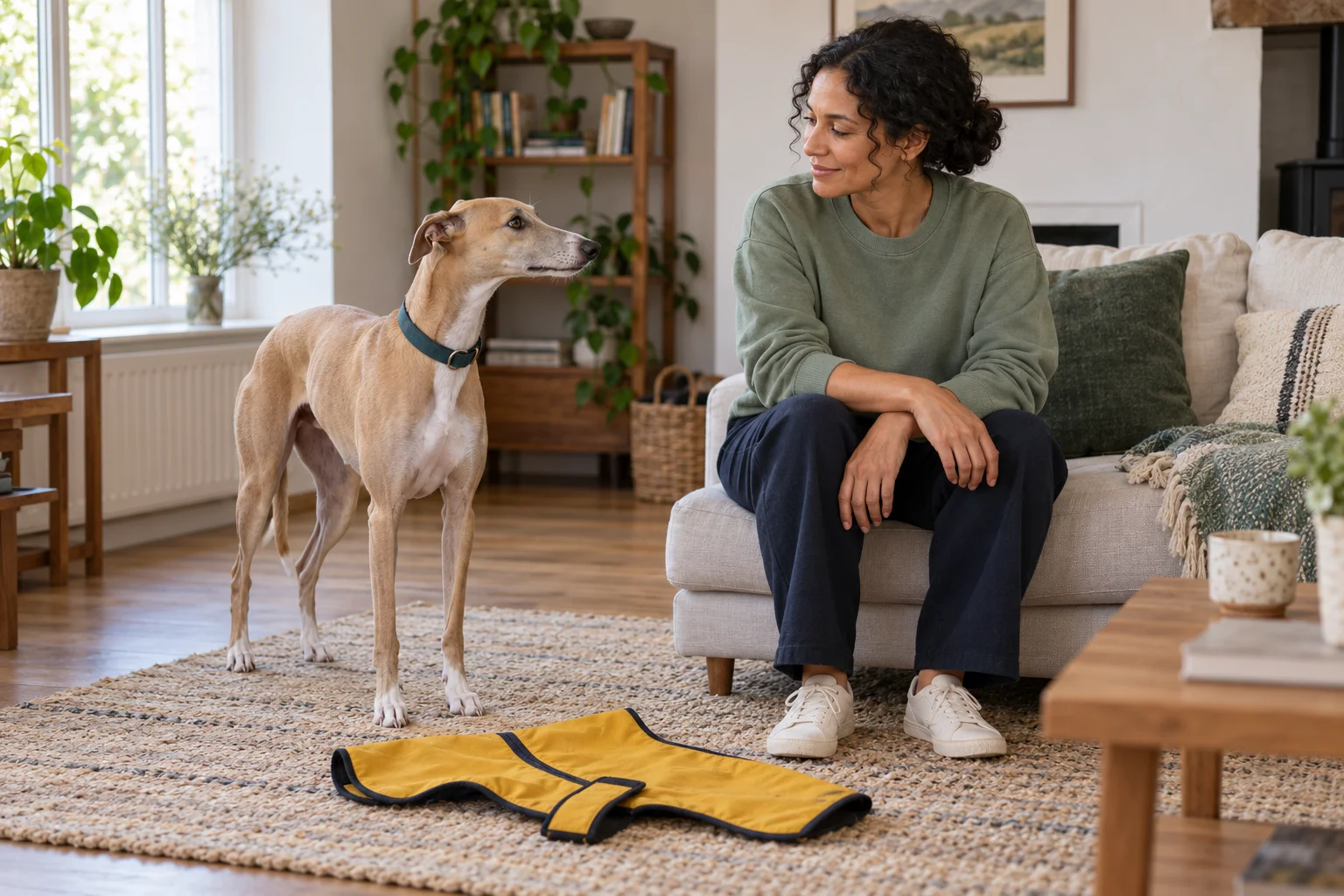
Does your dog need a coat?
Not every dog needs a coat. Many dogs with thick double coats cope well in cold weather without one. Others feel the cold much more.
Dogs Trust notes that some dogs might need a coat to help keep them warm, especially dogs with short hair (Dogs Trust: How to get your dog used to wearing a coat). Dogs who may benefit from a coat in cold or wet weather include:
- Short-coated or thin-coated dogs, such as greyhounds, whippets and many terriers
- Small and toy breeds, who lose heat more quickly
- Puppies and older dogs, who may find it harder to keep warm
- Dogs who are unwell or recovering, if your vet advises it
If you're not sure whether your dog needs a coat, watch for signs they feel the cold, such as shivering, reluctance to go out, a hunched posture or holding up their paws. Your vet can advise, especially if your dog has a health condition.
It's also worth thinking about when your dog will wear it. A coat for short, cold early-morning walks has a different job from a waterproof layer for long, wet hikes. Knowing what you need helps you choose a coat your dog will be comfortable in, and avoids training your dog to accept something they'll rarely use.
Choose a coat your dog can move comfortably in
The type of coat you choose can make training much easier.
- Avoid over-the-head styles at first, if your dog is worried. Coats that lie over the back and fasten under the belly are often easier for nervous dogs than ones you pull over the head.
- Look for quiet fastenings. Some dogs are startled by the ripping sound of hook-and-loop straps. Clips or buckles may be quieter.
- Choose light, flexible materials, so your dog can move freely.
- Check the fit carefully. The American Kennel Club notes that gear that is too restrictive, tight or loose-fitting can be uncomfortable for your dog (AKC: How to teach your dog to wear winter clothes).
A coat that fits well should allow your dog to walk, sit, lie down, toilet and shake comfortably. It shouldn't rub under the front legs, press on the throat or slide around to one side.
Before you start training, measure your dog along the back from the base of the neck to the base of the tail, and around the widest part of the chest. Many coat makers size by these measurements, and getting them right first saves your dog from practising in a coat that pinches or slips. If your dog is between sizes, try both if you can, and check how each sits when your dog walks and sits down.
Prepare treats and a quiet practice space
A little preparation makes the process smoother.
- Choose small, tasty treats your dog loves.
- Pick a calm moment, when your dog is relaxed but not sleepy. After a walk can work well.
- Train somewhere quiet, with few distractions.
- Keep sessions short. The AKC advises keeping training sessions short and fun. A couple of minutes is plenty.
- Plan to stop while your dog is still happy.
Use short practice sessions that fit your day rather than one long session. Choose training rewards your dog actually wants; if your dog stops engaging, make the exercise easier instead of reaching for better food to get them through it.
If your dog is uneasy about being touched around the head, body or legs, work on gentle handling without wrestling first. The same gradual approach works for adult dogs as well as puppies.
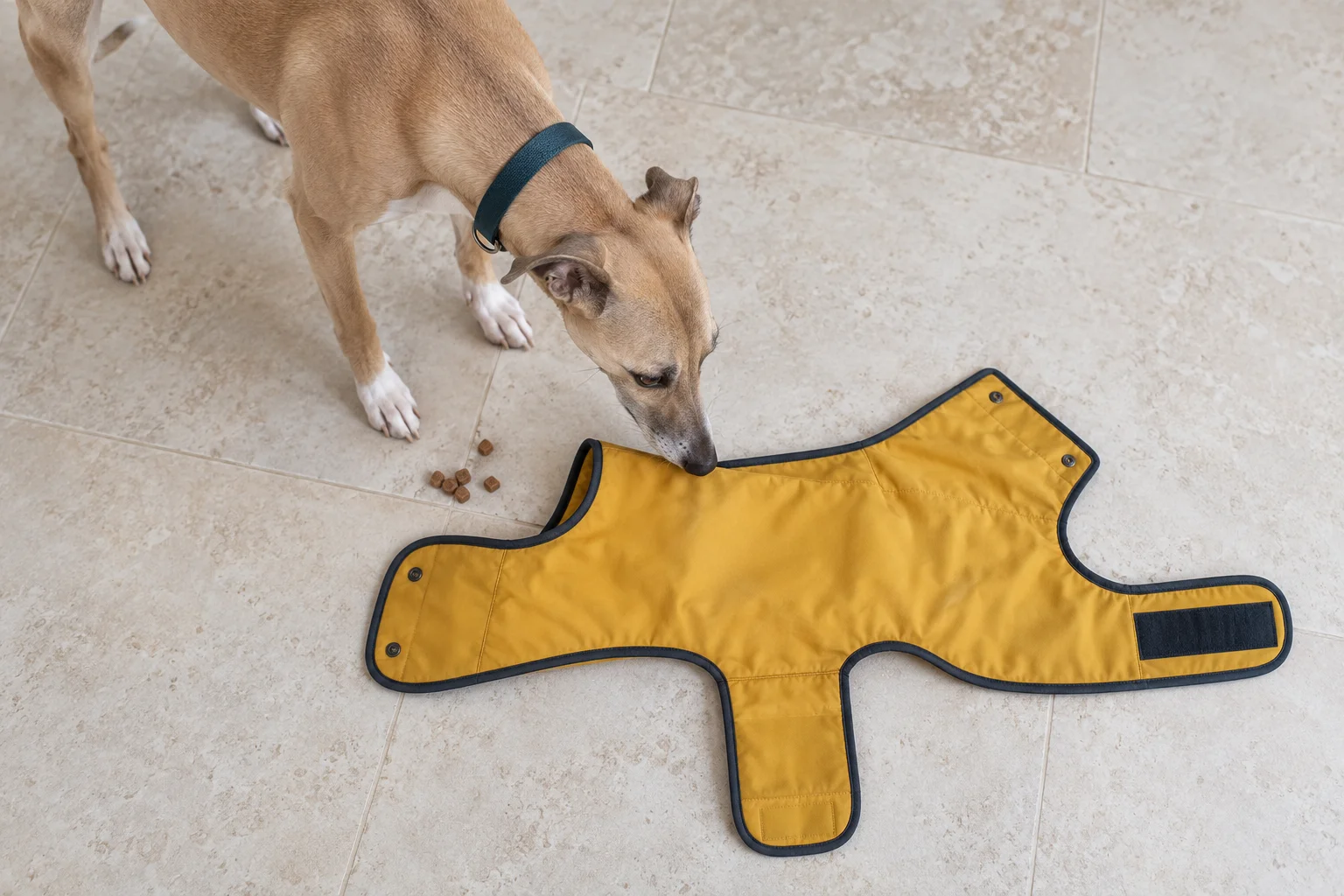
Let your dog investigate the coat on the floor
Start by letting your dog get to know the coat without any pressure.
- Lay the coat flat on the floor.
- Put a few treats on and around it.
- Let your dog sniff and eat the treats at their own pace.
- Praise any interest, such as looking at, sniffing or stepping on the coat.
Dogs Trust suggests this approach of placing treats on the coat so your dog can investigate it.
If your dog seems wary of the coat, start with it a little further away and toss the treats near it rather than on it. Move closer gradually over a few sessions.
Repeat this until your dog happily walks up to the coat whenever it appears. For some dogs this takes one session. For others, especially dogs who are wary of new things, it may take several days. Leaving the coat lying near your dog's bed for a while, with the odd treat placed on it, can help it become a familiar part of the room.
Practise with the coat touching your dog
When your dog is relaxed with the coat on the floor, start to let it touch them.
- Hold the coat in one hand and a treat in the other.
- Gently touch the coat to your dog's shoulder for a second, then give a treat.
- Take the coat away.
- Repeat, gradually touching other parts of the back.
If your dog moves away, that's fine. Let them, and make the next touch shorter or lighter.
Pay attention to the areas your dog finds harder. Many dogs are happy with something resting on their shoulders but less keen on touch near the belly, back legs or tail. Spend a little longer on those areas, with lighter, shorter touches and generous rewards. Letting your dog move away whenever they want helps them trust that they have a choice, which often makes them more willing to stay.
Let your dog choose to put their head through
Only use this exercise if your coat goes over the head. For a coat that opens fully across the back, skip to placing it on your dog's back. Many dogs feel uneasy having something pass over their face, so keep the opening still and let your dog control the approach.
- Hold the coat so the neck opening faces your dog.
- Hold a treat on the other side of the opening, so your dog can see and smell it.
- Let your dog push their nose through to reach the treat. Don't move the coat towards them.
- Gradually move the treat back, so your dog has to push further through.
Dogs Trust describes this approach of feeding treats through the opening, gradually moving your hand further back to encourage your dog to push their head through.
Let your dog choose to put their head through. If they back away, simply try again with the treat a little closer to the opening.
Some dogs find this much easier if the opening is wide. Undo any neck fastening, or stretch the opening gently with your hands, so it doesn't brush their ears or face. Once your dog happily pushes their head right through, let the coat rest on their neck for a second before you give the treat, then slide it off again. Build up from there.
For a back-and-belly style coat, you can skip this part and move straight to placing the coat on the back.
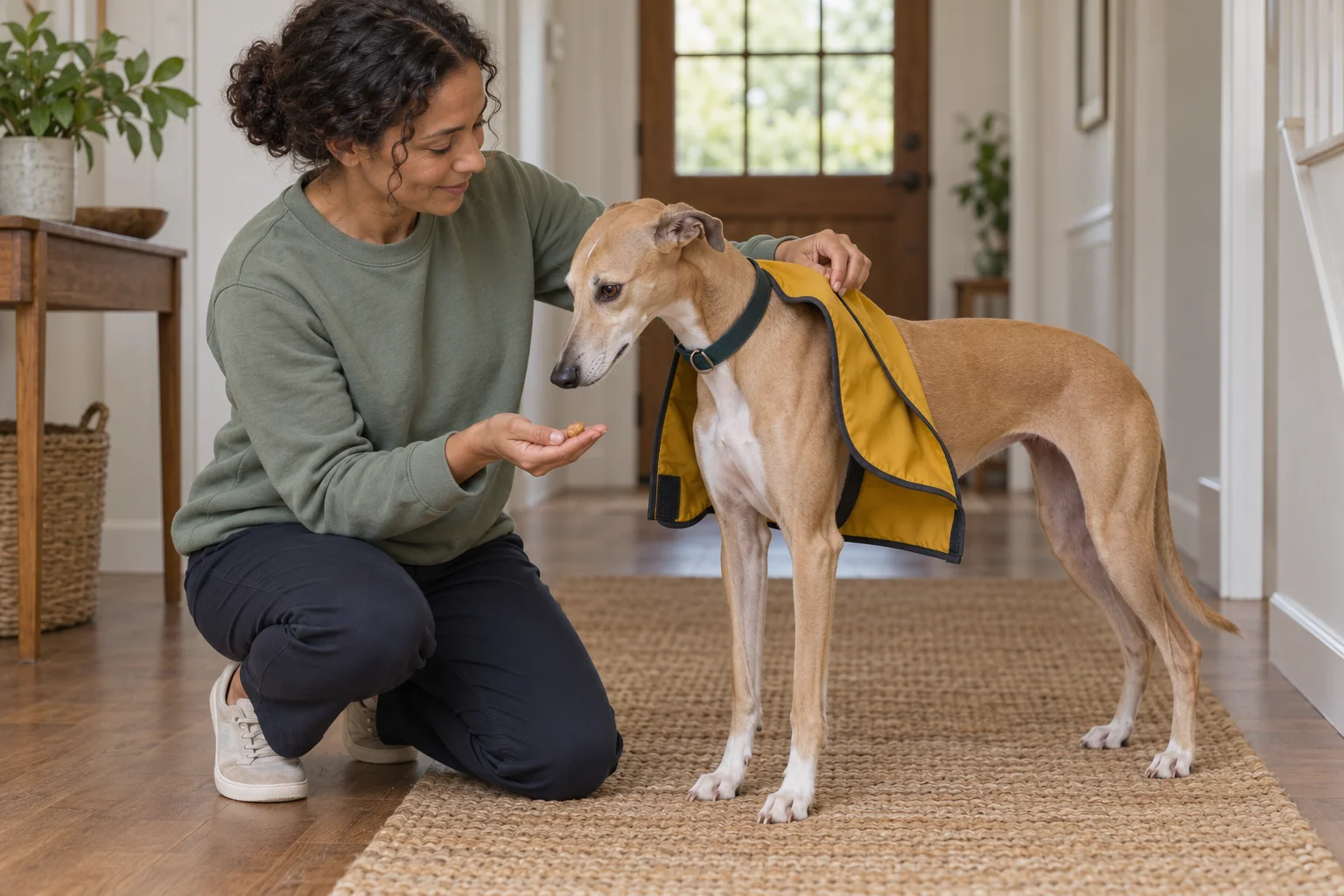
Place the coat on your dog's back
Once your dog is comfortable with the coat touching them and, if needed, with the head opening, it's time to put the coat on.
- Lay the coat gently over your dog's back, without fastening it.
- Give a treat, then take the coat off.
- Gradually leave it on for a few seconds longer before removing it.
Keep the coat on for only a few seconds at first. Before adding a fastening, look for a loose body and normal movement, with your dog choosing to stay close when you lift the coat again. Eating alone doesn't show that your dog is comfortable.
Fasten one strap while your dog stays relaxed
- Fasten one strap once your dog is relaxed with the coat sitting on their back, giving a treat as you do it. Then unfasten and remove the coat.
- Build up to fastening all straps, one at a time, over several sessions.
If reaching under the belly makes your dog stiffen or move away, take the coat off. Return to brief comfortable touches before trying that fastening again; don't hold your dog in place to finish it.
If the fastenings make a noise, such as the rip of a hook-and-loop strap, practise that sound separately first. Open and close the strap a little distance from your dog, then give a treat. Gradually do it closer, until your dog is relaxed about the sound before it's anywhere near their body.
Help your dog move in the coat
Try movement practice only when your dog is comfortable with the coat fastened and can already move normally. If they freeze, walk stiffly or try to escape, remove the coat rather than encouraging them to push through it.
Dogs Trust suggests scattering treats so your dog moves around finding them, which helps them adjust to how the coat feels as they move.
- Scatter a few treats on the floor once the coat is on.
- Let your dog sniff them out, moving around naturally.
- Play a short game with a favourite toy.
- Go for a short walk around the house or garden.
If your dog freezes at any point, stop the activity, remove the coat and give the treat anyway. Try again later with an easier exercise, such as resting the unfastened coat briefly on their back. Don't pull on the lead or use a game to distract them from discomfort.
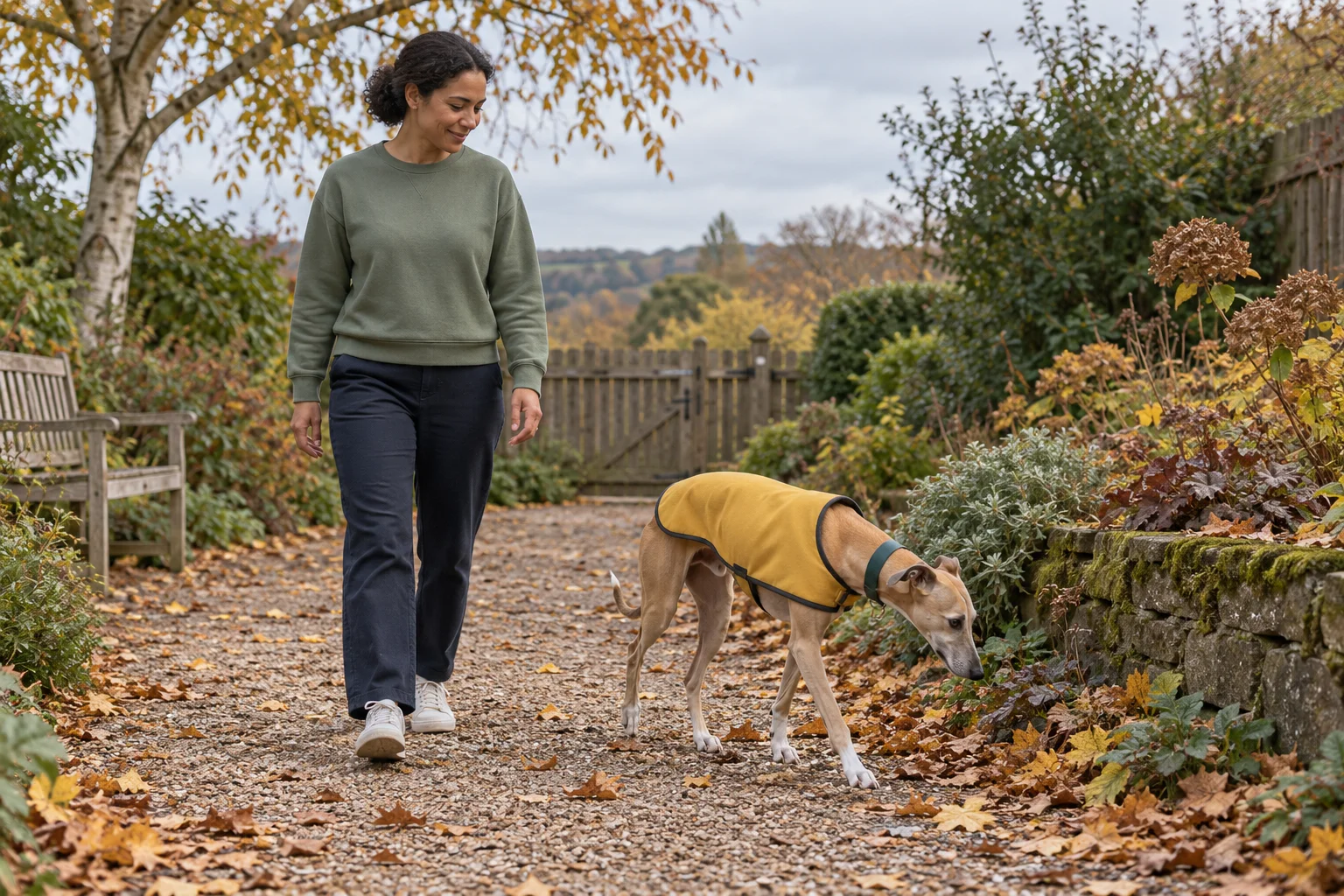
Take the coat outside
Once your dog is relaxed in the coat indoors, try short trips outdoors.
- Start with the garden or a quiet part of your usual route.
- Put the coat on just before going out, so it becomes linked with walks.
- Reward your dog for walking happily in the coat.
- Keep the first walks short, gradually building up.
Many dogs come to see the coat as a sign that a walk is coming, which helps them feel positive about wearing it.
The first walk in wind or rain can feel different again, as the coat flaps or becomes heavier when wet. Choose a calm day for your first outdoor trips if you can, and stay close to home. If your dog seems unsettled when the weather turns, keep the walk short and reward them generously for coping.
Watch your dog's body language
Your dog's body language tells you how they're feeling about the coat.
Signs your dog is comfortable include a relaxed body, a loose tail, soft eyes and normal movement.
Signs your dog is worried include freezing, walking stiffly or low to the ground, tucking their tail, licking their lips, yawning, turning their head away or trying to back out of the coat.
If you see signs of worry, go back to an easier stage. Dogs Trust advises that if a dog is uncomfortable, you should remove the coat and feed them anyway, then try again later. Our guide on how to read dog body language in context explains how to look at the whole picture.
Keep your dog comfortable and safe in a coat
Once your dog is happy wearing a coat, a few habits keep them comfortable.
- Check the fit regularly, especially for growing puppies or dogs who gain or lose weight.
- Look for rubbing, particularly under the front legs and around the neck.
- Don't leave your dog alone in a coat, in case they get caught on something or chew the straps.
- Take the coat off indoors, so your dog doesn't overheat.
- Dry wet coats before using them again.
- Watch for overheating. If your dog pants heavily or seems uncomfortable, remove the coat.
A worked example: a whippet who freezes in a coat
Here's an illustrative example. Adapt it to your own dog.
The pattern: A young whippet freezes and won't move when an over-the-head coat is put on.
Begin where the whippet can stay relaxed. The owner swaps to a back-and-belly coat with quiet clip fastenings and places it on the floor at a comfortable distance. They reward looking towards it and voluntary investigation. Before moving on, the whippet approaches without hesitation, keeps a loose body and can turn away freely. If the dog hangs back, the coat stays further away.
Add brief contact only when investigation is easy. The owner touches the coat to the shoulder, rewards and lifts it away. Once that stays comfortable, they rest it over the back without fastening it. The whippet remains loose and chooses to stay nearby when the owner offers another repetition. If the dog stiffens or moves away, the next practice returns to shorter contact or just looking at the coat.
Practise fastening before asking for a walk. The owner fastens one strap, rewards and removes the coat. They add the remaining fastenings only while reaching under the body remains comfortable. Once the whippet can wear the fastened coat and move normally, a small treat scatter gives them a chance to explore that movement. Freezing means the coat comes off, not that more food is needed to make the dog walk.
Go outside when indoor movement looks normal. The whippet can walk, turn and sniff without a tucked posture or stiff gait before trying a brief trip in the garden. If the coat flaps and the dog becomes unsettled, the owner ends the outing and returns to easier practice. There is no week-by-week deadline: one stage may need much more practice than another.
Troubleshoot common problems
My dog won't go near the coat. Start with the coat further away, toss treats near it and move closer over several sessions.
My dog backs away from the head opening. Make it easier by holding the treat closer to the opening, or switch to a coat that doesn't go over the head.
My dog freezes when the coat is on. Remove the coat and give the treat anyway. Later, return to a version your dog found comfortable, such as a brief unfastened drape. Save movement games for when your dog can move normally in it.
My dog tries to bite or chew the coat. Pause fitting and remove it safely rather than fastening it while your dog is distracted by food. Check for rubbing or trapped fur, then return to an easier exercise. Ask for reward-based help if biting or handling worries continue.
My dog is fine indoors but not outside. Outdoors is more challenging. Try short trips in the garden or a quiet place, with plenty of rewards.
My dog was fine, then suddenly started refusing the coat. Check the fit and look for rubbing or sore spots. A coat that has become too small, or has a rough seam, may now be uncomfortable. If you can't find a cause, mention it to your vet.
My dog shakes or rolls to get the coat off. Remove it and check the fit if your dog is repeatedly trying to escape it. A single shake can happen during ordinary movement; read the whole body rather than assuming it proves either comfort or worry. Resume only at a stage where your dog stays relaxed.
Other people in the house put the coat on differently. Agree on one calm routine, so your dog knows what to expect each time.
Know when to pause and ask for help
Most dogs can learn to accept a coat with patient, reward-based practice. Some need extra support.
Talk to your vet if:
- Your dog seems sore or sensitive when touched on their back, legs or neck
- Your dog has a skin condition that could be affected by a coat
- You're unsure whether your dog needs a coat
Look for a qualified, reward-based trainer or behaviour professional if:
- Your dog seems very frightened of the coat or of being handled
- Your dog growls, snaps or tries to bite when you approach with the coat
- You've tried a consistent plan for several weeks without progress
Use reward-based help only. The American Veterinary Society of Animal Behavior states that evidence supports reward-based methods for all canine training (AVSAB: Why you need to reward your dog in training).
You can find more skills and games to try in our dog training guides.