
Give your puppy a predictable daily rhythm
A puppy that is overtired, hungry or desperate for the toilet will struggle to learn. Keep the day predictable without trying to schedule every minute. Plan frequent toilet trips, calm rest, short play and brief training.
Use a safe resting area where the puppy can switch off. Rest should not be a punishment. If a puppy becomes frantic at the same time each evening, more activity is not always the answer. Check whether the day included enough uninterrupted sleep.
Make toilet training easier
Take the puppy to the chosen area after waking, eating, drinking, play and any excited activity. Stay nearby without distracting them. Reward after they finish, then allow a little supervised freedom.
Indoor accidents usually mean the gap between opportunities was too long or supervision failed. Clean thoroughly and adjust the routine. Punishment can make a puppy hide when they need to go without teaching the correct place.
Plan for biting and chewing
Puppies investigate with their mouths. Keep suitable chews within reach and redirect early. If play becomes too rough, pause movement and give the puppy a short chance to settle. Repeated grabbing often increases when a puppy is tired or overstimulated.
Protect clothing and furniture through management. Expecting a young puppy to ignore every loose sleeve, shoe and chair leg is not realistic while the habit is developing.
Let your puppy take socialisation at their own pace
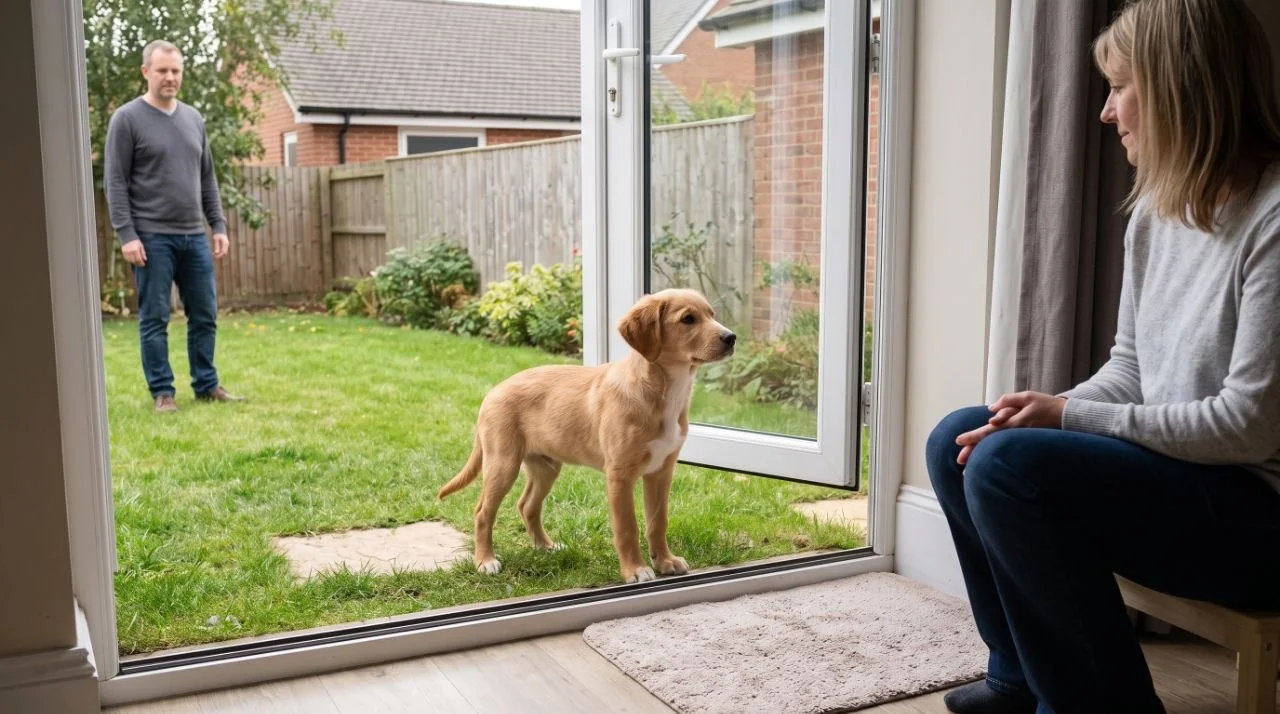
Good socialisation helps a puppy feel safe around normal sights, sounds, surfaces, people and animals. It does not require greeting everyone. Watch the puppy's body language and provide distance. Pair new experiences with food or play, then leave before the puppy is overwhelmed.
A puppy that can look, move away and re-approach is learning more safely than one held in place for an interaction.
Start with skills your puppy will use every day
Practise the puppy's name, a hand target, coming a few steps when called, trading items, settling on a mat and comfortable handling. These skills support later training without demanding long sessions.
Contact a veterinary professional if behaviour changes suddenly or the puppy seems painful or unwell. Seek qualified in-person help for serious fear, aggression or bite risk.