
A sudden change is worth checking
Pain, illness, sensory change and medication can affect behaviour. If a previously comfortable dog becomes irritable, restless, withdrawn, reluctant to move or unusually reactive, arrange a veterinary check rather than assuming the dog needs stricter training.
Write down when the change began and any related changes in appetite, sleep, movement or daily routine. That record can help a veterinary professional assess what is happening. You can keep dated observations together in our free dog behaviour diary, which stays on your device unless you choose to save it there.
Give your dog enough space to think
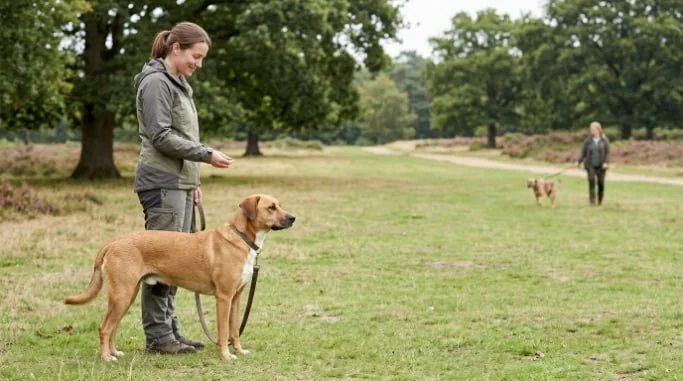
A dog that is barking, lunging, freezing or trying to escape may be too close to a trigger to learn. Increase distance, block the view or leave the situation. Once the dog can notice the trigger and still eat, move or respond, simple training becomes possible.
Distance is not a reward for bad behaviour. It is a safety tool. Repeated exposure at full intensity can make the response stronger.
Different behaviour problems need different plans
Barking at home
Identify what predicts the barking. Reduce window access, add background sound where appropriate and teach a routine away from the trigger.
When your dog struggles to be left alone
Start below the point of distress. Severe separation-related behaviour needs an individual plan rather than repeated "cry it out" absences.
Guarding food and other items
Do not grab or punish. Manage access, trade for something better and seek qualified help if there is growling, snapping or bite risk.
Fear around people or dogs
Allow space and prevent forced greetings. Work at a distance where the dog can remain comfortable and choose to disengage.
For loose-lead walking or recall practice, visit Training: everyday skills. If walks involve fear or lunging at other dogs, start with distance and behaviour support instead.
Know when you need more than an online guide
Get qualified individual behaviour support when there is a bite history, severe aggression, escalating guarding, intense fear, risk to children or vulnerable adults, or difficulty keeping people and animals safely separated. Start with a veterinary check where pain or illness may be involved. A qualified professional can decide whether remote assessment is appropriate or whether an in-person visit is needed; a generic online course is not an assessment.
Use barriers and distance. Do not test the dog's limits or copy a generic exercise that increases risk. A professional needs the full history and environment to build a suitable plan.