
A dog who barks at you can make a peaceful room feel like a negotiation you are losing. You sit down, answer an email, start making dinner or speak to somebody else, and the barking begins. Looking at your dog, saying their name, getting up, opening a door or throwing a toy may seem like the only way to restore quiet.
Sometimes it does restore quiet. That is exactly why the pattern can become hard to change. If barking is followed by something your dog wanted, barking may become a reliable way to ask for it. This is not about an annoying dog or a careless owner. It is about a repeated conversation in which both of you have been trying to get something done.
The useful question is not simply, “How do I make my dog stop?” It is, “What is my dog trying to obtain here, what happens immediately afterwards, and what could they do instead?” Once you can answer those questions, you can build a plan that is kinder and more realistic than trying to outwait your dog.
Make sure the barking is really aimed at getting something from you
Attention-seeking barking is barking directed at a person when the dog appears to be trying to obtain interaction or access. They may bark while looking at you, stand by the lead, face a toy, wait by the kitchen, or move between you and the thing they want. If barking repeatedly stops after the same response, that is a useful clue, not proof of the cause. The wider context still matters.
That description is deliberately narrow. It does not mean every bark near a person is an attempt to get attention. Dogs bark for many reasons, which is why the RSPCA advises considering why the dog might be barking rather than treating all barking as one problem in its guidance on barking too much.
Start with ordinary needs. A dog who has not had a chance to toilet may be asking to go outside. A dog who is due a meal, has an empty water bowl, needs a rest break, or has been waiting through a disrupted routine may be communicating a real need. Meet those needs before you decide that the behaviour is attention-seeking.
Also separate barking around discomfort, fear and the outside world. Barking after a sudden change in behaviour, alongside altered movement, appetite or sleep, needs veterinary attention. Barking at noises, people or movement through a window belongs with why dogs bark at the window, not this article. Barking when left alone may point to isolation distress and needs separate assessment rather than a home plan for demand barking.
You do not have to name your dog’s emotion perfectly before you make a safe first change. You do need to avoid assuming that every noisy request is wilful. If the bark is new, intense, paired with distress, or hard to interrupt even when you meet predictable needs, pause the training plan and seek individual help.
Notice the conversation that happens before and after each bark
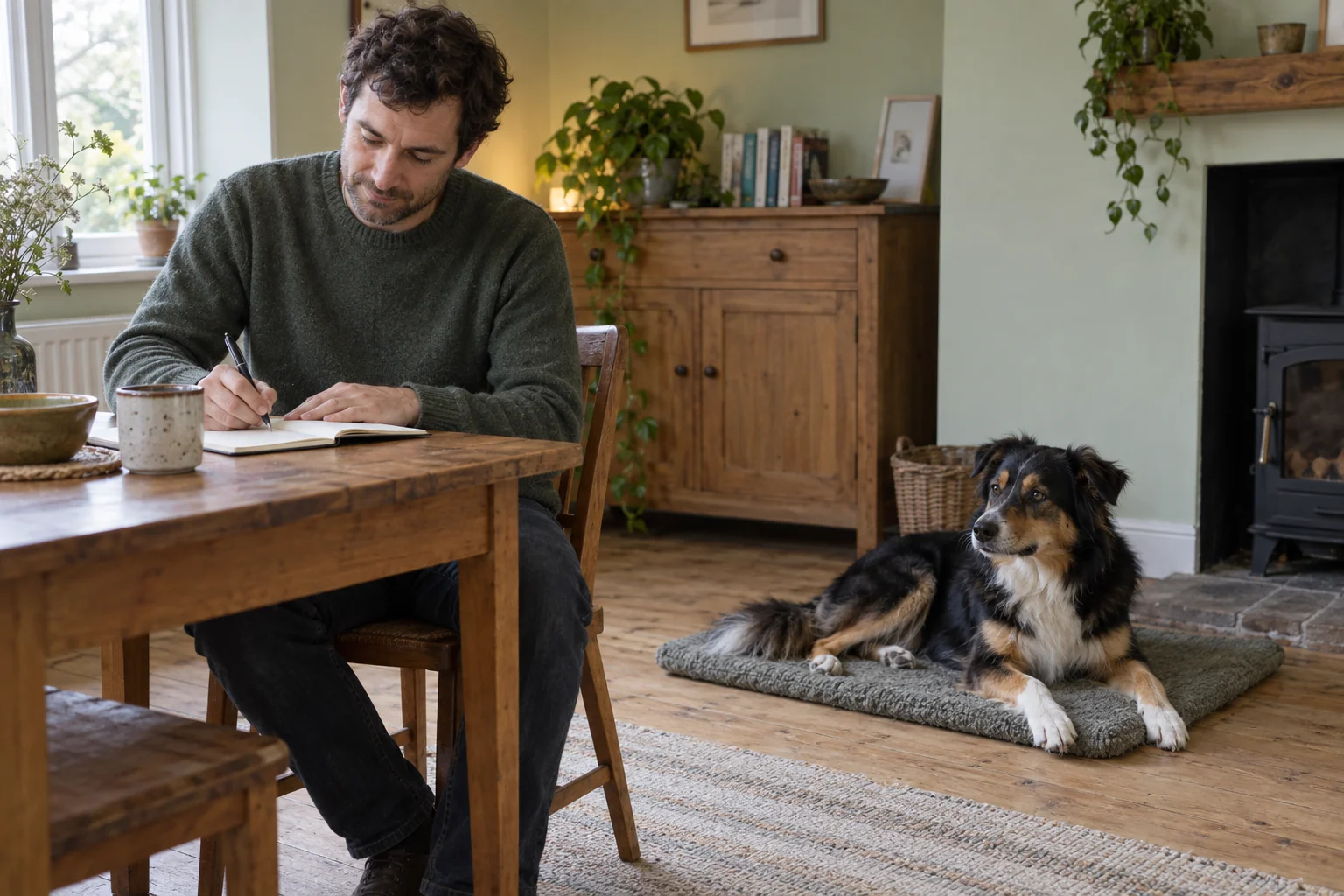
For a few normal days, make a short record of incidents without setting them up. Write down what happened immediately before the barking, what your dog did, what you did next, and what happened after that. Keep it factual rather than interpretive.
For example, “I took a phone call, dog brought a toy, barked twice while facing me, I threw the toy, dog stopped barking” is useful. “Dog was being demanding” is less useful because it does not show the sequence you could change. Our dog behaviour observation log can help you keep that record brief and consistent.
Look especially closely at the consequence. A consequence is simply what follows the behaviour. It does not mean punishment, and it does not mean you meant to reward barking. If you look at your dog, speak, stroke them, hand over food, start play, rise from your chair, open the garden door or move towards the lead, one of those responses may be helping to maintain the pattern. Your record should show whether that sequence actually repeats.
That can feel uncomfortable to read, but it is not blame. You may have responded because the request seemed reasonable or because you needed quiet for a meeting. Your intentions matter to you; the record helps show which response your dog experiences after barking.
Your log can show whether the pattern is specific. Does barking usually happen when you are busy? Does it occur before walks, meals, play, access to the garden, or when someone else receives attention? Does a quiet stare, a paw touch or bringing a toy happen first? These details help you choose a replacement that fits the real request.
Meet predictable needs before your dog has to ask loudly
A humane plan begins with the things your dog reasonably needs. If barking usually occurs before a toilet trip, build a chance to go out into the routine before the usual difficult period. If it appears before food, prepare meals before your dog is waiting at the bowl. If it often arrives after a long spell without any contact, arrange a short, calm interaction before you settle into focused work.
Your household may vary, and so may your dog’s age, health and daily activity. Look for needs you can predict and meet earlier, so barking is not the only dependable way to get access to the garden or a break from waiting.
Be precise about what your dog enjoys. For one dog, a greeting or a few moments of touch may matter most. Another may want to sniff outside, play with a person, follow you into a room, or receive a food toy while you work. The same outcome that accidentally maintains barking can become a useful reward when it follows a calmer request instead.
“Just ignore the dog” leaves too much out. A dog who needs the toilet, is uncomfortable or is overdue an expected meal needs that need addressed. For other requests, teach a clearer way to ask instead of leaving the dog with no route to success.
Prevent difficult rehearsals when you cannot respond well
There will be times when you cannot immediately respond. You may be cooking, carrying hot food, supervising children, on a call, getting ready to leave or simply resting. These are not failures of commitment. They are the situations your plan must survive.
Before a predictable busy period, give your dog an appropriate activity or set up a comfortable place near you but out of the busy route. If your dog likes a safe chew, food toy or scatter meal and it fits their diet and household safely, offer it before the usual barking window. If they normally want a toilet break before your call, take them out first. If access to the hallway or garden is the repeated request, decide in advance what access will be available.
The goal is not to distract your dog indefinitely. It is to avoid practising a difficult sequence while you are unable to notice and reward a better one. Environmental arrangements are part of humane behaviour plans, alongside reinforcing desirable behaviour, as explained in AVSAB’s Humane Dog Training Position Statement.
Think about what makes barking easy in your home. A toy basket beside your desk may invite repeated requests for play. A lead hanging by the door may become a visual reminder of a walk. A dog who can follow every household movement may have no chance to practise settling. You do not need to remove all interesting things from your dog’s life. You can change the setup around the periods that repeatedly go wrong.
For the wider principle that prevention gives training room to work, read why preventing rehearsal is not cheating. In this case, management means arranging a normal day so you are not forced to choose between ignoring a real need and paying the bark with frantic attention.
Choose a quiet alternative that makes sense to your dog
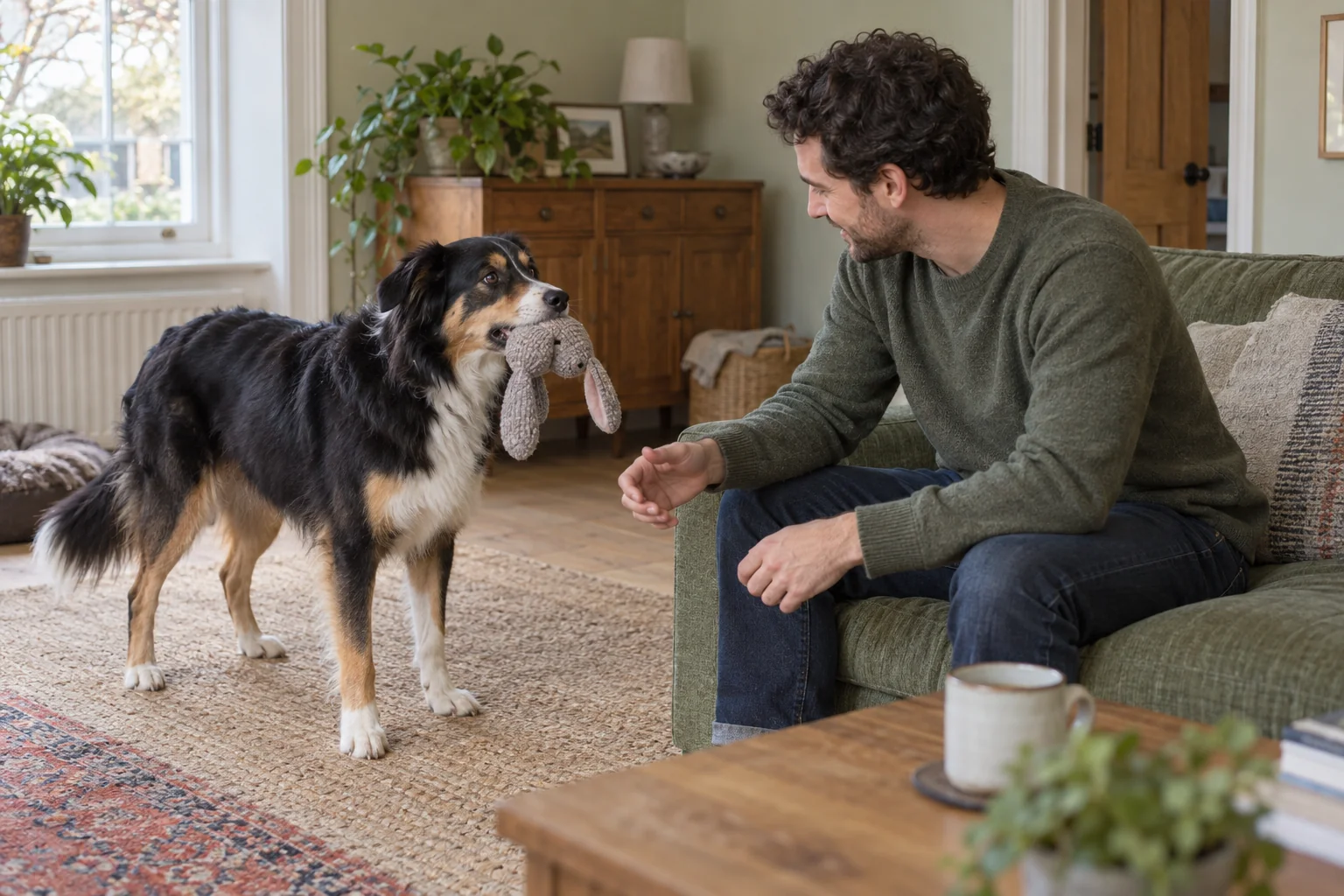
Choose a visible, easy action that can lead to the same good outcome without barking. Your dog might bring a toy and stand quietly, go to a mat, sit by the door, wait beside their lead, touch your hand, or look at you and then towards the garden.
Choose one behaviour for one common request. If your dog barks for play, a quiet toy presentation may be more useful than a sit at the other end of the room. If they bark to go out, standing calmly by the door might be clearer. If they bark when you start work, settling on a bed beside you may be a better match.
Avoid asking for a long or formal performance just because it looks polite. The alternative needs to be possible when your dog is mildly excited. A dog who can lie on a mat for a minute in a quiet room may not be able to maintain that position while a walk is about to happen. A brief quiet pause beside the lead may be the workable first target.
Make the request unambiguous for people too. If a quiet toy presentation means play can begin, everyone needs to recognise it. If sitting by the door means a toilet break, household members need to know that access follows it. Mixed messages make barking more likely because the old method has a longer history of working.
Teach the request when nothing important is happening
Teach the new action away from the difficult moment. Suppose you want your dog to go to a mat when you sit at your desk. Begin when you are not about to work and nothing else is competing. Place the mat close enough that it is easy to reach, notice your dog moving onto it, and reward there with something they value.
You can add a calm cue once the action is becoming familiar, but the cue is not the lesson by itself. The lesson is that going to the mat predicts good things. If you want a quiet toy presentation, start a short game when your dog approaches with a toy without barking. If you want a calm wait by the door, open the door after you notice that pause.
Rewards do not have to be food. They can be play, access, a sniff outside, a greeting or your attention, depending on what your dog wanted. Our guide to choosing dog training rewards can help you identify what is valuable enough in that moment.
Deliver the reward where the alternative happens. If you are rewarding a mat, bring the reward to the mat. If you are rewarding a quiet wait at the door, open the door after the wait rather than calling your dog across the room first. Clear placement makes the exchange easier to understand.
Keep practice easy and short enough that you can notice success. You are building a new communication habit, not testing your dog’s patience. If the alternative falls apart in a calm setting, simplify it before expecting it to work during the part of the day that normally produces barking.
Reward the first quiet choice rather than waiting for perfection
Watch for the earliest useful moment before barking starts. Your dog may look at you, approach with a toy, walk towards the door or pause. If they then make the alternative choice, respond promptly. Start the play, open the door, offer attention or give the planned reward.
This does not mean every sound is a training failure. Dogs communicate, and a plan that demands complete silence can make ordinary life tense for both of you. The target is a practical pattern in which a quieter request is more likely to work than barking.
If your dog barks after beginning the right action, consider whether the request was too difficult, the wait was unclear, or you were too slow to respond. Make the alternative easier, prepare the reward sooner, or practise when the outcome is less exciting.
Be careful not to make “bark, perform the alternative, get the reward” into its own reliable sequence. Unless there is a need that cannot wait, avoid delivering the requested play or attention immediately after prompting the alternative from active barking. Let the moment settle, then create an easier opportunity to notice and reward the alternative before the next bark. Never delay a toilet break or other genuine need to protect this training detail.
Avoid universal waiting times. A fixed delay might be easy for one dog and impossible for another, and it may not match the need being requested. What matters is whether you can spot and reinforce a brief quieter alternative before your dog is overwhelmed or frustrated.
Keep your response calm without making the dog invisible
When barking starts, your first task is to decide whether there is an urgent or reasonable need. Check the basics you have already identified. If your dog needs a toilet break, is suddenly unwell, or is reacting to something that worries them, address that situation rather than trying to prove a training point.
If the need has been met and the barking is part of a familiar attention loop, avoid adding a dramatic response. Shouting, repeated talking, pushing the dog away, waving your arms or bargaining with several different activities can all become more interaction. Keep your response low-key and reduce the opportunity for the loop. Once the moment has settled, make the practised alternative easy to offer and reward it before barking restarts.
Making the alternative easy does not mean forcing it. Do not drag your dog by their collar, physically hold them on a bed, or corner them until they are quiet. You can move closer to the mat before inviting your dog over, pick up the lead only when you are ready for the quiet wait, or put the toy away until a calmer moment.
AVSAB recommends reward-based approaches and advises against aversive methods for training and behaviour modification in its humane training statement. That is a useful safeguard here. Anti-bark devices, startling noises, water sprays and punishment may stop a sound in the moment, but they do not teach the dog a clear, safe way to communicate.

Give the whole household one simple version of the plan
A barking pattern often involves more than one person. One person may speak to the dog, another may open the door, and another may start play because they are trying to help. From the dog’s perspective, any of those responses can keep the old request useful.
Have a short household conversation about the most common barking scenario. Name the likely need, the new request, what counts as the reward, and what people should do when they cannot respond. Keep it simple enough to remember during a busy morning.
For example, your rule might be: “Before the afternoon call, offer the garden and settle activity. If the dog brings a toy quietly, say yes and play when free. If barking starts, do not start a noisy conversation. Check needs, then make the mat available and reward the quiet approach.” The exact version should fit your dog and home.
Consistency does not require everyone to behave identically every second. It means the important exchange stays clear. Quiet request leads to access or attention when practical. Barking does not reliably produce a bigger, more exciting interaction. Our guide to consistent family dog training explains how to make shared rules workable rather than perfectionistic.
Use your observations to adjust the plan, not to judge your dog
Return to your record after several ordinary days. Notice whether your dog offers the alternative sooner, whether you spot the request earlier, and whether meeting needs in advance makes difficult periods easier. Check for new contexts you may have missed.
Separate management from learning. A quiet call because your dog had a prepared activity is useful management. A quiet toy presentation followed by play is evidence that the new request is becoming available. Both are worthwhile, but they tell you different things.
If the barking becomes worse, more frequent or harder to interrupt, do not assume you need to be stricter. Check whether predictable needs changed, whether the alternative is actually easier than barking, whether people are responding in different ways, or whether the dog is coping with a new stressor. Change the setup before asking for more self-control.
Progress is often uneven because real life is uneven. A busy day, visitors, illness, disrupted sleep or an unexpected delivery can make a familiar skill harder. Keep the plan kind enough to return to after a difficult day rather than treating one setback as proof that it has failed.
Know when attention is not the issue to solve at home
Arrange a veterinary assessment if barking is sudden, accompanied by pain, altered appetite, sleep changes, difficulty moving, confusion, or a wider behaviour change. A general article cannot tell you whether a health problem is contributing.
Seek qualified, reward-based individual support if barking is linked with fear, panic, aggression, guarding, snapping, biting, or an inability to settle and recover. Barking when left alone also needs a separate assessment. Do not leave your dog alone for longer to test whether they will get used to it.
Individual help is also sensible when your household cannot safely prevent difficult episodes, when the barking causes serious conflict, or when you have tried a clear prevention and reinforcement plan without a workable improvement. Bring your observation notes. They give a vet or behaviour professional a better starting point than a label such as “attention-seeking”.
Meet genuine needs early, work out which responses may be maintaining the barking, and teach a quieter request your dog can use. That gives both of you a practical plan for the next time the pattern starts.