
Digging is normal dog behaviour, not a sign that your dog is being spiteful or deliberately ruining the garden. To stop your dog digging up the garden, first notice what is happening around the digging, then make the risky or precious areas unavailable and give your dog a safer way to meet the need if digging itself is part of the fun. A dig pit can help, but it will not fix every reason for digging, and it is not a substitute for shade, company, suitable activity or help with distress.
Notice what your dog gets from digging in that particular spot, and what you can change without frightening or hurting them. A dog may dig to investigate a smell, chase something underground, find a cool resting place, bury an item, use an enjoyable natural behaviour, or cope with frustration. Several motives can overlap. A hole by itself cannot tell you which one is operating.
Digging is normal, but its purpose varies
Dogs dig for different reasons, and the same dog may dig for more than one. Dogs Trust describes dogs digging to investigate a smell, spread scent from their paws, prepare a cooler resting spot or bury something. The RSPCA’s garden-digging advice also notes that boredom, frustration, loneliness, anxiety, unmet needs, weather and escape attempts can play a part.
That range matters because “give more exercise” or “buy a puzzle” is not a universal answer. A dog following an interesting scent may keep digging even after a long walk. A dog seeking shade needs a cool, sheltered place, not a harder food puzzle. A dog trying to get out needs secure containment and a proper look at why the garden feels less appealing than what lies beyond it.
Try not to infer a diagnosis from the shape of the hole, a breed label, or one episode. You can make a useful working guess from repeated context, but keep it as a hypothesis. The practical aim is to improve the setup and protect your dog while you learn what changes the behaviour.
Start with when, where and what happens around the hole
For a few ordinary garden visits, notice what comes before and after the digging. Do not set up a tempting situation to provoke it, and do not leave your dog out alone so you can see what happens. Observe only when you can supervise safely.
Write a short, factual note after a visit: the time, where the dog dug, what they were doing just beforehand, how long they were outside, the weather, whether people or animals were nearby, and what happened when you calmly joined them. Include what the dog did next. “Went straight to the fence line after hearing a dog next door, dug for a minute, then watched the gate” is more useful than “being naughty again”.
Look for patterns rather than deciding from one event. A dog who repeatedly digs in one freshly turned border may be interested in scent, texture or something buried there. Digging in a cool patch on a warm day may suggest a comfortable resting spot is missing. Repeated digging when left outside alone could relate to lack of company, frustration or distress. Persistent digging at a fence line could create an escape hazard, regardless of its original motivation.
A short record can help you explain the change to your vet or a qualified behaviour professional if needed. The dog behaviour observation log covers how to record context without turning every moment into a surveillance project. If you are unsure what your dog’s posture or expression means, the guide to reading dog body language in context can help you avoid conclusions from one signal.
Make the garden safe before trying to teach anything
A hole is not only a lawn problem. A dog can injure paws on buried debris, reach unsafe materials, disturb plants or create a route under a fence. Until you know what is happening, supervise garden time and block access to the areas where digging could cause harm. Use a secure, stable barrier or accompany your dog on a lead or long line if appropriate and safe for your dog; do not tether them unattended.
Check the whole boundary, especially the lower edge, gates and existing gaps. If your dog is excavating beside a fence, keep them away from that stretch while you inspect and repair it. Do not rely on a shallow patch of loose soil or a makeshift barrier that could collapse, snag a paw or become something to chew. If you cannot make the area secure, use a different enclosed space and ask a fencing professional for help.
Also scan the garden from your dog’s point of view. Put away sharp tools, secure compost and garden chemicals, and remove fallen or uprooted plant material. Dogs Trust advises checking that plants are suitable for dogs, securing dangerous substances and tools, and avoiding cocoa mulch. A dog-friendly garden checklist from Dogs Trust offers further garden safety guidance. If your dog has swallowed a plant or other potentially harmful material, contact your vet promptly rather than waiting to see whether symptoms appear.
If the digging began after a new fertiliser, compost, mulch or other garden product was used, prevent access to it and check its label and safety information. Smells can attract investigation, and an unknown substance can add a health risk. Do not cover the spot with another chemical or a strong-smelling deterrent.
Match your first change to the likely reason
You do not need to solve the mystery perfectly before making a sensible change. Choose the safest, most relevant adjustment based on what you have actually observed, then see whether the pattern shifts.
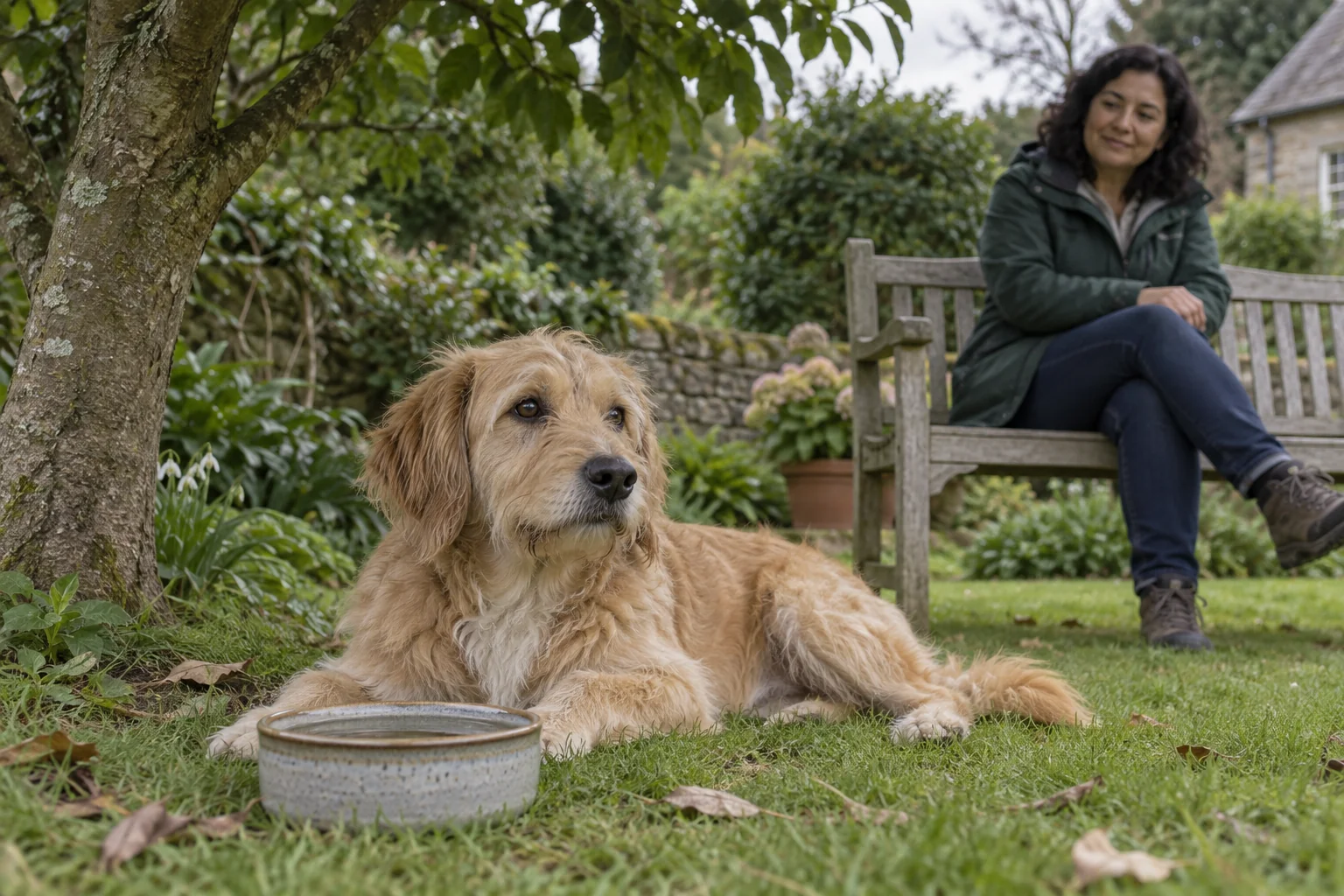
If digging happens during hot weather, bring your dog indoors or to a cool, shaded, sheltered place with fresh water. Do not expect a dog to tolerate heat just because they have access to a garden. If they are digging to make a resting hollow, create a comfortable place to lie down and reduce time outdoors in conditions that are too warm.
If your dog appears to be searching for a smell or something moving underground, supervise and protect the area. Do not use poison, traps or improvised pest-control mixtures where your dog or wildlife could be exposed. If there may be a pest problem, use a humane, pet-safe approach and seek appropriate local advice. Avoid digging around with your dog present if there may be sharp debris, buried cables or other hazards.
If the dog digs after being left outside without company or anything to do, shorten that period and provide company or a different safe arrangement. A garden is not automatically an activity just because it is outdoors. A walk, shared sniffing, play or a brief reward-based training activity may be useful for some dogs, but tailor activity and rest to the individual rather than trying to tire them into silence.
If the dog is burying an item, offer a safe place and routine for that item instead, and keep valuable or unsafe objects out of reach. If it is an enjoyable digging habit, make an allowed digging area more worthwhile while temporarily protecting the beds you want to preserve.
Prevent rehearsal without scaring or punishing your dog
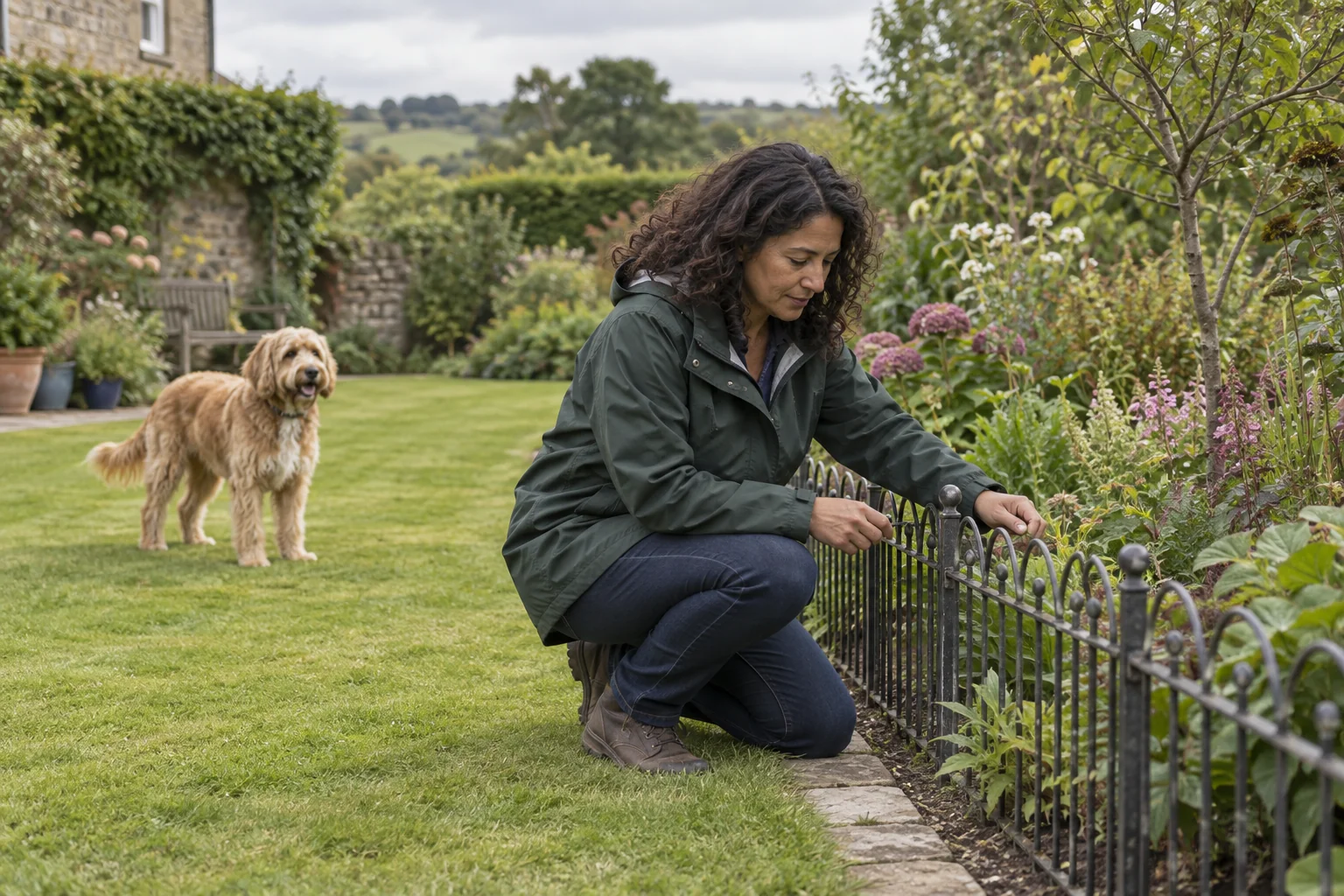
Management means arranging the environment so your dog cannot keep practising the damaging or unsafe version while you work out what helps. It is not a punishment. A temporary fence around a flower bed, supervised garden access, a closed gate to a vulnerable area, or a different outdoor space can prevent repeated damage and reduce risk.
If you catch your dog beginning to dig somewhere you want to protect, stay calm. Avoid shouting, chasing, grabbing, startling, or dragging them away. Those reactions can make the garden stressful, turn your approach into part of the game, or leave the reason for digging unchanged. Instead, calmly invite your dog away if they can respond, then reward coming with you and offer an appropriate alternative. If they are too absorbed to respond, increase distance from the spot and improve management next time rather than escalating pressure.
Dogs Trust recommends watching dogs in the garden or fencing off areas where they are likely to dig, and providing suitable alternatives for normal behaviours. Its guidance on destructive behaviour also emphasises managing access and considering unmet needs or pain. Management and teaching can support each other, but a barrier alone will not address fear, discomfort or a need the dog still has.
Avoid aversive deterrents, including painful or startling devices, substances that sting or irritate, and hidden objects designed to frighten your dog. Do not use buried mesh or sharp stones to make digging uncomfortable. Your dog should not have to learn through pain or fear that the garden is dangerous. If a method depends on startling or hurting them, choose a different setup. The American Veterinary Society of Animal Behavior’s humane training position recommends reward-based methods and says aversive methods should not be used for training or behaviour problems.
Build an allowed dig area your dog can understand
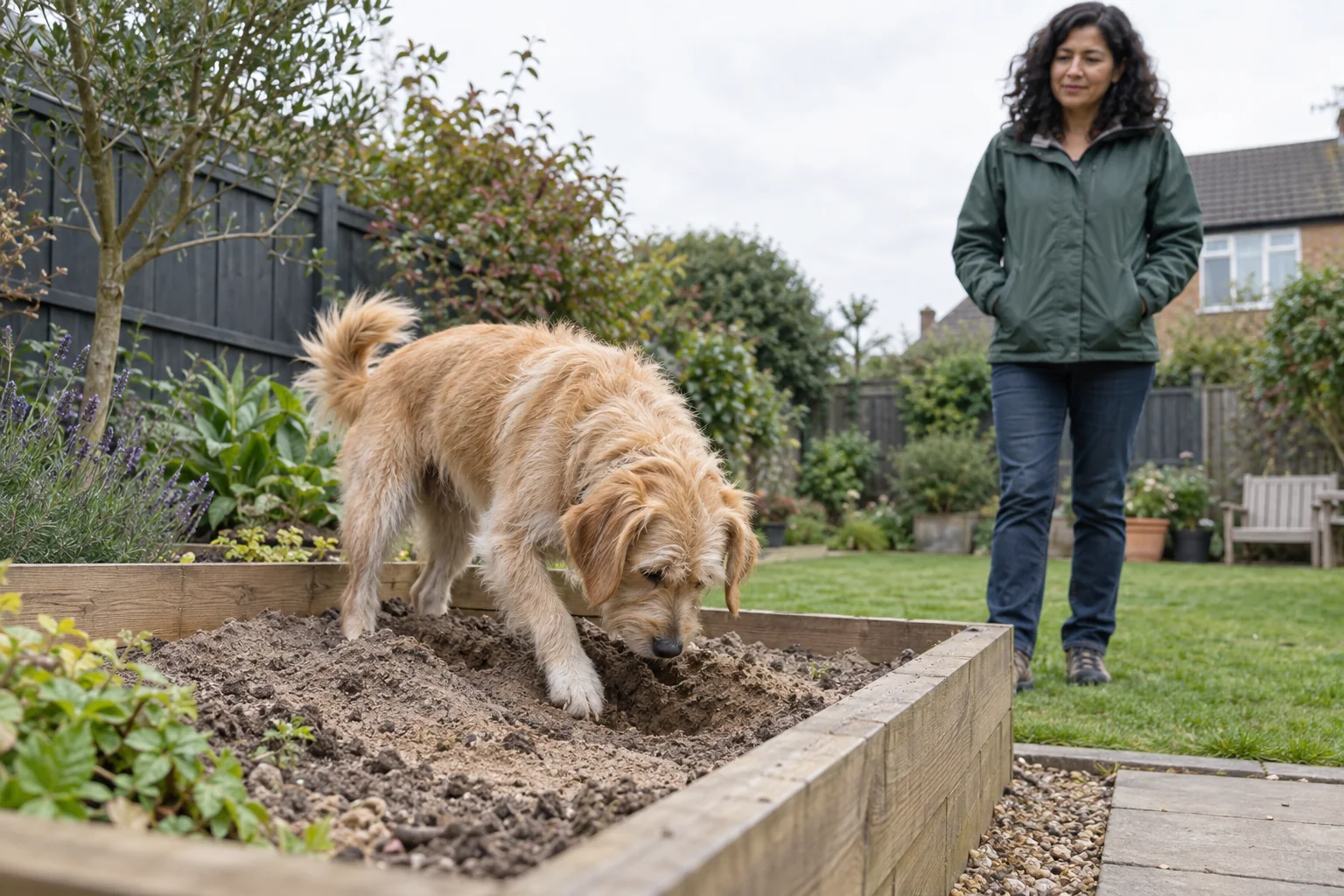
If your dog enjoys digging and it is safe to offer that outlet, make one clearly bounded area where digging is welcome. It could be a sturdy, stable box or a defined patch of earth. Choose a spot away from fences, toxic plants, garden chemicals, vegetable beds, wildlife areas and places where buried utilities or sharp objects may be present. Keep the area large enough for your dog to turn and dig without catching themselves on an edge.
Use a dog-safe, non-toxic, diggable material that you can check and maintain. Dogs Trust describes using earth or dog-friendly sand in a sturdy container. Inspect any sand, soil or other fill for debris, mould, animal waste, sharp fragments or anything your dog might swallow. Avoid materials with additives or scents you cannot verify as safe. If your dog eats soil or other non-food materials, do not encourage digging in loose fill until you have spoken with your vet.
Start when the area is quiet. Let your dog see you place a familiar toy or a few safe treats just below the surface, then give them room to investigate. Praise and reward voluntary digging in that area. Keep the first finds easy and visible enough that the dog can succeed without frantic scratching or swallowing the material. For dogs who guard food or toys, skip buried food and get professional advice about safe alternatives.
If your dog begins digging in a protected bed, calmly redirect them towards the allowed spot and make that spot interesting. Reward choosing it. Do not expect a single demonstration to teach a lasting boundary. The goal is to make the permitted location clear and rewarding through repeated, low-pressure opportunities, while the unwanted areas remain unavailable when you cannot supervise.
A dig area is a useful option, not a promise that every dog will transfer their digging there. Some dogs may prefer the exact scent, texture, temperature or location they first chose. If the dog ignores the pit, review the location, material and safety, and consider whether the original motivation is something else. Continue protecting the garden rather than forcing the dog into an alternative they do not want.
Keep enrichment in its proper role
Enrichment can add enjoyable activity to a dog’s day, but it is not a universal treatment for garden digging. A sniffing game, suitable toy, shared play, training, or another activity may help if boredom or lack of opportunity is part of the picture. It will not necessarily change scent hunting, heat-seeking, escape attempts, discomfort or distress. Nor does a busy activity compensate for unsafe garden access or long periods of isolation.
Think of enrichment as one part of a broader arrangement: a safe environment, appropriate company, movement and rest, and a chance to express normal behaviour. Choose something your dog actually enjoys and can use safely. If the activity makes them more frantic, guarding, or likely to swallow objects, stop using it and choose a safer option. The guide to rainy-day dog enrichment is about selecting indoor activities for a disrupted day, not a guaranteed digging fix.
Keep the garden visit purposeful and social where possible. You might walk with your dog, scatter a small part of their usual food in a safe area for sniffing, or reward a simple check-in. But do not turn every outdoor moment into a task. Dogs also benefit from resting and exploring at their own pace in a safe space. Some dogs will still choose to dig, and the answer may be an appropriate dig zone plus sensible barriers, not more stimulation.
Notice when digging could signal distress or an escape risk
Digging near a fence deserves prompt attention because even a dog who is simply following a smell can create an exit route. Keep the dog away from that boundary until it is secure. Do not test whether they will stay by allowing more unsupervised access. If they have escaped before, or repeatedly try to get out, get help to improve containment and consider professional support for the behaviour behind it.
Pay attention to whether digging happens mainly when your dog is alone. Scratching, pacing, vocalising, trying to escape, or being unable to settle when separated may indicate distress, but no single sign proves a diagnosis. Do not leave the dog alone to film or test the behaviour. Use ordinary observations and, if safe, a camera only to observe naturally occurring periods when you are already away for a necessary reason. Discuss persistent distress with your vet and a qualified behaviour professional.
An abrupt change in digging, especially alongside changes in movement, sleep, appetite, toileting, handling tolerance or general behaviour, merits a veterinary check. Pain or illness can affect behaviour, and you should not try to train through suspected discomfort. PDSA advises contacting your vet when your dog’s behaviour changes suddenly. Seek veterinary advice promptly for injury, possible ingestion of unsafe garden material, or signs your dog is unwell.
Persistent or intense digging that does not improve when you make the garden safer and meet reasonable needs also warrants help. Contact your vet first when health could be involved. For ongoing distress, escape behaviour, or behaviour that feels unsafe, ask the vet to refer you to a suitably qualified reward-based behaviour professional. If aggression is part of the picture, do not approach, corner or physically interrupt your dog around the digging site; create distance and seek professional guidance.
Review the setup and adjust one thing at a time
After you make a change, note what happens across ordinary garden visits. Did your dog still head for the same patch? Did they choose the dig area? Were they calmer after resting indoors? Did the behaviour appear only when the garden was empty or the weather was warm? These observations help you decide what to keep, but they do not prove a medical or behavioural diagnosis.
Change one part at a time where practical. If you move the dig pit, change its fill, add a new game and alter the garden schedule all at once, it becomes harder to tell which change mattered. Keep essential safety measures in place regardless. You are not running an experiment on your dog; you are using ordinary observations to make their environment safer and more comfortable.
If the dog returns to an unsafe spot, go back to stronger access control. That is information that the current arrangement is not enough, not evidence that your dog is being stubborn. Revisit the likely purpose, check that the permitted area remains appealing, and consider whether you need help. The management and training guide explains why preventing rehearsal can be useful while you make a longer-term plan.
What to change this week
For your next supervised garden visit, choose one safe adjustment based on what you already know. If your dog is digging by a fence, keep them away from it and check the boundary. If they dig during hot weather, offer a cool indoor or sheltered resting place. If they are repeatedly choosing a patch you can safely accommodate, protect other beds and try a clearly marked, safe dig area. If the cause is unclear, start a brief observation note and manage access in the meantime.
Keep your response reward-based: make the safe choice possible, reward your dog for coming with you or using the permitted spot, and avoid frightening or painful deterrents. Check plants, products and tools, and contact your vet if the behaviour changes suddenly, your dog is hurt, or you suspect they have swallowed something unsafe. If digging remains intense, distressing or linked to escaping, bring in qualified help rather than asking a garden pit to solve a problem it was never designed to address.