
Trying to get a handle on more than one part of training? You might be starting with puppy foundations and already thinking ahead to recall, everyday manners or a behaviour question, or simply want a library you can return to as your dog grows. Top Dog Academy brings puppy foundations, everyday skills, common behaviour material and professional resources together for self-paced learning. The membership includes online courses, recorded seminars, podcasts, worksheets, a private Facebook group and periodic live Q&A. That breadth makes it worth considering if you expect to study several subjects over time.
Start with the training question you have today. Use the free course collection to see whether the teaching style suits you, compare a one-time course if you want longer access to one subject, or explore the membership if several courses appeal. That gives you a simple way to match the access option to what you want to learn.
Explore the current Top Dog Academy offer
Ad · Paid link

Top Dog Academy at a glance: who it suits and why
Top Dog Academy is Dunbar Academy’s subscription library. Members can access its online course catalogue while their subscription is active. Topics include puppy basics, everyday skills, common behaviour concerns, reactivity, recorded workshops and material for people who work with dogs. That breadth is the membership’s main appeal: owners can explore more than one subject through one account, then choose where to focus. A single course is another option for anyone with one clear learning goal.
The course pages give concrete examples of the library’s size and scope. The Essential Puppy Training Course is divided into five developmental stages. The Behavior Problems Compendium page lists 212 lessons and 12.5 hours of video. Separate pages describe dog-dog reactivity and professional learning. The buyer chooses a route through those subjects rather than following one fixed programme from start to finish.
The library is designed for self-directed learning rather than one fixed sequence. Dunbar does not publish a stable current course count on its main membership page, so totals in older reviews may be out of date. Most subscription material streams while the membership remains active; selected ebooks and audio files can be downloaded. The member group and Q&A add ways to ask questions, while personal assessment remains a separate kind of support.
On 13 October 2026, the membership page listed $20 per month or $150 per year. The annual price is $90 less than twelve monthly payments at the displayed rate. Separate courses are also sold, sometimes with lifetime access. Compare the total cost with how long you want to keep each course, and check the checkout page for the current billing and refund terms.
My verdict: Top Dog Academy is a strong choice for owners who want one self-paced library spanning several training subjects. The course catalogue and member Q&A give you room to explore, while the free course collection lets you sample the teaching before paying. If you expect to use more than one course, compare the annual membership with standalone prices. If one subject is your priority, check its individual option and access terms.
Browse Top Dog Academy and its free course collection
Ad · Paid link
What are Dunbar Academy and Top Dog Academy?

Dunbar Academy is the provider’s online training platform. Top Dog Academy is its subscription product. The names are easy to blur together, especially because individual courses, free courses, professional resources, and the paid membership sit on the same website. If you are comparing a “Dunbar Academy course” with “Top Dog Academy,” first identify whether the page is selling a single course, a free enrolment, a bundle, or an ongoing membership.
The subscription gives members access to the online course library for one recurring price. It includes the provider’s online courses, video lessons, podcasts, ebooks, worksheets, recorded seminars and workshops, live webinars, Q&A sessions and a private Facebook group. Individual courses are also available to buy separately. Dunbar Academy describes those one-time purchases as lifetime access to the selected course, while Top Dog Academy provides access to the wider library while the subscription is active.
That difference matters more than the amount of content advertised. Someone looking for a single puppy course may prefer permanent access to that course, even if the upfront cost is higher. Someone who wants puppy guidance, help with a separate behaviour issue, and additional seminars may get more use from a period of membership. A professional who wants the whole library may value the breadth, although professional continuing-education credit and a recognised qualification are different things. A course or completion record should not be treated as a licence to practise or a certification unless the relevant organisation explicitly says so.
The public course catalogue is not only for pet owners. It includes courses and resources for dog professionals, shelters, breeders, veterinary staff and pet businesses, alongside recorded seminars that go deeper than a short beginner lesson. That variety gives curious owners room to keep learning as their interests change. If you are new to training, begin with the topic closest to your current goal and let the rest of the library be there when you need it.
Ian, Kelly and Jamie Dunbar run the Academy. Its About page describes Ian as a veterinarian, animal behaviourist and dog trainer, with a long record of teaching and publications. That background explains why the catalogue includes both owner courses and professional seminars. It does not establish that every lesson suits every dog or guarantees a particular result.
Course titles and descriptions make it easy to browse by subject and decide where to start. The membership provides educational material and exercises; personal assessment is a different service. The course-specific safety notes help readers choose the right kind of support for their situation.
Our guide to choosing between online and in-person dog training compares self-paced lessons, live classes, remote coaching and in-person support. Read it before paying for any online programme, including this one.
What does Top Dog Academy include?

The main sales page presents Top Dog Academy as an all-access membership. It advertises hundreds of hours of training video, about thirteen hours of podcasts, dozens of recorded seminars and workshops, handouts, worksheets, periodic live webinars and Q&A, and an exclusive member Facebook group. These are the provider’s descriptions of the catalogue, not an independent measurement of lesson quality or the number of hours a typical owner will actually use.
The course library is divided by topic and format rather than being one continuous class. That can work well for a learner with a clear question. If your immediate concern is puppy foundations, you can look for the puppy course. If you want to understand a specific behaviour, you can choose the compendium section or a focused workshop. If you are interested in training theory, the catalogue includes longer seminars. If you work with dogs, there are professional resources alongside owner-focused lessons.
The public catalogue includes, among other material, the Essential Puppy Training Course, the Behavior Problems Compendium, a general dog-training course, a Dog-Dog Reactivity Workshop, a course on treatment and prevention of aggression, Reliability and Games, and SIRIUS Dog Trainer Academy. It also lists resources such as Dog Training with Children, canine social and sexual behaviour, professional continuing-education material, interviews, Q&A, and older seminar recordings. The titles and availability can change, so this list is an orientation rather than a guarantee that every named item will always be included in the same form.
The library’s strongest structural feature is variety. If the current membership includes several topics you want to study, you can explore them through one subscription rather than buying each separately. A quick catalogue check helps turn that breadth into a useful learning path: choose one or two priorities, then follow the course outline that matches them. As your dog’s needs change, the wider library gives you more subjects to explore.
The membership includes a private Facebook group and periodic live Q&A. Members can ask questions, and the Academy often responds with video answers. Alongside the recorded lessons, that gives you a place to raise general questions as you work through the material. It is not the same as one-to-one assessment of your dog.
The provider’s help page says most subscription material streams on the website while membership is active, with some ebooks and audio files available to download. That format gives members access to a broad online library; a one-time course purchase is available for selected material when longer access to one subject is the priority.
Courses differ in audience and format, from puppy skills and behaviour topics to professional learning and business resources. The catalogue includes short lessons as well as recorded seminars, so learners can choose between focused material and longer explanations. Check the outline for the exact course you want, especially if you are looking for a prescribed routine or personal video feedback.
Before subscribing, scan the catalogue with one training question in mind. Find the relevant course and check whether it is included in the membership, sold separately or available for free. This quick check helps you choose the access option that matches your goal and makes it easier to get started with a lesson you can use.
What do the main Dunbar Academy courses cover?

The Essential Puppy Training Course is one of the clearest examples of a structured path. Its public description divides the material into five developmental stages and advertises more than a hundred short demonstration videos, plus worksheets, checklists, and quizzes. The course is designed to help owners prepare for a puppy and build habits over time. Its outline includes areas such as socialisation, bite inhibition, house training, confinement, handling, and basic manners. That staged structure is more specific than a general promise to “train your puppy,” because it gives an owner a way to think about what to work on as the puppy grows.
The staged structure gives new owners a helpful way to prioritise. Safe social experiences, a predictable toilet routine, calm handling and household management can come before polished obedience. The provider’s goal is a friendly, confident, well-behaved dog; each puppy will progress at its own pace, so owners should observe their puppy and adapt the exercises to its health, temperament and environment.
The Behavior Problems Compendium is a reference for common household and training concerns. Its public page describes an introductory crash course followed by topic-specific sections. It currently lists 212 lessons and 12.5 hours of video, including house soiling, barking, reactivity, jumping up, recall, chewing and fear. Those figures describe course size, not the time an individual dog will need. The material is organised as a menu of topics rather than a plan written for one household.
The compendium excludes dangerous aggression and directs readers with serious concerns toward professional help. If a dog has injured someone, has a bite history, or cannot be safely separated, seek an individual assessment. Our dog behaviour guidance explains the difference between general education and case-specific support.
The Dog-Dog Reactivity Workshop is a focused resource with material about the Growl Class approach. Its public page is for non-dangerous cases and directs serious bite histories toward individual, in-person help. The course is intended for dog-dog reactivity that falls within that boundary; it does not offer a plan for every dog or household.
The general dog-training and Reliability and Games material cover skills and training concepts that can apply beyond puppyhood. The catalogue describes games and rewards as ways to build motivation and reliability. The practical question for a buyer is whether the lessons show enough detail for the learner to practise accurately. A course title can sound like the answer to a problem without showing how much demonstration, feedback, or troubleshooting is actually included. The current public page lists the workshop as part of the library, while a separate purchase may be offered at a one-time price.
Beyond Treat Training focuses on motivation and training that does not rely on visible food rewards. Its page lists eight available chapters, with more planned. Check the current release status if a later module is important to you. The sales copy argues that dogs may become dependent on food rewards; that is Dunbar Academy’s rationale for the course, not evidence that every reward-based approach creates this problem.
SIRIUS Dog Trainer Academy is aimed at people interested in creating, managing or promoting a dog-training business. The provider describes it as a four-day course. It offers business and training context; a recognised qualification or supervised apprenticeship is a separate matter. Anyone seeking professional credit should check the requirements of the relevant organisation.
The catalogue includes recorded seminars, interviews, podcasts and older video material. Learners who enjoy longer explanations may value the archive. Someone who wants one short action to practise that evening may prefer a course with brief lessons. Check the description for the topic you care about, because the library does not use one lesson format throughout.
The free collection offers a way to sample the teaching before paying. It includes a puppy course, “Six Simple Steps to Solve Your Dog’s Behavior Problems,” guides and downloads. Dunbar Academy says its free courses are not accredited and do not include completion certificates. They are sample resources, not the full membership.
How are the lessons structured?
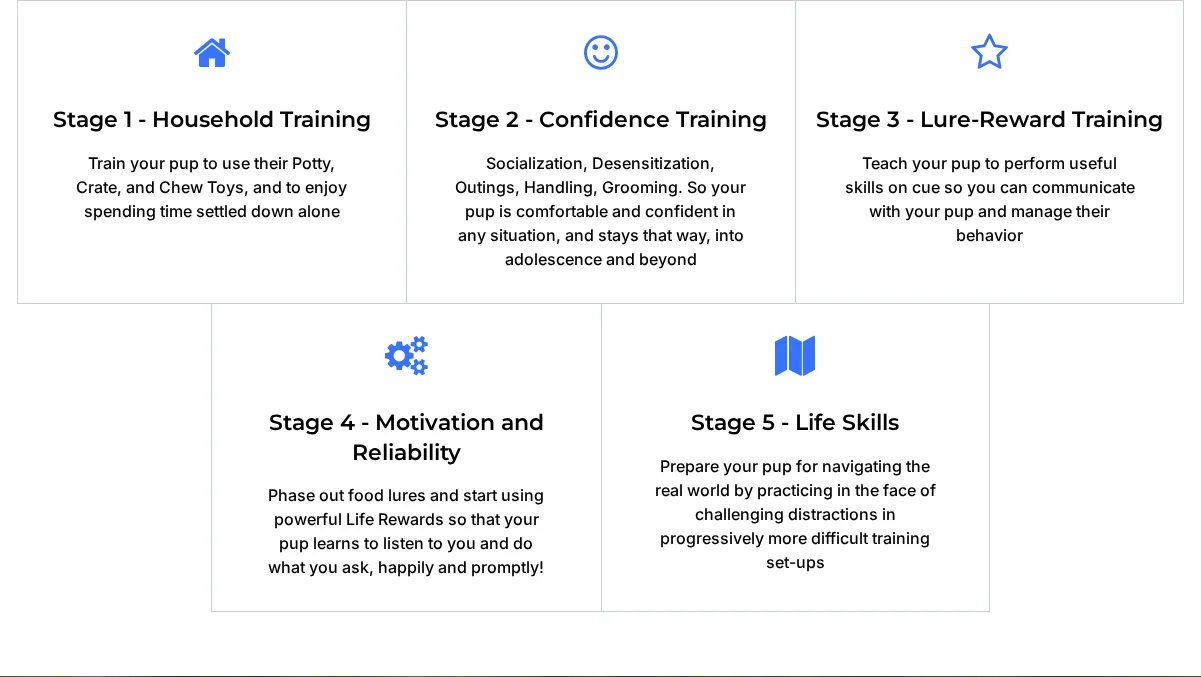
The published material suggests that the learning experience varies by course. The Essential Puppy Training Course is described as staged, with short demonstration videos, worksheets, checklists, and quizzes. The Behavior Problems Compendium is organised by a general introduction and topic-specific sections. Recorded seminars and workshops are longer. This variety is useful when a learner wants both quick reference and more detailed explanation, but it means there is no single “Dunbar Academy lesson format” that can be assumed to apply across the whole catalogue.
A short video can be easier to fit into a busy day than a long seminar. Worksheets and summaries may help an owner remember what to practise. Quizzes can encourage a learner to pause and check understanding rather than letting a video play in the background. The provider’s public pages mention these features, and an external reviewer reports that some of the newer course lessons are short and include text summaries and quizzes. That reviewer’s experience is useful, but it is one person’s report, not a guarantee about every current course.
The lessons are most useful when paired with practice. A learner can watch a demonstration, try the exercise, then return to the relevant lesson as the dog’s skills develop. The library is a resource for owners to consult and revisit, with group Q&A as an additional way to ask questions. If one-to-one feedback is important, confirm which current option provides it before enrolling.
The provider’s help pages describe a student dashboard for accessing purchased or enrolled courses. They also provide instructions for managing subscriptions on desktop and mobile. This is useful operational information: the account is the place to find courses and billing, rather than expecting a physical workbook or an app to arrive. The public material we reviewed does not establish that every course works identically on every device, or that video lessons can be saved for offline viewing under a subscription.
To get the most from a large library, begin with one course that matches your immediate goal. Note the ideas you want to practise, give them time to become part of your routine, then explore another topic when you are ready. That keeps learning practical while leaving the broader catalogue available for future questions. For serious safety concerns, individual professional support should come first.
What training approach does Dunbar Academy teach?

Dunbar Academy’s sales pages describe its approach as reward-based, enjoyable, and grounded in science. They mention food rewards, praise, redirection, life rewards, and games. They also present a three-part test of whether a technique is easy, effective, and enjoyable. These are the provider’s descriptions of its own method. They help a buyer understand the tone of the material, but the sales claims are not independent evidence that every technique will work for every dog or that progress will happen immediately.
The free and paid course descriptions include practical subjects such as socialisation, bite inhibition, house training, and teaching everyday behaviours. Some course pages describe using rewards and management to prevent predictable problems or develop a skill. The “Beyond Treat Training” title and the catalogue’s references to games indicate that the material is not framed only as showing a treat and asking for a behaviour. The details still vary by course, so a buyer should inspect the outline of the specific lesson they are considering.
Dunbar’s public catalogue covers more than obedience cues. It includes behaviour, confidence, social experiences, household routines and safety, which can help a puppy owner think about management as well as commands. Owners dealing with serious fear or aggression still need to follow the course-specific safety guidance.
The sales material describes the methods as easy, effective and enjoyable, and says learners may see measurable progress quickly. That gives a sense of the provider’s teaching philosophy, while each dog’s progress will depend on the learner, practice and situation. The public pages do not provide an independent outcome study or a way to predict a result for one dog, so view testimonials as individual experiences rather than a promise of typical results.
The public material is most useful for understanding what the provider teaches and how the courses are presented. Try exercises at a pace that suits your dog, and seek qualified individual help if a method increases distress or creates a safety concern. A course can offer useful education while a professional provides the closer assessment some cases need.
What support and community do members get?
The membership includes a private Facebook group, periodic live webinars and Q&A sessions. Members can ask questions and hear from the Dunbars, professional trainers and other owners. The Academy often responds with video answers, adding an interactive layer to the self-paced course library.
These sessions are a useful place for general training questions. One-to-one assessment or a review of your dog’s practice videos is separate support, so ask which option includes personal feedback if that is important to you. For complex or safety-sensitive cases, a trainer who can assess your dog directly may be the better next step.
The private group gives owners a chance to learn alongside others and see how different households approach common subjects. That peer perspective can make a self-paced library feel less solitary. The group complements the courses; veterinary care or a qualified behaviour assessment remains important when health or safety is involved.
The billing help pages are more concrete. They explain how to locate the account’s Billing section and cancel an active subscription. They also explain that customers can email support if they have trouble. That is a practical feature, and it is worth using the help page before starting a promotion so you know how to confirm cancellation. Keep the cancellation confirmation or check the account page if you decide not to continue.
If individual support is why you are buying, ask the provider before subscribing whether a trainer will review your dog, how feedback is delivered, and whether it is included. For a dog that could injure someone, is intensely fearful, or cannot be handled safely, start with a local professional who can assess the situation.
Dunbar Academy pricing and subscription terms

The current Top Dog Academy sales page lists a monthly subscription at $20 USD and an annual option at $150 USD. At twelve monthly payments, the listed monthly price totals $240. The annual price is therefore $90 less than twelve separate monthly payments, or 37.5 per cent below that total. The arithmetic is simple, but the commitment is not: a subscription provides access while active, whereas a one-time course purchase may give longer access to that selected item.
The annual price may suit someone who expects to use several parts of the catalogue across a year and is comfortable paying for the year in advance. The monthly option gives more flexibility if you only want to explore the library for a short period. At the listed $20 monthly price, seven monthly payments total $140 and eight total $160; the $150 annual option is lower than eight monthly payments but covers the full year. A short-term buyer should compare the actual billing interval, not just the headline annual saving.
Some single courses are listed at one-time prices, with examples at $100 or $200. The main membership page shows the Essential Puppy Training Course and the Behavior Problems Compendium at $200 each as separate purchases. The puppy course’s own sales page has also displayed a $99 promotion with lifetime access. Those are different public offer pages, so do not assume the lower figure will be available through every route. At $20 per month, ten monthly payments equal $200, but the subscription does not buy permanent access to one course. A $150 annual membership may cost less than a $200 standalone listing, but it still provides library access only while the subscription is active.
Dunbar Academy also describes the Ultimate Dunbar Collection as a one-time option with lifetime access to a defined set of materials; its public page lists it at $197. The comparison says Top Dog Academy adds a broader current library, live events, community access, and new content while the subscription remains active. It also says most membership content is streamed on the website rather than downloaded, while some ebooks and audio files can be saved. The stated lifetime access applies to the materials in that collection, not every current or future course in Top Dog Academy.
The provider’s Terms of Use say subscriptions renew monthly until cancelled. They say cancellation can be completed through Account > Billing or requested by email, with email requests sent at least two business days before renewal. The terms say users should verify cancellation in the account or by confirmation email. The help page also describes how to find the Billing section on desktop and mobile. If you take a trial or discounted promotion, read the exact renewal date and price shown at checkout, and do not rely on an old coupon or a review page’s expired offer.
The terms also state that a full refund is available when a customer contacts the company by email within 30 days of purchase. The Top Dog sales material separately advertises a 30-day satisfaction guarantee. The public text does not clearly explain how the guarantee works with every free-trial or promotional arrangement, or how an annual plan renews. If those details matter to you, confirm them with the provider before entering payment details. Treat a refund promise and a cancellation process as separate protections: cancelling prevents future billing, while a refund request concerns a payment already made.
The free course collection is a low-cost way to sample the teaching before paying. Dunbar says the free courses are not accredited and do not include completion certificates. They do not include every paid feature, so treat them as a preview rather than the full membership.
Prices and offers can change. This review records the prices displayed on Dunbar Academy’s public pages on 13 October 2026, not a promise that those prices will remain in place. Check the final checkout page for the currency, payment interval, applicable offer, card requirement, renewal date, and cancellation route. The posted Terms of Use is marked effective 23 March 2018, so confirm the terms displayed for the current signup rather than relying on an old screenshot, coupon code, or third-party article.
What do other Dunbar Academy reviews say?
The public review sample is small, and the articles we found do not all review the same product. One detailed review on Rescue Dogs 101 was published in 2021 and updated in December 2024. Its author says she joined the monthly membership to test it and discloses that she is a Dunbar Academy affiliate. Her account is useful because it describes actual use, and the disclosure helps readers understand how the site may earn money.
That reviewer praises the library’s breadth and organisation. She found that some newer courses combined short videos with written summaries and quizzes, and says the Behavior Problems Compendium was a useful place to start. Her criticisms are specific: she wanted more current hands-on demonstrations with dogs, noted that some practical footage was old, and said subscription videos could not be downloaded. She also felt that seeing the whole library would take more time than a single month. Those are one reviewer’s observations from the version she accessed, not a current count or a promise about every course.
A Furry Aging review describes the author working with Lola, her nine-year-old terrier mix, over roughly two weeks. She reports improvement when other dogs were at a comfortable distance, while closer encounters remained difficult. That detail is more useful than a score alone because it sets a realistic boundary around a short period of practice. It remains one person’s account, not proof that the course caused the change. The review gives the programme 4.9/5 on its own scale and discloses affiliate links.
Dogster’s 2026 Top Dog Academy review gives the membership 4.6/5. It describes the page as reader-supported and notes that it may earn commission through links. The article includes a section labelled “Our Experience,” but does not set out a testing duration, a member sample, or a comparative method. I would treat its score as the publisher’s assessment, not as a verified average of customer outcomes.
The three reviews offer individual perspectives, not a survey of all members. Their accounts describe a large catalogue and mixed lesson formats, which matches the provider’s public course list. They differ on the experience of working through that material. Rescue Dogs 101 and Furry Aging disclose affiliate relationships; Dogster describes itself as reader-supported. Those commercial ties are relevant when weighing the scores: each is the publisher’s opinion, not an average of verified customer outcomes. Dunbar’s own testimonials are selected by the provider and do not establish typical results.
Where Top Dog Academy is strongest

Top Dog Academy’s breadth is its clearest strength. One provider covers puppy basics, common behaviour topics, practical skills, reactivity, seminars, professional learning, and free resources. That range may suit an owner whose questions change as a dog grows, or someone who genuinely wants to explore more than one topic. It matters less to a buyer who needs one specific answer and is unlikely to use the rest of the library.
The buying options also give readers some control over how much they commit. A free resource lets a learner sample the teaching. A one-time course suits someone who wants a particular subject available for longer. The subscription provides broader access while it is active. These choices are useful when the price and access difference is clear before checkout.
Some courses include learning aids alongside video. Dunbar Academy lists quizzes, worksheets, checklists, handouts, and ebooks in its material. These may help with planning and recall. Their presence varies by course, so check the outline of the exact course you want rather than assuming the entire library uses the same format.
The public course descriptions also include safety limits. The Behavior Problems Compendium places dangerous aggression outside its scope, and the Growl Class directs serious bite cases toward individual support. A buyer can use those limits to decide whether self-study is appropriate before paying. They are more helpful than a general promise that a single membership can address every problem.
The free collection is a practical way to begin without paying for Top Dog Academy. It includes owner resources and professional material, although the provider says its free courses are not accredited and do not include completion certificates. A free lesson will not show every paid feature, but it can reveal whether the teaching style and presentation work for you before you consider a subscription.
A few practical points before joining
The size of the catalogue is a real advantage when you want to explore more than one subject. A quick check of the current course list helps you choose where to begin, and the free collection offers a way to sample the teaching before deciding whether to join.
Membership material is mainly streamed while your subscription is active. Selected ebooks and audio files can be downloaded, and some individual courses are sold with longer access. Choose between them based on whether you want a broad library to explore or permanent access to one particular course.
Courses use different formats, from staged puppy lessons to topic-based reference material and longer seminars. Some older recordings are part of the catalogue. A Rescue Dogs 101 reviewer noted that some practical footage looked dated, while also praising the breadth and organisation of the library. A free course gives you a starting point for seeing whether the teaching style suits you.
The member group and periodic Q&A add opportunities to ask questions. One-to-one assessment is a separate kind of support, so ask the provider about current options if personal feedback is important to you.
The provider describes its methods as easy and effective, and some sales material mentions quick progress. Treat that as an aim rather than a guaranteed result for every dog. Promotions can change and trials may renew automatically, so check the current offer, next charge and cancellation details before joining.
For dangerous aggression, a serious bite history, severe fear or possible pain, contact a veterinarian or qualified behaviour professional who can assess the situation. The online courses are educational resources, and individual support remains available for cases that need it.
Who is likely to get the most from Top Dog Academy?

Top Dog Academy is especially appealing to owners who want a broad, self-paced library they can return to as new questions come up. New dog owners can begin with puppy foundations, while experienced owners can explore everyday skills or common behaviour topics. The free collection is an easy way to sample the teaching style, then the membership opens up more subjects for learners who expect to use several parts of the library.
A puppy owner who wants a staged curriculum can start with the Essential Puppy Training Course. Its public outline is organised into five developmental stages and advertises supporting materials alongside video lessons. Compare the one-time course price with membership: a standalone course offers longer access to one subject, while Top Dog Academy gives broader access to the library for the active subscription period.
Owners working on common household skills or lower-risk behaviour concerns may appreciate the Behavior Problems Compendium as a reference, with lessons organised around specific topics. For severe or escalating behaviour, possible pain or injury risk, pair general education with individual professional help that can assess the situation.
A professional or aspiring trainer may want to browse the CEU material, seminars, and SIRIUS Dog Trainer Academy. Before purchasing, confirm whether the exact course is accepted by the professional body you care about and whether the credit is available under the access route you plan to use. Do not assume that a course included in a membership automatically grants a credential, licence, or continuing-education credit in every jurisdiction.
If you already know you want one specific course, prefer permanent access, or need individual feedback, compare the separate course or professional-support options as well. Top Dog Academy is a subscription library, so it works best for learners who welcome ongoing access and are comfortable with online streaming and recurring billing.
Frequently asked questions
Is Dunbar Academy the same as Top Dog Academy?
No. Dunbar Academy is the online provider and course platform. Top Dog Academy is its subscription option for accessing the broader course library while the subscription is active. The site also sells individual courses and offers free resources, so check which product a specific page describes before comparing prices.
How much does Top Dog Academy cost?
The public membership page lists $20 USD per month and an annual option at $150 USD. Offers and prices can change, so confirm the amount, currency, billing interval, and renewal terms at checkout. Dunbar Academy has also advertised a one-month free trial that then renews at the monthly rate. Trial availability can depend on the offer link, so check the actual checkout page rather than assuming every route includes one.
Does Dunbar Academy offer a free trial?
Its public offer page advertises a month of Top Dog Academy at no charge followed by monthly billing at the listed rate. The offer may be tied to a particular page or link and renews automatically unless cancelled. Check the exact trial end date, next charge, and cancellation instructions at checkout. The free course collection is separate and can be used to sample selected material without joining the paid membership.
Does the subscription include all courses?
Dunbar Academy describes Top Dog Academy as access to all of its online courses. The exact catalogue can change, and the public main page does not provide a fixed course count. Check the current course list and the specific membership terms before buying if a particular workshop or resource is the reason you are subscribing.
Can I download the videos?
The provider says most subscription content is available only through its website while you remain subscribed. Some ebooks and audio files can be downloaded. Separate one-time course purchases may have different access and download options, so verify the selected course’s current terms.
Is there a free Dunbar Academy course?
Yes. The provider lists a free course collection with puppy resources, Six Simple Steps to Solve Your Dog’s Behavior Problems, guides and downloads. It says the free courses are not accredited and do not include completion certificates. They provide a limited sample rather than access to the full paid membership.
Does Top Dog Academy provide personal coaching?
The membership advertises a Facebook group and periodic live Q&A sessions, which can help members raise general questions as they work through the material. The public descriptions do not promise a one-to-one trainer for every dog. Ask the provider about individual feedback options if personal assessment is central to your plan.
Can I cancel Top Dog Academy?
The provider’s Terms of Use say monthly subscriptions renew until cancelled. The account’s Billing page can be used to cancel, or a formal cancellation request can be emailed at least two business days before renewal. The terms say to verify that cancellation has taken effect in the account or by email confirmation.
Is there a refund guarantee?
The provider’s terms say customers who contact the company by email within 30 days of purchase can receive a full refund, and its sales pages advertise a 30-day satisfaction guarantee. The terms do not clearly explain every interaction between a promotional free month, later renewal, and refund eligibility, so confirm the details for the offer on the checkout page.
Is Dunbar Academy suitable for an aggressive dog?
The Behavior Problems Compendium excludes dangerous aggression, and the focused reactivity page directs serious bite histories toward individual professional help. If you cannot keep people and animals safely separated, seek qualified help rather than beginning with an online course.
Final verdict: should you try Dunbar Academy?

Dunbar Academy is worth a close look if you want more than one training subject in one place. Top Dog Academy brings together puppy lessons, everyday skills, behaviour resources, reactivity material and professional seminars in a self-paced library. The free course collection lets you sample the teaching before joining, and the monthly option gives you a flexible way to explore the wider catalogue.
The membership is most compelling when you plan to use several courses or expect your questions to change over time. At the prices checked for this review, two separately listed $200 courses would cost more than the $150 annual membership, though the access terms differ: standalone purchases may provide longer access to those courses, while membership covers the library during the active subscription. Compare the current options against the subjects you actually want to study.
Ready to explore the library? Browse Dunbar Academy’s current courses and free resources, then choose the membership or individual course that fits what you want to learn. Check the current price and renewal terms at checkout. For safety-sensitive cases, pair online learning with a professional who can assess your dog directly.
Explore Top Dog Academy courses and free resources
Ad · Paid link
Method note: This review draws on Dunbar Academy’s published course, help and terms pages, plus publicly available reviews. DogTrainingScout has not enrolled in the paid membership.
Affiliate disclosure: This review contains affiliate links. DogTrainingScout earns a commission on eligible purchases made through these links. Dunbar Academy sets the prices and terms.