
To help a rescue dog settle in, prepare a secure, quiet place before they arrive, find out what care they already know, and make the first week predictable without filling it with activities. Offer opportunities to rest, go to the toilet and spend time near you, but let the dog choose whether to approach. Keep visitors and introductions low on the agenda.
If the dog seems unwell, contact a vet rather than assuming they need time to settle. If there is a bite history, severe fear, guarding or another safety concern, arrange help with the rescue and a qualified, reward-based behaviour professional before attempting interactions. This guide covers ordinary settling-in care, not treatment for those problems.
Watch the dog in front of you rather than working towards a deadline. What the rescue or foster carer knows can guide your preparations. Where information is missing, use secure boundaries and avoid testing the dog to find out what they will tolerate.
This guide focuses on newly adopted adult dogs. If you’re bringing home a puppy, use the puppy first-week routine guide for puppy-specific care alongside the arrival and household-safety advice here.
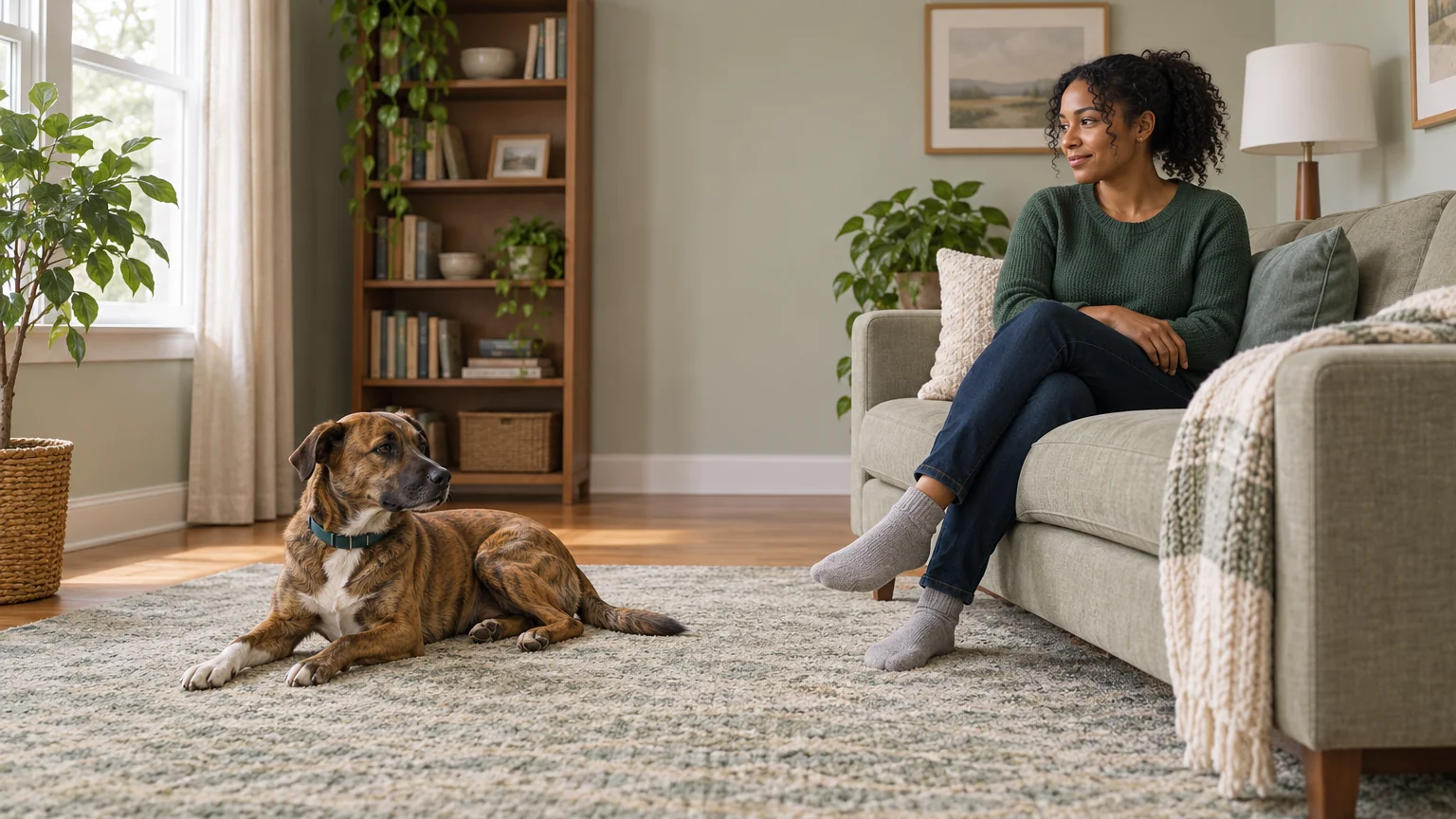
What should you ask before bringing your dog home?
Speak to the rescue organisation or foster carer before collection, ideally while there’s still time to prepare your home. Ask about this individual dog rather than relying on a breed description or a general account of rescue dogs.
Useful questions include:
- What food do they eat, how much, and at what times?
- What does an ordinary day look like, including toilet opportunities and rest?
- Where do they usually sleep or choose to spend quiet time?
- Are there current veterinary needs, medicines or follow-up appointments?
- How do they respond to putting on a lead, being touched and other everyday handling?
- What is known about living with children, dogs or other animals?
- Are there situations the rescue already manages carefully?
- Who should you contact if something is difficult after adoption?
Ask for practical detail. “They’re fine with dogs” leaves questions unanswered. Has the dog lived with another dog, or only seen dogs outside? Was that recent? Were there arrangements that helped everyone remain comfortable?
Write down what is known and mark what is unknown. A missing history isn’t a reason to assume something bad happened, but it isn’t proof that an interaction will be safe either. If accounts differ, keep both descriptions and ask the rescue to clarify the circumstances rather than choosing the more reassuring answer.
Dogs Trust’s guidance on helping a rescue dog settle recommends asking about the dog’s routine, preferences, food and veterinary needs. Use those answers as your starting point. If an answer affects safe handling or essential care and remains unclear, ask the rescue how to manage that need before collection.
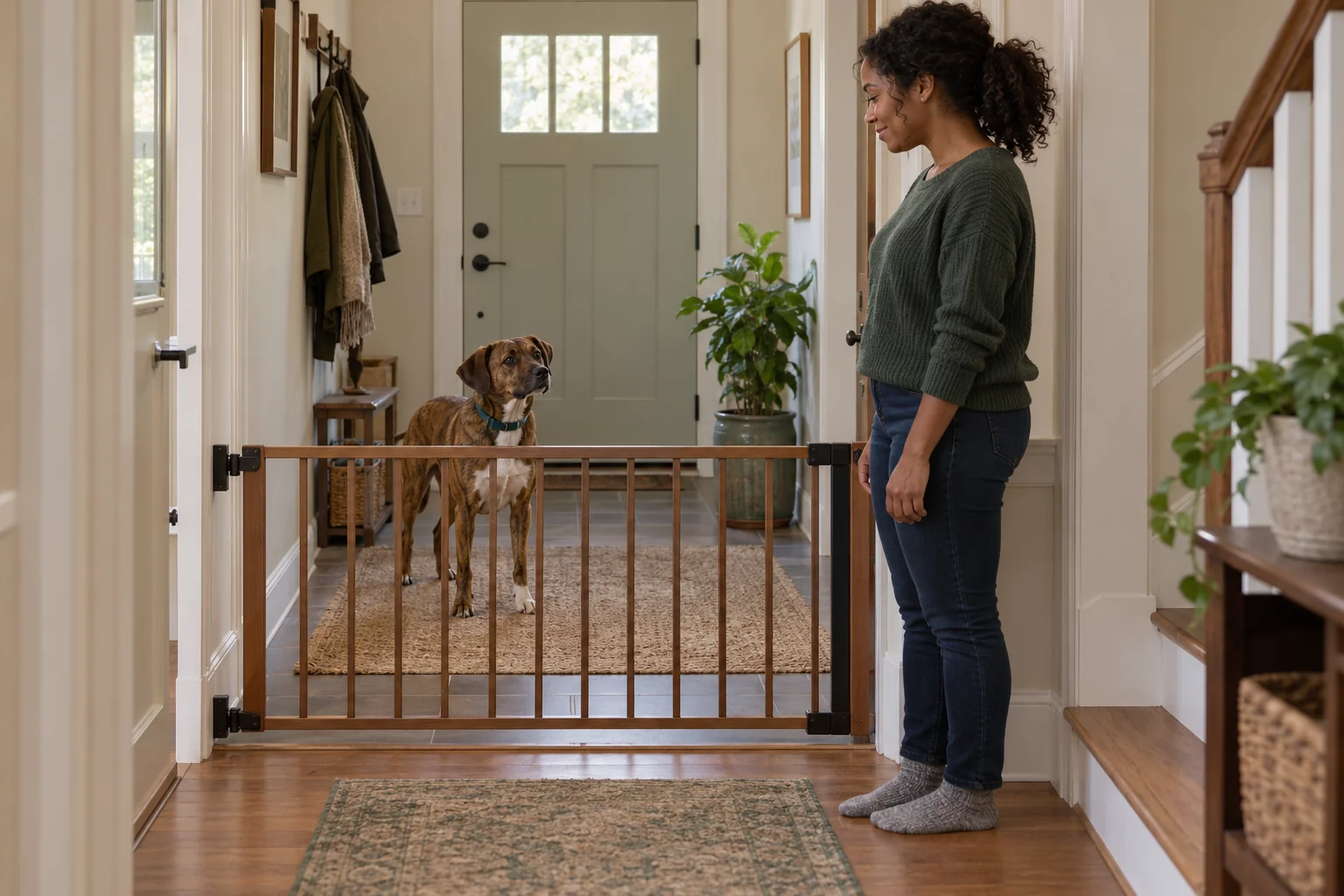
How can you make the journey and entry secure?
Arrange the transfer with the rescue before collection. Ask what safe transport and handling arrangements suit this dog, and who will be responsible for them at each handover. If the dog’s response to handling is uncertain, resolve that with the rescue rather than improvising beside a vehicle.
Prepare your entrance before you leave home. Close exterior doors and gates, check the immediate area for escape routes, and put resident animals somewhere separate. Tell everyone in the household when you expect to return so nobody opens the door into the arrival unexpectedly.
Think through the route from the vehicle to the dog’s prepared space, including where you can safely offer a toilet opportunity. Remove bags, shoes and other obstacles. Avoid having several people waiting in a narrow hallway. The person managing the dog needs room to move without also directing a welcoming committee.
If you have a garden or yard, check its boundaries and access points before treating it as available to the dog. Until you’re confident about security, don’t assume an unfamiliar outdoor area is safe simply because a previous dog stayed there. If it isn’t suitable, agree another arrangement with the rescue before bringing the dog home.
If you cannot manage the transfer or entry safely, ask the rescue for help before proceeding. A supported handover is preferable to trying to fix an uncertain situation at an open doorway.
Keep this arrival route available and uncluttered afterwards too. Deliveries, visitors and ordinary trips through the door still need managing while you learn how your dog responds.
What should your dog’s quiet home base look like?
Choose a quiet area where the dog can rest without being passed, approached or touched repeatedly. It should be practical for everyday care, with water available and somewhere comfortable to lie down. Keep hazards and belongings you don’t want the dog accessing out of reach.
A useful home base is more than a bed in a busy room. Look at what happens around it. Is it beside the front door? Do children cross it on their way to play? Will someone need to step over the dog to reach a cupboard? If so, choose a less disruptive position.
You don’t need to assume that a crate is the answer. Ask whether the dog has used one and how they responded, but don’t use a crate as a cure for fear or other behaviour difficulties. If safe containment is necessary and you’re unsure what arrangement is suitable, discuss it with the rescue.
Plan how to keep resident animals out of this space without making the dog’s resting area the centre of household traffic. Check that any boundary you use is secure for the animals involved. Separation only works if each animal can still receive ordinary care without someone having to open a route between them.
The ASPCA’s adoption tips recommend preparing a quiet area, managing access and allowing time and space without forcing interaction. Arrange the space so the dog can rest without being approached, while you can still provide the care they need.
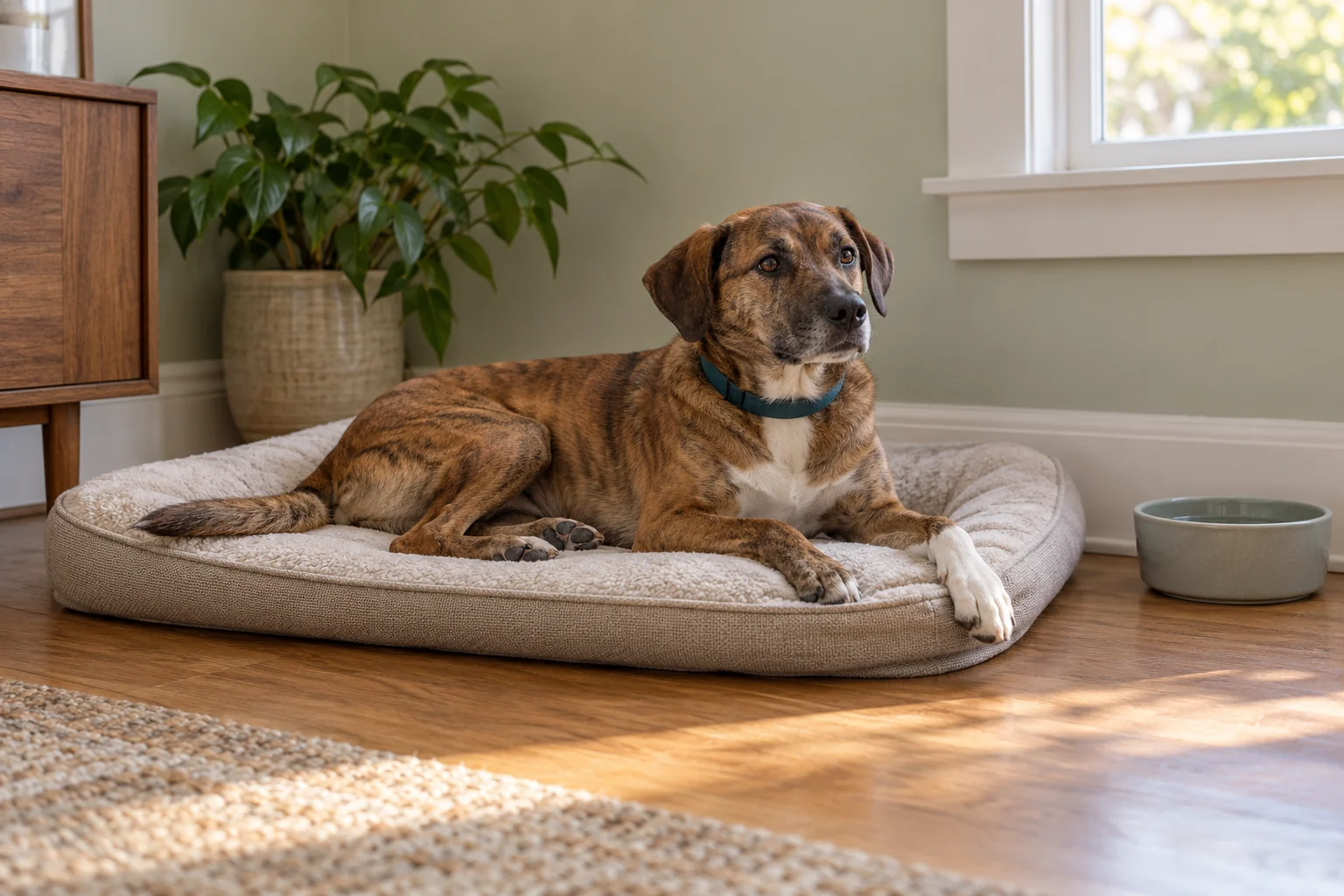
What should happen on arrival day?
Keep arrival day focused on ordinary care. There’s no need for a tour of every room, a visit from friends or a demonstration of everything your dog can do.
Follow the secure entry and toilet arrangements agreed with the rescue. Give the dog access to the prepared area and allow them to look around within the space you’ve made safe. Show them where water is available without steering them into contact, and provide food and any prescribed care according to the information you were given.
Stay available without following the dog from place to place. You might sit nearby and let them investigate, or continue a quiet household task while leaving their retreat undisturbed. If they choose distance, you don’t need to close it.
Leave training tests, photographs requiring handling and unnecessary grooming for another time. Essential care may still need attention, but if it involves handling the dog is not comfortable with, contact the rescue or vet for guidance rather than forcing it.
Before bedtime, confirm who is responsible for the dog and how doors, household movement and toilet access will be managed overnight. Use the information about their usual sleeping arrangements where it is practical and safe. If the arrangement isn’t working, ask the rescue for help rather than repeatedly moving or handling the dog to make them stay somewhere.
If the dog appears unwell, injured or unable to receive essential care, don’t put the concern down to a difficult first day. Contact a vet. Settling-in advice is not a substitute for assessing a possible health problem.
How do you offer company without forcing contact?
Let your dog choose whether to approach, stay nearby or move away. Being welcoming doesn’t require touching them. Quiet company can mean sharing a room while leaving enough space for the dog to rest elsewhere.
If the dog approaches, don’t assume that every approach is a request for petting. They may be investigating you or simply passing. Keep your movements unhurried and leave their route away open.
When you do offer contact, avoid leaning over the dog, gathering them into an embrace or holding them in place. Pause rather than continuing automatically. If they move away, let the interaction end. Don’t follow them to their bed to continue it, or call them back because you want another try.
Household members should agree on the same approach. It’s confusing for one person to protect the dog’s space while another repeatedly calls them over or reaches into their retreat. Explain that choosing to rest apart is not an invitation to bring the dog back into the group.
Look at behaviour in its setting rather than deciding what one gesture means. What was happening just before the dog moved away? Who was close? Could they leave easily? A quiet dog is not automatically relaxed. The guide to reading dog body language in context can help you consider the whole situation without treating a single sign as a diagnosis.
If ordinary proximity or touch raises a safety concern, stop attempting contact and seek qualified, reward-based behaviour support, with veterinary advice where health or pain may be involved. Allowing the dog to choose contact does not replace individual help for severe fear or aggression.
How should you manage children, visitors and resident pets?
Keep early social demands low. You can tell friends that visits will wait while you learn what your dog needs. There’s no requirement to introduce the dog to everyone who will eventually be part of their life.
Explain household rules to children before arrival. The dog’s retreat is not a play area. Children should not follow the dog there, disturb them while resting or try to take things from them. Adults remain responsible for managing access; don’t rely on a child remembering every rule.
If you cannot supervise an interaction closely, use safe separation. Supervision is not permission to attempt contact when safety is uncertain. In that situation, keep children and the dog apart while you obtain individual advice.
For resident animals, make arrangements before the new dog arrives so they do not have to meet at the doorway or compete for access to a narrow space. Check that each animal can receive food, rest and ordinary care without an encounter being necessary.
Do not stage introductions when safety is uncertain. A history of living with an animal does not answer every question about a new household. Ask the rescue and a qualified, reward-based behaviour professional for an individual plan where needed. If you cannot keep everyone safely apart, resolve that with the rescue before proceeding.
This is a practical example of environmental management rather than dog training: you change access and household arrangements instead of asking the new dog to cope with an avoidable encounter. This article does not provide a pet-introduction protocol.
What kind of routine helps during the first week?
Use the dog’s known routine as a starting point where it is practical and safe. Keep meals, toilet opportunities, rest and necessary outings reasonably predictable. The aim is to make care understandable, not to maintain an exact clock regardless of what happens.
Write a simple household plan. Note who will feed the dog, who will manage toilet access, when prescribed care is due, and which spaces remain available. Include overnight responsibilities and any periods when nobody will be home. If you don’t know how those periods can be managed safely, ask the rescue before they arise rather than leaving the dog alone as a test.
A short shared note is enough. If household members disagree about an outing, visitor or change in access, keep the existing safe arrangement while you discuss it. Where the disagreement concerns health or safety, take the question to the rescue or appropriate professional instead of trying both approaches on the dog.
Keep the food and feeding instructions supplied by the rescue clear. If you want to change the diet, or the instructions conflict with veterinary advice, ask the relevant professional rather than making the arrival period an experiment. Do not withhold food to encourage interaction or compliance.
Offer regular toilet opportunities without assuming that a previously house-trained dog already understands the layout and access arrangements in your home. Notice what works and adjust practical access as you learn. If accidents occur, don’t punish the dog. Record what happened and consider whether the care arrangements need changing; speak to a vet if there is a health concern.
Keep outings within what you can manage safely and what the rescue has advised for this dog. Avoid adding busy destinations simply to expose them to everything at once. Protect quiet time between care activities rather than filling every gap with something to do.
How much freedom should you offer around the house?
Start with the space you can supervise and manage safely. You don’t have to make the entire home available on the first day, especially if that would give the dog access to exterior doors, resident animals or places where they could be repeatedly disturbed.
Use the surroundings to manage access. Close a door to a room that isn’t ready rather than repeatedly following the dog inside and moving them out. Put belongings away rather than waiting to see whether the dog takes them.
As you learn more, review those arrangements. Is the dog able to reach their quiet area without crossing a busy room? Can you manage toilet access without opening several unsecured doors? Is a larger space useful, or does it introduce problems you haven’t yet solved?
Don’t expand access because a certain number of days has passed. Equally, don’t keep restrictions unchanged without considering whether they still serve a purpose. Make decisions around the dog’s observed behaviour and the household’s ability to keep everyone safe.
Choice works within sensible boundaries. You can offer different resting positions in a secure area without opening every room. You can allow the dog to leave a social interaction without allowing access to an unsafe part of the home.
If a necessary boundary cannot be maintained safely, contact the rescue for help with the arrangement. Don’t turn that difficulty into a confrontation with the dog.
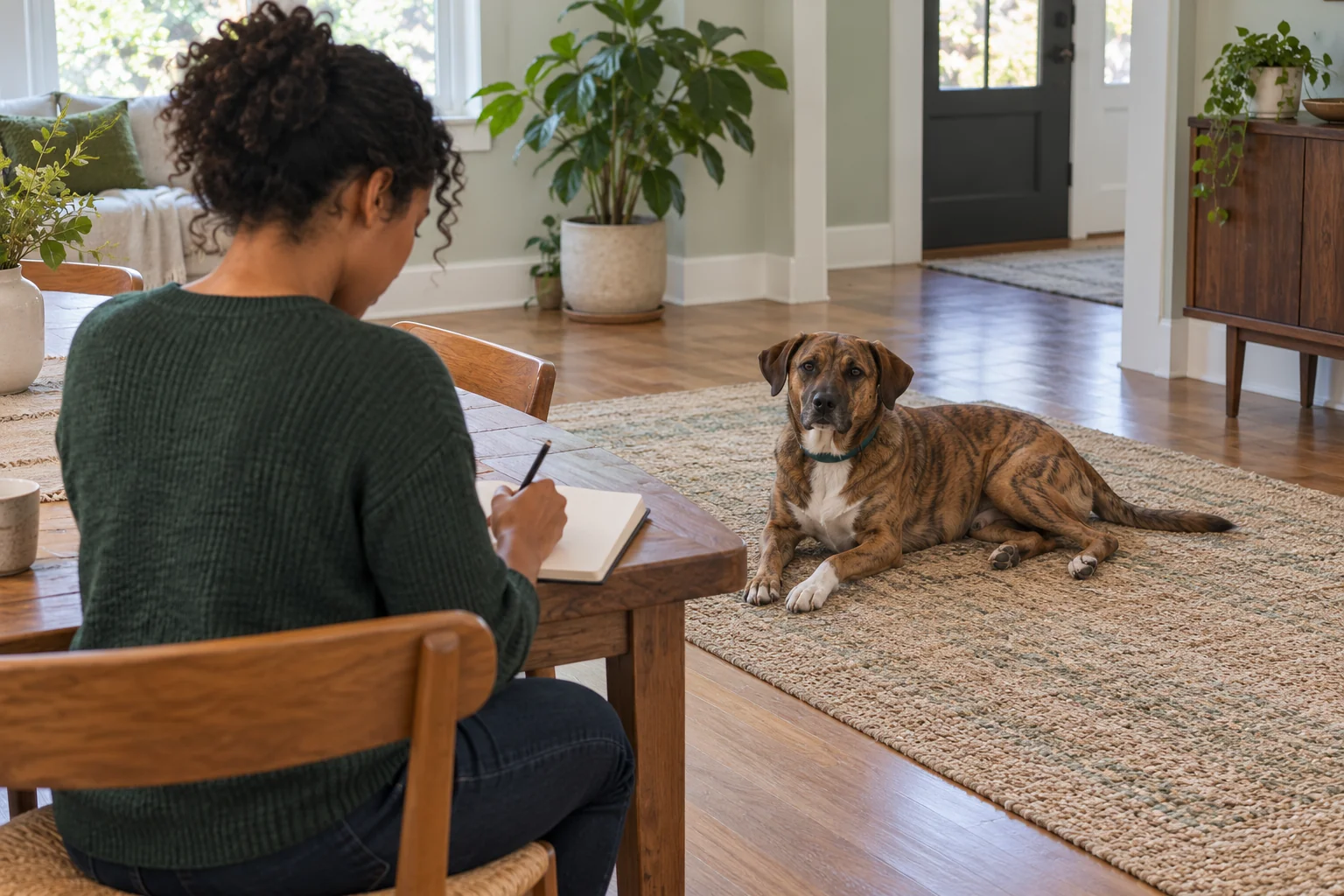
What should you record, and how should it change your plan?
Keep a short record of everyday observations. You don’t need to watch the dog continuously or write an account of every movement. Useful notes describe what happened clearly enough to discuss later.
Record meals, toilet opportunities, rest, necessary outings and any concerns. For a difficult moment, include where it happened, who or what was nearby, what happened beforehand, what the dog did and what you did next. Note what happened afterwards, including whether the dog returned to resting or another ordinary activity. If you didn’t see that part, write “not observed” rather than guessing.
“Wouldn’t settle” is hard to interpret. “Left the bed when visitors entered and stayed behind the chair until they went home” gives you something practical to review. You can postpone further visits and protect the resting area without trying to provoke the same response again.
Separate observation from explanation. Write “moved away when I reached towards the collar”, rather than deciding the dog must have a particular past experience. Their history may remain unknown. If two people describe an event differently, keep their accounts separate and note what each actually saw.
The dog behaviour observation log provides a way to organise these details. Bring relevant notes to the rescue, vet or behaviour professional so they can understand the situation more accurately.
Use observations to make modest changes to ordinary care: protect a resting space from traffic, discuss a simpler outing with the rescue or postpone an unfamiliar visitor. Don’t use the log to design your own treatment for aggression, guarding, severe fear or separation distress. If those concerns arise, manage access safely and seek individual help rather than testing what the dog will tolerate.
Does the 3-3-3 rule tell you when your dog will settle?
You may hear that rescue dogs settle according to a “3-3-3 rule”, referring to the first three days, three weeks and three months. Treat it as a broad way of thinking about a transition, not a timetable your dog must follow.
The ASPCA’s adoption tips describe this framing as a guideline and note that some pets adjust quickly while others need more time. It does not give you a deadline for relaxed behaviour, safe introductions or being comfortable alone. Nor does it mean that a worrying change should be left until a particular date before you ask for help.
Instead, review concrete questions. Can your dog access a quiet place? Are essential care arrangements working? What happens around visitors, handling or household movement? Are you seeing something that needs veterinary attention or professional behaviour advice?
Avoid comparing your dog with an adoption story online. You may not know the other dog’s history, home arrangements or support needs. Even a reassuring comparison cannot tell you what is safe for your household.
The calendar can remind you to review your arrangements, but it cannot tell you whether your dog is ready for an introduction or a change in access. Make those decisions from what you know about the dog and what you can manage safely.
When should you speak to a vet or behaviour professional?
Arrange veterinary care and follow-up around the dog’s known needs, and make sure you understand any existing instructions. Ask the rescue which records will be provided and how ongoing concerns should be communicated.
Contact a vet when you’re concerned about the dog’s health, a change in everyday functioning or their ability to receive essential care. Don’t assume changes in eating, toileting, movement or behaviour are simply part of adoption. Persistent appetite concerns, signs of pain or illness, and sudden changes need veterinary advice. If you think the concern may be urgent, seek urgent veterinary advice rather than waiting to see whether the dog settles.
Seek qualified, reward-based behaviour help for aggression, guarding, bites, severe fear, panic when alone or persistent worsening distress. Contact the rescue as well, particularly when its staff or foster carer already know the dog. Veterinary advice is also important where health may be contributing.
While arranging help, avoid the situation where possible and keep people and animals safely separated where necessary. Don’t recreate an incident to collect evidence, take an item to test guarding or leave the dog alone to find out how distressed they become. Tell the rescue or professional if you cannot maintain safe separation or provide essential care.
If someone is bitten or injured, address their medical needs as well as securing the situation. An article cannot assess the risk or provide an individual response plan.
The guide to when a dog needs professional behaviour help can support your referral decision. You do not need to wait for a problem to become severe before asking. When you contact someone, explain the immediate concern, what you can currently manage safely and what support you need.
How do you adjust the plan as you learn about your dog?
Review the household arrangements with everyone responsible for care. Use your observations and the rescue’s information to decide what still helps and what needs changing.
Perhaps the resting area is quiet in the morning but busy when children return home. You can protect access at that time or choose a more suitable space. Perhaps an outing includes a stretch you cannot manage comfortably. Discuss an alternative with the rescue rather than repeatedly attempting the same route.
Keep changes purposeful. Adding visitors, wider access and new activities together makes it harder to understand what the dog is responding to. There’s no need to introduce more simply because the first few days seemed uneventful.
Notice your own practical limits too. A plan that depends on nobody opening a frequently used door may need a better boundary. An arrangement that leaves one person handling every difficult situation may need additional support.
For each change, agree who will make it and check that ordinary care and safe separation remain possible. Keep unresolved safety questions with the rescue or relevant professional rather than using the dog’s next encounter to settle them.