
To teach your dog a chin rest, reward small movements towards an empty, open palm, then reward the moment the underside of their chin touches it. Build a brief rest and add a cue once the movement is familiar. Your dog must be free to lift their head or leave. For the behaviour to become an opt-in for gentle handling, you also need to teach that lifting the chin makes the handling stop.
This guide covers voluntary position training and the first introduction of light, familiar touch. It does not teach medical procedures or treatment for handling fear. If your dog has pain, sudden sensitivity, panic, aggression or a bite history, or you cannot safely bring a hand near them, do not attempt this beginner exercise. Seek veterinary advice and appropriately qualified reward-based behaviour support first.
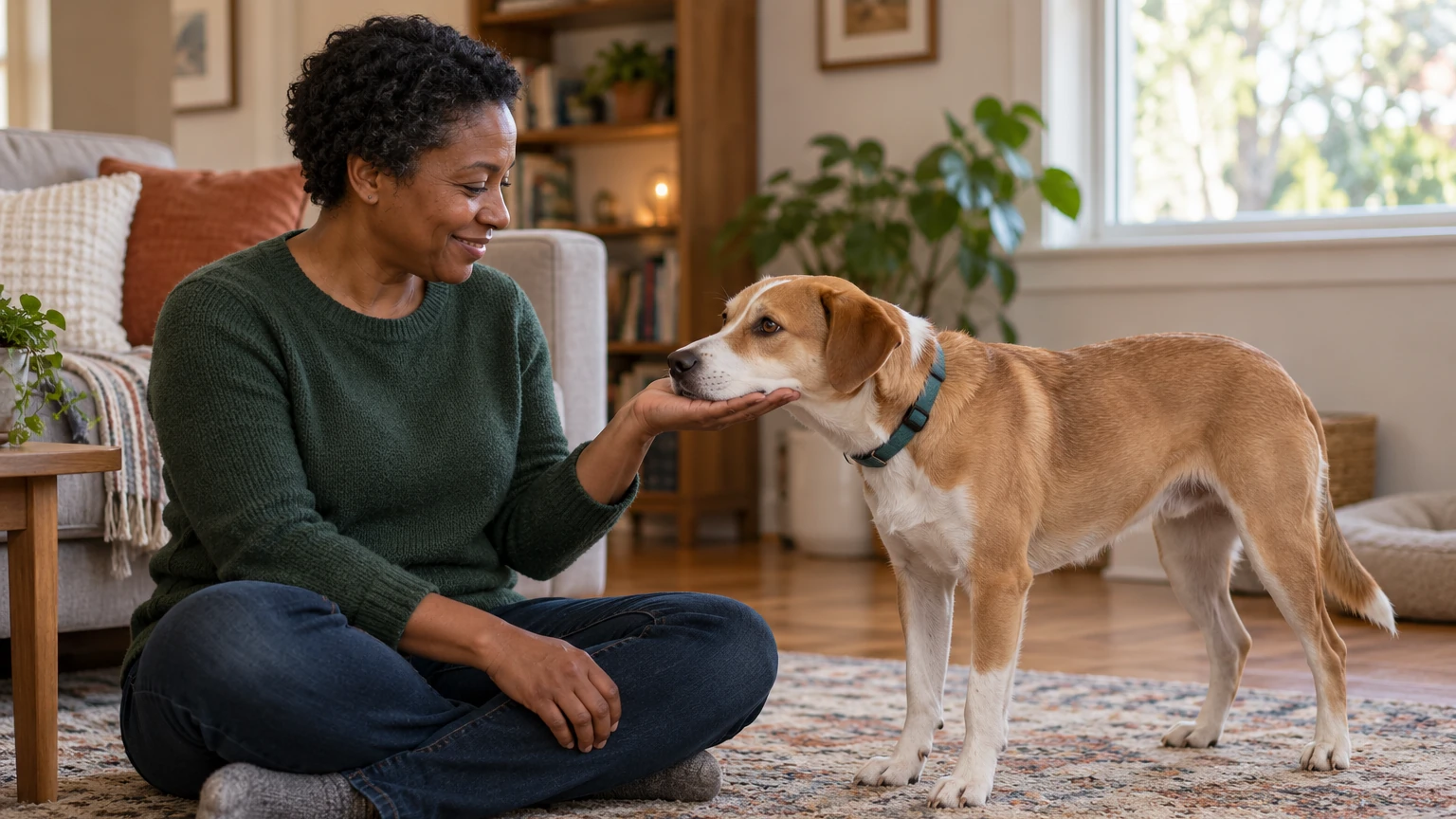
What a chin rest can communicate
A chin rest gives you an observable behaviour to work with: your dog places the underside of their chin on your palm. You can teach the position without doing any handling at all.
In cooperative care, that position can become a “start button” for a particular activity. The dog offers the rest, you begin the familiar activity, and lifting the chin makes you stop. That meaning comes from what you consistently do during practice. Simply teaching a pose or adding a cue does not establish it. The IAABC Foundation Journal's cooperative-care guide explains the importance of allowing the dog to end handling by breaking position.
Returning to the hand is not permission for any procedure you choose. It may be an invitation to repeat the small, familiar activity you have been practising, provided the dog's wider body language also supports continuing.
Watch more than the chin. A dog can remain in position while looking tense or leaning away. Read changes in posture, face and movement together with what is happening around them. The guide to reading dog body language in context explains why one signal alone cannot tell you how comfortable your dog is.
Arrange your hands, rewards and practice space
Choose a quiet place with a non-slip floor. Leave enough open space for your dog to approach, turn away and leave without squeezing past you. Sit on a chair or on the floor, whichever lets you offer your hand comfortably without leaning over them.
Have small rewards your dog already enjoys within reach of your free hand, taking dietary needs into account. Keep the resting hand empty throughout. For this method, you do not need a food lure, so there is nothing to fade later.
Use a quiet “yes” to mark the response you want. A marker identifies the moment that earned the reward; the food follows it. If your dog does not know that word, first say “yes” and immediately give a treat a few times, without asking for a chin rest. You can use an already familiar marker instead.
Hold your resting hand palm-up, with relaxed fingers together, just below your dog's natural chin height and a little in front of them. Let your dog choose whether to close the gap. They can stand, sit or lie down; do not ask them to change position just to fit your hand. The American Kennel Club's chin-rest guide describes shaping the behaviour by rewarding increasingly close approaches to the finished position.
This guide uses a hand rest as the default. Chin rests can also be taught on a lap or cushion, but changing the target adds another training task. If holding your hand steady is difficult, get help choosing a suitable setup rather than putting your dog on a raised surface to make them easier to reach.
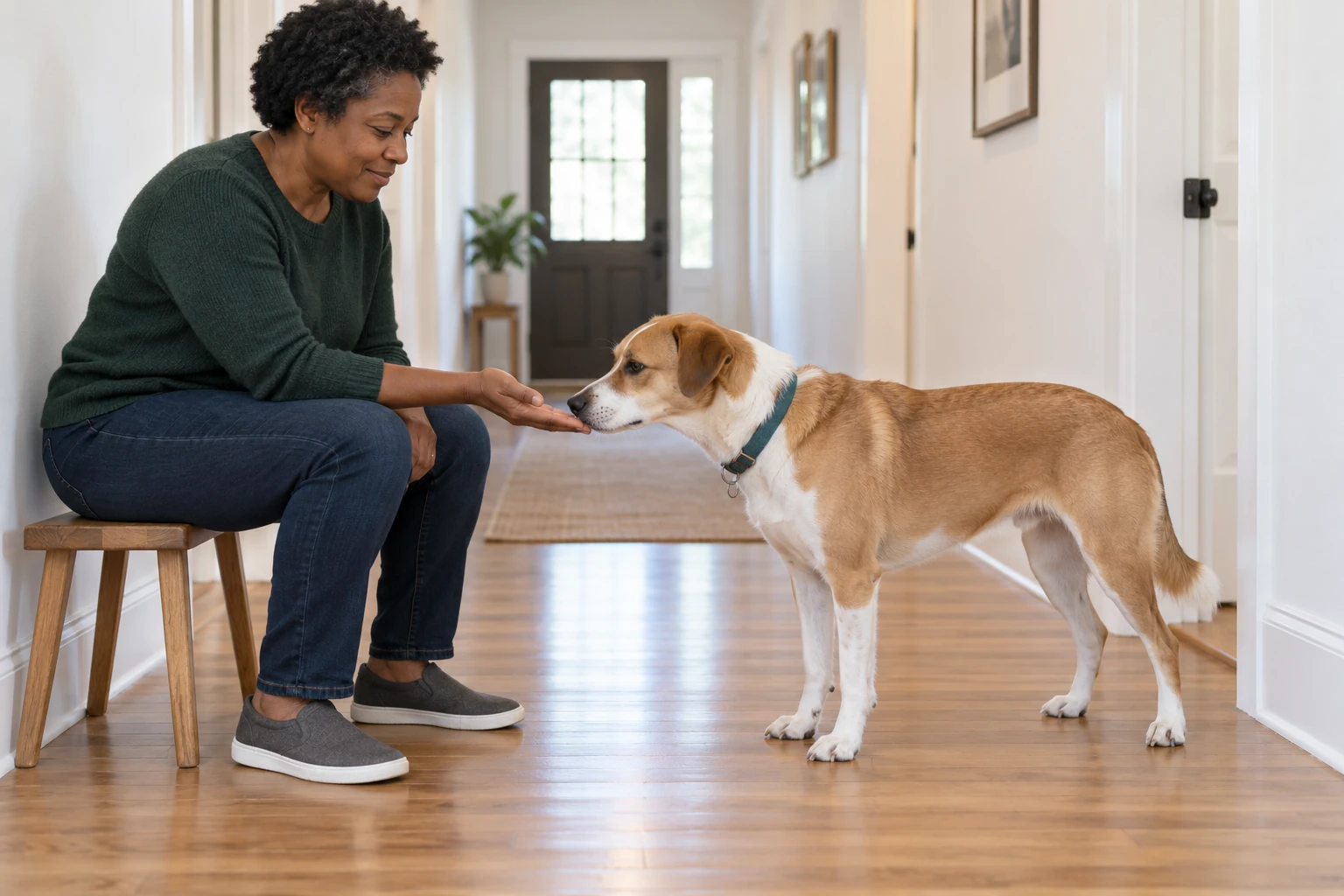
Reward an approach to your empty palm
Offer your empty hand and watch for a small movement towards it. Looking at the palm, leaning closer or sniffing it can be a useful starting response. Say “yes” at that moment, lower the resting hand, then use your free hand to give the reward.
Deliver the food a little to one side of the resting-hand position, where your dog can take it easily. Let them lift their head to eat. After they finish, return the empty palm to the same place and wait for another choice to approach.
Keep that order consistent: offer the palm, mark the chosen response, lower the palm, deliver the food, then offer the palm again. Lowering the hand after the marker makes the end of each repetition clear.
As your dog begins approaching readily, reward a slightly closer movement. A nose touch may be part of that progression, but it is not a compulsory exercise to master first. If your dog offers chin contact straight away, reward it.
If they hesitate, move your hand lower or farther away between attempts and reward an easier response. Do not close the gap by reaching towards their face. If they turn away or leave, let them go without following or repeatedly calling them back.
Recognise the first chin contact
The response you are working towards is contact between the underside of the chin and your palm. A nose touching your fingertips is an approach to that response, not yet the finished chin rest.
Watch for a small lowering of the muzzle as your dog investigates the hand. Mark the first underside-of-chin contact immediately, even if it lasts only an instant. Then lower your hand and deliver the reward as before.
Do not wait for a long hold at this stage. Your dog does not need to press down hard, look at you or keep their whole body perfectly still to earn a reward for that first contact.
If nose touches keep happening without chin contact, reward a smaller downward movement of the muzzle rather than waiting through a long, unsuccessful attempt. You can adjust the palm's height or angle between repetitions so the underside of the chin can reach it naturally. Do not move the palm upwards to create contact yourself.
The hand should remain an available surface, not a grip. Keep your fingers open rather than curling them around the muzzle, and never lift or physically place the dog's head. The Cooperative Care Certificate chin-rest rubric specifically excludes holding the muzzle or removing the dog's option to move.
Add a cue when the movement is familiar
Wait until your dog repeatedly chooses chin contact with the empty palm in your familiar setup. Then choose a word such as “chin” or “rest”.
Say it once, just before presenting the hand. Mark the chin contact and reward in the usual way. The word is being paired with a movement your dog already knows, rather than being used to persuade them to do something unfamiliar. This cue timing is also described in the AKC tutorial.
If your dog does not respond, pause. Do not repeat the word or push your palm under their face. On another attempt, return to offering the hand without the cue and reward an easier approach if needed.
A cue does not remove the choice to decline. Even after your dog knows the word, they may choose not to offer the rest.
Build a short rest and a clear release
Once chin contact is happening readily, delay the marker by a tiny amount. Reward a brief pause with the chin still touching the palm, then return to an immediate reward on another repetition. Increase the wait in small amounts, mixing easier, shorter rests with slightly longer ones.
For this exercise, “yes” ends the repetition: your dog can lift their head while you lower the palm and give the food. If you want a separate release word, say “free” immediately after the marker and before lowering your hand. Keep that order consistent. Do not wait until after eating to announce that the rest has ended.
Your release word never means your dog must stay until you say it. If the chin lifts beforehand, let it lift, lower your hand and pause. Do not follow the head with your palm or put the chin back.
There is no universal duration to reach before the behaviour becomes useful. The Cooperative Care Certificate exercise uses five seconds for its assessment, but that is a particular rubric, not a requirement for every beginner.
If your dog begins stretching, shifting away or repeatedly breaking contact as you increase the wait, return to the shorter rest they were offering comfortably. Keep your own hand position steady so they are not having to follow it.
Introduce hand movement before light touch
Only introduce touch if your dog is comfortable with the basic rest and already accepts ordinary touch in the area you plan to use. Do not use this passage to work through existing handling fear or sensitivity.
Begin with movement alone. While your dog rests their chin, move your free hand a small amount within their view, well short of touching them. If they remain in position without signs of discomfort, stop the movement, mark the rest, lower the resting hand and use the free hand to deliver the reward.
Keep the rest short while adding this new feature. Once a particular movement is comfortable, make it slightly closer on another repetition. Do not simultaneously increase the movement and ask for a longer hold.
For a first light touch, use an area your dog already accepts comfortably, such as the shoulder. Show the approaching hand, briefly touch, then remove that hand. If your dog has remained comfortably in the rest, mark, lower the resting hand and reward. Your free hand handles both the touch and the food, one after the other.
If the chin lifts or your dog shows discomfort, stop the movement or touch immediately. Do not finish the intended touch first. The AVSAB-hosted cooperative-care seminar slides describe introducing visible hand movement before touch and watching for avoidance. They are a teaching resource, not an individual clinical assessment.
Do not jump from this practice to nail clipping, opening the mouth, giving medication or another procedure. Those tasks require their own preparation and, where appropriate, veterinary guidance.
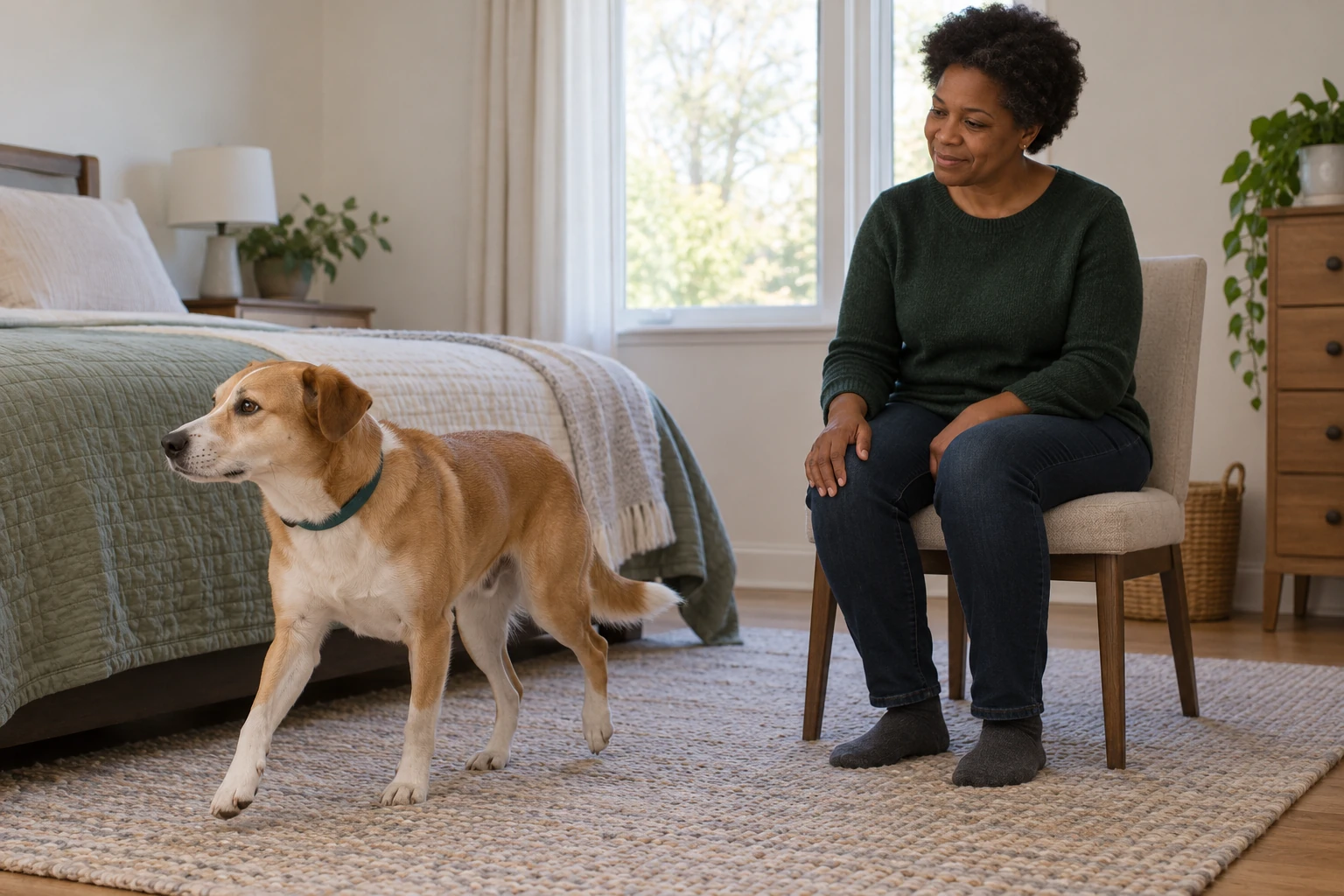
Respond when your dog stops
During handling practice, lifting the chin must reliably pause what you are doing. Stop the touching or approaching hand, lower the resting palm and give your dog room. Do not immediately cue another rest or hold food at their nose to bring them back.
If your dog stays nearby and later offers the behaviour again, consider what happened just before they lifted their head. A hand moving closer might call for a smaller movement next time. Repeated lifting or difficulty returning is a reason to finish, rather than keep trying to obtain one more rest.
Also stop if your dog becomes stiff, leans away, trembles or repeatedly turns their head away, even if the chin remains in contact. Lip licking around food is not automatically a stress signal, so consider the whole dog and the timing rather than treating a single movement as a diagnosis.
The point of teaching this start-and-stop arrangement is that you respond to it. Returning to the palm does not erase the difficulty you just saw or justify increasing the handling. The IAABC guide illustrates both stopping when position breaks and respecting a dog's decision not to resume.
Make a stalled attempt easier
If your dog only sniffs the palm, reward a small approach or downward muzzle movement. Keep the hand empty and adjust its position between attempts. Do not withhold rewards through a long wait for a response your dog has not yet worked out.
If they paw or mouth the hand, withdraw it without correcting them. On another attempt, reward an earlier response, such as looking towards the palm, before the pawing or mouthing starts. Stop if the contact hurts or you cannot offer your hand safely.
If your dog watches the reward hand instead, keep that hand away from the palm until after the marker. Have the food within reach so delivery is prompt, but do not display it over the resting hand.
If contact breaks as soon as your free hand moves, return to a shorter rest and a smaller movement farther from the dog. Keep touch out of that attempt. If they repeatedly leave or look tense, end the session rather than trying stronger encouragement.
Practise changes as separate lessons
A rest learned with you sitting on the floor may not happen when you sit on a chair. Another person, room, hand or body position also changes the exercise. Do not assume the cue carries the same meaning everywhere.
Begin a changed setup with the basic empty-palm invitation and reward brief contact again. Leave handling out until the dog is readily offering the rest there. If the new setup is harder, return to the familiar one rather than changing several things at once. Gradual introduction of distractions is part of the AKC's teaching progression.
Another adult practising with your dog must understand the same stop rule before introducing touch. A dog who offers a chin rest to one person has not automatically agreed to handling by someone else.
Know when to get individual help
Stop practice and seek veterinary advice for sudden sensitivity, suspected pain or a new reaction to touch. Panic, aggression, a bite history or difficulty keeping people safe also puts this outside a beginner tutorial. Do not resume the exercise without individual guidance.
The guide to when your dog needs professional behaviour help explains when general training information is insufficient. A qualified reward-based professional can help assess the training task alongside your veterinary team.
A chin rest cannot make necessary or urgent care safe by itself. If care cannot wait, contact your veterinary team promptly for advice on how to proceed. Do not delay treatment while trying to teach the behaviour or force the position because your dog knows a cue.
Your first short session
For your first session, leave handling out entirely. Sit in the quiet space with rewards within reach, offer the empty palm and reward a few small choices towards it.
For example, your dog might sniff the palm. Say “yes”, lower that hand, deliver a treat with the other hand and let them finish eating. Offer the palm again. If you see the underside of the chin touch it, mark that contact immediately rather than waiting for a hold.
Finish after a few easy repetitions, or earlier if your dog turns away, leaves or becomes uncomfortable. At the next session, begin with the response they were offering readily, not the longest rest you hope to teach.