
A dog has a toy in their mouth. You say “drop it”, and they let go. That small moment can make fetch smoother, stop a tug game before it gets too excited, and help you retrieve an ordinary household item without turning it into a chase.
To teach drop it, begin with a safe toy your dog can readily exchange. Offer a reward, reinforce the moment they let go, and add the cue once the exchange is familiar. Keep rewarding release as you make the food or second toy less visible.
This guide is for calm practice with ordinary toys and other safe, non-guarded objects. It is not a way to test your dog with dangerous items, food they protect, or something they have already swallowed. If your dog freezes, stiffens, growls, snaps or has bitten around possessions, skip home trading practice and get qualified reward-based help. The cue is one part of everyday training, not a substitute for managing hazards or getting professional advice.
What drop it means, and how it differs from leave it
“Drop it” asks your dog to let go of an object they are already holding. “Leave it” asks them not to pick up or approach something in the first place. They are related life skills, but they answer different questions.
That difference changes what you practise. For drop it, your dog is allowed to take a safe toy, then learns that releasing it brings a good outcome. You are reinforcing a voluntary release. You are not asking them to ignore a toy on the floor, and you are not trying to make them relinquish something they feel worried about losing.
Keep the aim modest at first: your dog opens their mouth and the toy lands on the floor when you give one familiar cue. You can later shape where the toy lands, such as beside your feet or in your hand, but accuracy is a separate detail. A relaxed release is more useful than a perfect retrieve that makes your dog wary of you approaching.
Why trading makes letting go worthwhile
When a dog holds something enjoyable, giving it up can feel like losing access. A trade changes the pattern. The toy leaves the mouth, and something worthwhile arrives. Sometimes the dog also gets the toy back, or the game starts again. Releasing no longer predicts that a person will take everything away.
This is why the exchange should feel clear and dependable. The treat or second toy helps your dog learn the exchange. Once they understand the cue, the reward can stay out of sight until after they release. A marker word such as “yes” or a click can identify the instant the jaws open, then the reward follows. If you already use a marker, the guide to reward-marker timing explains how to make that signal consistent.
Rewards are individual. Some dogs will drop a toy for food; others are more interested in another toy or in restarting a game. The guide to choosing rewards your dog wants in that moment can help you notice what actually matters to your dog. There is no need to assume that the most expensive treat or the most exciting toy is automatically best.
Set up practice so your dog can succeed
Choose a familiar, quiet room where your dog is comfortable and there is space to move without bumping into furniture. Have one ordinary toy your dog likes but is not frantic to keep, a few small food rewards if your dog enjoys food, and a second toy if play is more valuable. Use items that are intact and suitable for your dog’s size and chewing habits, not small enough to swallow whole. A ball that suits one dog can be too small for another. Ask your vet if you are unsure about a toy. This is practice with toys, not food bowls, chews your dog guards, stolen medication, rubbish or anything hazardous.
Start when your dog is settled enough to notice you. If they are tired, overexcited or already playing hard, make the activity easier or leave it for another time. Keep your body loose, avoid leaning over your dog, and leave enough space for them to hold the toy comfortably. You do not need to hold their collar, block their route or put your hands near their mouth.
Have the rewards within reach before the toy goes into play. This lets you respond smoothly instead of rummaging in a pocket while your dog waits. If food is part of the exchange, use a reward that is safe and appropriate for your dog, considering any dietary or veterinary advice. Keep the play area clear of other pets and children so no one interrupts or competes for the toy.
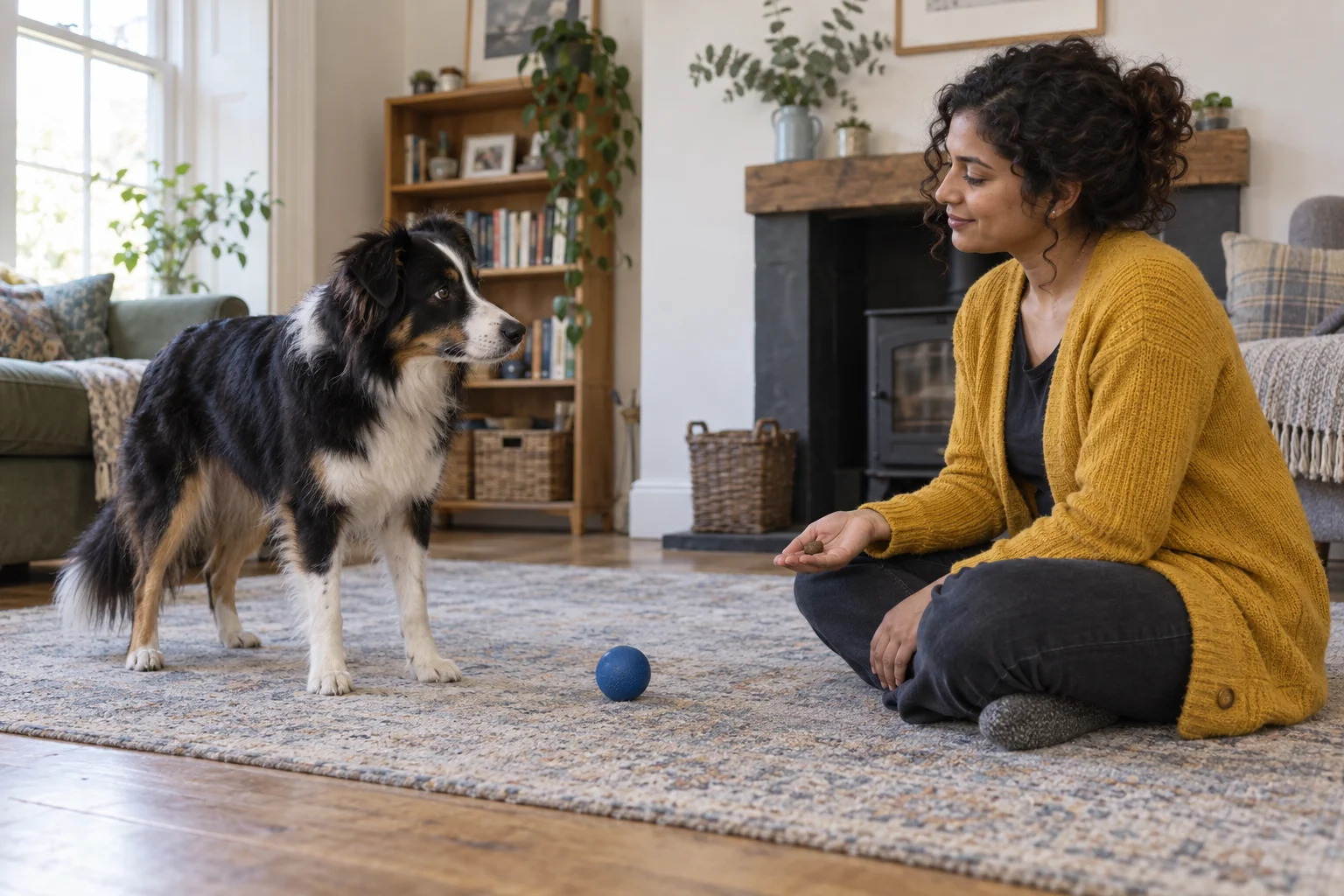
Teach the release before adding the cue
Offer the toy and let your dog take it. Give them a short moment to hold or play with it. Then present a food reward close enough for them to notice, without poking it at their nose or moving the toy around. Stay quiet and still. Give your dog time to choose the trade.
The moment the toy leaves their mouth, mark that release with your chosen marker, then deliver the treat. Once the dog has moved comfortably to the reward, collect the toy calmly if there is space to do so. If they stay over it or return immediately, leave it where it is; you can practise release without collecting it on every turn. If your dog prefers toys, bring a second one to life by moving it gently away from the first. When they release the first toy to follow the second, mark and reward that choice with a brief play session.
For the first few practices, let your dog have the original safe toy back after the reward. This is not a rule that every item must always be returned. It is an easy way to show that releasing a toy during practice does not always end access to it. Keep the exchange light, with only a few releases before you finish or let your dog play normally.
If the dog does not release, do not repeat the cue, tug harder, or reach for the toy. Make the trade more appealing or choose an easier toy next time. Your aim is to arrange an easy choice, not to wait your dog out or outmuscle them.
Add the drop-it cue once the release is easy
At first, your dog is learning the exchange itself. Wait until they release readily when they see the reward or the second toy. Then begin saying “drop it” just before you make the familiar trade. Say it once in an ordinary, friendly voice, pause briefly, and present the reward as you did before. When your dog releases, mark and reward as usual.
After several easy experiences, make the reward less obvious. Keep it in your pocket or on a nearby surface instead of holding it in front of your dog. Say the cue, give them a moment to respond, and then deliver the reward when they release. The food is still part of the payoff even though it was not visible first. This teaches your dog that the cue predicts a worthwhile exchange, rather than teaching them to wait for a treat held at their nose.
If your dog hesitates when the food is out of sight, return to an easier version. You might show the reward again, use a more attractive toy trade, or wait until another day. Do not keep repeating “drop it” while your dog holds the toy. Repeated cues can become background noise and tell you that the current version is too difficult.
Some dogs naturally let go while playing tug when the toy becomes still. You can reinforce a relaxed pause by marking the moment your dog releases and then restarting the game. Keep the game gentle and let your dog move freely. This is an optional route, not a requirement, and it should not become a test of endurance or a reason to yank the toy away. VCA describes using a second toy, a calm voice and shorter play when teaching a release during games (VCA guide to teaching a dog to drop an object).
Make the reward part of the finished skill
You do not have to remove food rewards to prove your dog understands. Keep rewarding releases, while varying what follows in ways your dog values. Sometimes give food, sometimes return the safe toy, and sometimes resume the game. The reward can also be a brief chance to sniff or move on when that naturally follows the activity. Keep the reward meaningful to your dog throughout practice.
If your dog only releases when they see food, the answer is not to stop rewarding. Keep the reward out of view until after the cue, return to an easier toy if needed, and keep paying promptly. Over time, your dog can respond to the cue without seeing the reward in advance while still receiving reinforcement afterwards. The American Veterinary Society of Animal Behavior’s specific drop-it guidance pairs the cue with a food exchange during tug and advises against abruptly removing food rewards.
Use a marker if it helps your timing, but do not let the marker become another hurdle. A clear “yes” or click marks the release, and the treat or game follows. If you do not use a marker, deliver the reward as soon as the toy lands. In either case, reward the behaviour you actually want: mouth open, toy released, dog comfortable.
Practise with different ordinary toys at an easy pace
Once your dog releases one familiar toy comfortably, try another safe toy. Begin with something of similar or lower value, rather than immediately choosing their favourite. Practise in the same room first. Then try a different part of the home when your dog is relaxed. A change of toy, place, person or distraction can make a familiar cue feel new again, so adjust only one thing at a time.
Keep sessions brief enough that your dog remains interested and able to think. You might practise a few trades during ordinary play, then stop while it is still going well. There is no universal number of repetitions or timetable. If you tend to keep going after the dog loses interest, our guide to short training sessions helps you plan a useful stopping point. If your dog loses interest, wanders away or starts grabbing more urgently, end the practice without making a fuss and try an easier set-up later.
When the toy is released, allow it to land naturally. Do not insist on a hand delivery unless that matters for a game you play. If you do want a hand delivery, build it gradually after a reliable floor release by rewarding the toy landing closer to you, then beside your foot, before asking for a more precise placement. The release and the location are separate pieces of learning.
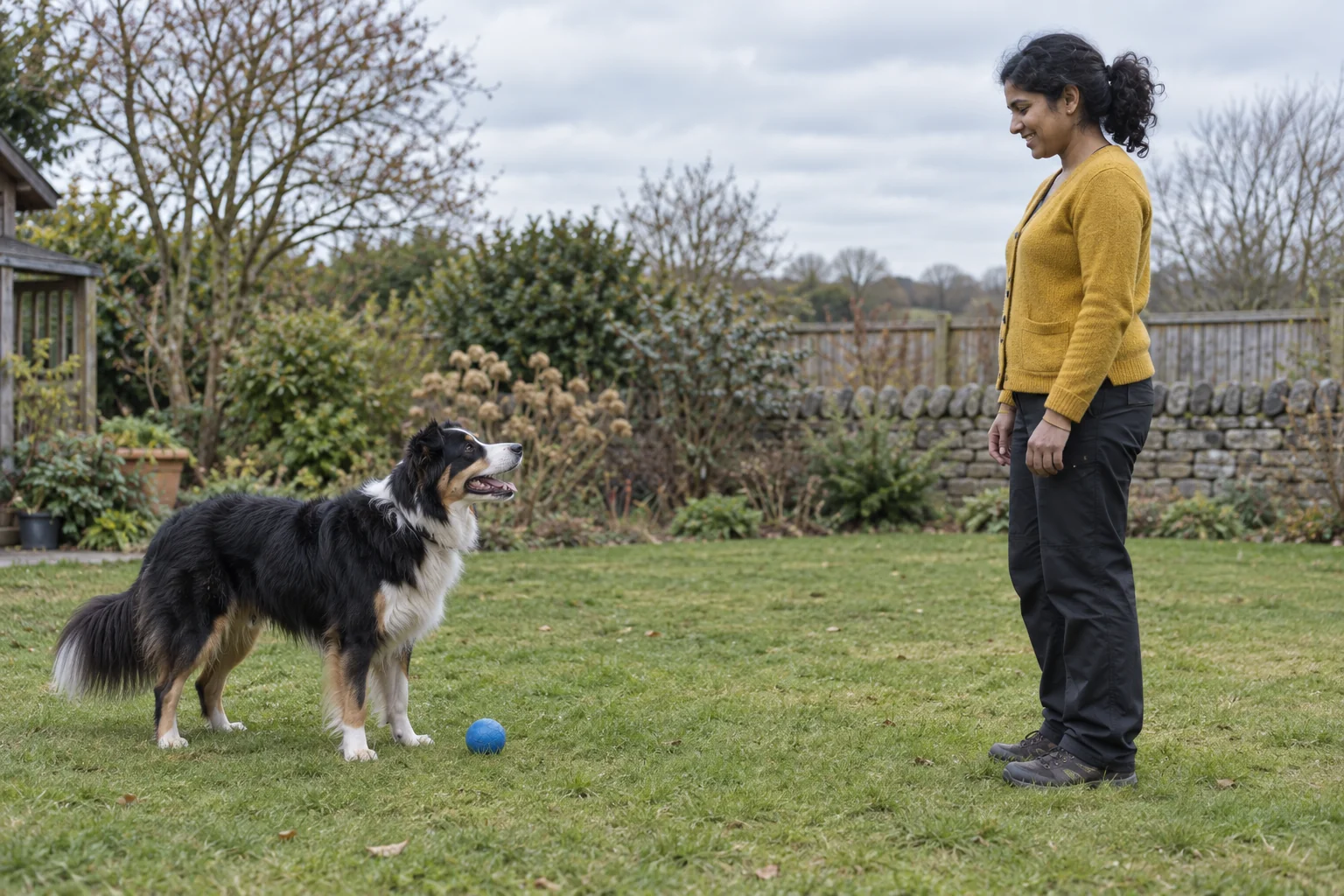
Use the cue in play, then change the context slowly
Fetch and gentle tug give you natural chances to practise because a release can lead to another turn. Ask for the cue when your dog is already playing happily with a safe toy. Mark the release, reward, then toss or animate the toy again if your dog wants to continue. You are showing that the game carries on when the toy is released, not ending play every time you ask.
Do not turn every few seconds into a test. Let your dog play, carry the toy and take breaks. If they become too excited to respond, pause the game, give them space and return to calmer play later. Dogs Trust’s fair-trade guidance recommends rewarding a release and letting the dog return to the toy during practice.
Practise in a new room or garden only after the cue is comfortable in your usual setting. Start again with an easy, familiar toy and a reward your dog values. Outside has smells, movement and other activity that may compete for attention. If your dog cannot release there yet, that is useful information about the difficulty, not evidence that they are stubborn. The article on why dogs listen at home but not outside explains why a cue often needs to be rebuilt in a new context.
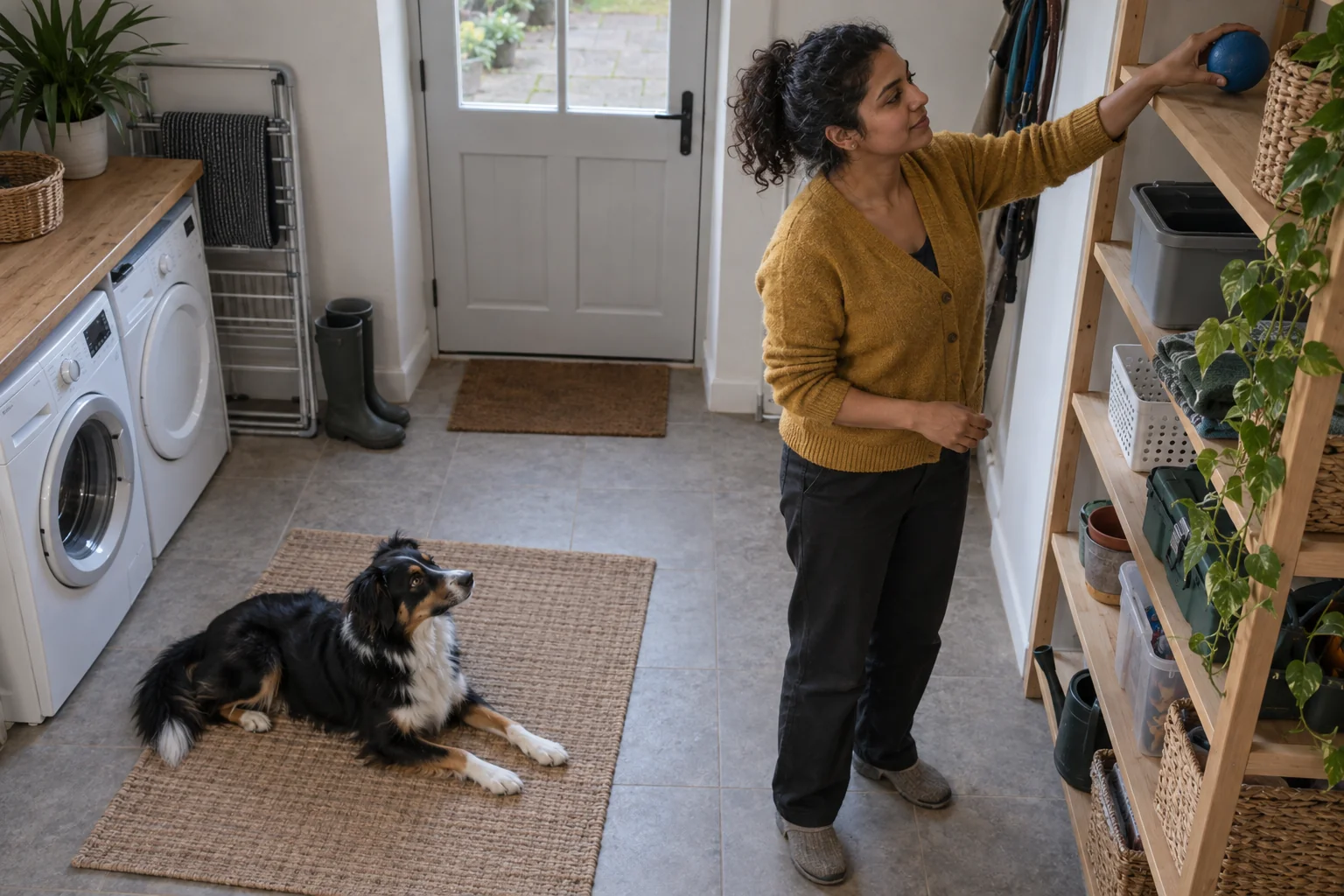
What to try when your dog will not drop the toy
A dog who holds on may be more interested in the toy, distracted, unsure about the exchange or simply not ready to stop playing. First, stay calm. Do not crowd them or repeat the cue. Pause, bring out a better reward without pushing it towards their mouth, or invite a trade with another toy. Give them room to decide.
If that does not work, let the toy remain with them and end the practice. Next time, choose a less exciting toy, a quieter room, a better reward or a time when your dog is more settled. Change one thing and see whether the release becomes easier. Do not make the reward less worthwhile just because your dog did not respond.
If your dog runs away with the toy, avoid chasing. Chasing can turn possession into an exciting game. Practise in a room with fewer escape routes or play at a comfortable distance where your dog already likes to stay near you. Do not tether or restrain your dog to force them to remain beside you. If they want to move off, allow them to do so and plan a simpler practice later.
A dog may also drop the toy and immediately pick it up again. That is not a failure. Deliver the reward where the dog can get it, let them take the toy again, or toss food a short distance away if you need space to pick up a safe toy. Do not race your dog to the object. If you cannot collect it without a scramble, leave it and use a toy-management plan next time.
Keep ordinary trading separate from guarding or danger
This exercise is not appropriate if your dog shows discomfort about a person approaching an object. Freezing, stiffness, hovering over an item, a hard stare, growling, snapping or biting are reasons to stop practising trades at home. Do not test whether a treat will “fix” it, take the object to see what happens, chase or corner your dog, punish them, pry at their mouth or force their jaws open. Give your dog secure space and contact a qualified reward-based behaviour professional. A vet should also assess a sudden change or signs of pain. Our guide to when a dog needs professional behaviour help explains what information to gather without testing the behaviour. The RSPCA’s guidance on giving up toys also advises seeking qualified help if teaching is difficult and treats every dog as an individual.
Do not use practice toys that the dog guards, nor food, chews or treasured objects. The guide to reading dog body language in context can help you notice why one signal alone does not tell the whole story, but it is not a substitute for individual help when safety is in question.
Do not use the cue as your plan for dangerous objects. This article teaches an everyday toy skill, not an emergency guarantee. If you believe your dog has swallowed something, contact a vet urgently. Keep hazardous objects out of reach and do not treat them as training trials. A cue built with toys can help in daily life, but no cue makes hazards safe.
Put calm practice into this week
Choose one safe toy your dog enjoys but can readily exchange. Set aside a few small rewards or a second toy, and practise in a quiet room when your dog is relaxed. Let them hold the toy, offer the trade, mark the release and reward. Return the toy sometimes, or restart play, so releasing does not always end access. Add the words “drop it” only after the release is easy to predict.
Over the next few days, keep the same simple arrangement and notice what helps: which reward works, how close you need to be, whether the dog stays relaxed, and which toys are easiest. Then change just one feature, such as the toy or room, and return to an easier version if your dog hesitates. A calm, willing release is progress even when it happens only in that familiar setting.
Keep dangerous objects out of reach and use barriers or storage rather than relying on a new cue to prevent access. The guide to management and dog training explains how prevention supports practice while a cue is still developing. If practice brings tension, stop and seek qualified help. Keep the next session easy enough for your dog to release willingly, and continue to reward that choice.