
To teach a dog to back up, reward a small, comfortable movement of the paws towards the tail, then gradually build a few backward strides and add a cue. Work on a clear, non-slip floor with room to turn away. Your dog should move by choice, not because you crowd, push or trap them.
Backing up is an optional trick that can help a willing dog make a little more room beside you. Start with one tiny movement and build from there at your dog’s pace. Keep it separate from handling, visitors or situations where your dog is worried; those need their own management and support.
Decide what you mean by backing up
For this guide, backing up means that your dog is standing and moves one or more paws backwards while keeping their body roughly facing the same direction. A single deliberate backward step is a good early result. You are not asking for a sit, a down, a turn, a crawl or a full spin.
Be specific about what counts before you begin. If your dog shifts their weight back but does not lift a paw, that can be a useful first approximation. When you are ready to reward a full step, look for a paw travelling backwards and landing behind its starting point. A sideways shuffle is a different movement, even if it happens to create space.
Dogs Trust explains that a marker can identify the moment your dog has made the choice you want, and that it should be followed by the reward. Its reward-based training guidance is useful background if you have not used a marker before. You can use a click or a brief word such as “yes” to identify the movement. If you find a marker helpful, follow it with a reward every time.
Choose a simple cue word before you add one, such as “back”. Use it only for this particular movement. If you already use “back” to mean something else, pick a different word that everyone in the household can remember.
Check that this is a comfortable skill for your dog
Moving backwards may be unfamiliar, so keep the first goal modest. This is an optional trick, and there is no benefit in continuing if the movement looks awkward or your dog seems uneasy.
Skip this exercise if your dog has known pain, an injury, mobility concerns or veterinary advice to limit movement. Ask your vet before teaching deliberate backward movement if you are unsure whether it suits your dog. Your vet can advise on health concerns; a reward-based trainer can help adjust an uncomplicated practice setup.
Watch for signs your dog wants more space or a pause: turning away, moving off, freezing, tucking their body, lowering their head, repeatedly sitting, or declining food they normally enjoy. One signal does not diagnose a feeling, but it is enough reason to make the next attempt easier or end practice. Do not step closer to make the dog move back, block their route, hold their collar or use a wall as a barrier.
The American Veterinary Society of Animal Behavior recommends reward-based methods for teaching common skills and cautions against methods that rely on force, pain or discomfort. That principle applies here: pay for a movement your dog chooses, rather than creating it through intimidation or restraint. If you see fear, pain, sudden reluctance or an unexpected behaviour change, stop and speak with your vet or a qualified behaviour professional as appropriate.
Prepare a spacious, non-slip practice area
Choose a quiet room with a floor your dog can grip. Move trailing cables, toys and clutter out of the immediate area. Leave enough room on every side for your dog to turn and walk away. Do not use a narrow corridor, place furniture close around the dog, or position them on a raised surface to prevent other movements.
Stand or sit in a comfortable position, slightly to one side rather than leaning over your dog. Keep your hands low and relaxed. Have small, suitable food rewards ready if your dog likes food, or another safe reward they can enjoy without lunging or twisting. Follow any veterinary diet advice and count food rewards as part of the day’s intake. The guide to choosing dog training rewards can help you pick something your dog enjoys without making the session too excitable.
Set up one dog at a time so no one is crowded around the reward. Make sure the dog can leave freely. Avoid practising near stairs, furniture corners, open doors, slippery mats, or anything they could bump into while moving backwards.
A clicker or a familiar marker word can help you notice an early weight shift. If your dog has not learned the marker, introduce it separately by making the sound and immediately giving a reward several times, in a calm setting. Do not start the backing-up exercise by clicking repeatedly or saying the word over and over. For more on how a marker pinpoints a behaviour, see the guide to reward markers and timing.
Start by noticing small backward weight shifts
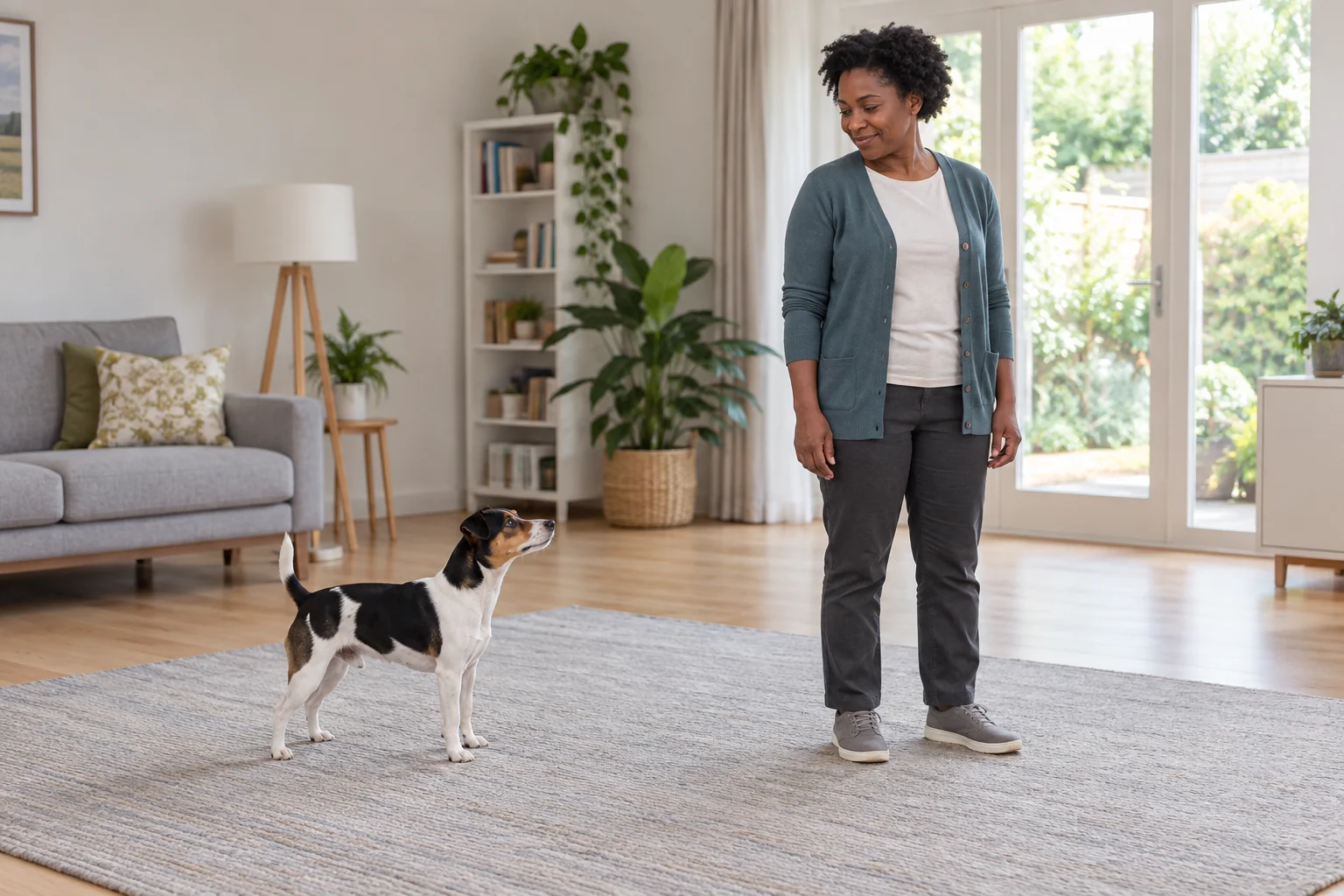
Wait for a moment when your dog is standing comfortably and facing roughly towards you. Keep your own body still. Watch their shoulders, hips and paws. If they make a small voluntary shift of weight backwards, mark that moment and deliver the reward low, close to the space between their front paws.
The reward placement matters because it can help reset the position for another attempt. Avoid reaching over your dog’s head or holding food above their nose. That can make some dogs sit or crane upwards, which changes the movement you are trying to teach. Food should arrive after the backward choice, not serve as a reason to follow your hand into an uncomfortable position.
If your dog stays still, give them a few quiet moments, then end that attempt. Try another time when they are alert and relaxed. Do not move towards them to make them retreat or keep waving a treat to provoke a response. If you repeatedly see no clear movement to reward, ask a reward-based trainer to help with the setup. Only capture a natural backward shift when your own position is not putting pressure on the dog.
Keep your body neutral and leave open space so your dog can turn away or leave. If they keep backing away from your presence rather than offering a small movement and returning comfortably, stop the exercise and give them more space.
Shape one clear backward step
Once your dog is comfortable with the marker and reward routine, look for a tiny rearward movement. At first, you might mark a weight shift or a paw lifting and moving slightly back. Give the reward where your dog can take it without stepping into you. Pause while they finish, then see whether another small movement happens naturally.
Mark the moment a paw lands farther back than it started. Deliver the reward calmly, then reset without drawing your dog forward by the collar or walking into them. If your dog turns or shifts sideways, let them; simply wait for a separate opportunity. Do not lure their nose across their body to force a reverse step.
If your dog offers several different movements, make the task easier by returning to the easiest one you can comfortably identify. You might reward a slight shift before expecting a full paw movement. Changing the criterion after every attempt makes it hard for your dog to understand what paid, so keep the current target simple for a short run of practice.
Some dogs learn well when you gently toss a reward between their front paws after a backward step. Others prefer to take food from a still hand placed low. Choose a delivery that keeps your dog’s feet steady and body relaxed. If your dog hops, scrambles, or rushes into your hands, put the food away and choose a calmer arrangement.
Make one backward step easy to repeat
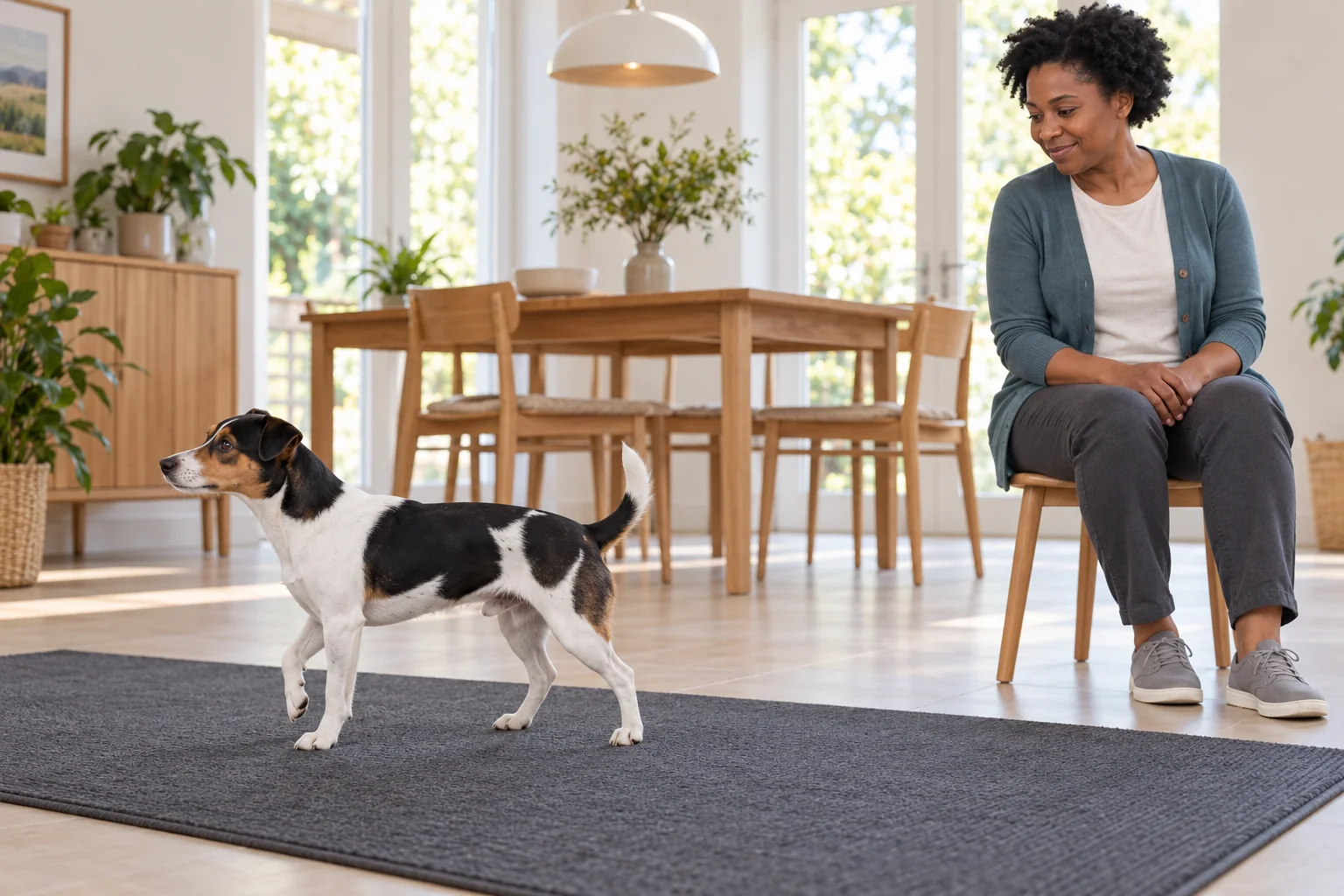
When your dog has offered a few comfortable backward strides over time, make the pattern easy to repeat. Start with your dog standing in an open space. Wait for the smallest backward movement you have been rewarding, mark it, give the reward, and let your dog settle back into a natural standing position before offering another chance.
The reset is not a command to walk forwards. Your dog can return to a convenient position on their own, turn away, or take a break. If they do not return to the starting area, do not call them back repeatedly or lure them close. Finish there and resume later if they approach again willingly.
At first, reward one backward step before asking for more. Once that is easy and relaxed, occasionally wait to see whether your dog offers a second step before marking and rewarding. Do not suddenly hold out for a long reverse walk. The new criterion should be only slightly more difficult than the one your dog already understands.
Reward every successful attempt while the movement is new. Keep your hands still between attempts so your dog is responding to the same calm picture rather than chasing a moving treat. If the movement becomes less clear, return to marking a single step. Short, regular sessions are preferable to drilling until either of you is tired. The RSPCA's training guidance recommends starting new tricks in a quiet room and practising in short, regular sessions. The guide to short dog training sessions covers how to keep practice manageable.
Add the cue after the movement is familiar
Wait until your dog is offering a clear backward step in the easy practice area before attaching a word. Say your chosen cue once, just before the moment you expect the movement, then mark and reward the backward step. Keep your body still as you say it, so you are asking for the familiar movement without putting pressure on your dog.
If you are still shaping an uncertain weight shift, do not add the cue yet. A cue said while your dog is guessing can become background noise. Keep rewarding the movement quietly until it looks predictable enough that you can reasonably anticipate it.
After the cue is introduced, pause briefly after saying it. Give your dog a chance to respond. If they do not, do not repeat the word more loudly or move towards them. Reset by making the situation easier, or end the attempt. You can go back to rewarding the movement without the cue at the next practice.
A hand signal is optional. If you add one, make it small and consistent, such as a low, open palm that does not advance towards the dog. Avoid a gesture that resembles pushing or looming. Teach the visual signal separately from the spoken word at first, then combine them only when each is familiar.
Troubleshoot sitting, turning and hesitation
If your dog sits instead of stepping back, stop and check your posture, hand height and reward delivery. Reaching over their head, standing squarely above them, or placing a treat too high may make sitting the easier response. Turn slightly sideways, lower the reward to a comfortable height, and wait for a relaxed standing opportunity. Do not physically lift or reposition your dog.
If your dog turns sideways, the exercise may be too difficult or your body may be in the way. Make more open space, stand at an angle, and reward any comfortable rearward weight shift before asking for a step. Do not create a narrow chute to prevent turning. Your dog is allowed to choose another direction. Keep the space open while you reward the movement you want.
If your dog walks towards you, freeze your feet and put the reward away until they are standing comfortably again. Do not back away while holding food in front of their nose, since that may teach them to chase your hand rather than move backwards. Try a lower, calmer reward delivery next time.
If your dog backs away repeatedly, avoids returning, or seems worried by your position, stop. That is not a successful version of the trick. Make space and consider whether your dog is uncomfortable with people approaching or with this movement. A trainer should not ask you to increase pressure to force a result.
If the dog is enthusiastic but starts bumping you, pawing, or snapping at food, end the food-based arrangement and seek advice from a reward-based trainer. If the behaviour is new, painful, fearful or unsafe, contact your vet or a qualified clinical behaviour professional rather than continuing to experiment.
Practise in another place only after the first is easy
A cue learned in one room does not automatically transfer to every floor, person or environment. When your dog can comfortably offer one backward step in the original space, try a quiet second room with familiar footing. Begin again with the easiest version and reward one clear step.
Change one feature at a time. Keep the same handler and cue while changing rooms, or keep the room familiar while another household adult offers the cue. Do not add a visitor, another dog, a busy pavement or a slippery surface to see whether the cue works under pressure. A new location can make a familiar behaviour harder, so lower your expectation and give your dog a chance to understand the setting.
If your dog hesitates, returns to sitting, or offers a different movement, go back to the original easy setup. The changed setting may simply have made the exercise harder. The article on why dogs listen at home but not outside explains this broader learning issue.
Avoid practising on a lead if it is likely to become tight while your dog moves. Do not tug a dog backwards by a lead, harness or collar. If you need to keep a dog safe outdoors, use ordinary secure management and choose a place where the dog can move comfortably. This skill is not a substitute for recall, lead training or safe barriers.
Where the back-up cue can help
A familiar back-up cue may help a willing dog adjust their position by a small amount in an uncomplicated situation, such as making a little room beside a chair. It should not replace moving yourself, opening a gate, using a barrier, or giving your dog time to move away. Do not rely on it when carrying hot food, opening an exterior door, near traffic, on stairs, or around children.
Never use the cue to make a dog retreat from a person or animal they fear, to get a dog off a resource, or to approach a veterinary or grooming procedure. Do not train it as a way to control aggression, guarding, reactivity or panic. Those situations need careful management and individual professional advice; practising a trick in the presence of a trigger could put people and dogs at risk.
The American Veterinary Society of Animal Behavior’s position statement on humane dog training supports reward-based methods for common training skills and states that aversive methods based on force, pain or discomfort should not be used. This low-risk trick is not a treatment plan for a behaviour problem.
Plan your next short practice
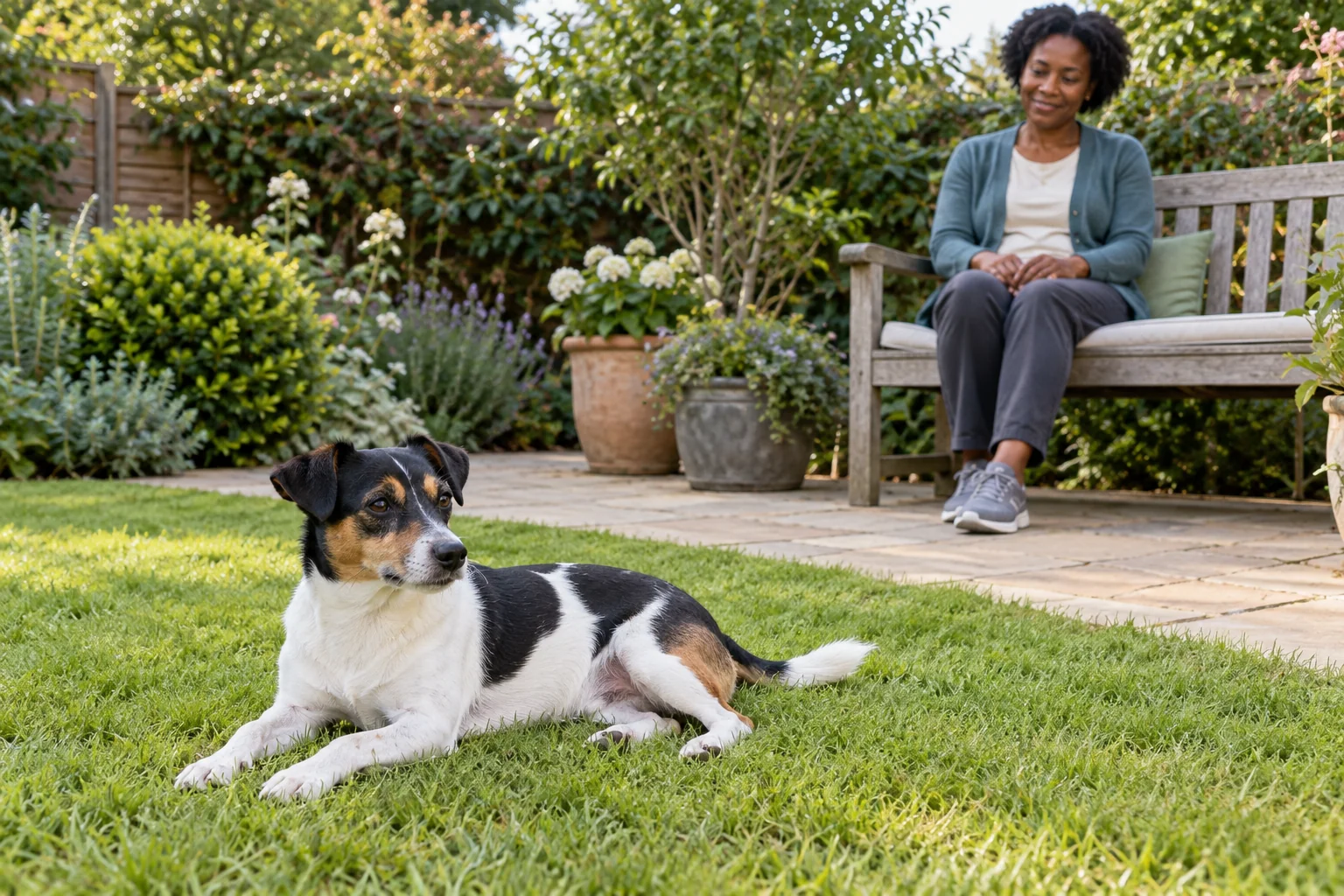
Choose one quiet, non-slip place for your next practice. Afterwards, note which movement you marked and where you delivered the reward. Record whether your dog returned comfortably, too. Our guide to tracking dog training progress explains how to use observations like these to adjust your next session.
A first practice can be no more than noticing one comfortable weight shift. On another occasion, you might see a paw move back. If your dog already offers that easily, reward a single clear step and finish. There is no required number of repetitions and no deadline for adding a cue or a second step.
Stop while the exercise is still easy. End with something your dog enjoys and already knows, or simply put the food away and let them choose where to go. If your dog walks away, let them. Check that each movement stays comfortable before trying to build any distance.
If your dog seems uneasy or moving backwards looks awkward, leave the exercise out and ask your vet about any discomfort. You can choose a different activity your dog already enjoys.