
If your dog won't let you cut their nails, pause before trying to finish the trim. First check whether a cut is needed now and whether your dog may need veterinary help.
For an established worry, keep the care your dog needs today separate from the gentle practice you can do at home. A vet, vet nurse or groomer may be better placed to handle a trim while you help your dog get more comfortable with paw handling and the tools.
This guide is for adult dogs who resist nail care. It does not teach cutting technique or provide a treatment plan for dogs who growl, snap or bite during handling. Ask your vet for individual guidance in those situations, then use the professional-help section below to decide what support to look for.
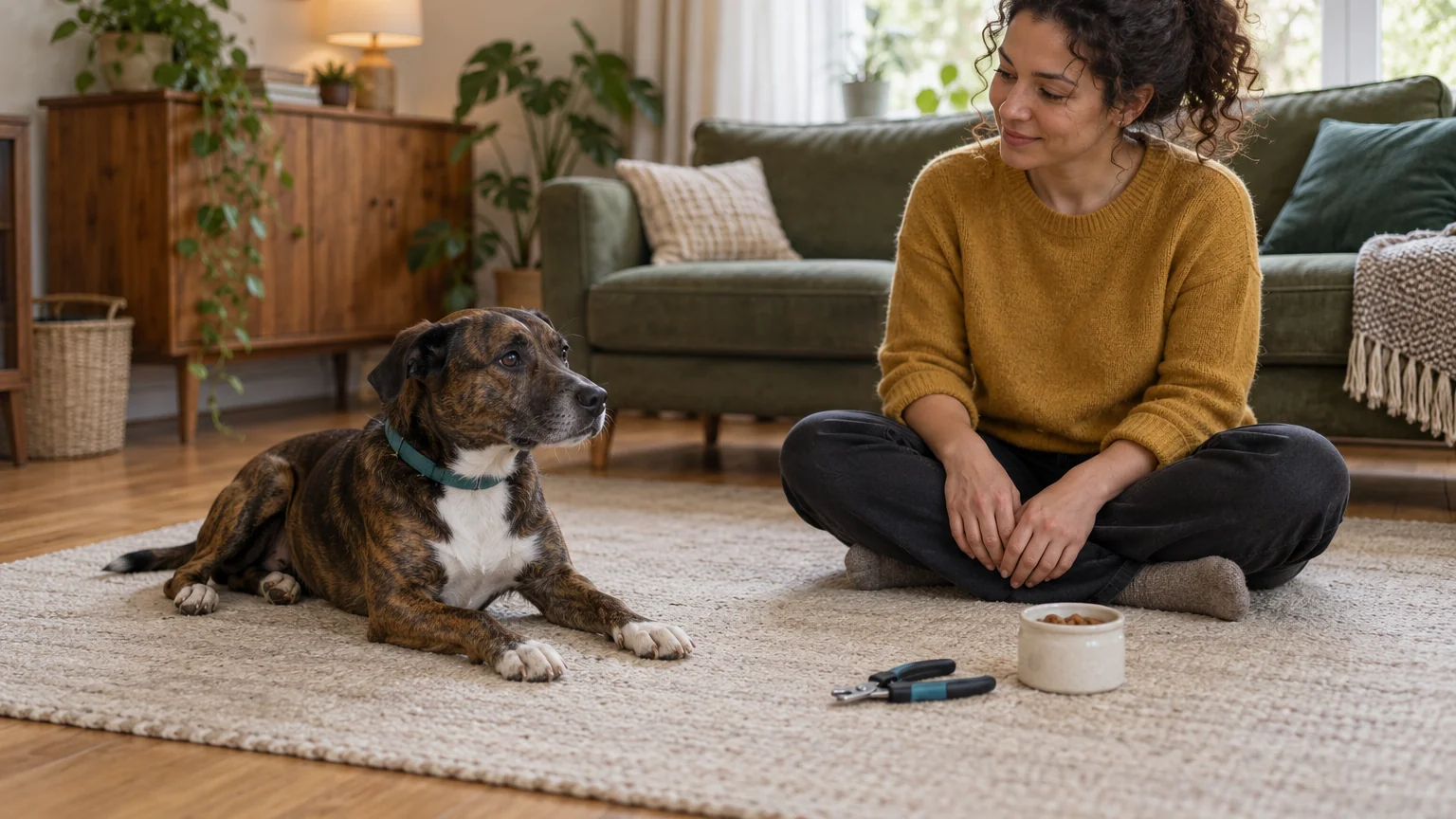
Why nail care can feel difficult
Nail care asks a dog to accept touch around a paw, a tool near the nails and pressure they may not understand. If the quick is cut, the nail can bleed and hurt. PDSA explains that the quick contains blood vessels and nerves (PDSA: How to clip your dog's nails).
An unpleasant trim can contribute to worry the next time the clippers appear, though pulling a paw away on its own does not tell you why your dog is resisting. A slippery surface, a hand moving too quickly or a long session may also make practice harder. Review the setup without treating any one behaviour as a diagnosis.
Your first decision is whether a trim is needed now. If it is, arrange the care safely and let home practice remain a separate activity.
Check whether a trim is needed
Before changing your dog's response, ask whether the nails need clipping and whether anything may be sore. Dogs Trust notes that hearing nails click on the floor does not necessarily mean they are too long. Splayed nails or nail beds that seem pushed upwards are worth asking your vet about (Dogs Trust: How to clip your dog's nails).
If resistance started suddenly, or a nail or paw looks damaged or sore, pause home practice and contact your vet. Those observations do not show you what is wrong, but they are a reason to get advice before handling the area further.
Nail wear varies with the dog and the surfaces they walk on. Some nails may wear naturally while others need attention, so a regular look at each paw is more useful than waiting for a click. Ask your vet which nails need trimming and when to check them again. Avoid comparing your dog's nails with another dog's.
Your vet can tell you whether regular clipping is needed and check any concern about pain or nail length. PDSA advises asking for help if clipping at home is difficult. The quick contains blood vessels and nerves, so ask to be shown the technique before you decide to cut a nail yourself.
Decide who will do the cutting for now
You can practise your dog's comfort with touch and tools without cutting a nail in the same session. If care is due before your dog is comfortable, ask your vet about arranging the trim and keep home practice easy and separate.
Separate the two jobs:
- Home practice: helping your dog feel more comfortable with handling, tools and a position they can leave.
- Nail care now: arranging a trim when your vet says it is needed.
For now, the cutting job might go to:
- Your vet or a vet nurse, particularly if your dog is very worried or you are unsure how to proceed
- A groomer your dog already copes with, after you have asked how they handle a dog who needs a pause
- You, if your dog remains relaxed and your vet or vet nurse has shown you the technique
PDSA advises asking your vet for help if clipping at home is difficult. Before booking an appointment, tell the professional what your dog does when they need a break. Ask whether they can stop and give your dog space if those signs appear.
Before booking, ask what the provider will do if your dog moves away, whether they can pause and try again later, and how they handle a dog who is worried about paw contact. Explain what your dog has already found difficult. If the suggested plan does not fit your dog, ask your vet about another option. The priority is a safe trim, not completing it at any cost.
Make the practice spot easy to leave
Choose a place where your dog can stand or settle without sliding and can move away without being blocked.
Choose one spot for nail care practice and keep it consistent:
- A non-slip rug, yoga mat or bath mat on the floor
- Somewhere quiet, away from the front door and busy rooms
- Good light, so you can see what you're doing
- Treats in a pot within reach, ready before your dog arrives
Sit beside your dog rather than leaning over them. Let them choose whether to stand, sit or lie down, and keep the route away from you clear.
Keep the clippers out of sight for now. You'll introduce them separately later.
Learn your dog's "that's enough" signals
Your dog may show discomfort before pulling away. Look for a change from their usual posture or movement, such as:
- Pulling a paw away or tucking it under
- Turning their head, licking their lips or yawning during the interaction
- Becoming still or stiff
- Panting when they were settled before
- Getting up or moving away
Dogs Trust advises that if your dog seems worried at any point, you should stop what you're doing and have a break. PDSA gives similar advice: if your dog gets stressed, stop, give them a treat and try again another time.
One signal on its own can be hard to read. Look at the whole dog and what was happening at the time. Our guide on how to read dog body language in context explains how to do that.
If your dog growls, lifts a lip or snaps, stop straight away and do not tell them off. Do not resume nail handling without advice from your vet and a qualified behaviour professional.
Build comfort with paw handling first
Start with paw handling only when your dog is comfortable in the practice spot. The aim is for them to remain relaxed while you briefly touch an easy area, then gradually work nearer to the paw.
Dogs Trust recommends always pairing paw handling with a tasty treat, so your dog learns to think of having their feet handled as a good thing.
You might begin by briefly touching the shoulder and giving a treat. If your dog stays comfortable, another session could include a touch farther down the leg. Move nearer to the paw only while your dog remains relaxed; add a brief hold or touch to a toe later, when the earlier contact is easy for them.
Remove your hand while your dog is still comfortable. If they pull away, pause and make the next attempt easier. Do not hold the paw in place to finish an interaction.
Treat each paw as its own project. Your dog may be happier with front paws than back paws, or prefer one side. It's fine to be at different levels on different paws.
Keep practice brief and end while your dog is still comfortable. There is no required session length. Our guide on how long should dog training sessions be? has ideas for fitting practice around a busy routine.
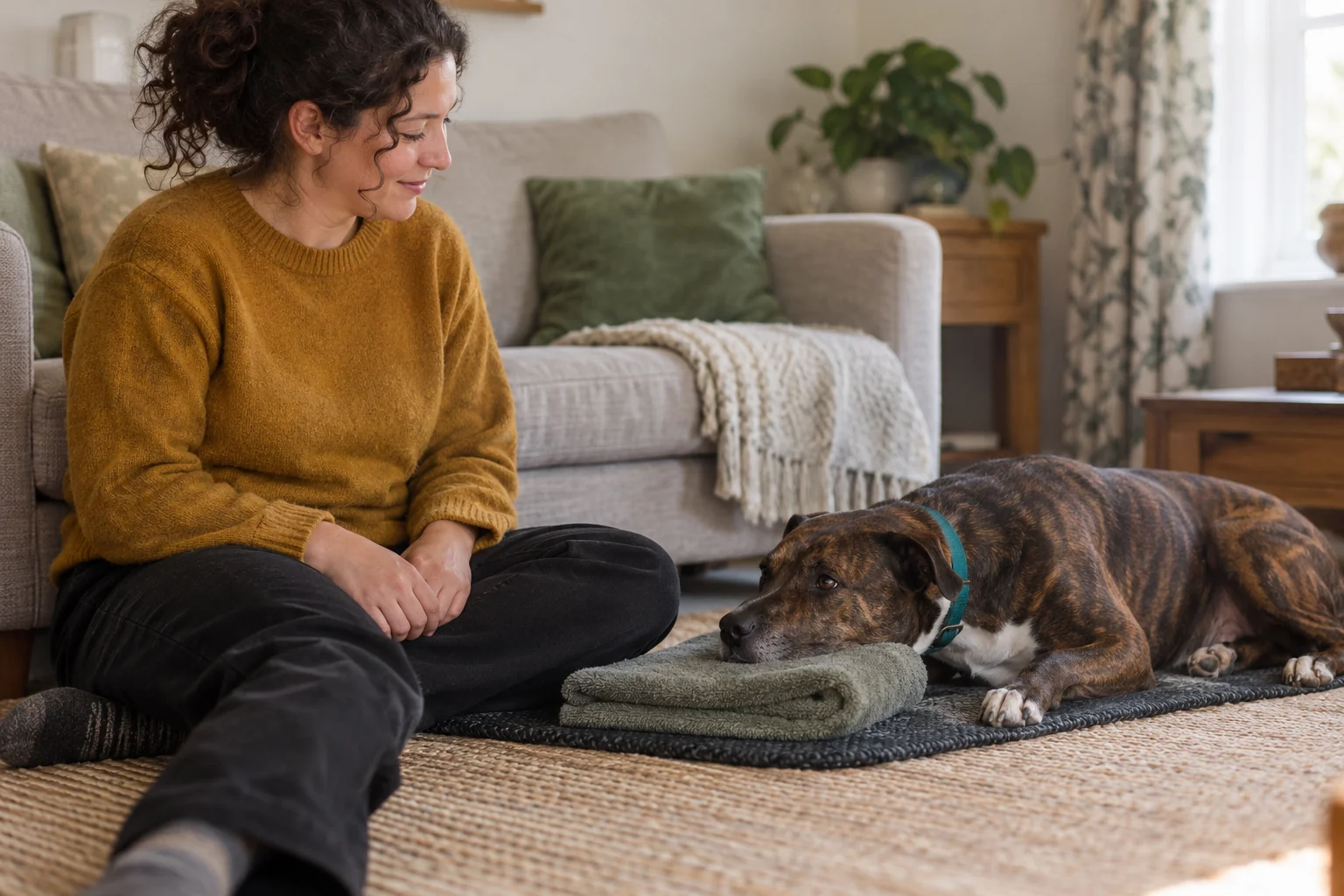
Give your dog a way to say "ready"
You can teach a familiar position to act as a participation signal for a small, predictable interaction. For example, your dog could rest their chin on a cushion or place it on your open hand. Let them choose whether to offer the position.
Practise the signal first without touching the paw. When your dog lifts their head or leaves, stop reaching and give them space. The IAABC Foundation Journal describes this kind of cooperative care as giving the dog a way to end handling by breaking position (IAABC Foundation Journal: Cooperative Care).
The signal only works if you honour it. A dog holding still is not automatically comfortable, so pause if their body looks tense even when their chin remains in place. The signal is for familiar practice, not a way to make a painful or urgent procedure safe.
Our guide on how to teach your dog a chin rest for cooperative care explains how to build a voluntary hold. Nail handling needs its own preparation, so begin with the simple practice described here rather than moving straight to a trim.
If your dog stops offering the position, finish that interaction. At another time, return to an easier form of practice.
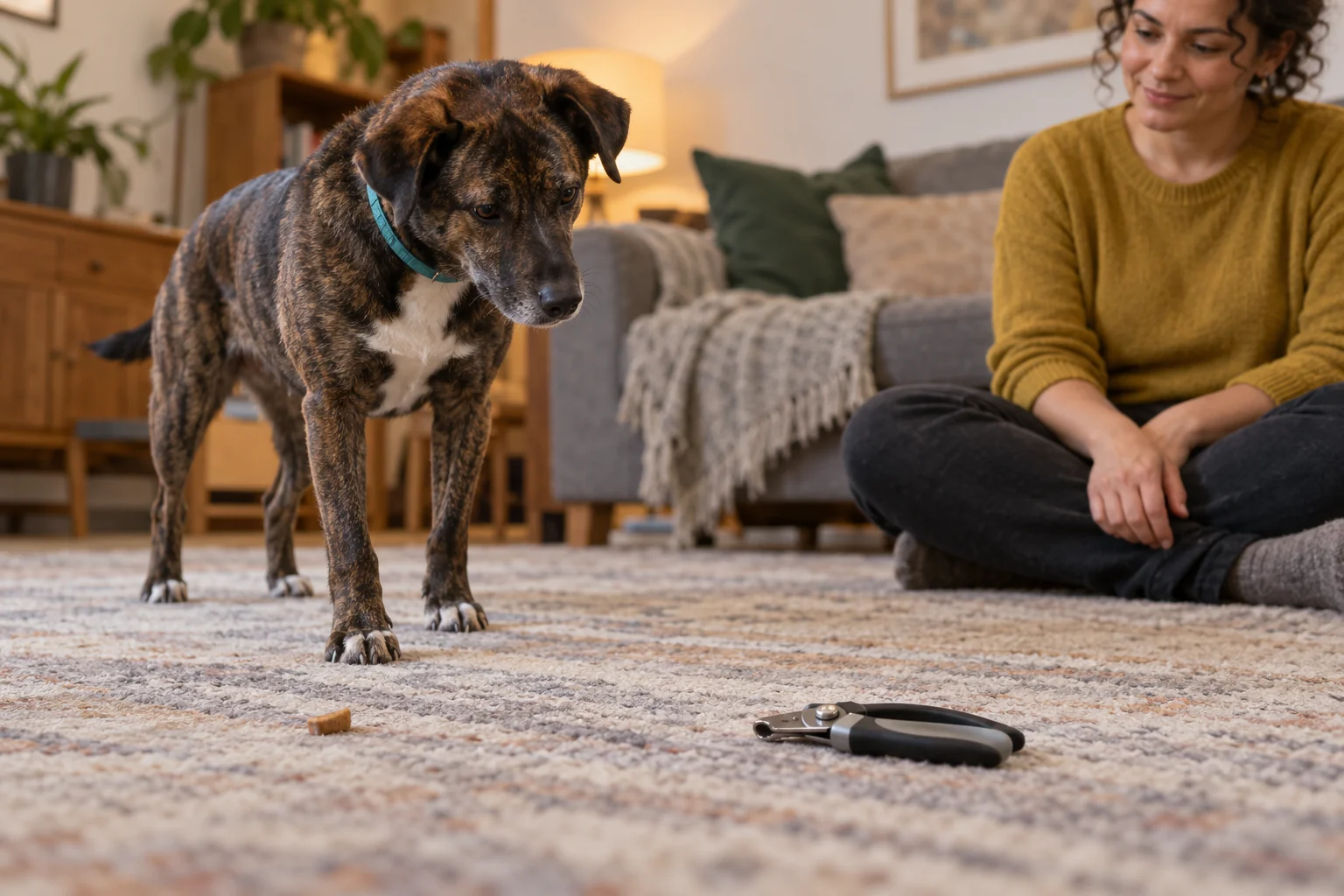
Introduce the clippers without asking for a cut
Once paw handling feels easy, introduce the clippers as a separate part of practice. Keep them closed and start far enough away that your dog can notice them while remaining relaxed.
- Leave the closed clippers on the floor. Reward your dog for looking towards them or choosing to sniff, then put them away.
- On another occasion, pick them up briefly while your dog stays comfortable at a distance, then put them down again.
- Introduce the sound separately and from a distance. If your dog becomes still, moves away or stops engaging, end that attempt and make the next one easier.
- Bring the closed tool nearer to the paw only after your dog is comfortable with the tool and paw handling as separate experiences. Do not press it against a nail to test your dog's tolerance.
Dogs Trust recommends pairing nail handling and the clippers with treats and praise. Keep the reward available without using it to lure your dog closer than they choose to come.

Stop early and note what your dog chose
Decide before practice what you will do when your dog shows discomfort. If they pull a paw away, turn away repeatedly, become stiff or leave, remove your hand and give them space. If they growl, lift a lip, snap or yelp, end the session immediately and do not try again without individual advice.
Dogs Trust and PDSA both advise stopping when a dog seems worried. PDSA suggests giving a treat and trying again another time; offer one if your dog wants it, then let the session end. Do not use food to draw them back into handling.
If you are unsure whether a movement is a worry signal, pause. You can review what happened later or ask your vet or a qualified reward-based professional for help reading the situation.
Use a notebook or phone note to remember what your dog chose and what happened before they wanted a pause. The note is a prompt for your next decision, not a score of how well your dog performed.
You could record:
- Which paw and position you practised
- Whether the clippers were visible, being held or making a sound
- What your dog did when you moved your hand
- The first change in their posture or movement
- Whether you stopped, and what you would make easier next time
Change one part of the practice at a time. If your dog was comfortable with a hand near the shoulder but moved away when you reached the paw, return to the easier contact at another session. If a particular paw or position is harder, work with that difference rather than expecting the same response everywhere.
Use your dog's response to decide whether to repeat, make the interaction easier or leave it for another time. There is no universal number of sessions or calendar schedule that fits every dog.
A hypothetical note might read: “Looked at the closed clippers from the mat, took a treat, then turned away when my hand moved closer. I put the clippers away.” That record gives you a clear place to restart without treating the dog's choice to move away as failure or a reason to repeat the harder interaction.
When nails need doing before your dog is ready
Sometimes a trim is due before your dog is comfortable with home practice. Ask your vet what care is needed now and whether they can provide it or recommend an appropriate vet nurse or groomer.
Dogs Trust suggests starting with one nail (their nail-care guide). Treat that as a possible first trim when your dog is comfortable, not a target for today's practice if they are still moving away. If you plan to cut at home, ask a vet or vet nurse to demonstrate the technique first. PDSA advises getting help when clipping is difficult and asking a vet to show you where to cut dark nails (PDSA nail-care guidance). This guide does not explain where or how much to cut.
Tell the professional which parts of handling your dog already accepts. A quiet dog is not necessarily relaxed, so watch their posture and give them a chance to pause. If a nail is injured or bleeds and you are unsure what to do, contact your vet rather than continuing the trim.
Options include:
- Tell the professional what your dog finds difficult and what signals mean they need a pause.
- Ask in advance whether the appointment can stop if your dog becomes worried.
- Ask your vet about any additional support they think is appropriate for your individual dog.
If the professional does the trim, you can keep home practice limited to comfortable handling or tool introductions. It does not need to end in a cut.
Troubleshoot common sticking points
Your dog accepts one paw but not another. Treat each paw as a separate practice. Return to the easier area and leave the harder paw alone until your dog is comfortable with the setup.
Your dog accepts the clippers nearby but moves away when a cut begins. Stop. Do not assume the quick is the cause or try taking a smaller amount. Ask your vet or vet nurse to assess what happened and show you how to proceed safely.
Your dog becomes less comfortable after an easy interaction. Review what changed in the position, tool, room or handling. If the response is sudden or you suspect pain, contact your vet. Otherwise, return to an interaction your dog already accepts.
Your dog will not take a treat. Put the clippers away and give your dog space. You can try again another time at an easier level. Do not use food to draw them towards contact they are avoiding.
You feel nervous about cutting. Ask your vet or vet nurse to demonstrate or arrange the trim. You can continue no-cut practice at home while the professional handles the immediate care.
When nail care needs professional help
Reward-based practice lets you work at a level your dog can manage, but it cannot resolve pain or guarantee that every trim can be done at home.
Contact your vet if:
- Your dog suddenly resists handling they used to accept
- A nail or paw looks damaged or sore
- You are unsure whether the nails need clipping or how to proceed
Ask your vet about a qualified, reward-based behaviour professional if:
- Your dog has growled, snapped or bitten during nail care or paw handling
- Your dog shows fear before you can begin comfortable practice
- Your dog's worry is not easing when you make the interaction easier
The American Veterinary Society of Animal Behavior recommends reward-based methods for canine training in its Humane Dog Training Position Statement. Choose professional help that follows that guidance.
Our guide on when to seek professional behavior help for your dog explains what to look for and how to prepare.