
One minute your dog is calm. The next, they're tearing around the living room, skidding round corners, leaping on and off the sofa and doing laps of the garden with a wild look on their face. Then, just as suddenly, it stops and they flop down, panting and pleased with themselves.
These bursts are usually called zoomies. For most dogs they're a normal, harmless way of letting off energy or excitement. What you do in the moment matters mostly for safety: keeping your dog from slipping, crashing into things or running somewhere dangerous.
This guide explains what zoomies are, when they tend to happen, how to keep your dog safe during an episode, and how to reduce zoomies that happen at awkward times. It also covers the signs that something else might be going on, such as pain or fear, and when to speak to your vet.
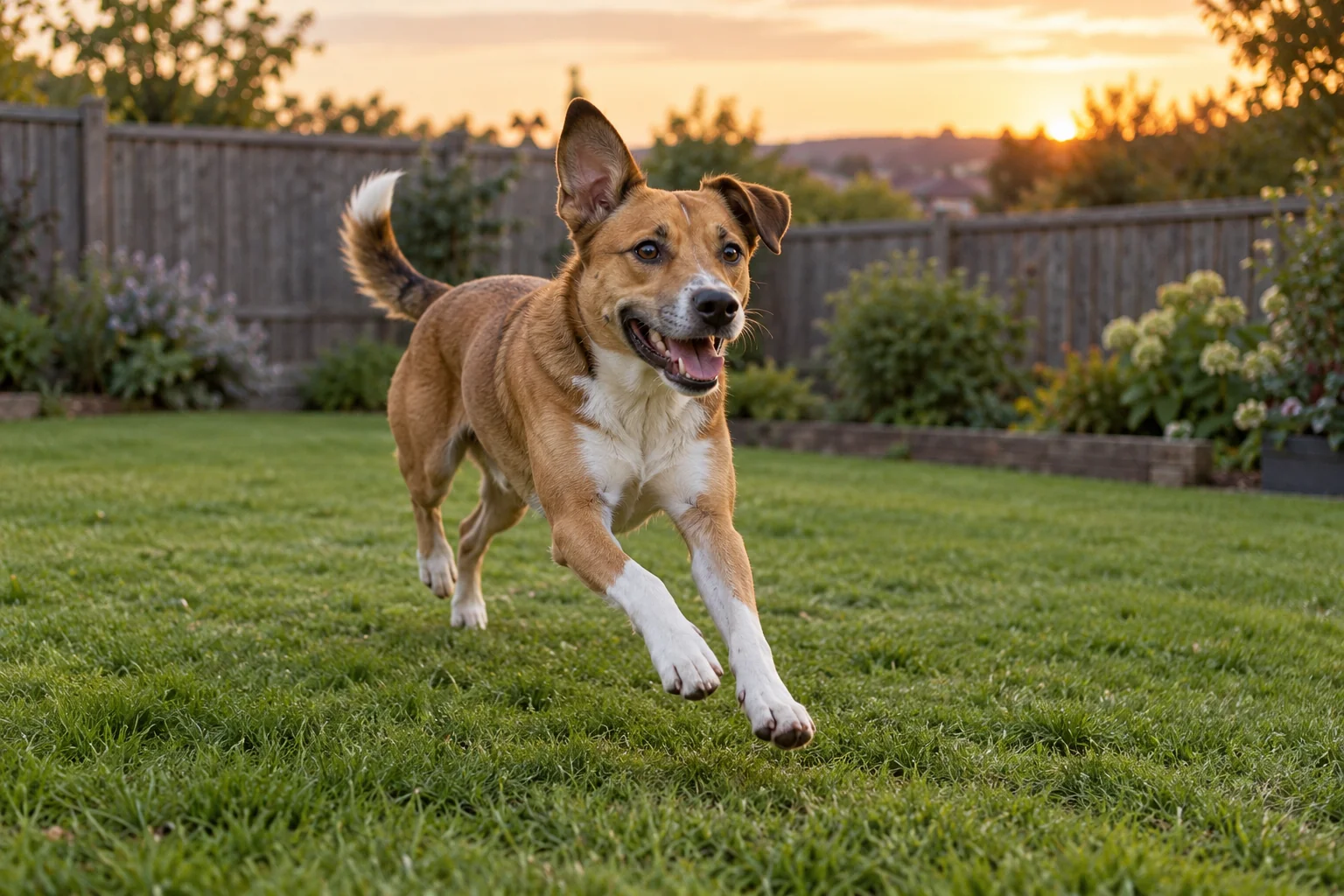
What zoomies are
Zoomies are short, intense bursts of running, spinning and bouncing. Many dogs drop into a play bow, then race off at full speed, often in circles or figures of eight. Their tail may be tucked low as they run, and their expression often looks excited and slightly wild.
Cornell University's College of Veterinary Medicine explains that the scientific term for this behaviour is frenetic random activity periods, often shortened to FRAPs (Cornell University College of Veterinary Medicine: What are zoomies?). Cornell notes that no single cause is known, and that zoomies seem to help dogs release pent-up energy or ease stress.
An episode typically lasts a short time, then the dog settles. Many dogs look relaxed and happy afterwards.
Zoomies are generally a sign of a dog having fun or letting off steam. They aren't bad behaviour, and they don't need to be trained away. The goal is to keep them safe and, if they're happening at difficult times, to understand why.
When zoomies tend to happen
Cornell notes that zoomies are most common in puppies and young dogs, and that they often happen in certain situations:
- After a dog comes home or has been left alone with little to do
- During play
- In the evening
- During exciting moments
Owners often notice zoomies at predictable points in the day, for example:
- Straight after a bath or after being towelled dry
- When you arrive home after being out
- After a dog has been in a crate or a small space for a while
- After a toilet trip in the garden
- In the evening, when the household is winding down
If you start noticing a pattern, that's useful. It tells you when to make the space safe, and it can point to things you might adjust, such as more activity earlier in the day.
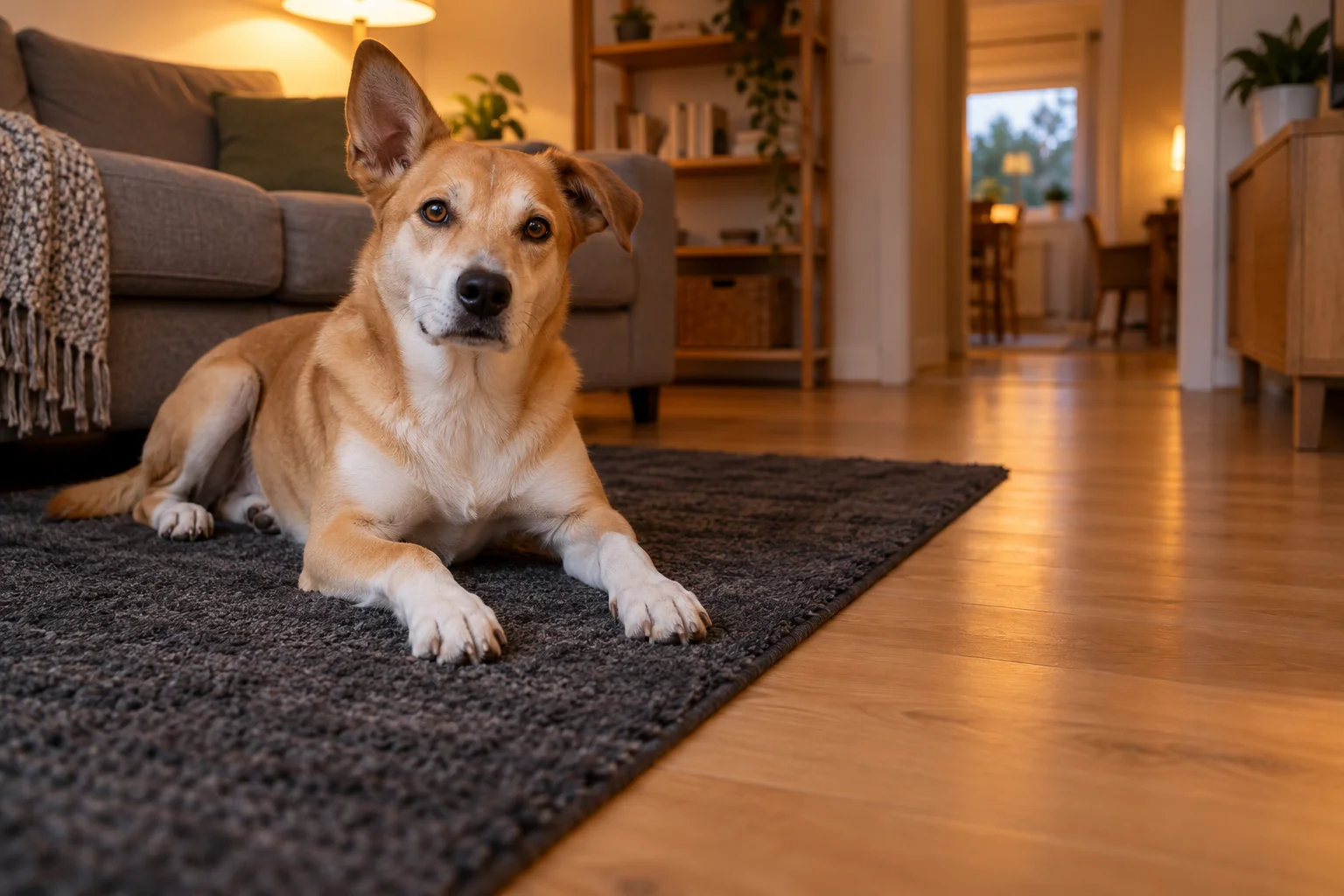
Keep your dog safe during an episode
The zoomies themselves are usually harmless. The risk comes from where and how a dog is running. Cornell points out that a dog running at speed can hurt themselves or knock things over.
During an episode:
- Clear the path. Move breakable items, cups of tea and small children out of the way if you can do so safely.
- Watch the floor. Cornell lists hard floors, ice, gravel and sand among the surfaces that raise the risk of slips and falls. Grass is the safest surface, followed by carpet and packed earth.
- Steer away from stairs. Close a door or use a baby gate if your dog tends to zoom towards the stairs.
- Keep away from roads. Cornell advises keeping your dog in an enclosed space when off-lead.
- Give them room. Stand still or step to the side so your dog isn't bumping into you at full speed.
If your dog regularly zooms indoors on wooden or tiled floors, add some rugs or runners with non-slip backing, especially on corners where they tend to skid.
What to do while your dog has the zoomies
For most dogs, the simplest approach is to let the episode run its course safely. Zoomies tend to burn out quickly on their own.
Helpful things to do:
- Stay calm and quiet. Your dog is excited enough already.
- Avoid chasing them. Chasing can turn the episode into a game and keep it going for longer.
- Move to a safer space if you need to. For example, open the back door so your dog can zoom on the grass, if your garden is secure.
- Wait for the slowdown. Most dogs will start to slow, pant and look for a place to lie down.
If you need the episode to end sooner, for example because your dog is about to crash into something, try something calm and easy for them to do:
- Toss a few treats on the floor for them to sniff out
- Call them to you in a friendly voice and reward if they come
- Move away from them, which some dogs follow
Avoid grabbing your dog's collar mid-run or trying to hold them still. A dog moving at speed can be knocked off balance, and some dogs may mouth or snap if they're grabbed while very excited.
Don't punish or scold zoomies
It can be tempting to tell your dog off, especially if they've knocked over a plant or left muddy paw prints across the sofa. Scolding is unlikely to help.
Zoomies are an outlet for energy or excitement, and your dog isn't doing anything wrong. Telling them off may confuse or worry them, without changing why the zoomies happened. The American Veterinary Society of Animal Behavior states that evidence supports reward-based methods for all canine training (AVSAB: Why you need to reward your dog in training).
A better approach is to change the situation: make the space safer, plan for the times zoomies usually happen, and give your dog more chances to use up energy in other ways.
Reduce zoomies at awkward times
You don't need to stop zoomies altogether. But if they're happening at times that are inconvenient or risky, such as in a small flat late at night, a few changes may help.
Cornell notes that frequent zoomies, or zoomies at inconvenient times, may suggest a dog needs more exercise or mental stimulation.
Ideas to try:
- Add activity earlier in the day. A longer walk, a sniffy wander or a game of fetch in the afternoon can take the edge off evening energy.
- Add mental work. Sniffing games, food puzzles and short training sessions can tire dogs in a different way to running. Scattering part of a meal on a washable mat for your dog to sniff out is an easy place to start.
- Plan for predictable triggers. If your dog zooms after a bath, towel them in a room with a carpet or let them out into the garden straight away.
- Build in a wind-down routine. A calm chew or a lick mat in the evening can help some dogs settle.
- Make greetings low-key. If your dog zooms when you come home, keep your arrival calm and give them something to do, such as a scatter of treats.
These changes won't necessarily stop zoomies, and they don't need to. They just make them less likely to happen at the worst moments.
It's also worth looking at how much time your dog spends confined. Cornell notes that zoomies are common in dogs left alone with little to do. If your dog spends long periods in a crate, a small room or alone while you're at work, a burst of running when they're finally let out makes sense. Breaking up long stretches with a midday walk, a visit from a dog walker or a food puzzle left for them can reduce the build-up of energy.
Some dogs zoom more in the evening simply because that's when the household is home and things feel exciting. A calm, predictable evening routine, with a walk, a meal and then a quiet chew in a favourite spot, can help them settle rather than explode into a burst of running at bedtime.
Notice the difference between joy and fear
Most zoomies look happy: a loose body, a bouncy gait, play bows, and a relaxed, tired dog afterwards. But not every burst of running is the same.
Cornell advises seeking veterinary help if a zooming dog seems to be in pain, frightened or anxious. It lists signs of fear including a tense body, wide eyes, a tail clamped tightly to the belly, a low head and ears pinned back.
Running that may not be zoomies:
- Running away from something, such as a loud noise, then hiding
- Frantic running with panting and trembling, without the usual playful look
- Running combined with yelping, limping or holding up a paw
- Running in circles while seeming disoriented or unaware of you
Our guide on how to read dog body language in context can help you tell excited running from fearful running.
If your dog seems frightened rather than playful, focus on helping them feel safe rather than letting them run it off. For example, if fireworks or other loud noises are the trigger, our guide on how to help a dog who is scared of fireworks may help.
When zoomies might signal a health problem
Most zoomies are normal. Occasionally, sudden bursts of activity can be linked to discomfort or a health issue. Talk to your vet if you notice:
- Zoomies that are new in an older dog, or very different from usual
- Running combined with licking, scooting or biting at the back end
- Signs of pain, such as yelping, limping or reluctance to be touched
- Episodes where your dog seems confused, unaware of you or unable to respond
- Frequent zoomies along with other changes, such as restlessness, poor sleep or changes in eating or toileting
Your vet can check whether anything physical is going on. If you can, take a short video of an episode on your phone to show them. A recording is often more useful than a description, because episodes rarely happen in the consulting room.
Zoomies in puppies and young dogs
Cornell notes that zoomies are most common in puppies and young dogs. If you have a puppy, you may see them several times a day, often after a nap, a meal or a toilet trip.
Puppies can be especially prone to slipping and bumping into things, because they're still learning to control their bodies. A few extra precautions help:
- Keep puppy zoomies on carpet, rugs or grass where you can.
- Block access to stairs with a baby gate.
- Keep furniture they could leap off at low heights, or block access to it.
- Make sure there's nothing small on the floor that they could grab and swallow mid-run.
Sometimes puppy zoomies are a sign of an overtired puppy rather than one with spare energy. If your puppy zooms, nips and seems unable to settle, a quiet rest in a calm space may help more than more play.
As puppies grow up, zoomies often become less frequent, although many adult dogs still have them now and then.
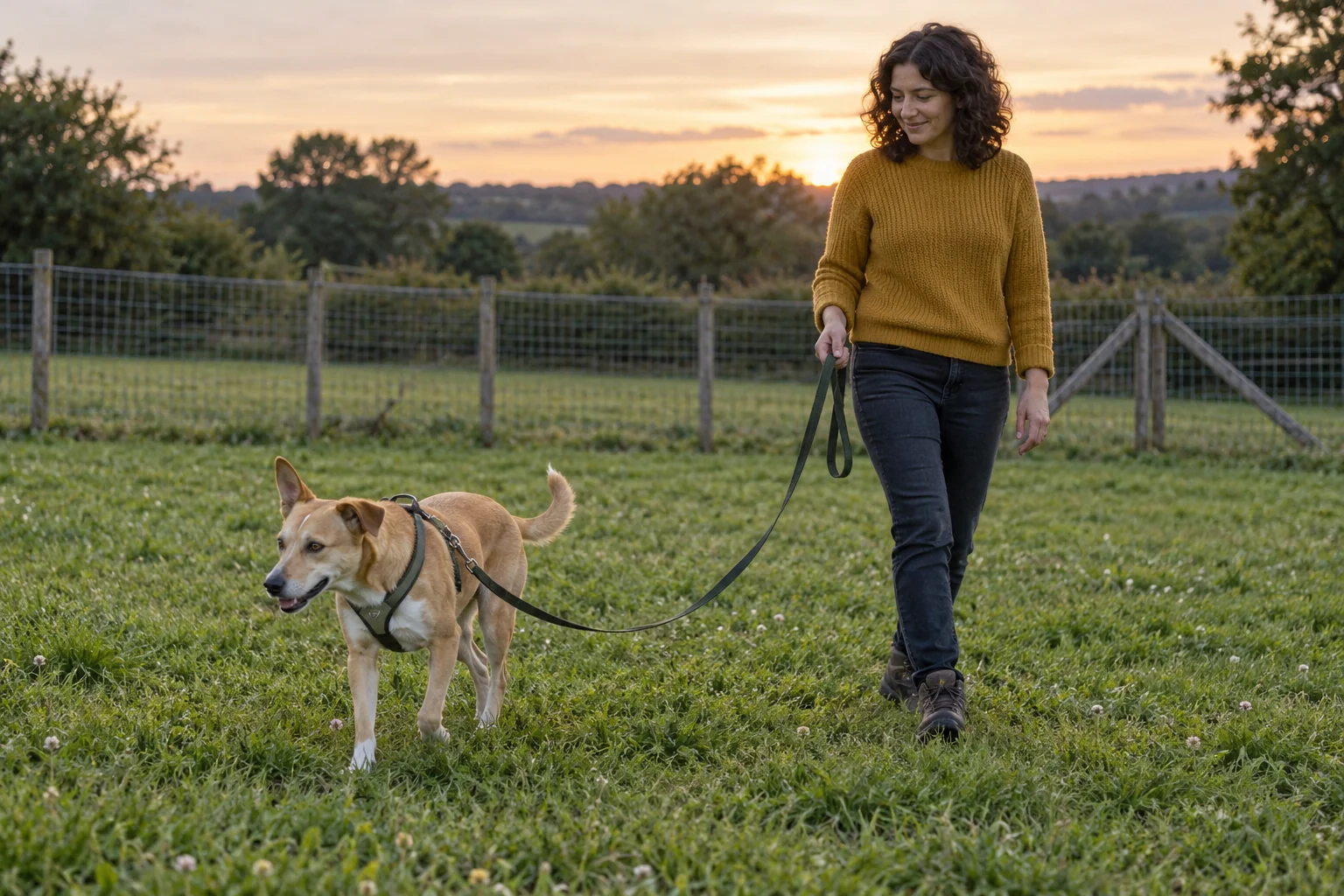
Zoomies outdoors and off-lead
Outdoors, zoomies can be a joy to watch. A dog racing around a field with a big grin is usually a happy dog. But open spaces bring different risks.
Before letting your dog off-lead:
- Choose a safe, enclosed area, away from roads, cliffs, water with steep banks and livestock. Cornell advises keeping your dog in an enclosed space when off-lead.
- Check the ground. Holes, rocks, ice and loose gravel can cause injuries at speed. Cornell recommends filling or clearly marking holes in your own garden.
- Think about other dogs and people. A zooming dog can knock into others or startle a nervous dog. Choose quieter times and places.
- Be confident in your recall. If your dog is hard to call back, practise in an enclosed space first. Our guide on how to teach your dog to come when called safely explains how to build it safely.
If your dog tends to zoom as soon as they're unclipped, it can help to wait for a calmer moment before letting them off, or to let them run on a long line in a quiet field.
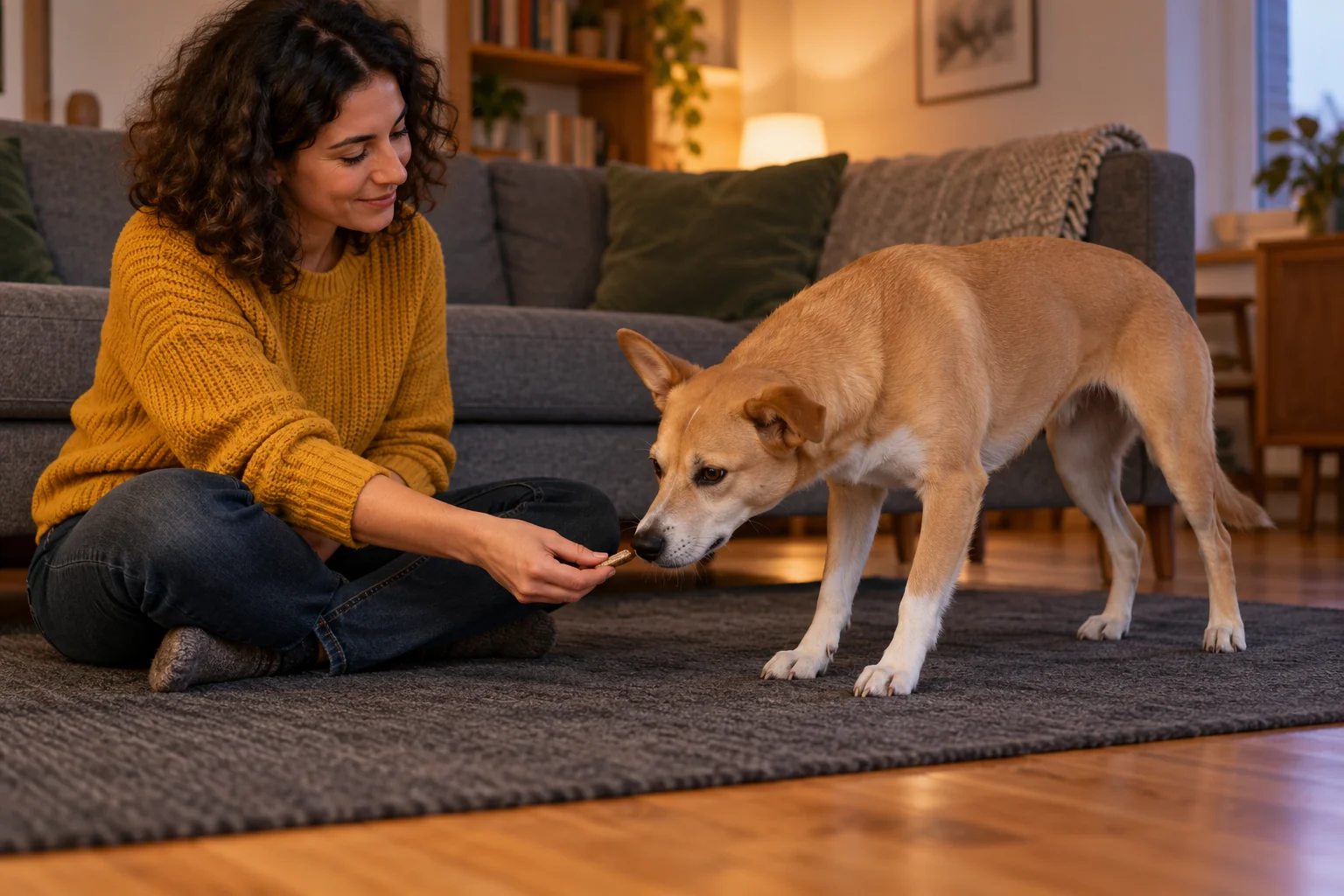
Help your dog wind down afterwards
Most dogs settle on their own after a burst of zoomies. A few simple things help them recover.
- Offer water, especially after a long or energetic episode.
- Give them a quiet spot to lie down.
- Avoid restarting the excitement straight away with rough play or a new game.
- Check them over if they slipped or crashed into anything. Look for limping, a sore paw or any sign of pain.
If your dog seems sore, lame or reluctant to move after zoomies, contact your vet.
A worked example: evening zoomies in a small home
Here's an illustrative example of how you might work through a common pattern. Adjust it to your own dog and home.
The pattern: A young dog has zoomies most evenings around 8pm in a small flat with wooden floors. They've knocked over a lamp twice.
Make it safe first:
- Put down two rugs with non-slip backing on the main running route.
- Move the lamp and other breakables out of the way.
- Close the door to the kitchen, where the floor is slippery.
Look at the day:
- Check whether the afternoon walk is being cut short.
- Add a short sniffing game or food puzzle in the early evening.
At 8pm:
- Offer a long-lasting chew or a lick mat in a quiet corner.
- If zoomies happen anyway, stand aside, let them run on the rugs and wait for the slowdown.
After a week:
- Look at whether episodes are shorter, less frequent or happening in a safer place.
The aim isn't to stop the zoomies, but to make them safer and more manageable.
Troubleshoot common situations
Your dog zooms after every bath. Towel them in a carpeted room or let them run in a secure garden, so the burst happens somewhere safe.
Your dog zooms when guests arrive. Keep greetings calm and give your dog a job, such as finding treats on the floor while your guests come in and sit down.
Your dog zooms off-lead in the park. Make sure the area is safe and away from roads. If your dog is hard to call back, practise recall in an enclosed space before giving more freedom.
Your dog bumps into people or furniture. Stand still to the side and make the space safer. Teach children to stand still and calm rather than chasing.
Two dogs zoom together and things get rough. Zoomies can be contagious, and two dogs racing around a room can collide or get overexcited. Give them space outdoors if you can. If play tips into stiff bodies, growling that sounds tense, pinning or one dog trying to get away, calmly call them apart, give each a quiet spot and something to chew, and let them settle separately for a while.
Your dog zooms right after eating. Some owners like to give dogs a quiet rest after meals. If your dog tends to zoom straight after food, offer a calm chew or lick mat after dinner and keep the space around them quiet for a while.
Your dog's zoomies have suddenly changed. Talk to your vet, especially if the dog seems uncomfortable, confused or frightened.
When to get help
Most zoomies are normal, healthy bursts of energy and need nothing more than a safe space.
Talk to your veterinarian if:
- Your dog seems to be in pain, frightened or anxious during or after episodes
- Zoomies are new, very frequent or different from usual
- Your dog seems confused or unaware of you during an episode
- You notice other changes in behaviour, sleep, eating or toileting
Look for a qualified, reward-based behaviour professional if:
- Your dog's running seems to be driven by fear or stress
- Your dog nips or mouths people during episodes
- You'd like help planning more activity or enrichment
Our guide on when to seek professional behavior help for your dog explains how to find the right support. You can also browse our other dog behaviour guides.
With a safe space, a calm response and enough activity during the day, zoomies can stay what they usually are: a short burst of fun.