
If your dog shakes, pants, hides behind the sofa or tries to bolt every time a rocket goes off, fireworks season can feel like weeks of dread. In the UK it rarely means one noisy night. Bonfire Night, Diwali, New Year's Eve and assorted weekend parties can stretch the bangs across several weeks, often with little warning. In the US, plan ahead for July 4th as well as New Year's Eve.
You can't stop the fireworks, but you can do a lot to help your dog cope. A safe hiding place, a few changes to your routine, a calm presence and some planning for the days afterwards all make a real difference. Longer term, gentle sound work outside the season can help some dogs feel less worried next time.
This guide covers how to recognise when your dog is frightened, how to prepare your home before the season starts, what to do on a firework night, how to keep a scared dog from escaping, and how to help them recover the next day. It also explains when fear is severe enough to need your vet, and why that's a sensible step rather than a last resort.
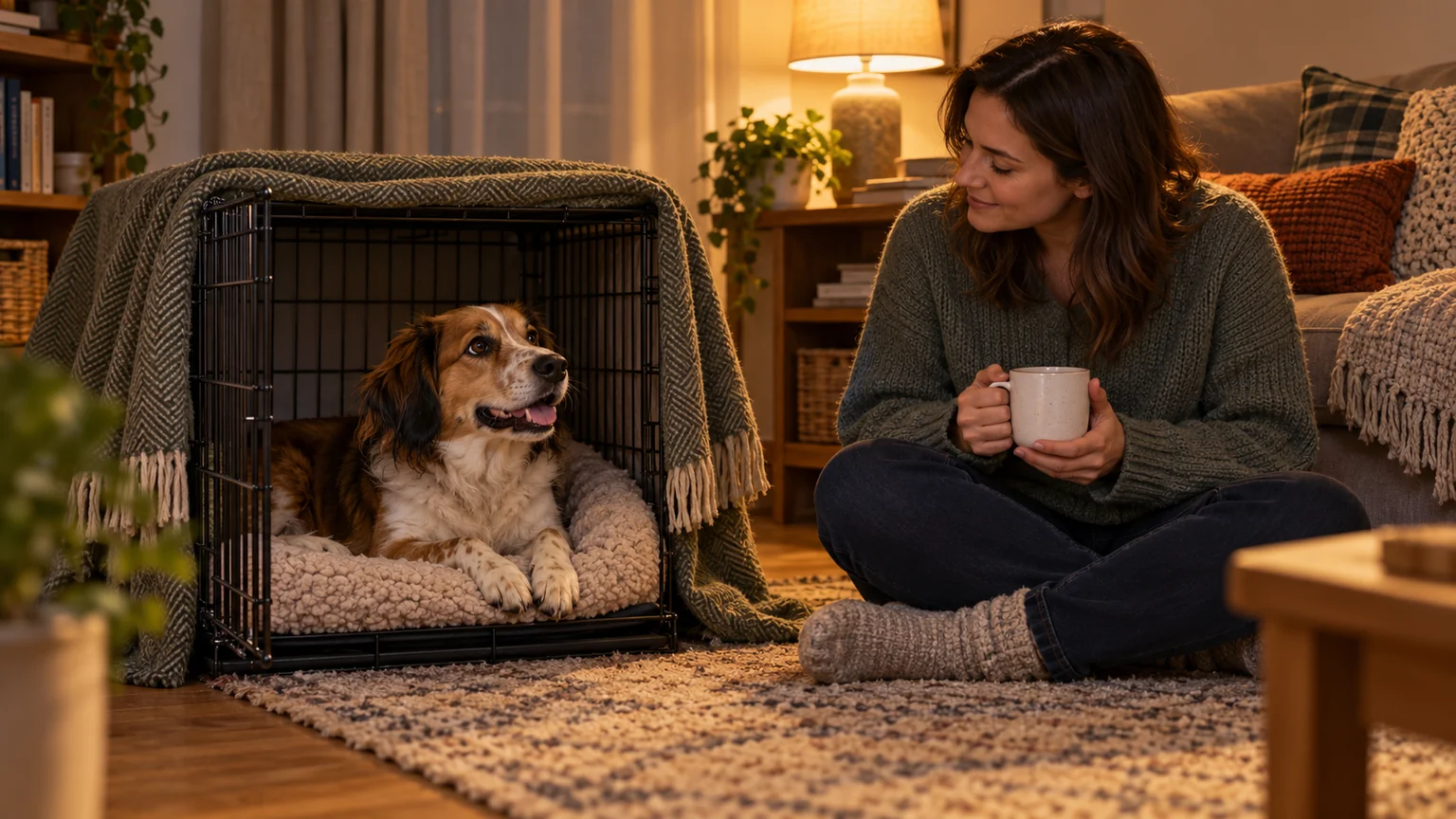
Why fireworks frighten so many dogs
Fireworks are loud, sudden and unpredictable. There's no pattern a dog can learn, and the noise can come from any direction, at any time, for hours.
Dogs also seem to experience firework noise differently from us. Research by the University of Salford, working with Dogs Trust, suggested that dogs may be more sensitive to low-frequency booms and vibration than previously thought. The same work noted that these low booms are hard to block out of a home (University of Salford and Dogs Trust: Bonfire night advice).
On top of the noise come flashes of light, the smell of smoke and the tension in a household when everyone is on edge. For a dog who already finds loud sounds difficult, it can add up to a very frightening evening.
A frightened dog is reacting to something that genuinely scares them, so telling them off won't help. The kindest approach is to reduce what frightens them and help them feel safe.
Recognise the signs your dog is frightened
Some dogs make their fear obvious. Others show it more quietly, so it's worth knowing what to look for.
Signs that a dog may be frightened include:
- Trembling or shaking
- Panting when they haven't been active
- Pacing, or being unable to settle
- Hiding behind furniture, under beds or in small spaces
- Clinging to you, or following you from room to room
- Tucking their tail, flattening their ears or crouching low
- Barking, whining or howling
- Toileting indoors when they usually wouldn't
- Trying to escape through doors, windows or fences
- Refusing food they would normally enjoy
PDSA lists shaking, hiding, toileting indoors and trying to escape among the signs owners should watch for (PDSA: Eight million pets fear fireworks).
Look at the whole dog rather than a single sign. Our guide on how to read dog body language in context explains how to put signals in context.
If you're not sure how your dog reacts, keep a few notes during the early weeks of the season. They'll help you plan, and they're useful to share with your vet.
Prepare before the season starts
The best time to help a firework-shy dog is before the first bangs. A little preparation in early autumn means you're not scrambling on the night.
Things to sort out in advance:
- Plan a safe den. Choose the quietest room in your home and set up a hiding place there. There's more on this below.
- Check the dates. Look out for local displays, school events and community bonfire nights. Some councils and venues publish their dates.
- Talk to your vet early if your dog has struggled before. Don't wait until the week of Bonfire Night, when appointments are busier.
- Check your dog's microchip details. PDSA advises making sure dogs are microchipped and that their registered details are up to date.
- Check doors, windows, gates and fences. Repair any gaps before the season.
- Plan to be home on the busiest nights, or arrange for someone your dog knows to stay with them.
Dogs Trust recommends that owners stay in with their dog during fireworks, and have a clear plan in place.
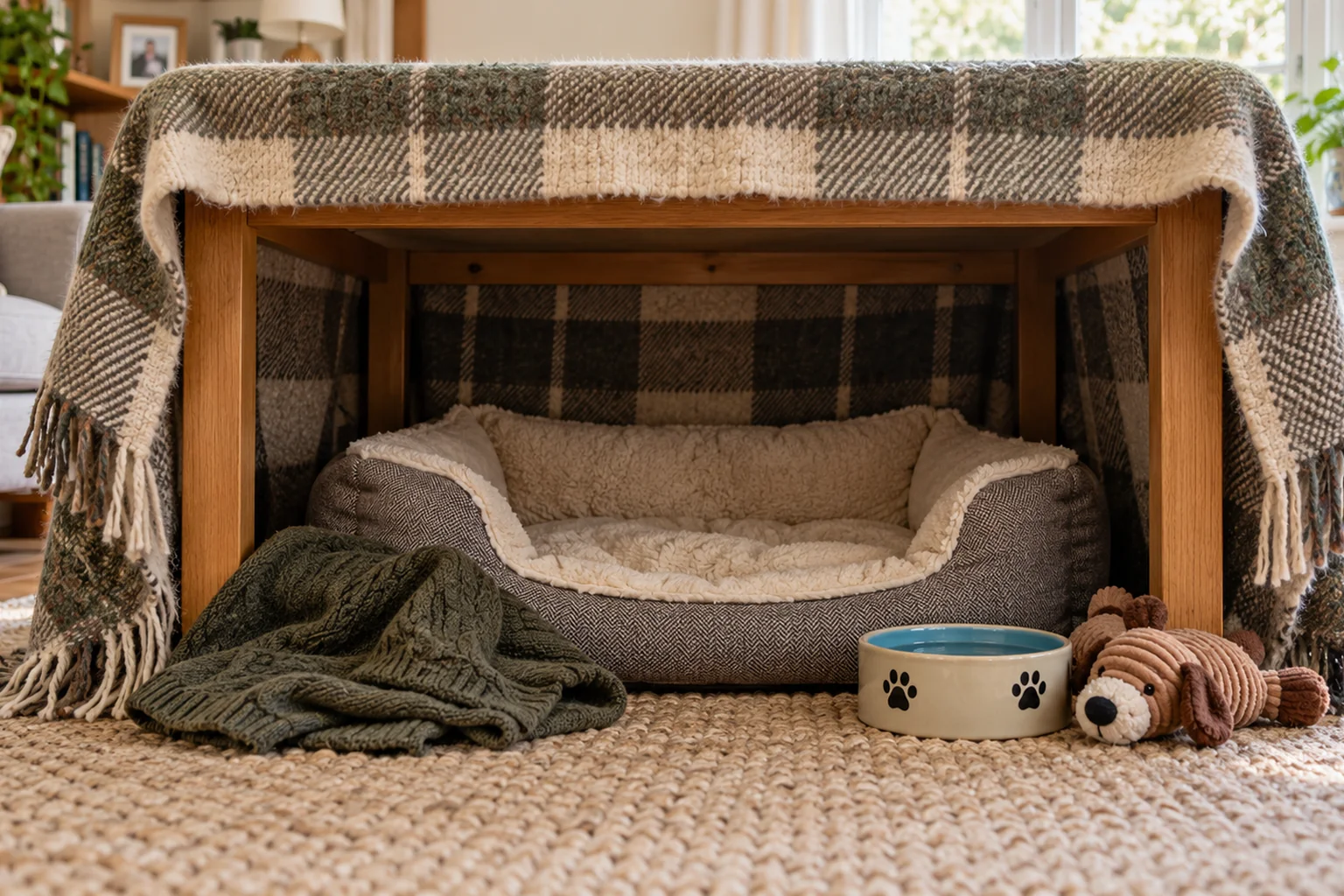
Create a safe den your dog can choose
A safe den gives your dog somewhere to retreat when the noise starts. The RSPCA recommends making sure your dog always has somewhere to hide if they want to, stocked with favourite toys and chews (RSPCA: Pets and fireworks).
To set one up:
- Pick the quietest spot, ideally an inner room with few windows, away from the street.
- Make it enclosed and cosy. A covered crate with the door left open, a space behind a sofa or a table draped with a thick blanket can all work.
- Add familiar bedding, an old jumper that smells of you and a couple of favourite toys.
- Keep water nearby.
- Let your dog get used to it early. Set the den up a week or two before the season and reward your dog for spending time there.
Never shut a frightened dog in a crate they're not already happy in. A dog in a panic can injure themselves trying to get out. If you use a crate, leave the door open so the den is always a choice. Our guide on how to crate train a dog explains how to build genuine comfort with a crate, which needs to happen well before firework season.
PDSA advises never forcing a pet into their den. If your dog chooses a different hiding place, such as under your bed, let them use it as long as it's safe.
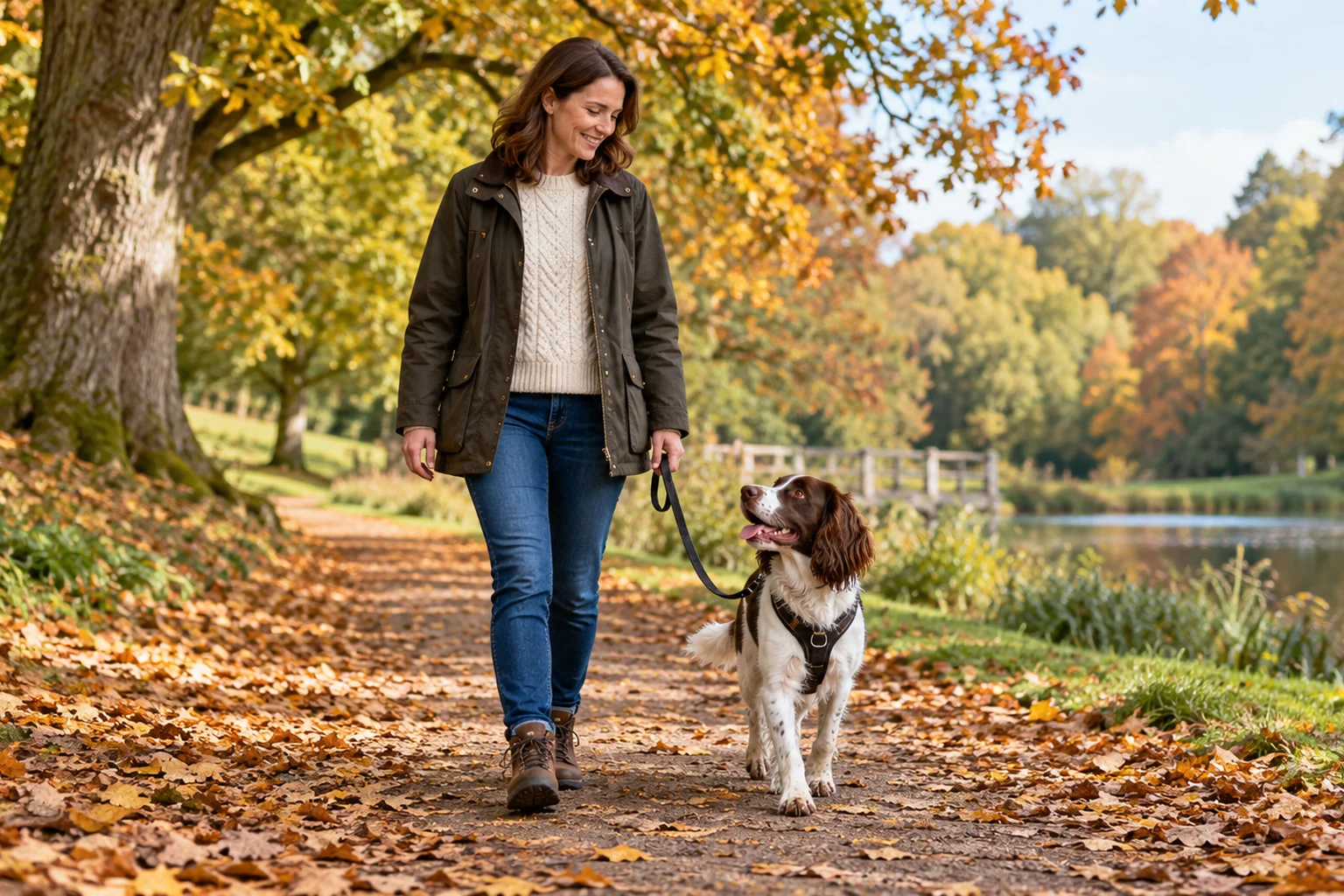
Adjust your dog's routine on firework days
A few changes to the daily routine can make the evening much easier.
Walk earlier. The RSPCA advises walking dogs in daylight during firework season. Aim to finish walks well before dusk, when fireworks usually start.
Feed earlier. Give your dog their evening meal before the noise is likely to begin. Some frightened dogs won't eat once the bangs start.
Toilet before dark. Take your dog into the garden for a toilet break before fireworks begin, and keep them on a lead if you need to go out later.
Close up early. PDSA recommends closing all doors, windows and curtains well before displays start. That helps muffle the noise and hides the flashes.
Settle in before it starts. The RSPCA suggests moving your dog to their safe space before fireworks start each evening, and playing calming music.
If shorter or earlier walks leave your dog with energy to burn, add some calm indoor activities. Our guide on rainy-day enrichment for dogs has ideas for sniffing games and chews that work well indoors.
Soften the noise and the flashes
You can't make your home soundproof, but you can take the edge off the noise.
- Close curtains and blinds to hide flashes.
- Play music or the TV at a comfortable volume to mask some of the outside sound. The RSPCA suggests calming music.
- Choose an inner room for the evening, away from external walls and windows.
- Keep lights on so sudden flashes are less noticeable.
Be realistic about what this can do. The Salford research noted that low-frequency booms and vibrations are difficult to block out of a home. Masking sound helps, but it won't hide every bang. That's why the den, your presence and the rest of the plan matter too.
If you live near a regular display site, it's worth asking whether you could take your dog somewhere quieter for the busiest nights, such as staying with friends or family further away. The Salford work suggested that distance from displays is one of the most effective ways to reduce exposure.
Stay with your dog and comfort them if they want it
Many owners worry that comforting a frightened dog will make the fear worse. Dogs Trust's advice supports giving reassurance to a dog who comes to you for it.
Dogs Trust's advice is to let your dog choose. If they come to you for reassurance, give it. If they prefer to hide, leave them to it and check on them regularly to make sure they're coping.
Helpful things you can do:
- Stay calm and relaxed yourself. Speak in a normal, gentle voice.
- Sit nearby so your dog knows you're there.
- Offer gentle strokes if your dog leans into you and seems to want them.
- Offer something to chew or lick, such as a stuffed food toy or a long-lasting chew, if your dog is calm enough to take it.
- Play a simple game if your dog is relaxed enough to enjoy it.
Things to avoid:
- Coaxing your dog out of their hiding place. PDSA advises offering comfort without coaxing a hiding pet out.
- Telling your dog off for barking, toileting indoors or chewing something. Punishment adds to fear.
- Forcing your dog outside during fireworks. Dogs Trust is clear that a dog should never be forced outside while fireworks are going off.
PDSA also advises staying home and having plenty of toys and distractions to hand.
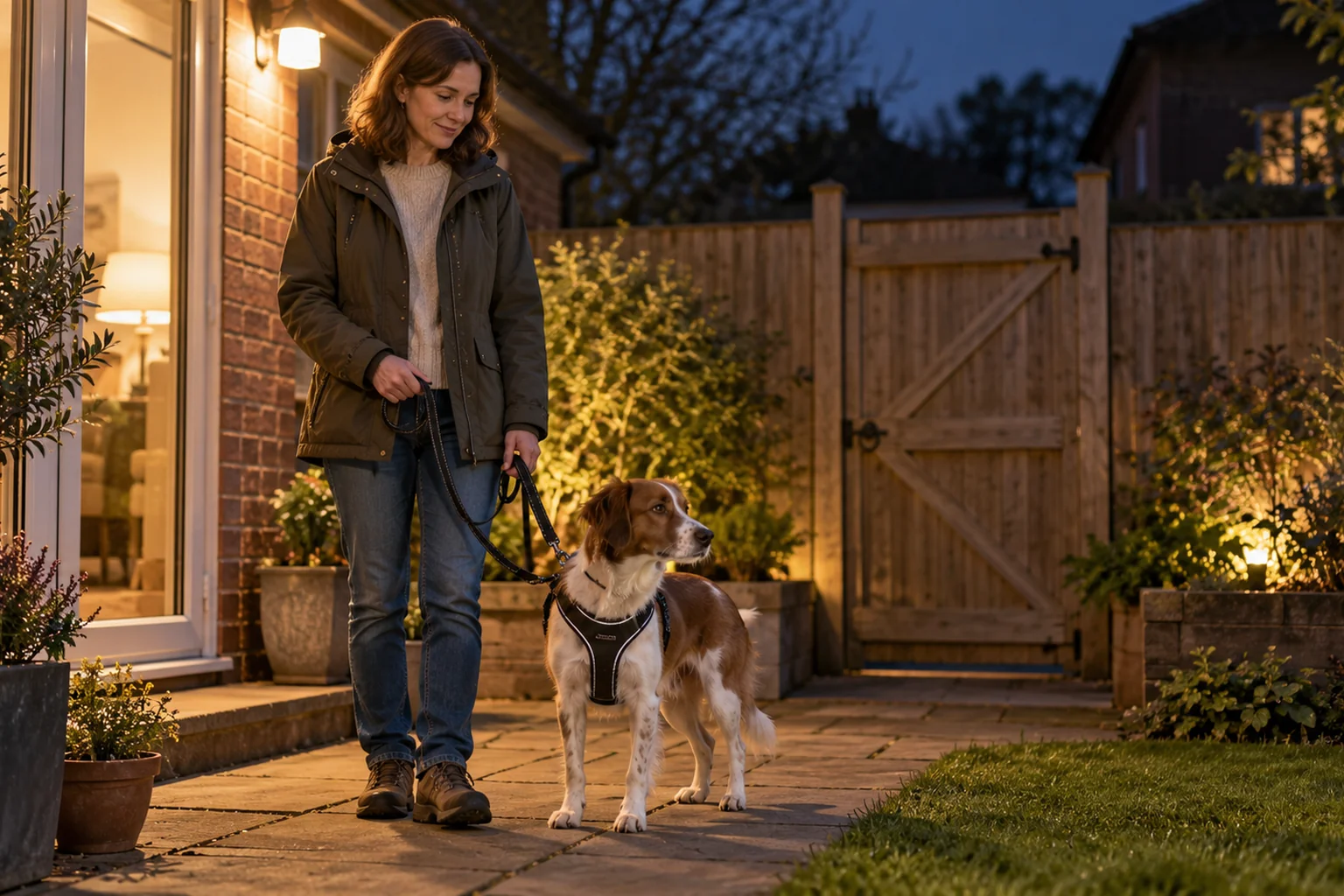
Stop a frightened dog from escaping
Frightened dogs can run, and a dog who bolts in the dark during fireworks is in real danger. Escape-proofing is one of the most important parts of your plan.
Indoors:
- Keep external doors closed, and use a baby gate or an inner door as a second barrier.
- Ask visitors and family members to close doors behind them.
- Check that windows can't be pushed open, including small ones.
In the garden:
- Check fences and gates for gaps or loose panels before the season. Dogs Trust advises checking that doors, windows and fences are secure.
- Keep your dog on a lead in the garden after dark, even if the garden is fully enclosed. A panicked dog may clear a fence they'd normally never attempt.
- Go out with your dog rather than letting them out alone.
On walks:
- Use a well-fitting harness and lead, and check buckles before you leave.
- Keep walks short and close to home during the season.
- Avoid letting your dog off the lead when fireworks are likely.
Make sure your dog wears a collar and ID tag, and that their microchip details are up to date. The RSPCA advises keeping dogs in a secure space so they can't escape from a sudden noise, and making sure they're microchipped.
Help your dog recover the next day
Firework nights don't end when the last rocket goes up. Some dogs are tired, unsettled or jumpy the following day. A calm recovery day helps.
- Keep the next day quiet. Stick to familiar routines, short walks and plenty of rest.
- Watch for jumpiness outside. Debris and the smell of smoke can unsettle some dogs. Choose quiet routes.
- Check your garden for spent fireworks and debris before your dog goes out.
- Check your dog over for any injuries if they tried to escape or chewed at doors or crates.
- Note what happened. Write down how your dog reacted, what seemed to help and what didn't.
Those notes are valuable. They'll help you plan the rest of the season and give your vet or a behaviour professional useful information. Our guide on how to keep a dog behavior log explains how to record what you see simply.
If your dog seems unusually withdrawn, isn't eating, or seems unwell in the days after fireworks, contact your vet.
Talk to your vet about severe fear
For some dogs, fear of fireworks is severe. They may panic, injure themselves, refuse food for long periods or be unable to settle for hours. These dogs need more than a den and some music.
Speak to your vet if your dog:
- Panics, trembles or pants for long periods
- Injures themselves trying to escape or hide
- Toilets indoors repeatedly, or stops eating
- Doesn't settle even after the fireworks have stopped
- Seems to be getting worse each year
The PDSA advises consulting a vet about severe fear, medication or referral to an accredited behaviourist. The RSPCA also recommends asking your vet about medication or clinical behaviour support.
Talk to your vet well before the season if you can. Any medication needs to be prescribed for your individual dog, and your vet can advise on timing. Never give your dog medication intended for people.
A vet check is also a sensible first step for any dog whose fear seems to be getting worse, so other health problems can be ruled out.
If noise fear affects your dog outside firework season, or you want help with a sound programme, ask your vet about referral to a qualified behaviour professional. Choose reward-based support. The American Veterinary Society of Animal Behavior says evidence supports reward-based methods for canine training (AVSAB: Why you need to reward your dog in training).
Build confidence with sounds outside the season
Firework season itself is not the time to train. But in the quieter months, gentle sound work can help some dogs become less worried by bangs.
The RSPCA recommends playing your dog high-quality recordings of fireworks, starting well before the season. PDSA describes starting at a low volume and gradually increasing it over weeks or months, and says desensitisation should always be guided by a vet, vet nurse or accredited behaviourist (PDSA: Noise phobias in dogs). Ask your vet who should guide a programme for your dog before you start.
The general idea:
- Play a recording of fireworks at a volume so low your dog barely notices it.
- While it plays, do something your dog enjoys, such as feeding them or playing a gentle game.
- Over many sessions, very gradually increase the volume, only when your dog stays completely relaxed.
- If your dog shows any sign of worry, turn it down and go back to a quieter level.
Keep sessions short, and stop if your dog seems uneasy. This kind of work goes slowly, and recordings can't fully reproduce the low booms and vibration of real fireworks.
If your dog already has significant noise fear, ask your vet whether a structured sound programme is suitable and who should guide it. Our guide on when to seek professional behavior help for your dog explains how to find the right support.
Try a simple plan for a firework night
Here's an illustrative plan for an evening when fireworks are expected. Adjust it to your dog and your home, and drop anything that doesn't suit them.
Daytime:
- Check doors, gates and fences.
- Take your dog for a good walk in daylight.
- Make sure their den is ready, with bedding, water, toys and a chew.
Late afternoon:
- Feed your dog's evening meal.
- Take them out for a toilet break, on a lead.
- Close windows, curtains and blinds.
Early evening:
- Turn on music or the TV in the den room.
- Settle in with your dog, and let them choose where to be.
- Offer a stuffed food toy or chew if they're calm enough.
During the fireworks:
- Stay calm, stay with them and offer comfort if they want it.
- Check on them regularly if they're hiding.
- Keep the lead on for any late toilet trips.
The next day:
- Keep things quiet and check the garden for debris.
- Write a few notes about what helped.
Troubleshoot common problems
Your dog won't use the den. Let them choose their own hiding place, as long as it's safe. Try moving the den to where they naturally go.
Your dog won't eat during fireworks. Feed earlier, and offer food again once things settle.
Your dog won't go out to toilet after dark. Take them out earlier, before the fireworks start, and go with them on a lead.
Your dog tries to dig or chew their way out. Stop the attempt calmly, move them somewhere safer and talk to your vet. This can be a sign of severe fear.
Fireworks happen on random nights. Keep your routine adjusted for the whole season, not just the main dates.
You have to go out on a busy night. Arrange for someone your dog knows and trusts to stay with them.