
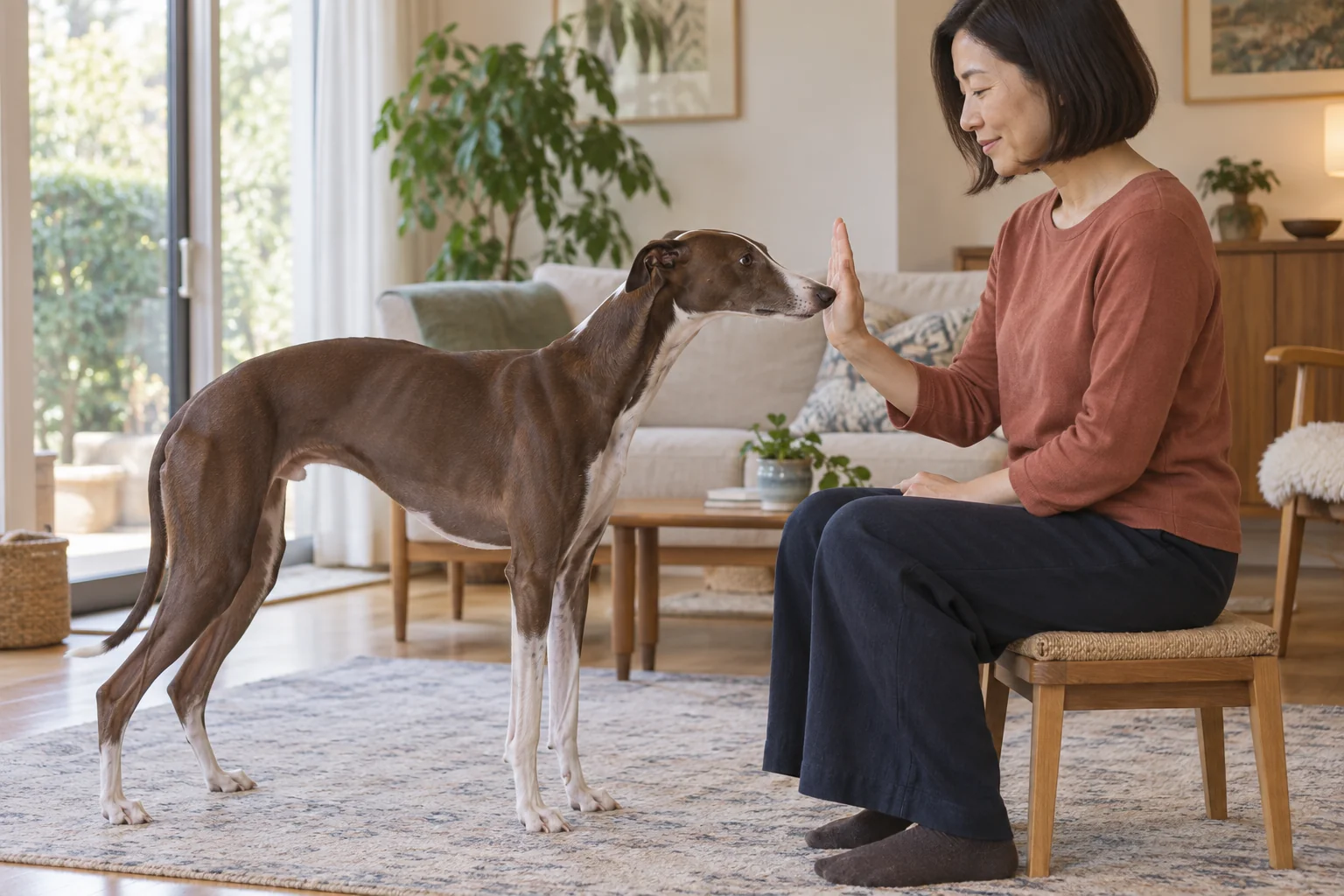
To teach a hand touch, offer an empty palm near your dog's nose and let them investigate. Mark the moment their nose touches your hand, then give a small treat from your other hand. Once they readily repeat the action, say "touch" just before offering the palm.
The useful detail is who closes the gap. Your dog moves their nose towards your stationary hand. Pressing your palm against their nose might produce the same picture, but it removes the action you want them to learn.
This guide teaches a brief, gentle nose touch for a dog who is comfortable approaching you. You can eventually use it to invite a small change of position around the house. It is not a substitute for recall, a way to overcome fear of hands, or permission to begin handling your dog.
Decide what a successful hand touch looks like
Choose one simple result: the front of your dog's nose briefly meets your open palm, with their feet comfortably on the floor. A light contact counts. They do not need to push hard, lick your hand or hold their nose there while you count.
Keeping that picture clear helps when your dog offers something else. A paw on your palm may be a perfectly familiar response to an offered hand, especially if they know "give paw". It is simply a different action from the one you are teaching here.
Your target hand will become a place your dog knows how to reach. That gives you a way to indicate a nearby position without pushing their body or pulling their collar. Dogs Trust describes this use in its target-training guidance, alongside advice to keep practice comfortable and rewarding.
There are other forms of targeting, including holding the nose against a hand and touching objects. Leave those out for now. If you reward a brief touch on one attempt but wait for a long hold on the next, your dog has less consistent information about what earns the treat.
You also do not need to require a sit before every offer. Start with whatever comfortable position your dog has chosen, provided your palm is easy to reach. Adding an unnecessary sit can leave you managing two behaviours when you only meant to teach one.
Prepare an empty target hand and an easy reward delivery
Use a quiet, familiar room with enough space for your dog to move away. Choose secure footing and remove anything that would make approaching awkward, such as a bag between you and the dog. Practise with one dog so another cannot crowd in for the food.
Have small pieces of familiar, suitable food ready in a pocket or accessible pouch. Keep normal meals and water available as usual. Do not make your dog hungry to persuade them to participate, and follow any dietary restrictions your vet has given you.
For the first attempts, give your hands separate jobs. One presents the target; the other delivers the reward. Start with a clean, empty target palm rather than pinching food between your fingers, which can make it harder to distinguish a nose touch from trying to take food.
A clicker is optional. If your dog already understands a short marker word such as "yes", use that. Our guide to reward markers and timing explains the foundation if the marker itself is new to you; here, the particular moment to mark is nose contact.
Choose a position you can hold without wobbling or leaning over your dog. Sitting on a stable chair may make this easier. If you cannot comfortably reach their nose level, ask a reward-based trainer about adapting the setup rather than putting the dog on a raised surface or encouraging them to jump.
Offer your hand where your dog can choose to approach
Wait until your dog is awake, relaxed and voluntarily near you. Turn your body slightly sideways if that gives them more room. Bring your open hand into view at approximately their nose height, with your fingers together and the palm facing towards them.
Leave a small, visible gap between palm and nose. The right starting distance allows a comfortable dog to investigate with a small head movement, without your hand entering their face space. There is no reason to measure a fixed gap if your dog needs more room.
Keep your wrist still once the palm is presented. Do not waggle fingers to attract a grab or move the palm forwards as your dog sniffs. Watch the gap from the side if possible so you can tell whether the nose actually makes contact.
If your dog leans in and touches, mark that contact and deliver the treat with the other hand. Bring the food to an easy eating position near where the touch happened. Let them finish eating before presenting the target again.
If they turn away, lower your hand and give them space. Do not follow their face with it, hold their collar, block their exit or keep presenting until they surrender. A dog who walks off has ended this opportunity to practise.
After a successful touch, put the target hand down while you reward. This makes the next presentation distinct. Leaving it beside their face throughout eating can invite licking or repeated nudges when you are not ready to acknowledge another touch.
Help an interested dog work out the contact
Some dogs immediately sniff an offered hand; others look at it without approaching. If your dog is comfortable but puzzled, you can reward a smaller movement towards the palm before expecting contact. The American Kennel Club's nose-targeting guide describes this gradual approach, beginning with looking or moving towards the hand.
For example, offer the palm and mark a deliberate nose movement towards it. Reward, lower the hand and reset. When that small movement is easy to repeat, look for a little more approach before marking. Keep the hand still so the extra movement comes from your dog.
Use what they are already offering to decide what comes next. If their nose repeatedly stops just short, a tiny additional lean may be the next thing to reward. Do not suddenly expect them to walk across the room or press firmly into the palm.
If waiting for more produces hesitation, return to the easier response or take a break. You do not need to keep withholding the reward until they solve the whole exercise. Equally, once gentle contact is happening readily, continue rewarding contact instead of changing back and forth between a glance and a touch.
This approach is for a relaxed dog investigating a new task. A dog leaning away, freezing or retreating from the offered hand needs the pressure removed. Avoid putting food on your palm to tempt a worried dog closer than they want to come. Skip this exercise and seek individual help if hands themselves seem frightening.
Add the word when your dog recognises the offered palm
Before adding a spoken cue, look for a recognisable pattern: you offer the empty palm, your dog moves towards it without coaxing, their nose touches, and you reward. See whether that pattern is still comfortable when you return to the exercise after a break.
When you can reasonably expect the touch, say "touch" once, then present the palm. Mark the contact as before and reward. This follows the cue-before-hand sequence described in the AKC guide. The word predicts the familiar opportunity; your dog does not have to work out a new sound and an unfamiliar movement simultaneously.
Keep the word and marker separate. "Touch" asks for the action. "Yes", or your click, identifies the contact that earned food. Saying "touch, touch, yes, touch" throughout an attempt makes those jobs harder to tell apart.
If nothing happens, quietly lower your hand. Check whether you changed its position, offered it while your dog was busy, or introduced the word before the action was familiar. Make the next opportunity easier rather than repeating the cue more loudly.
Your palm can remain part of the cue. You are teaching a dog to reach a visible hand, so there is no need to test the word while hiding the target behind your back. Keep using the same word and clear hand shape before adding variations.
Move the target a little without making it harder to reach
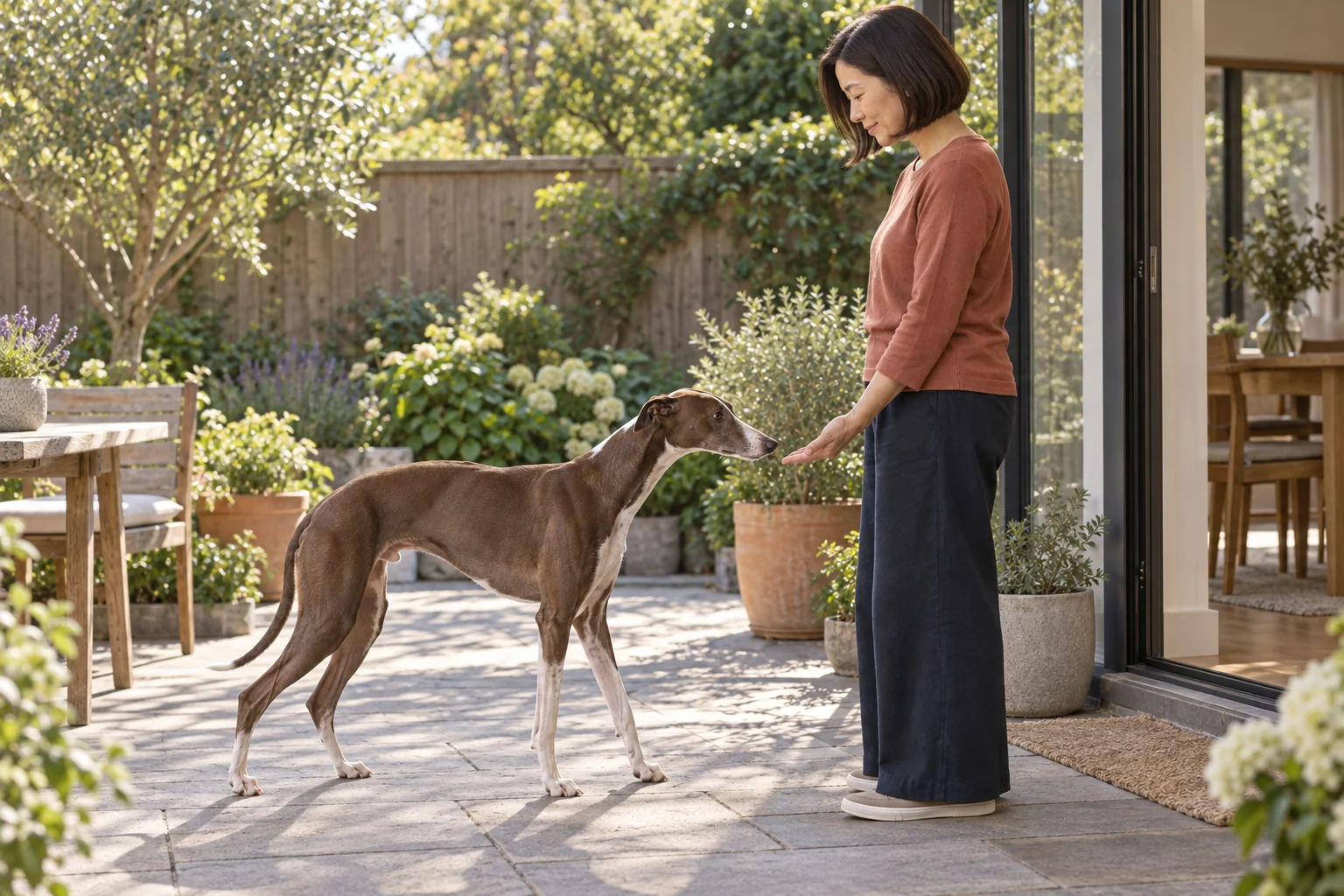
Once the close touch is comfortable, change where you place the palm before the next attempt. Start with a small sideways shift or a slightly greater gap, keeping it near nose height. Present it, hold it still and let your dog close the new gap.
The timing of that movement matters. Repositioning before an invitation gives your dog a reachable destination. Pulling the hand away while they approach keeps moving the destination. For this beginner exercise, let them complete the touch without having to chase your hand.
Change one feature at a time. If you move the hand farther away, keep the same room and body position. If you stand instead of sitting, put the hand close again. You will then have a better idea of which change needs more practice.
Watch how your dog reaches. If they stretch awkwardly, shuffle on a slippery patch or lift their front feet, bring the palm back within comfortable reach. Do not use an overhead target to encourage jumping or put it behind their shoulder to ask for a tight twist.
You can introduce your other hand as a target once the first is familiar. Offer it close and reward the same light contact, with the food now delivered from the original target hand. A pause does not mean your dog has forgotten everything; the hand and food arrangement have both changed.
Keep rewarding gentle contacts. A harder bump is not a better version of this skill. If enthusiasm becomes forceful, reduce the movement involved and return to a nearby, stationary palm rather than encouraging a run-up.
Adjust the setup if you get licking, paws or teeth
Look at what happens immediately before the unwanted response. If your dog licks the palm, check for food residue and whether you left the target out after contact. Clean the hand, present it briefly and be ready to mark the first light nose touch.
If they offer a paw, compare your target with the gesture you use for a paw trick. A palm held low and facing upwards may look familiar for another reason. Try a vertical palm at comfortable nose height, close enough for a small head movement, without saying their paw cue.
Do not correct or push away a lifted paw. Lower your hand calmly and reset, or finish if your dog becomes frustrated. Dogs Trust specifically notes that mouthing, pawing or barking during this exercise can indicate confusion or frustration, and advises making it easier or taking a break.
If teeth contact your hand, pause the exercise. Avoid snatching the hand back and forth in a way that invites chasing. On a later attempt, use an empty palm and a close target, with food arriving promptly after a nose touch rather than after a prolonged investigation.
Repeated grabbing, painful mouthing or uncertainty about whether it is safe to offer your hand is a reason to stop and get help from a qualified reward-based trainer. Growling, snapping or fear warrants professional behaviour assessment. Do not keep putting a hand within reach to see whether the next attempt goes better.
If your dog repeatedly bumps you when you have not offered a target, avoid turning every nudge into another round. Put the training food away when you finish and return to an ordinary activity. During practice, use a deliberate palm presentation so the invitation has a clear beginning.
Use a hand touch for an ordinary change of position
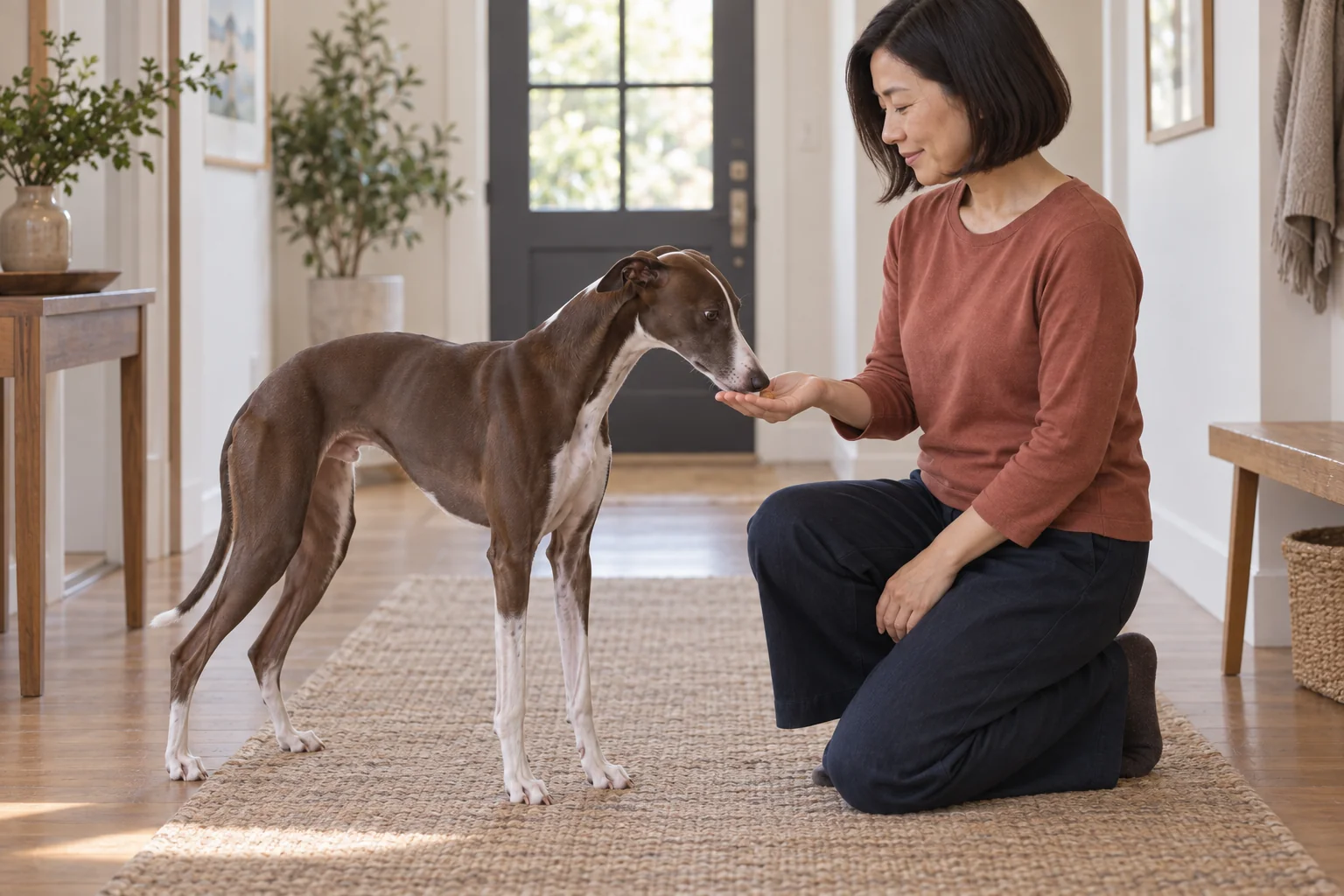
Choose a small, unhurried use once the touch is familiar. For example, imagine your dog standing beside you in a roomy part of the kitchen. You want to invite them a little to one side so you can walk past without squeezing around them.
Check the destination first. It should have clear footing and enough space for their whole body, not just their nose. Position yourself so you can offer the palm slightly towards that space without reaching across their face or drawing them into furniture.
Say "touch", present the hand and keep it still. If your dog chooses to move over and make contact, mark and reward there. Then put the target away. Let the dog stand, sniff or move on; a completed touch does not include a promise to stay in place.
If they remain where they are, take another route or wait. Do not turn a helpful invitation into repeated demands because you are in a hurry. Practise the smaller movement another time when the position itself does not matter.
Avoid using the touch to draw your dog onto an uncomfortable surface, into a bath or towards something they are trying to avoid. Do not use it to distract them while somebody grabs a collar or begins a grooming procedure. Touching your palm is agreement to that familiar action only.
For the same reason, do not ask visitors or children to offer targets as a test of friendliness. Keep beginner practice with a familiar adult whom the dog already approaches comfortably. Moving to another person's hand is a separate change, and no dog needs to greet someone through this exercise.
Take the familiar touch into another quiet setting
Try a different calm room before considering outdoor practice. Begin with the target close to the nose, even if your dog had been crossing a larger gap elsewhere. Keep the hand shape and reward arrangement familiar while the surroundings change.
Check whether your dog is actually available for the exercise. If they are investigating the room, allow that without repeatedly calling "touch". Offer the hand when they return to you voluntarily, or leave practice for another time.
An outdoor attempt belongs in a secure, quiet setting where your dog is already comfortable. Keep any necessary lead loose enough for the tiny movement involved, without pulling them towards the target. If managing food, the hand and the lead feels awkward, stay indoors until you have a safer arrangement.
Do not stage distractions by asking someone to approach with another dog. You can postpone practice when the environment is busy. Our guide to why a dog listens at home but not outside covers the wider problem of skills becoming difficult in a different setting.
A hand touch does not make off-lead freedom safe or replace a trained recall. Do not release your dog near roads, livestock or other hazards because they touched reliably in the kitchen. For coming back from a distance, use the separate guidance on practising recall safely.
Stop for discomfort and get the right kind of help
A dog can take a treat and still be uncomfortable with the exercise. Look at the whole interaction, including whether they willingly return after eating or need repeated encouragement to approach again. End practice if offering the hand brings a retreat, a freeze or an effort to get away.
If your dog previously enjoyed touching but suddenly avoids it, stop and contact your vet. The same applies if contact seems painful, moving towards the hand has become difficult, or you notice another sudden behaviour change. Do not repeatedly test the nose or move their head to check what hurts.
Dogs Trust's veterinary guidance on behavioural first aid explains that medical and painful conditions can affect behaviour even when an owner cannot identify an obvious physical problem. A vet should assess that possibility before you treat a new reluctance as a training issue.
Fear of hands, aggression or a bite history needs an individual safety assessment. Avoid using food to draw the dog within touching distance and then trying to handle them. Ask your vet about referral to a qualified, reward-based clinical behaviour professional; our guide to when a dog needs professional behaviour help explains that boundary.
An ordinary training question, such as difficulty arranging your hands, may be something a reward-based trainer can help you change. You do not need to provoke a worrying response to demonstrate it. Describe what you have already observed and let the professional advise what information would be safe to gather.
Choose the next practice from what your dog can comfortably repeat
For your next attempt, pick the easiest version that previously worked. If you have not yet had contact, your task is to offer a still palm and notice a voluntary approach. If contact is familiar, practise the word followed by the hand without also moving farther away.
Before increasing the gap, ask yourself whether your dog is choosing to come back, reaching without strain and making a light contact. If any answer is uncertain, keep the target close or finish. You do not need a fixed number of repetitions to justify stopping.
A useful note might be: "Touched the left palm beside the chair; paused when I stood up." That describes the condition to practise next. It gives you more usable information than calling the dog stubborn or assuming the cue works everywhere.
You may spend several opportunities on the same comfortable version, and there is no deadline for adding distance. The aim for this week can simply be a recognisable, voluntary nose touch to an empty hand. Other foundation topics are in the training guides if a different skill would be more useful right now.