
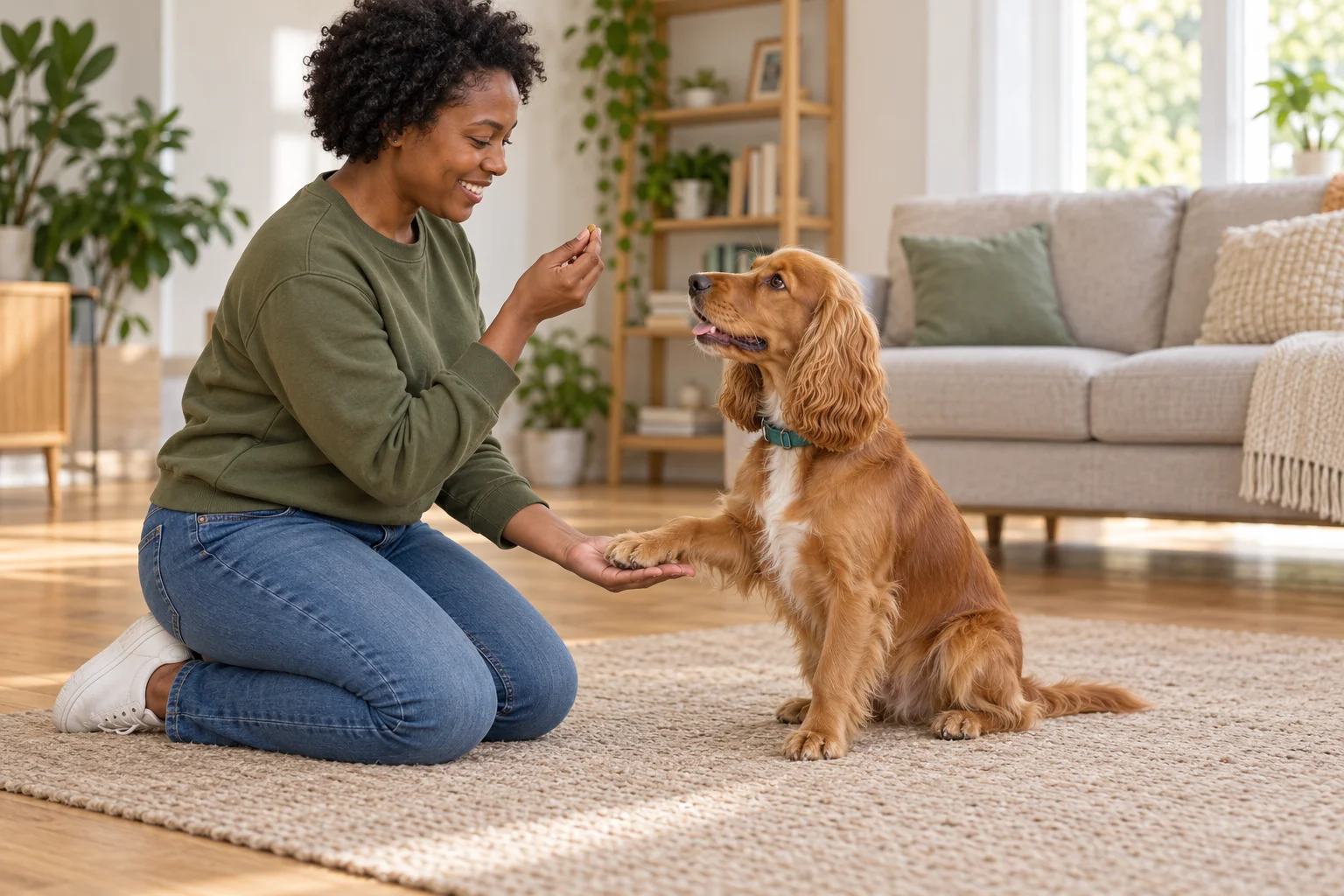
To teach your dog to shake (give paw), start with a small treat in a closed fist held low, near their nose and front paws. Let your dog investigate, then say "yes" and give the treat as soon as they lift a paw, even slightly. Once that movement is familiar, offer an open palm for the paw to land on. Add "paw" or "shake" just before offering your hand when your dog can comfortably repeat it.
Practice on a non-slip rug and keep the paw low. Let your dog lift their own paw. Stop if they seem sore, pull away or become frustrated; don't hold their foot in place.
Once the trick has a cue, reward it when you ask, rather than every time your dog paws at you. That helps keep a fun trick from becoming scratches at dinner or swipes at visitors. The guidance below explains each part, including an alternative if your dog keeps mouthing your hand.
Why teach your dog to give paw
Teaching paw gives you practice at rewarding the right moment and introducing a cue. It can also be a confidence builder for an owner learning to train. A dog who enjoys offering a paw may become more comfortable with gentle foot contact, but nail care and grooming still need their own gradual preparation. Giving paw does not mean your dog is ready to have their nails trimmed.
PDSA describes paw as a simple trick that can be taught with a favorite treat and a short, consistent cue (PDSA: How to teach your dog paw).
Check it's comfortable for your dog
Lifting a paw means your dog shifts their weight onto three legs. For most dogs that's easy. For some, especially older dogs or dogs with sore joints, it can be uncomfortable.
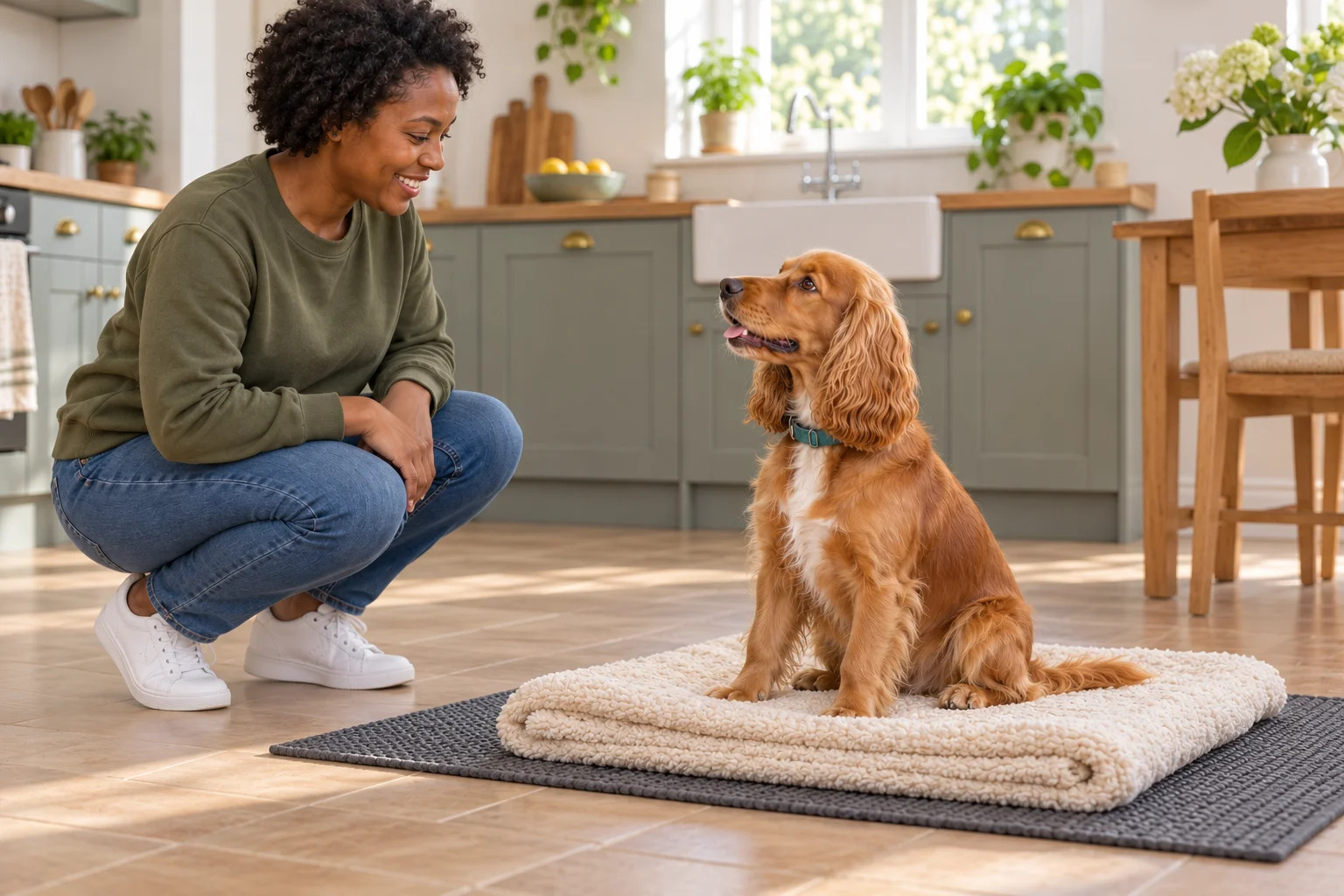
VCA Animal Hospitals' tips for training older dogs note that even senior-appropriate tricks like shake can be uncomfortable when a dog is asked to sit on hard ground, and suggest giving them a padded spot to practice on (VCA: Practical tips for training your senior dog).
Before you start:
- Choose a soft, non-slip surface, such as a rug or a yoga mat.
- Watch how your dog sits. If they sit awkwardly or seem stiff, keep sessions very short.
- Notice if your dog prefers one paw. That's normal, but if they consistently avoid lifting one particular paw, or seem sore, it's worth mentioning to your vet.
- Keep the paw low. Your dog doesn't need to lift their paw high for the trick to count.
Talk to your vet if your dog limps, licks a paw a lot, seems uncomfortable shifting their weight or has recently become reluctant to have their feet touched.
Get ready to train
A few minutes of preparation makes paw much easier to teach.
- Choose small, tasty treats. Soft treats your dog can eat quickly work well. PDSA advises keeping treats to no more than 10% of your dog's daily food.
- Pick one cue word, such as "paw" or "shake", and stick to it. PDSA recommends one simple command.
- Train somewhere quiet, with few distractions.
- Train when your dog is alert, not straight after a big meal or a long walk.
- Keep sessions short. A few minutes is plenty.
Our guide on how long should dog training sessions be? has tips for fitting quick practice into a busy routine.
A marker word, such as "yes", or a click, helps your dog understand exactly which moment earned the treat. Our guide on reward markers and timing explains how to introduce one.
It helps if your dog already knows how to sit, because most dogs find it easiest to lift a paw from a sit.
Reward your dog's first paw lift
The closed-fist method works well for many dogs, and it's the approach PDSA describes.
- Ask your dog to sit.
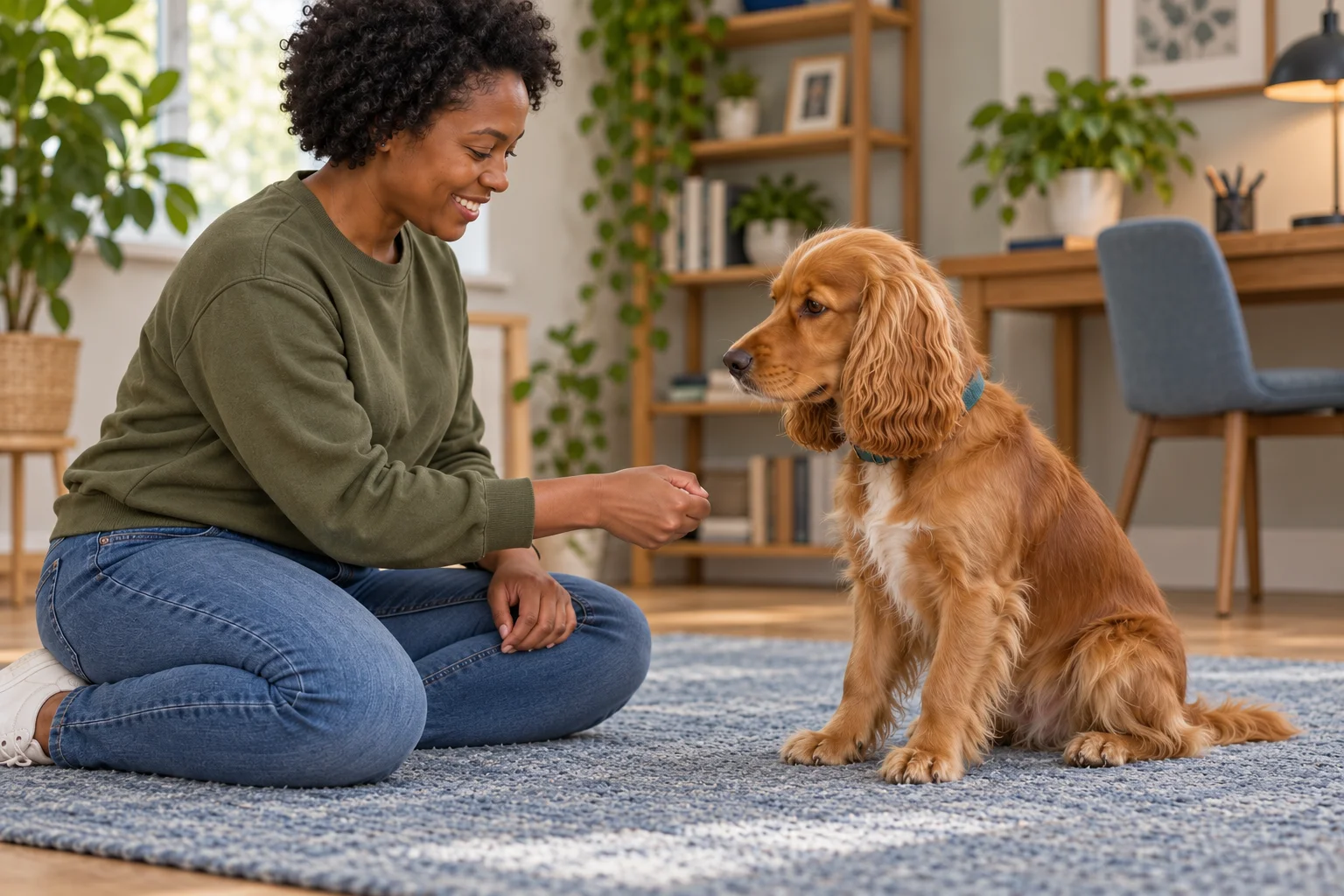
- Hold a treat in a closed fist and place it low, near your dog's nose and front paws.
- Let your dog sniff, lick and nudge your hand. Don't open it.
- Wait. Many dogs will eventually try lifting a paw toward your hand to get the treat.
- The moment your dog lifts a paw, even slightly, mark it with "yes" and open your hand to give the treat.
At first, reward any small paw lift. Over several sessions, wait for a slightly higher or more deliberate lift before you reward.
If your dog keeps mouthing your hand, pause the attempt. Don't keep waiting through chewing or turn it into a tugging game. On the next attempt, try the alternative below instead of repeatedly offering the closed fist.
Try a natural paw lift if the closed fist frustrates your dog
Some dogs find the closed fist frustrating, or keep using their mouth rather than their paw. Capturing can be an easier route.
- Sit with your dog and watch for any moment they naturally lift a front paw, such as when shifting position.
- Mark it immediately with "yes" and give a treat.
- Repeat whenever it happens.
You can encourage a natural lift by holding a treat at your dog's nose and moving it slowly to one side, so they shift their weight. Many dogs lift the opposite paw slightly as they lean. Mark and reward that small lift.
Capturing can take a little longer at first, but it's a gentle option for dogs who are unsure about hands near their feet.
Move the paw onto your hand
Look for a small, relaxed paw lift that your dog offers again after eating the reward, without chewing your hand or needing encouragement. When that happens repeatedly, including after a break, start offering a palm for the paw to land on. If you are still waiting through licking and frustration, stay with the easier version or finish for now.
- Hold your open hand, palm up, low and just in front of your dog's paw.
- When your dog lifts their paw and it touches your hand, mark and reward.
- Gradually raise your hand a little, but keep it comfortable for your dog.
Let your dog place their paw on your hand themselves. Some guides, including PDSA's, suggest gently taking the paw as you praise. That suits plenty of relaxed dogs, but if your dog is unsure about having their feet handled, it's kinder to let the paw rest on your flat palm without gripping it. Don't squeeze the paw or pull it up. A dog who feels held may pull back and become less keen to offer it next time.
If you'd like to build toward gently holding the paw, do it gradually. Let the paw rest on your palm for a moment, mark and reward. Then curl your fingers lightly around it for a second before you mark. If your dog pulls the paw away, that's information, not disobedience: go back to an open palm for a few sessions.
If your dog paws at your hand rather than placing their paw on it, reward the gentler versions and calmly ignore the harder swipes.
Say "paw" before offering your hand
Add the word when presenting your palm usually brings a gentle paw onto it, and your dog is happy to repeat the action after a break. You should be able to anticipate the paw lift before you say anything.
- Say "paw" once, just before you offer your open hand.
- When your dog lifts their paw onto your hand, mark and reward.
- Repeat many times, across several short sessions.
Keep the two words separate: "paw" asks for the action, while "yes" marks the moment that earns the reward. Offer the hand after the cue so your dog hears the word before doing the familiar movement.
Say the cue once. If your dog doesn't respond, wait a moment, then make it easier by offering your hand a little lower. Avoid repeating "paw, paw, paw", which can teach your dog that the first cue doesn't matter.
Reduce food rewards gradually
First, separate seeing food from earning it. Once your dog will place a paw on your open hand, keep the treats in a pocket or pouch. Say "paw", offer your empty palm, then bring out a treat after the paw touches. Continue rewarding each successful attempt while your dog learns that food can arrive without being visible beforehand.
Reducing how often you give food comes later, when the cue and hand gesture work comfortably without showing a treat first. PDSA suggests occasional treats once a dog understands the trick, with praise and attention in between.
- Begin with an occasional familiar attempt rewarded with something else your dog enjoys, such as praise or a quick game.
- Continue giving food often enough that your dog stays keen to participate. There is no deadline for stopping treats.
- Reward every success again when practicing somewhere new or making the exercise harder.
If your dog hesitates or stops offering the trick, return to the easier setup and more frequent food rewards. Check that the alternative reward is something they actually want; not every dog enjoys being petted during practice.
Stop uninvited pawing
Some dogs learn paw so well that they start offering it all the time, pawing at people for attention, food or play. This can be annoying, and with big dogs or sharp claws it can hurt or scratch, especially with children or older people.
To keep paw on cue:
- Once you've added the cue, reward paw when you've asked for it. Outside the initial teaching sessions, avoid giving food or attention for uninvited pawing.
- Don't respond to pawing for attention. Turn away briefly, then reward your dog when they're calm with all four feet on the floor.
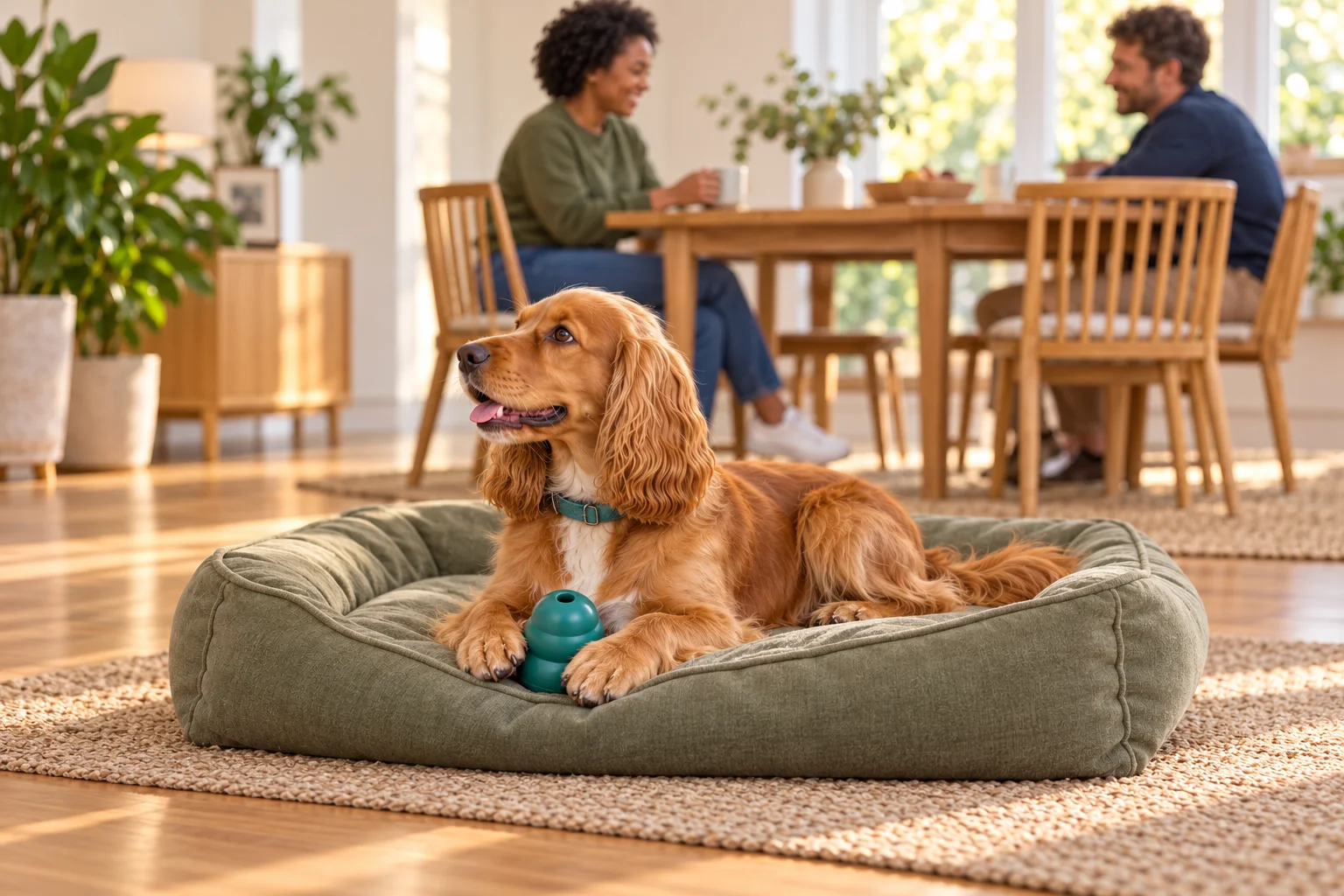
- Teach an alternative, such as a sit or going to their bed, and reward that in situations where your dog tends to paw.
- Ask for paw only at planned times, such as during short training sessions, not at mealtimes or when visitors arrive.
It helps to understand why this happens. Your dog isn't being rude. They've learned that lifting a paw makes good things happen, so they try it whenever they want something. Every time someone in the household laughs, pets them or hands over a crust in response, the habit gets a little stronger. That's why everyone at home needs to follow the same training rule: once the cue is learned, paw earns a reward when it's been asked for.
For a few days, it can help to jot down when uninvited pawing happens. You may find a clear pattern, such as pawing at the table, when you sit on the sofa in the evening or when your dog is bored after a short walk. Once you can see the pattern, you can plan ahead, for example by giving your dog a chew on their bed before you sit down to eat, or by fitting in a short game or sniffing walk before the evening quiet time.
If your dog paws at visitors, ask guests not to respond and give your dog something else to do, such as a chew on their bed.
Be patient. A dog who has been rewarded for uninvited pawing may try harder for a while before giving up. Stay calm and consistent, and keep rewarding the behavior you do want.
Add variations once paw is solid
When your dog gives paw reliably on cue, you can teach variations.
The other paw. Use a different cue, such as "other" or "left", and offer your hand to the opposite side. Reward when your dog lifts the other paw. Some dogs find their less-preferred paw harder, so keep it easy.
High five. Hold your hand upright, palm facing your dog, a little higher than for paw. Reward when your dog touches your palm with their paw.
Wave. Hold your hand slightly higher, then pull it away just before your dog touches it. Reward the lifted paw in the air. Over time, your dog learns to lift their paw without touching.
Keep any variation comfortable. Higher paws, such as a high five or a wave, ask more of your dog's balance and joints, so they may not suit older or stiff dogs. A low, relaxed paw is just as good a trick.
Practice in new places and with new people
A trick learned in one room often looks different to your dog in a new setting. The yard, a friend's house or a café has new smells and sounds, and the cue may not mean as much there at first.
When you move to a new place, go back to an easier version. Offer your hand a little lower, reward every paw again and keep the session very short. Once your dog responds well, you can return to occasional rewards.
If other people want to ask for paw, show them how to offer a flat, low hand and say the cue once. Children should do this only with an adult nearby, and only with a dog who is relaxed and enjoys the trick. If your dog seems unsure about someone new, or turns away, let them skip it. A trick should never be a reason to push a dog into contact they don't want.
A worked example: a puppy who mouths your hand
Here's an illustrative example of how you might adapt the training for a common problem. Adjust it to your own dog.
The pattern: Your puppy chews and licks your closed fist enthusiastically but never lifts a paw.
Change the approach:
- Switch to capturing. Watch for natural paw lifts during calm moments and reward them.
- Try the side-lure, moving a treat slowly to one side so your puppy shifts their weight.
In sessions:
- Keep sessions to a couple of minutes, two or three times a day.
- Reward the smallest paw lift.
- When your puppy is lifting a paw reliably, introduce your open hand.
Move on when the movement is comfortable:
- When your puppy repeatedly offers a relaxed lift, introduce your open palm. Add the cue only after they can comfortably place their paw on it, including when you return after a break.
- If they still chew at your hand or stop joining in, return to rewarding an easier natural lift. You do not need to reach the cue stage by a particular day.
A different dog, a different plan. Now picture an older Labrador who knows paw already but has started to hesitate when asked on the kitchen tiles. Rather than repeating the cue, the owner moves practice onto a folded blanket, asks for the paw only once or twice per session, keeps their hand low and rewards generously. If the hesitation is new or the dog seems sore, they stop practicing and contact their vet before continuing. The trick stays in the dog's repertoire, but it's adjusted to suit their body.
Both examples share the same idea: when the trick isn't working, change the setup to make it easier, rather than asking more firmly.
Troubleshoot common problems
Your dog won't lift a paw at all. Try capturing natural lifts, or the side-lure method. Make sure your dog is comfortable on the surface.
Your dog mouths your hand. Pause and use the natural-lift alternative above. Don't keep offering a fist to a dog who is chewing or becoming frustrated.
Your dog paws too hard. Reward only gentler paws, and keep your hand low. Keep your dog's nails trimmed, with help from your vet or groomer if needed.
Your dog only gives paw when they see a treat. Keep food out of sight, then deliver it after the familiar cue and paw contact. Keep rewarding each success at this stage; reducing reward frequency comes later.
Your dog paws at you constantly. Stop rewarding uninvited pawing, and ask for paw only during training sessions.
Your dog lifts the wrong paw. That's fine at first. Reward whichever paw your dog offers until the trick is solid, then teach the other paw as a separate cue.
Your dog lies down instead of staying in a sit. Keep your hand a little higher, so your dog doesn't need to lower their head to reach it, and reward quickly before they slide down. A soft surface also helps dogs who find sitting on hard floors uncomfortable.
Your dog only does it in the kitchen. Dogs don't always transfer a skill to new places right away. Practice in a few different rooms and then outdoors, making it easier each time you change location.
Your dog seems reluctant or uncomfortable. Check the surface, keep the paw low and talk to your vet if you notice limping or soreness.
When to get help
Most dogs learn paw quickly with patient, reward-based practice. A few need extra support.
Talk to your vet if:
- Your dog seems uncomfortable lifting a paw or putting weight on three legs
- Your dog limps, licks a paw a lot or avoids having their feet touched
- Your dog's willingness to do the trick changes suddenly
Look for a qualified, reward-based trainer or behavior professional if:
- Your dog growls or snaps when you approach their paws
- Your dog becomes very frustrated or frantic during training
- You'd like help with uninvited pawing or attention-seeking behavior
Use reward-based help only. The American Veterinary Society of Animal Behavior states that evidence supports reward-based methods for all canine training (AVSAB: Why you need to reward your dog in training).
If your dog enjoys learning tricks, our guide on how to teach your dog to touch your hand with their nose is another easy, useful skill to try next. You can also browse our other dog training guides.