
To teach your dog to leave it, start with a low-interest item they cannot take and a better reward in your other hand. Let them notice the item, then reward the moment they voluntarily look or move away. Once that response becomes predictable, add “leave it” before presenting the item. Practise with easy changes before expecting the cue to help outside.
The reward comes from you, separately from the thing you asked your dog to leave. Keep that distinction throughout practice. If you finish by giving them the prohibited item, you can turn the exercise into waiting for permission to take it.
You can begin at home with a piece of ordinary kibble and small treats your dog likes more. You are rewarding the moment your dog loses interest in the item, even if they only turn their nose away at first.
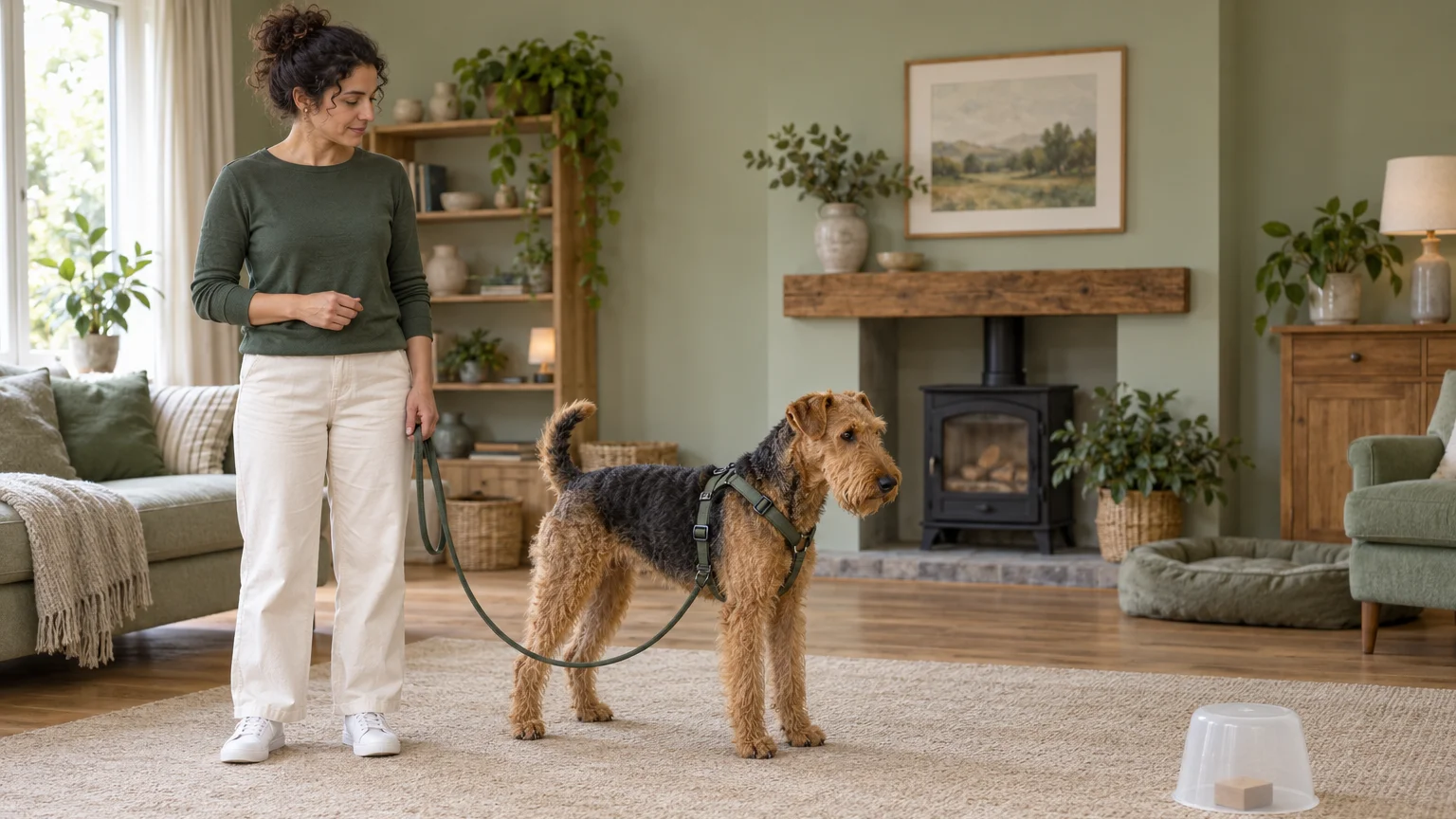
What “leave it” asks your dog to do
“Leave it” means disengage from something before picking it up. Your dog might turn their head, move their nose away or step towards you. You don't need a formal sit or prolonged eye contact to start teaching it.
“Drop it” concerns an object already in the mouth. That needs its own practice, which you can find in our guide to teaching your dog to drop it. Keep the words distinct so you aren't asking your dog to work out whether you mean ignore an item or release one.
Dogs Trust's leave-it guidance makes this distinction and teaches disengagement using an interesting reward from the other hand. That's the progression used here. You first help your dog discover the response, then attach a word to it and gradually practise in different situations.
Think about the situations where you'll use the cue. You might want your dog to turn away from a harmless dropped object while you clear it up, or ignore something beside a walking route. During training, you arrange those situations so the item stays inaccessible and your dog has an easy opportunity to succeed.
You can still allow ordinary sniffing and exploration elsewhere. There's no need to say “leave it” every time your dog investigates something safe. Use it for a particular item you want them to disengage from, then help them move on to an appropriate activity.
Prepare an easy practice space
Choose a quiet room with enough space for your dog to move away freely. Clear loose food and tempting objects from the floor. Practise without another dog competing for rewards, and have an adult handle the exercise rather than involving children as training partners.
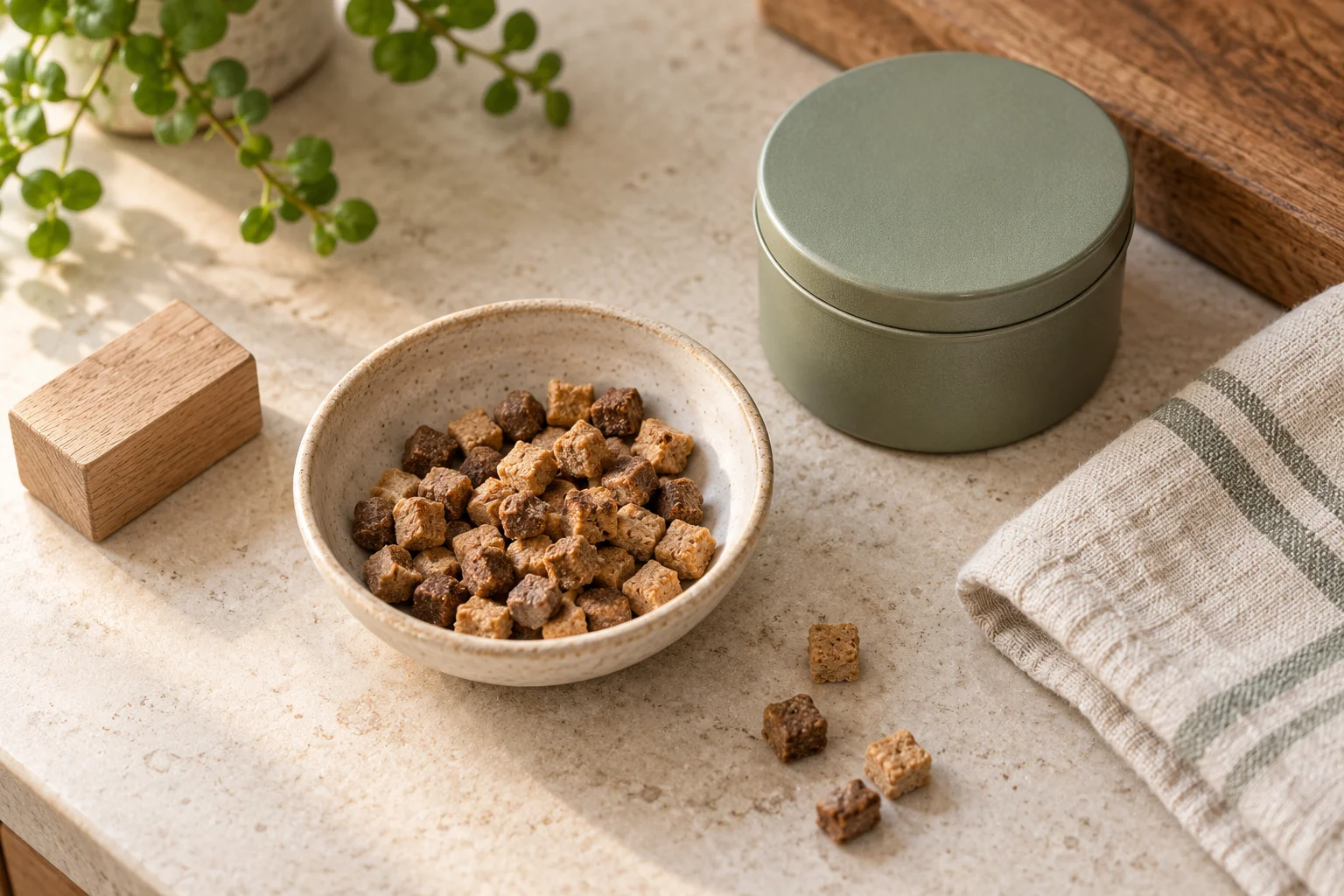
For your first item, a piece of your dog's usual kibble can work if it's less exciting than the reward. Use food that's suitable for your dog, taking any dietary restrictions into account. If they would do almost anything for kibble, start with a less interesting, ordinary object that you can hold securely instead. Avoid small loose objects your dog could swallow.
The reward should be something your dog readily accepts in this setting. Prepare small pieces that are easy to deliver, with spare rewards within your reach and outside theirs. You don't need to withhold meals to make practice work. Our guide to choosing rewards your dog wants can help if the difference between the practice item and reward isn't clear.
Sit or stand in a comfortable position where you can keep the item protected without leaning over your dog. They can stand, sit or change position. Asking for a sit before every repetition adds an extra task that isn't necessary for learning to turn away.
Choose a brief reward marker, such as “yes”, or use a clicker your dog already understands. A marker identifies the exact response you're rewarding, and the treat follows promptly. If this is new to you, read about reward marker timing before adding a clicker to the exercise. A familiar word is enough; you don't need special equipment.
Have an easy way to end practice too. You should be able to put the item away and let your dog do something else without a scramble for it. Start when neither of you is rushed.
Reward the first turn away
Keep the low-interest item in one hand and the reward in the other. With kibble, enclose it loosely in your fist so your dog can smell it without taking it. Hold that hand still at a comfortable distance for them to investigate. Keep the reward hand quiet rather than waving it in front of their face.
At this stage, don't say “leave it”. You're looking for a response you can reward before asking your dog to understand a new word.
Your dog may sniff the item hand. Watch for the first small break in interest: their nose moves away, their head turns slightly or they take a step back. Mark that turn away, then deliver a treat from your other hand. You don't need to wait for them to look directly at you.
For example, your dog sniffs your closed hand, then turns their head towards a sound in the room. Say “yes” as their head turns and offer the reward away from the item hand. That first response doesn't have to look deliberate or polished. It gives you something useful to reinforce.
Keep the practice item enclosed while your dog eats the reward. Lower or put away the item hand between repetitions, then present it again when you're both ready. The kibble in that hand stays separate from the rewards; it doesn't become a prize at the end.
Access is prevented by the hand enclosing the item. You aren't pushing your dog away, holding their muzzle or pulling them back by the collar. If they paw hard, mouth your hand or persistently press against it, end that presentation and make the next one easier. Don't keep your hand there through discomfort in the hope they'll eventually give up.
Try a less interesting item or hold it farther away. If you can't comfortably protect it, put it away and reconsider the setup. The exercise should provide opportunities to turn away, rather than a prolonged struggle to reach something.
Repeat while your dog remains comfortable and interested in the rewards. As they learn, you may see a shorter sniff followed by a clearer turn away. Stop for a break while practice is still manageable; there's no benefit in continuing until either of you is frustrated.
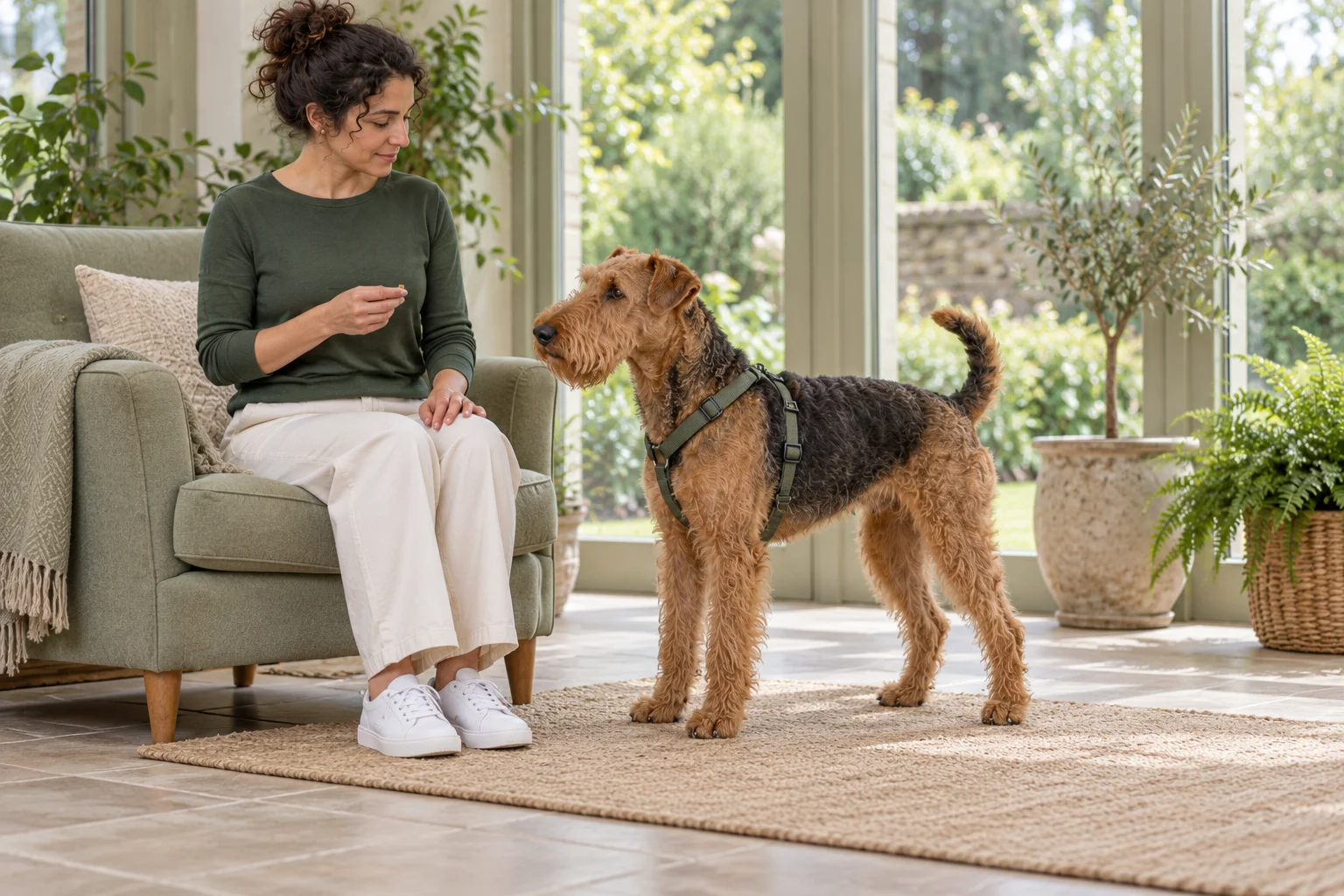
Add the words when the response is predictable
Wait until your dog regularly turns away when you show the item safely in your hand. You should be able to recognise the response without watching through a long spell of licking or pawing. There's no fixed number of repetitions that establishes this for every dog.
Then say “leave it” once, in a normal, gentle voice, just before presenting the item hand. When your dog looks or moves away, mark and reward from the other hand as before. Keep everything else familiar so the new words are the main change.
Avoid saying “leave it, leave it, leave it” while your dog stays focused on the item. If they don't respond, pause and return to an easier presentation. Repeating the words more loudly doesn't explain the behaviour you're asking for.
Keep rewarding the response even when it starts to look easy. You're still building the association between those words and turning away. Don't immediately ask for a longer pause, a sit and eye contact before delivering the treat.
Other people in the household should use the same phrase and reward arrangement. Show them what counts as a response and how to keep the item inaccessible. Someone who says “leave it” and then offers the item from that same hand is practising a different rule.
You can check your own timing by noticing what happens just before the marker. If you mark only after your dog returns to sniff the item, you're missing the earlier disengagement. Slow the exercise down so you can see and reward the turn away clearly.
Make the item more visible, then practise near the floor
Once your dog responds readily to the cue with the item enclosed, make a small change in visibility. With a piece of kibble, you can open your hand slightly while keeping enough distance to close it comfortably before your dog reaches it. Say the cue before presenting it and reward disengagement as usual.
If your dog moves towards the kibble, close your hand gently before they can take it. Don't snap it shut around their nose or chase their mouth with it. Return to the enclosed-hand version, or start farther away next time. The RSPCA's advanced leave-it exercise also uses a closed hand to prevent access and a reward from the other hand.
An open palm isn't compulsory. If your dog is quick or your hand feels vulnerable, stay with a protected item and seek reward-based coaching before making it more exposed. Progress should be comfortable for you as well as your dog.
For floor practice, begin by lowering the protected item hand closer to the floor. This changes the position without also removing the protection. Cue, watch for disengagement, mark and reward. Work at a height where you can stay balanced and avoid looming over your dog.
A covered item on the floor is optional. Use an ordinary harmless object too large for your dog to swallow, beneath a rigid, unbreakable transparent cover with smooth, intact edges. A second adult must keep the cover steady while you handle the cue and rewards. Set it up before your dog approaches. Skip this version if you cannot keep the item inaccessible without restraining your dog or reaching towards their mouth. Stop if they paw at, mouth or try to shift the cover, and return to the lowered-hand exercise. Never leave your dog alone with these props.
When your dog notices the covered item, give the familiar cue and reward the turn away. Offer the reward towards you, away from the practice item. After rewarding, move on together and put the prop away once your dog is comfortably elsewhere. Don't remove the cover while they are hovering over it.
Leave uncovered floor practice for later, when you can prevent access calmly. A second adult can protect a harmless prop while you work with your dog farther away. If either of you has to race the dog to the item, return to the hand-held exercise. You can ask a reward-based trainer to help you arrange this progression.
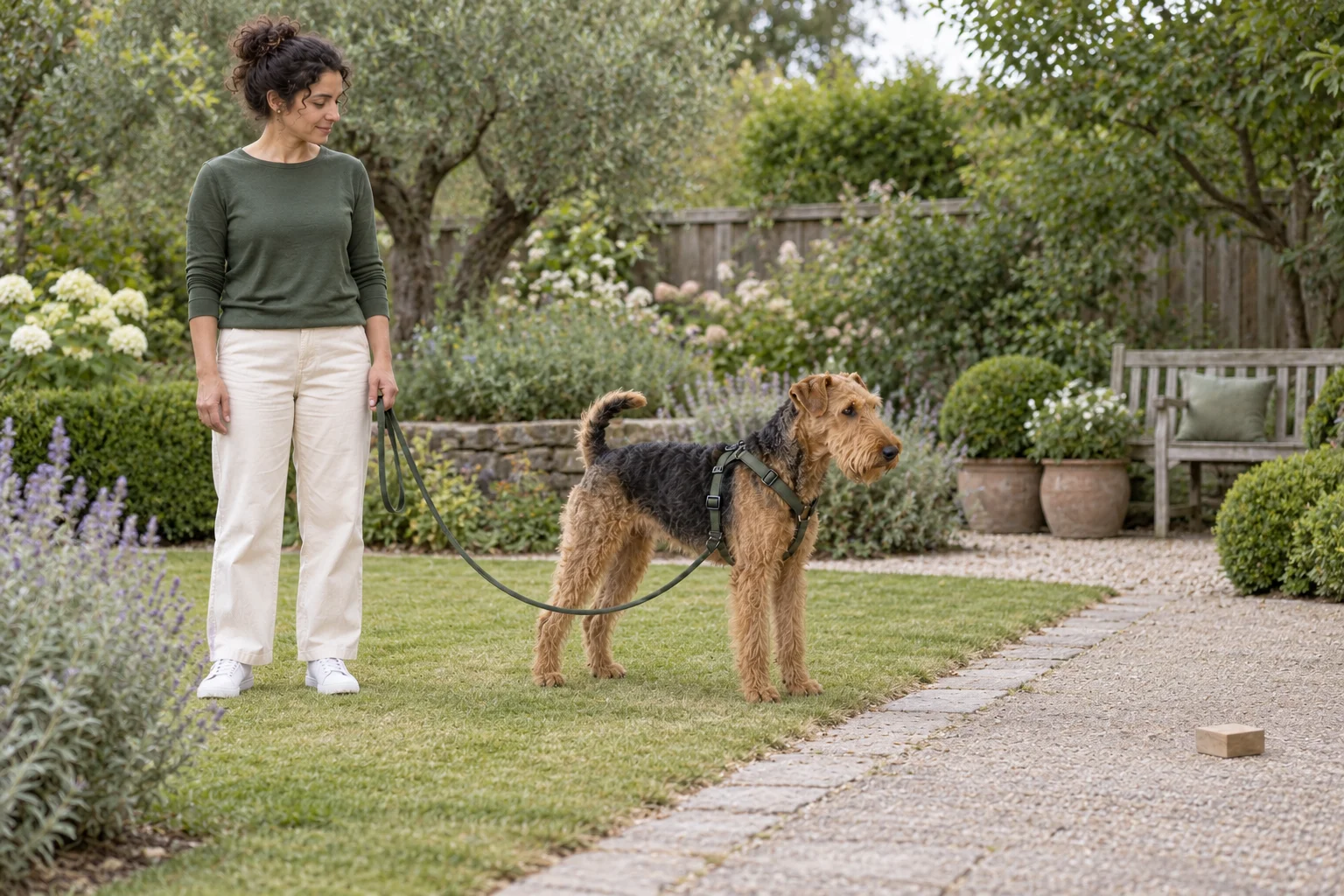
Build useful variety without making a sudden leap
A response in one room tells you about that setup. Try the familiar hand-held exercise in another quiet room before expecting an uncovered item on a pavement to be manageable. Your dog now has different smells and surroundings to take in, so make the item itself easy again.
Dogs Trust recommends practising in new places, adding distractions and gradually increasing the item's appeal. Change one feature at a time where you can. If you move outside, keep the prop boring and protected. If you choose a slightly more interesting prop, work in the quiet room your dog already knows.
You can introduce a different ordinary object securely in your hand, then reward the same voluntary turn away. A low-interest dog toy may suit some dogs, while being far too exciting for others. Judge difficulty by your dog's response rather than assuming a particular object is boring.
Movement is another change. An item gently placed on the floor can attract more attention than one held still. Dogs Trust includes placing items down and eventually dropping them from a low height, but you don't need to hurry towards dropping exercises. Continue controlling access, and don't use valuable or hazardous objects to test the cue.
For outdoor practice, choose a quiet, checked area rather than beginning beside discarded food. Use your own harmless protected prop and keep enough distance for your dog to respond. A comfortably fitted harness and loose lead can help you manage the space without pulling them away as a training correction.
The American Kennel Club's city-skills guidance recommends beginning at home with few distractions and building towards more distracting environments. That principle is useful even if you live somewhere quiet. The first outdoor session can be a return to the easy hand-held exercise.
If your dog turns away, reward and continue walking away from the prop together. You don't need to stand beside it asking repeatedly for the same response. If they remain fixed on it or pull towards it, the setup is too difficult. Create more space and try easier practice rather than holding them at the end of a tight lead.
Adjust practice when your dog struggles
If your dog keeps sniffing the hand holding the item, first reconsider the item and distance. A tempting treat held beside their nose is harder than a less interesting item presented farther away. Make that change before asking for a bigger response.
Also check whether your dog actually wants the reward. Offer a piece away from the exercise. If they don't take it readily, don't assume you need to be firmer. They may need a quieter setting, a different suitable reward or a break. If this change is sudden or your dog seems uncomfortable, ask your vet before continuing. Avoid pushing on through a session in which food and interaction have stopped being useful.
If your dog watches the reward hand throughout, you may be drawing attention to it before they've had a chance to notice the practice item. Keep it still and out of the centre of the exercise, then move it to deliver the treat after you mark. You aren't trying to make the reward a secret; you're making the sequence clearer.
A dog who turns away for the reward and immediately returns to the item may need help finishing the repetition. Feed away from the item, lower the protected hand and pause. For a floor setup, move away together after the reward rather than leaving your dog beside the prop while you prepare another treat.
If they accidentally get an ordinary harmless practice item, end that repetition and change the setup so they cannot reach it next time. Don't punish the grab or turn the session into a chase. If an object is already in their mouth, that belongs to your separately taught release skill, not repeated leave-it cues.
You may also find that performance changes when you stand instead of sit, use the other hand or practise after a busy walk. Return to an easier version under the new conditions. You can keep a brief note of the room, item and response to help you choose the next session without relying on memory.
Best Friends Animal Society's leave-it advice supports building gradually from less exciting items and keeping sessions short, with breaks when focus fades. There isn't a universal timetable for moving through these variations. If you remain stuck on an easy setup, a reward-based trainer can help you spot what's making it difficult.
Keep management in place around real temptations
Use the cue early enough for your dog to respond, while they still have space to turn away. If you notice something unsuitable on a walk, choose a route around it rather than deliberately approaching to test the training. Reward a response and keep moving away.
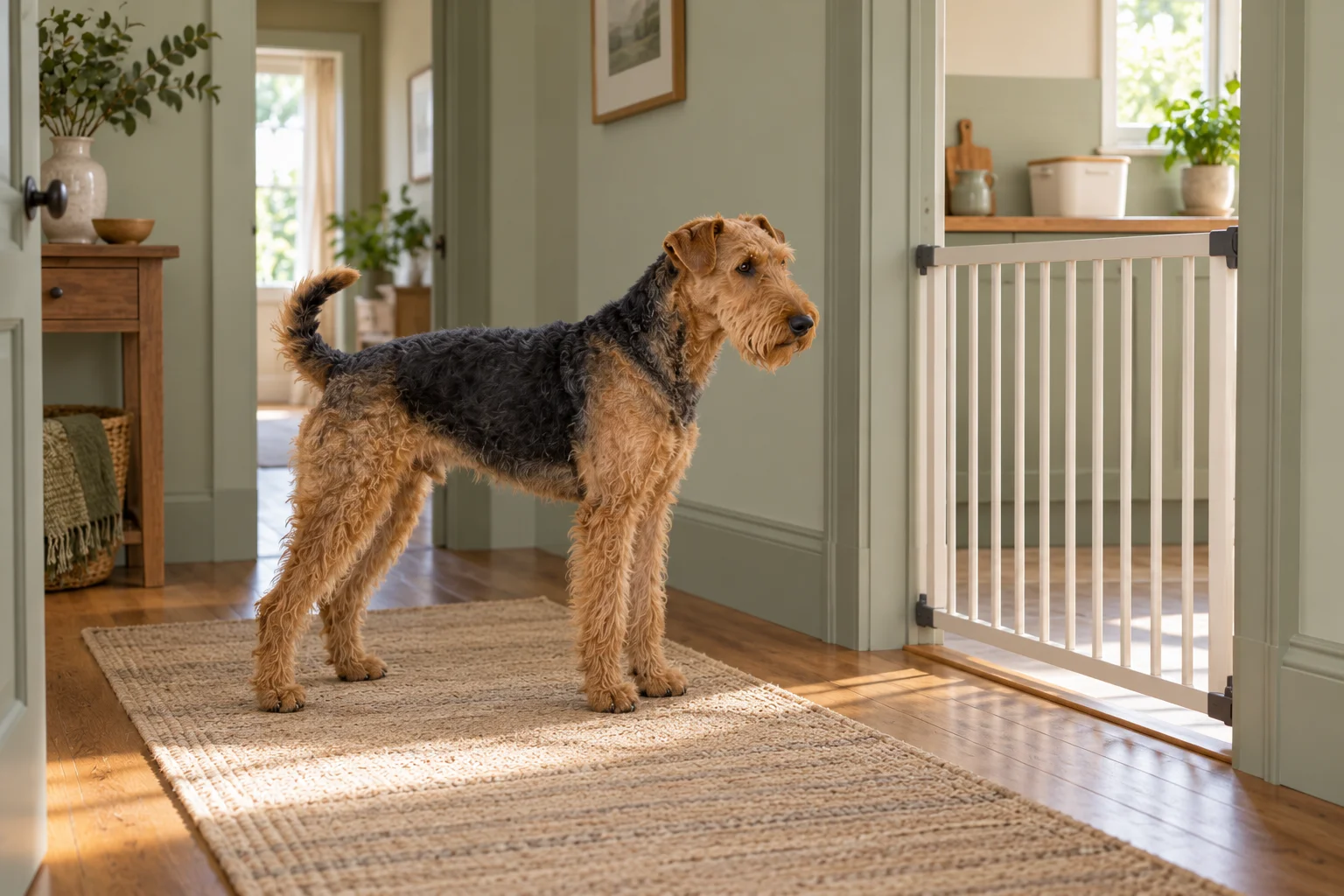
At home, put tempting items out of reach and clear dropped food promptly. A gate can keep your dog away from a food-preparation area while you're busy. Our guide to management alongside dog training explains how these arrangements support learning without requiring you to supervise every possible choice.
If kitchen food access is the recurring problem, the counter-surfing guide covers that setting in more detail. Leave-it practice doesn't replace closed storage, cleared worktops or suitable separation during cooking. It also can't protect a dog when nobody is there to give the cue.
Keep the practice props harmless. Never set out medication, toxic food, sharp objects or anything your dog might dangerously swallow as a test. A cue can be useful without offering guaranteed protection, including after plenty of successful practice.
If your dog guards food or objects, has a bite history, or stiffens, growls or snaps during this exercise, stop practising around those items. Arrange veterinary advice and suitably qualified reward-based behaviour support rather than using leave-it drills as treatment. Don't grab collars, reach into mouths or try to prove that you can take things away.
Suspected harmful ingestion needs prompt veterinary guidance. If you think your dog has swallowed something poisonous, contact your vet or an animal poison-control service immediately, even if they seem normal, as ASPCA's poisoning advice recommends.
Choose your next practice session
Start your next session at the easiest recent version your dog could manage comfortably. Prepare the separate rewards, protect the practice item and decide whether today's task is still rewarding a voluntary turn away or adding the familiar cue. You don't have to increase difficulty every time.
If you have changed rooms or props, watch whether your dog can still turn away without repeated cues. Make the exercise easier if they stay focused on the item.
When you do change something, keep the rest familiar. Practise the protected item in a new room, or a different low-interest item in the usual room. End by putting the prop away, with your dog already away from it. Save harder practice for another session if you cannot reward the turn away and put the item away calmly.