
If your dog needs a prescribed tablet or pill, check the label first. Ask the prescribing team whether it may be given with food, needs to remain whole or has other preparation instructions, and what to do if it is refused or spat out. Only use a method the vet confirms is suitable for this medicine.
If your dog turns away or becomes worried when you reach towards their mouth, pause. You can practise a familiar touch at another time, when no dose is due. Keep the routine voluntary and easy to stop.
If your vet prescribes eye drops, our guide to helping your dog with prescribed eye drops covers separate comfort practice and what to ask your vet.
For other reward-based skills, browse our dog training guides.
Check the prescription before planning the routine
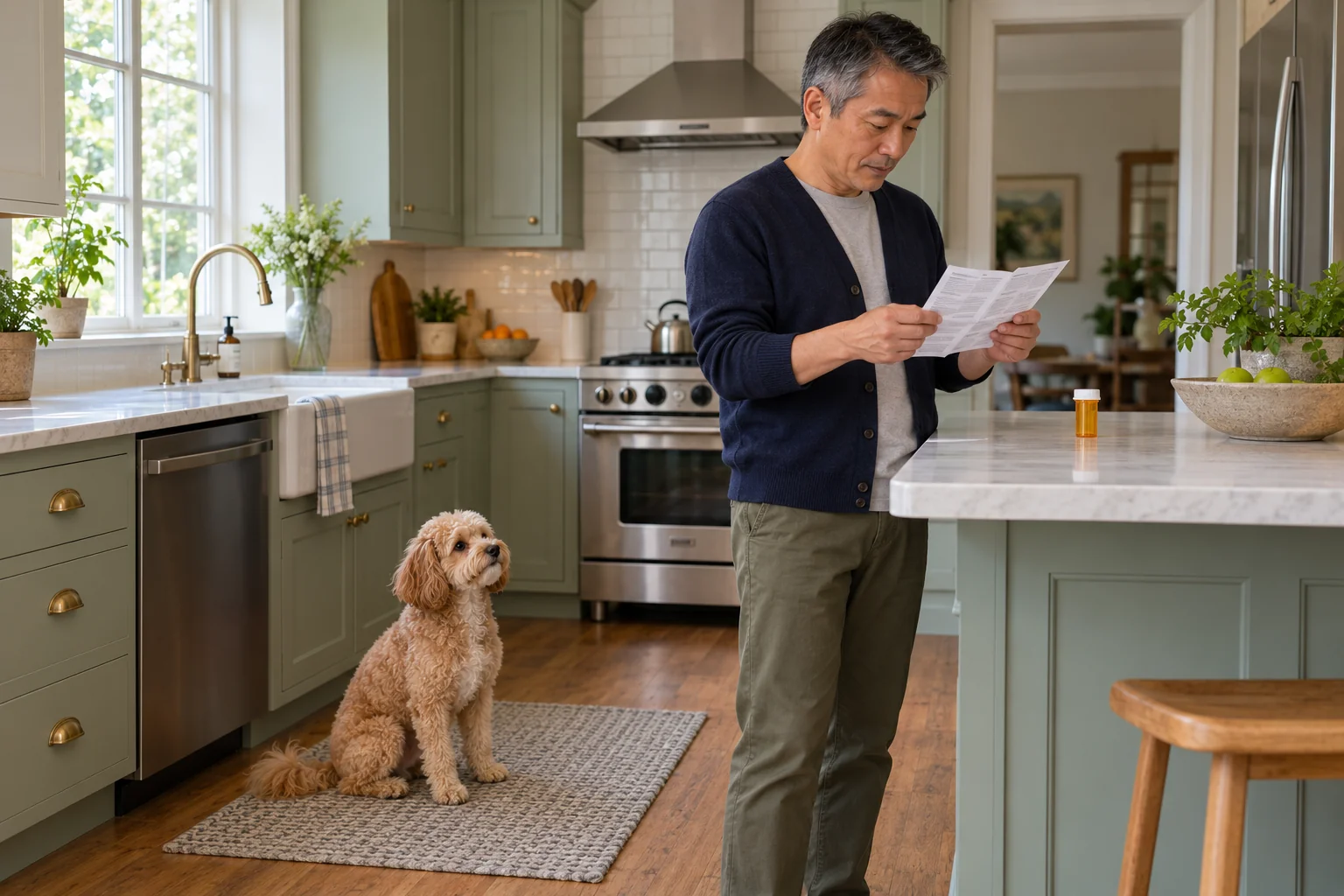
Read the label and any instructions supplied by your clinic before preparing the dose. Confirm which dog the medicine is for, the prescribed amount and timing, whether food is allowed, and any handling or storage precautions. If any part is unclear, ring the veterinary practice or dispensing pharmacy rather than relying on a general online guide. Directions vary between medicines, so an approach that is fine for one tablet may be unsuitable for another.
Ask specifically whether the tablet can be split, crushed, dissolved or hidden in food. Do not assume that a scored tablet is meant to be divided, that a capsule can be opened, or that powder is harmless to handle. Some medicines need to remain intact, and certain products can require precautions for people handling them. The Dogs Trust guidance on giving tablets advises checking with your vet when you are unsure about preparing medicine or protecting your skin. That page also describes hands-on methods; ask your own vet whether any of them suit your dog before trying them.
Check what the label says about taking the medicine with food. A small morsel may be convenient, but the prescription might require an empty stomach or specify another condition. If your dog has allergies, a medical diet, swallowing difficulty or a history that affects treat choice, ask the clinic what is suitable. Never use a human medicine or another animal’s prescription for your dog unless a vet has explicitly prescribed it.
Before the dose is due, decide what you will do if your dog refuses it, spits it out or vomits afterwards. Do not repeat a dose automatically: you may not know how much was swallowed. Contact the prescribing team for instructions. Decide in advance so you do not have to guess in the moment.
Choose a tablet method that fits the prescription
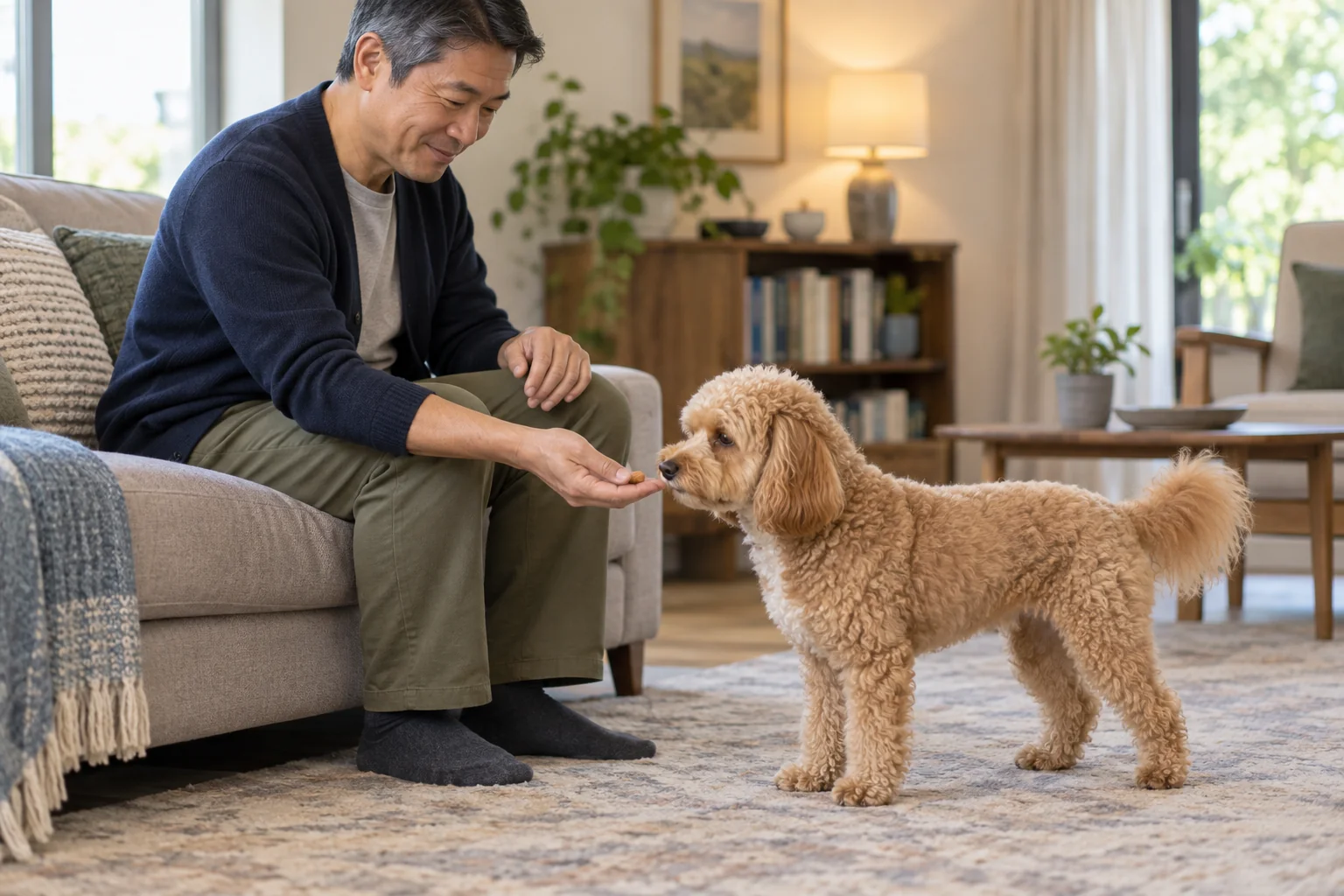
If the prescription allows food, a small portion of an approved food may be an option for some dogs. Choose something your dog can swallow comfortably and check whether the tablet was taken. If it is bitten, spat out or left in partly eaten food, ask the clinic what to do next.
A purpose-made pocket treat or a familiar soft food may suit some dogs. If your dog has allergies or dietary restrictions, check the ingredients and ask before trying a new food. Some medicines must be given without food, so ask the clinic if the instructions are unclear.
Some dogs detect the tablet in food or begin avoiding a food they normally enjoy. If that happens, stop using that food and ask the clinic about another option. Avoid repeated attempts to disguise the tablet with new foods.
Do not hide a tablet in your dog’s full meal unless you can confirm they have eaten the complete portion. If they leave some behind, you may not know how much medicine they received. A separate, small serving can make it easier to check, provided the medicine is allowed with food and the vet approves that approach. Keep the rest of the meal routine ordinary so that an unsuccessful tablet attempt does not make every bowl feel suspect.
If food is not suitable or your dog will not take the tablet this way, contact your vet before moving to a more hands-on method. The medicine may have another form, or the veterinary team may show you a safe technique. Do not crush a tablet, open a capsule, disguise a bitter medicine in a large meal or change how it is given without their go-ahead.
Use a cue for brief, predictable contact
If your dog needs to accept a hand near the head, begin when no medicine is present and no dose is due. Choose a quiet time when your dog is awake, comfortable and free to move away. Sit at an angle rather than leaning over them. Have a reward your dog likes and can safely eat, and keep it out of sight until after the small interaction. Practice when your dog feels well and is comfortable being near you.
Pick a short phrase such as “tablet time” or “ready?” and use it before an easy action. Say the phrase, briefly touch a familiar area such as the shoulder, then remove your hand and offer a reward. Pause. If your dog remains relaxed and chooses to re-engage, you can repeat the same easy version. The phrase should predict a brief touch followed by a release and reward.
When that is comfortable, let your hand move gradually towards the side of the head, then away, followed by the reward. Later, you might briefly touch the cheek or chin if your dog accepts that easily. Change only one thing at a time: where your hand goes, how long it stays, or whether it rests lightly. There is no need to progress to mouth handling simply because a few repetitions went well.
Keep the release part of the routine clear. Move your hand away after each contact so your dog can choose to leave. If they do, end the session or make the next attempt easier. Do not follow them with a treat or repeat the cue until they give in.
A predictable signal can also help you notice when your dog is not ready. If they hear the phrase and turn away, freeze, retreat or refuse a usual reward, do not proceed with the planned touch. Pause, end the session or make the next practice easier. Avoid using the cue for unrelated handling, nail care or grooming, which can make it less clear and less trustworthy.
Build mouth-handling comfort only if your dog is willing
Some dogs are comfortable with a brief cheek touch but not with a hand over the muzzle. Others accept the muzzle touch but dislike a lip movement. Treat these as separate experiences. If your dog has a history of fear around the head, growling, snapping, biting, or a sudden change in tolerance, do not use home practice to test whether they have improved. Speak to your vet first; Cornell's guide to recognising pain in dogs notes that dogs in pain may react negatively to being touched or held. A qualified behaviour professional may also be appropriate.
For a dog who is relaxed with the earlier contact, you can make a small change: briefly touch the side of the muzzle, remove your hand and reward. Keep the dog’s head in a natural position. Do not cover the eyes, grip the muzzle, pull the lips back or open the mouth to see what happens. If the dog stays comfortable over separate opportunities, ask your vet or veterinary nurse to demonstrate the handling they recommend for your dog and medicine. If you want to practise a separate cooperative-care behaviour, our guide to teaching a chin rest covers that skill. It does not replace veterinary advice about tablet handling.
Direct tablet placement is not a technique to learn from a general article alone. It involves placing hands near teeth and needs to suit the dog, the tablet and the person doing it. A vet or veterinary nurse can show you whether a direct method or a purpose-designed dispenser is appropriate, demonstrate how to use it safely, and tell you what signs mean stop. Ask them to observe your handling and give feedback before trying it at home, especially if the dog is small, has mouth pain, has breathing or swallowing concerns, or has previously resisted.
Cornell's guide to medicating your dog advises checking with your veterinarian if you have difficulty. Its page includes hands-on techniques, but they are not a default for every dog. Ask the clinic to demonstrate a method suited to this prescription, your dog and the person handling them. A device does not remove the need for a method your dog can tolerate.
Read your dog's body language during handling
Stillness alone does not show that a dog is comfortable. Look at the whole body and what happens before, during and after your hand moves. Does your dog approach, stay loose, take a reward normally and return after a pause? Or do they turn away, lean back, stiffen, move off or stop taking food? Any one sign can have more than one explanation, so note the context and how your dog responds when you stop. Dogs Trust advises reading the whole body rather than one signal. Its body-language guide and our guide to dog body language in context can help you observe without diagnosing from a single movement.
If your dog turns away, withdraws or tries to leave, give them room and end the practice. Do not hold or chase them, block their exit, raise your voice or keep offering food near their face. Next time, make the exercise easier or ask your veterinary team for another plan. Stop and create space if your dog growls. Do not punish or suppress the warning.
The American Veterinary Society of Animal Behavior's humane-training position recommends reward-based methods and says methods relying on force, pain or emotional or physical discomfort should not be used. For medication practice, do not pin your dog, scruff them, prise their jaw open or force a pill down. Those actions can place hands near teeth while the dog is already uncomfortable. If your dog will not participate, stop and ask the veterinary team for another plan.
If a dose is missed or uncertain, call the prescriber rather than risking a bite with another attempt. Tell the clinic what happened, including whether the tablet was partly eaten or found on the floor. They can advise what to do next and whether the plan needs to change.
Practise the parts that do not involve medicine
Training is easier when no dose is due. Practise only the parts your dog is comfortable with: hearing the cue, seeing you prepare a treat, accepting a brief touch at an easy place, then getting a release. Offer the reward after the contact, not as a lure that brings your dog towards a hand. A few easy repetitions are enough. Our guide to choosing dog-training rewards can help you pick something suitable for practice.
Keep practice short enough that your dog stays interested. You might offer one or two easy contacts and finish. This keeps the interaction predictable and gives your dog the option to pause. If your dog is tired, nauseous, in pain, newly medicated or generally not themselves, skip practice and check with the vet if their condition has changed.
When the cue and easy touch are familiar, practise in a second calm location only if the first setting is genuinely easy. A new room, a different person, a food wrapper and mouth contact all add difficulty. Introduce only one change at a time. If the dog seems less comfortable in the new setting, return to the familiar one and keep the handling simpler.
Household members should follow the same plan and understand its limits. Explain the cue, the touch your dog currently accepts, the approved reward and how to stop. An adult who understands the prescription should manage each dose. Keep children away from medication handling and any practice near the dog’s mouth; never ask them to hold or restrain the dog.
Describe what happened: “Moved away when my hand reached the muzzle.” That gives the veterinary team useful context without guessing why. Our dog behaviour observation log offers a simple way to record those details without recreating a difficult moment.
What to do if your dog refuses a tablet
If your dog eats the treat and spits out the tablet, do not scold them or immediately try again by hand. Check the area so the tablet is not left where another animal or child could reach it, then call the clinic for dose guidance. Ask whether the tablet can be given differently or whether another formulation is available. Do not give an extra dose unless a veterinary professional instructs you to.
If your dog sniffs the medicated food and walks away, remove it calmly and keep it away from other pets. Do not leave a dose-containing portion available for an unknown length of time, and do not mix another tablet into a new meal. Contact the prescriber to explain that the dose was refused and ask for a plan. If repeated attempts make your dog avoid their usual food, stop using that food as a medication vehicle until you have advice.
If your dog accepts food but becomes uneasy when you reach towards their face, return to food-only administration if the medicine permits it. Otherwise pause and ask the vet team for an alternative. A dog who has already become fearful may need a professional plan for cooperative care, but do not delay an urgent question about a current prescription while attempting to train through the discomfort.
If you are unsure whether the dose was swallowed, do not guess from a lick, a nose movement or an apparently empty mouth. Cornell's guide to medicating your dog notes that some dogs may chew the treat and spit out the pill. Observe without forcing the mouth open, and ask the vet how to proceed. Before future doses, the team may recommend a way to confirm the medicine was taken that fits the particular prescription.
Ask the veterinary team when the plan needs to change
Call the prescribing clinic if the instructions are unclear, the tablet is repeatedly refused, the dog vomits after a dose, the medicine is spat out, a dose may have been missed, or you cannot give it safely. Bring the packaging or have the label details available. Tell them what methods you have tried and how your dog responded, so they can advise on this prescription.
Ask whether a different form, flavour, size, administration schedule or other suitable medicine is available. The answer depends on the treatment and your dog’s health, so do not assume a liquid or compounded version exists or is equivalent. A veterinary nurse may be able to demonstrate an approved technique, and a vet can decide whether changing the prescription is appropriate. Never alter the dose or stop a course without discussing it with the prescriber.
Seek prompt veterinary advice for signs of a reaction or a sudden change in how your dog eats, swallows or behaves. If you suspect your dog has eaten extra medicine, swallowed a different medicine, or may have taken a dangerous substance, contact a vet or the appropriate animal poison service immediately and follow their directions.
If attempts have led to growling, snapping, biting or panic, stop mouth handling and tell your vet. Ask about checking for pain and for referral to a suitably qualified, reward-based behaviour professional if needed. Our guide to deciding when professional behaviour help is needed explains when online advice is not enough. Until you have that advice, store medication securely, avoid placing your face or hands near the dog’s mouth, and do not ask another person to restrain the dog.

Prepare for the next dose
Before the next dose, write down the exact question you need answered: “Can this tablet be given in food?”, “May it be split?”, “What should I do if it is spat out?”, or “Can someone show me a safe method?” Keep the medicine in its original packaging, follow the label, and prepare only what the clinic has approved. If food is permitted, use a small amount that your dog can eat comfortably and that you can check. If direct handling is required, ask for a demonstration rather than improvising.
When your dog is relaxed, practise one easy cue or familiar touch with no medicine present. Let them leave. If they remain uneasy, skip practice and ask your vet about another way to give the prescription.