
To teach a bow, start with your dog standing on a non-slip rug or mat. Hold a treat at their nose and slowly move it down and slightly back toward their front paws. The moment their elbows dip and their rear stays up, mark it with a "yes" or a click and give the treat. Reward small dips at first. Stop if your dog seems uncomfortable, and check with your vet before starting if they are stiff, injured or have movement restrictions.
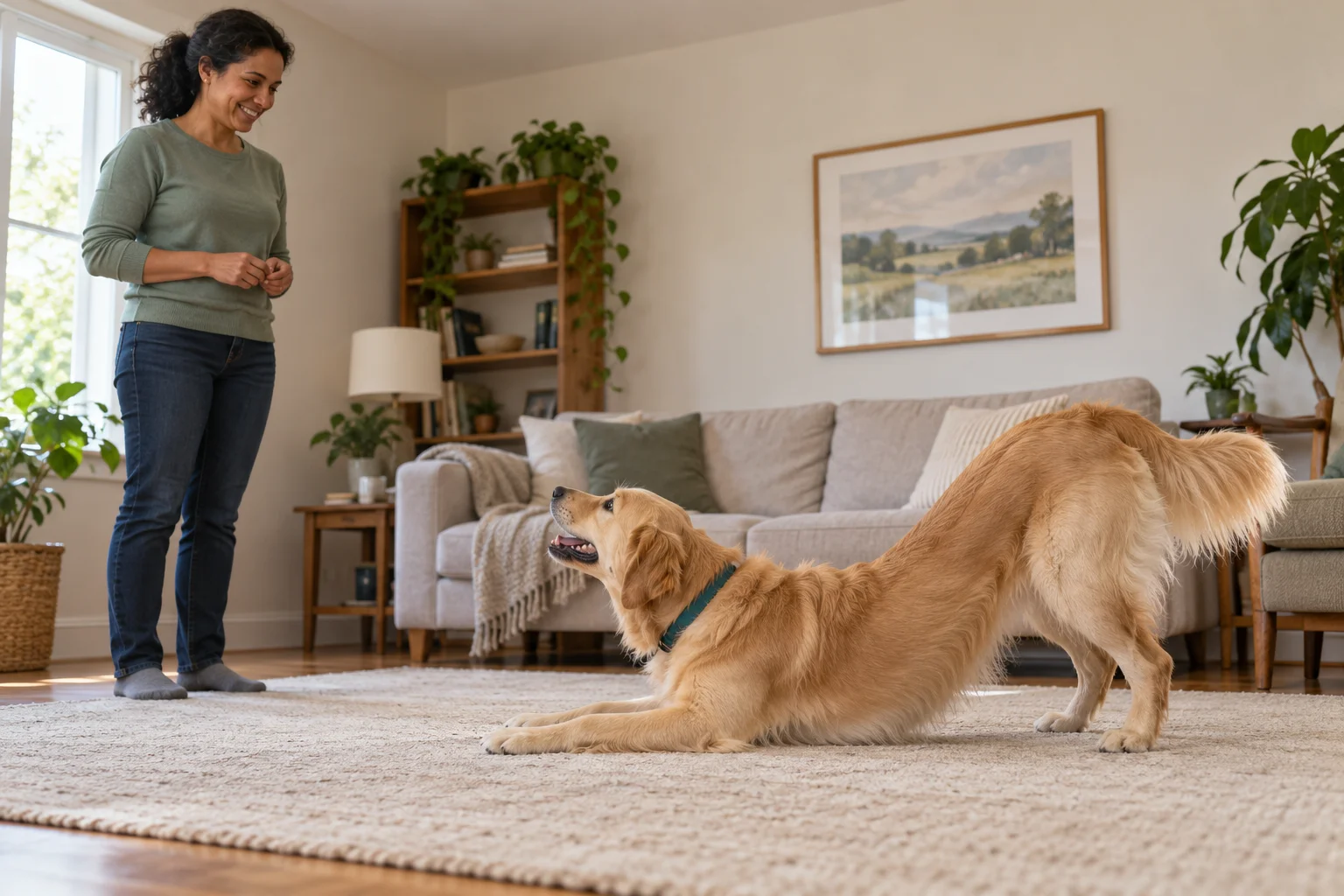
In a bow, your dog lowers their chest and front legs while their back end stays up. Most dogs already do something similar after a nap or when inviting another dog to play. The treat-lure routine below is the main method; capturing a natural stretch is an optional alternative.
Once your dog follows the lure with their rear staying up across short sessions, try the same movement with an empty hand and reward from your other hand. Add a word such as "bow" only after that hand signal produces the movement comfortably.
Why teach a bow
A bow can give a comfortable dog a little mental activity at home and give you practice marking a precise movement. You can keep it as an occasional trick or include it in a brief indoor session. There is no need to ask for a deep bow or repeated holds to make the exercise worthwhile.
Check your dog is comfortable first
A bow is a physical exercise, so comfort matters as much as the finished pose. In its guidance on therapeutic exercise, Canine Arthritis Resources and Education recommends starting easy and watching for fatigue. That guidance concerns individualized exercise for dogs with arthritis; this trick guide is not a rehabilitation plan or permission to exercise an injured dog.
For most healthy adult dogs, a few short bows are just a gentle stretch. But take extra care, and check with your vet before you start, if your dog:
- Is older, stiff or slow to get up
- Has known joint, back, shoulder or elbow problems
- Is recovering from an injury or surgery
- Is very heavy or carrying extra weight
- Is a young puppy whose body is still developing
If your dog seems reluctant to go down, moves slowly or stops partway every time, that may be their body telling you something. Don't push for a deeper bow. Talk to your vet, and stick to tricks that don't put pressure on the front legs, such as a hand target, until you know more.
Avoid practicing bows straight after a big meal or a long, tiring walk. A dog who is relaxed, a little hungry and warmed up from gentle movement will find it much easier.
What you'll need
You don't need much.
- Small, soft treats your dog loves. Tiny pieces work best, since you'll be rewarding often.
- A non-slip surface, such as a rug or yoga mat. Slippery floors make the bow harder and less comfortable.
- A quiet room with few distractions.
- A marker, such as a clicker or a short word like "yes."
If you're not sure which treats to use, our guide on choosing dog training rewards can help.
How to lure a bow
Luring means using a treat to guide your dog into position. It's the quickest way for most dogs to learn a bow.
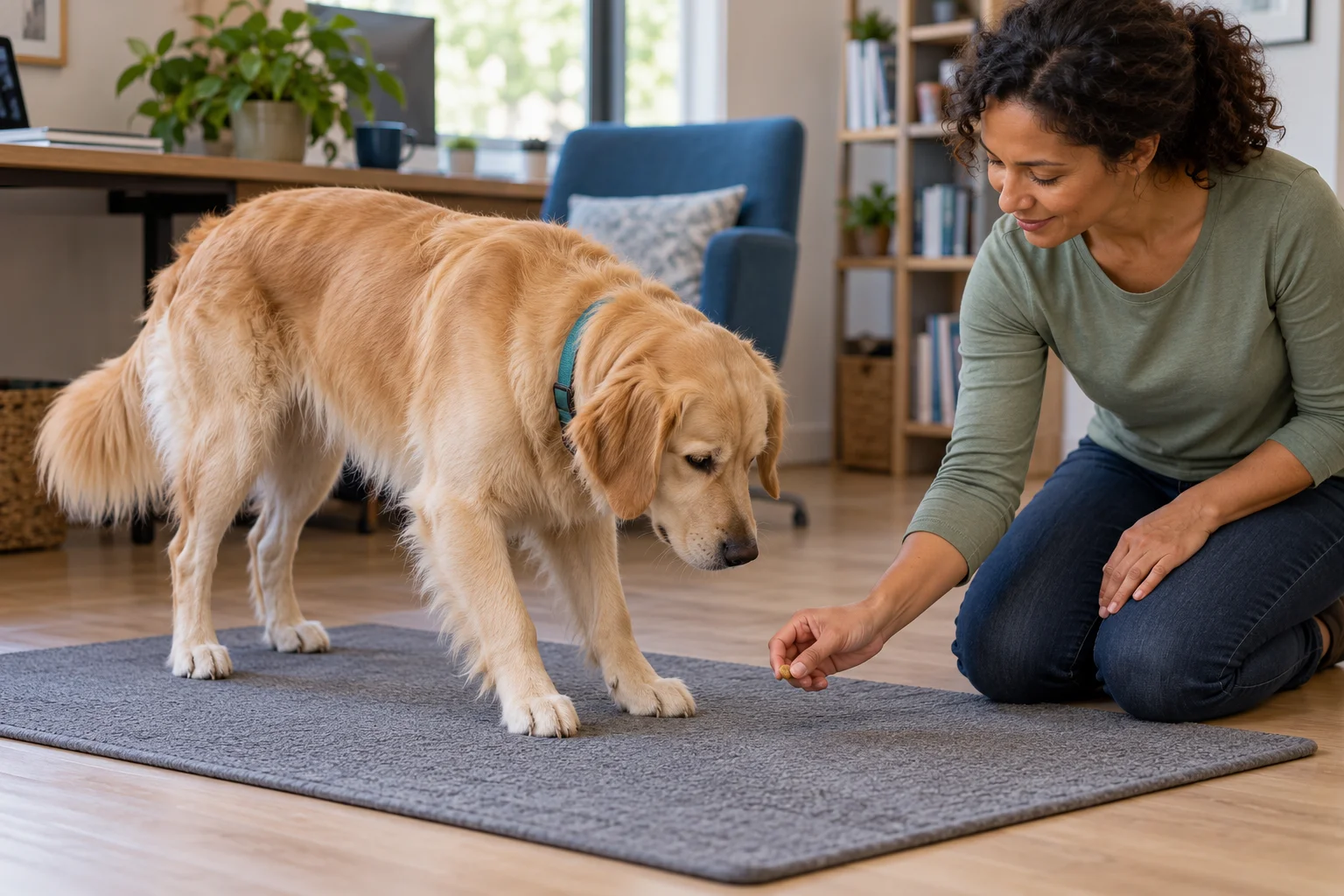
- Start with your dog standing in front of you on the non-slip surface. Hold a treat right at their nose, so they can smell it. Let them choose to follow your hand.
- Slowly move the treat down and slightly back, between the front paws and toward the chest. The American Kennel Club describes moving the lure from the dog's nose, between the front legs and back toward the belly (AKC: Teach your dog to bow).
- Watch the elbows and rear together. The moment the elbows bend while the rear stays up, mark that movement with your "yes" or click. Accept a tiny dip at first instead of waiting for the chest to reach the floor.
- Give the treat while your dog is still in that small bow. Keep your hand close to the front paws, but raise it a little if following the food makes the rear sink. Then encourage a stand with a cheerful "OK" or toss a second treat a little way off.
- Try another easy repetition only if your dog returns willingly and moves comfortably. After a few repetitions, take a break. Stop while your dog is still keen, and stop sooner if they hesitate, move stiffly or avoid the movement.
Reward small dips generously. Keep asking for that small movement if your dog still sits or lies down during other attempts. Reset to a stand between repetitions. When the elbow dip with the rear up becomes easy to repeat, wait for a little more bend before marking. If asking for more makes your dog lie down again, return to the smaller dip they could manage.
It helps to picture where your hand is going before you start. Many people move the treat straight down to the floor, which tends to produce a sit or a down. A bow needs the treat to travel down and slightly back toward the chest, close to the front legs, and slowly enough that your dog can follow it with their nose. Practice the movement once or twice without your dog if it feels awkward.
How to keep your dog from lying down
The most common problem with luring a bow is that your dog follows the treat all the way down and lies flat. That's not wrong. It just isn't a bow yet.
A few ideas that can help:
- Move the treat more slowly, and stop the moment the elbows bend.
- Mark earlier, before your dog has time to fold their back legs.
- Reward slightly higher, so the treat doesn't pull your dog into a full down.
- Keep the movement brief. AKC suggests you "get your dog moving again so they don't wind up lying down."
- Practice when your dog is a little more energetic, since sleepy dogs often flop into a down.
Some trainers rest a hand very lightly under the dog's belly to remind them to keep their rear up. If you try this, keep the touch gentle and only do it if your dog is relaxed about being touched there. Never push or pull your dog into position. If your dog dislikes the touch, skip it and use timing instead.
If your dog keeps lying down, go back to rewarding very small dips for a while. Keep all four paws on the same non-slip surface and make the next attempt smaller. There is no need to add a platform or hold the rear up to get a deeper position.
Optional: capture your dog's natural stretch
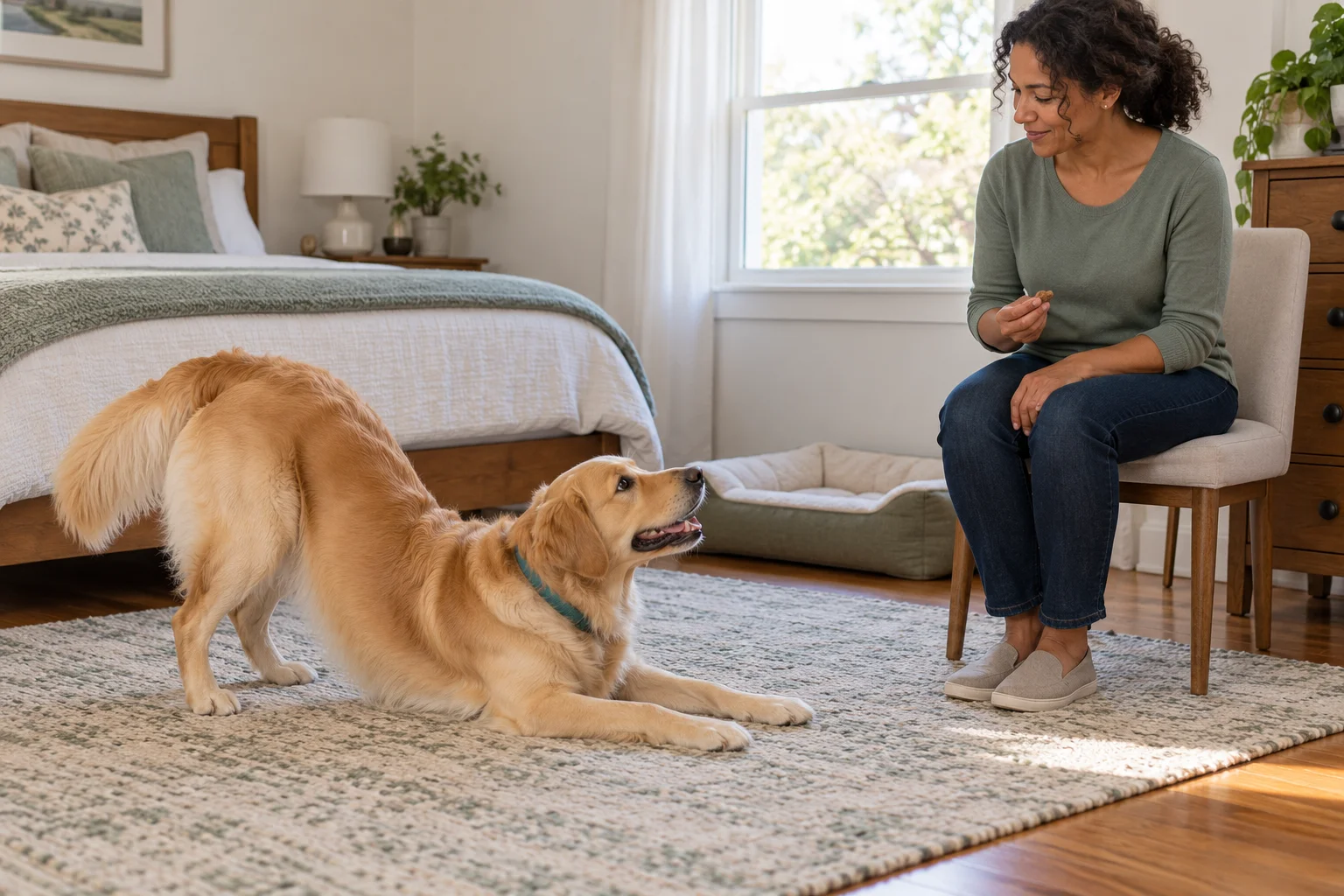
You can skip this method if the lure routine suits your dog. Capturing means waiting for your dog to do the behavior on their own, then marking and rewarding it. It can suit dogs who stretch often, provided the movement is comfortable. Reluctance to follow a lure because of possible pain still needs veterinary advice.
Many dogs stretch into a bow when they first get up from a nap. Others do a play bow when they want to start a game.
To capture a bow:
- Keep a few treats in your pocket, or in a jar near your dog's bed.
- Watch for the moment your dog stretches into a bow.
- Mark at the bottom of the stretch, and give a treat.
At first, your dog won't know why they're getting a treat. Over time, many dogs start offering the stretch more often, hoping for a reward. When they do it often enough that you can predict it, start saying your cue just as they go into it.
Capturing takes more patience than luring, since you're waiting for the behavior to happen naturally. But it can produce a lovely, relaxed bow, and it's a nice way to use moments that already happen in your day.
Practice without showing the treat
Try an empty hand when your dog can follow the lure into a comfortable bow across short sessions without repeatedly sitting or lying down. Keep the food ready in your other hand so a successful attempt still earns a reward.
- Make the same movement with an empty hand. When your dog bows, mark and reward with a treat from your other hand or your pocket.
- Gradually make the hand movement smaller, so it becomes a simple hand signal.
- Keep sessions short and upbeat, and go back to the treat lure for a few repetitions if your dog seems confused.
Most dogs find the switch from a food lure to an empty hand a little puzzling at first. That's normal. Be patient, and reward even a half-bow when you first switch.
Say "bow" before the hand signal
When your dog bows easily with a small hand signal, you can add a verbal cue. Popular choices include "bow," "take a bow" or "curtsy."
- Say your cue just before you give the hand signal.
- Mark and reward the bow as usual.
- Repeat across several sessions.
- Over time, start saying the cue and pausing briefly before you give the signal. If your dog starts bowing on the word alone, reward generously.
Some people like to do a little bow or curtsy themselves as part of the cue. That's fine too, as long as you're consistent.
Use one cue and stick with it. If one family member says "bow" and another says "take a bow" with a different hand signal, your dog has twice as much to learn. Agree on the word and the signal before you start, and write them down if several people will be training.
It's also worth choosing a cue that doesn't sound like another one your dog knows. "Bow" and "down" are fairly different, but if your dog tends to lie down when you say "bow," a longer phrase such as "take a bow" may help keep the two apart.
Build duration and add distractions
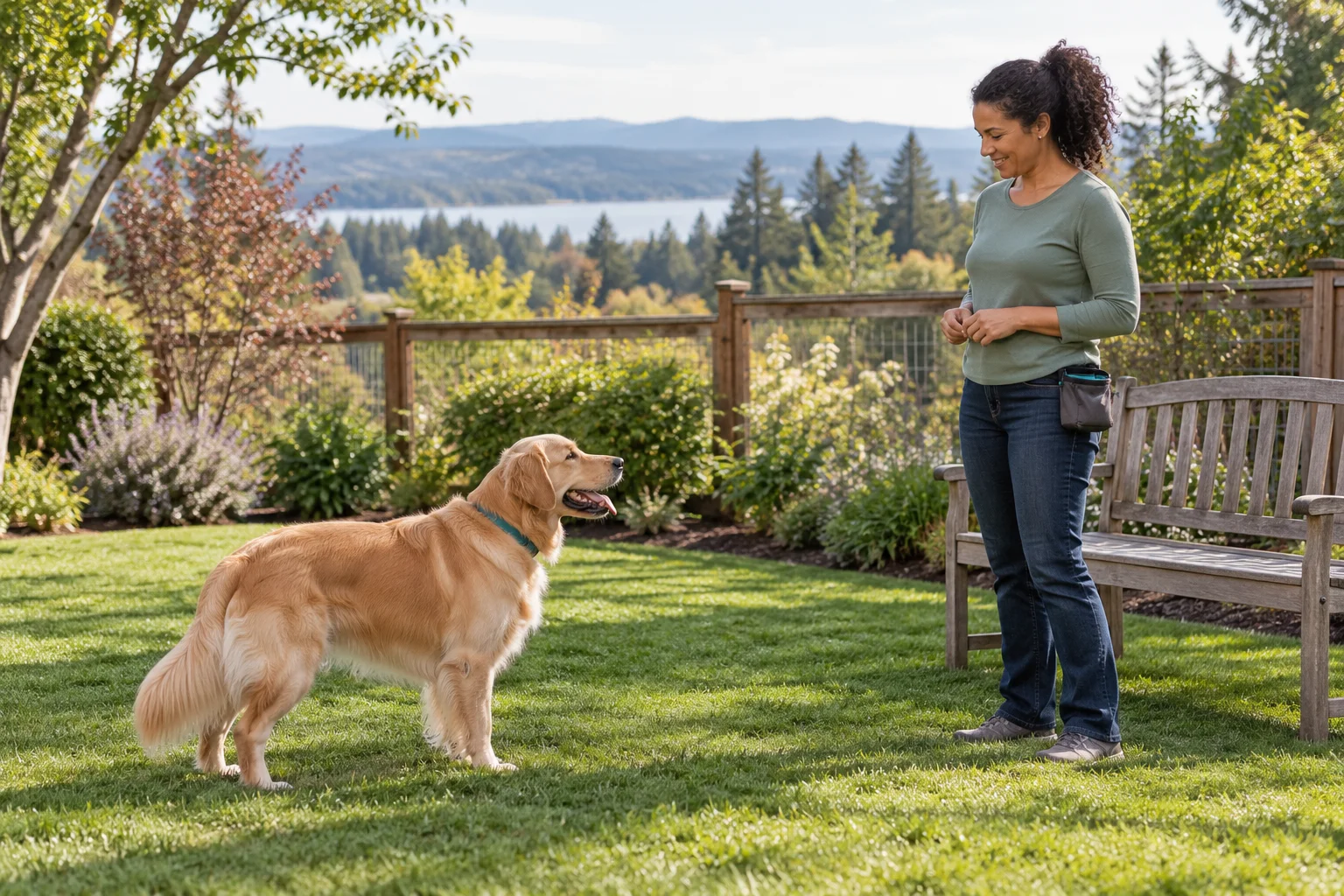
Once your dog knows the cue, you can gradually ask for a slightly longer bow, if your dog is comfortable.
- Wait a second before marking, then gradually build to two or three seconds.
- Keep it short. A bow doesn't need to be held for long, and long holds can be tiring.
- Mix in easier tricks so your dog doesn't get frustrated.
Once your dog bows on cue in your living room, practice in new places one at a time. Try a different room, then the backyard, then perhaps a friend's house. Expect your dog to need some help in new places, and go back to the hand signal or even the lure if needed. Dogs don't automatically transfer a trick from one place to another, so a little practice in each new setting is normal.
Our guide on short dog training sessions has more ideas for keeping practice brief and fun.
Fit bows into everyday life
Once your dog knows the bow, it can become a small, pleasant part of the day rather than a separate training session.
- Ask for a bow before you put down a food bowl, then release your dog to eat.
- Use a bow as a greeting for visitors, with your dog a few feet away, instead of jumping up.
- Add one or two bows to a short trick routine on a rainy afternoon. Our guide to calm rainy day enrichment has more quiet ideas.
- Ask for a bow before you throw a ball, so your dog gets a little stretch before the game.
Keep the numbers low. One or two bows here and there are plenty, especially for a dog who is still building strength and flexibility. If you notice your dog's bows getting shallower over time, or your dog starts avoiding the cue, that's a sign to ease off and check in with your vet.
Children often love this trick. If a child in the family wants to help, an adult should stay close, keep the session short and make sure the child gives the hand signal gently and lets the dog choose whether to join in.
Adjust the exercise when your dog lies down or stretches naturally
Here are two illustrative examples. Adapt them to your own dog.
A young, energetic Labrador follows the lure but keeps lying all the way down. His owner practices when he is awake and comfortable, moves the treat more slowly and marks at the first elbow dip. She raises the reward slightly if his rear starts to sink. If he lies down, she resets to a stand and asks for a smaller dip. She waits for that small movement to become easy to repeat before asking for more, keeping each bow brief and getting him moving again afterward.
A small terrier stretches comfortably into a bow after getting out of bed, but does not follow a lure. Her owner keeps treats nearby, says "yes" during the natural stretch and rewards it. She adds "bow" only when the terrier starts offering the movement predictably enough for her to say it just beforehand. If the terrier stops stretching or seems stiff, she pauses the exercise and asks her vet, rather than waiting for a fixed number of weeks or encouraging a deeper stretch.
In both cases, the owners kept sessions short, rewarded small progress and changed their approach when the first idea didn't work.
Troubleshoot common problems
My dog lies down every time. Move the treat more slowly, mark earlier, reward slightly higher and get your dog moving straight after the bow. Practice when your dog is more energetic.
My dog won't follow the treat down. Try a tastier treat, or start from a smaller movement. If your dog still won't go down, try capturing instead, and check with your vet if you think they might be uncomfortable.
My dog sits instead. Start with your dog walking toward you, so they're already moving, then lure down from there. Mark the moment their elbows bend before their back end sinks.
My dog backs away from the treat. Keep the movement smaller and slower. Some dogs are unsure about putting their head down near their own feet. Make it easy, and reward tiny dips.
My dog bows but won't hold it. That's fine. A brief bow is a lovely trick. Only build duration if your dog is comfortable, and keep it short.
My dog only bows when I have treats. Mix up your rewards, practice with an empty hand signal and reward from your pocket. Over time, rewards can come from your pocket, a toy or a quick game.
My dog seems stiff or sore after practicing. Stop practicing bows and talk to your vet. Some dogs simply aren't comfortable in this position, and there are plenty of other tricks to try.
When to stop and try something else
A bow isn't the right trick for every dog. If your dog is older, stiff, recovering from an injury or seems uncomfortable in the position, stop and ask your vet which activities suit them. A hand target at a comfortable height or a voluntary chin rest may be options, but neither is automatically suitable for every injury. Avoid substituting spins or another movement trick on the assumption that it will be gentler.
It's also fine to keep the bow as an occasional trick rather than something you practice every day. A healthy dog who enjoys bowing can show it off now and then without needing daily repetitions. If anything about your dog's movement changes over time, such as stiffness getting up, a slower walk or reluctance on stairs, let your vet know and drop the bow from your routine until you've had advice.
Keep all training reward-based. The American Veterinary Society of Animal Behavior states that "Evidence supports the use of reward-based methods for all canine training" (AVSAB: Why you need to reward your dog in training).
Choose your dog's next easy practice step
For your next session, choose the smallest comfortable movement your dog can repeat. If they still lie down after the lure, reward an earlier elbow dip. If the bow is easy with food visible, try one empty-hand attempt and reward from your other hand. If they already respond comfortably to that signal, say "bow" just before it. Keep practicing at the same level when your dog needs help, and stop for veterinary advice if their movement or willingness changes.
For more training ideas, browse our dog training guides.