
Before you touch your dog's ears, check two things. First, do the ears look or smell wrong, or does your dog seem uncomfortable? Redness, swelling, discharge, a bad smell, scratching, head shaking or pain when the ears are touched all mean a vet visit now, not training. Second, has your dog ever growled, snarled, snapped or bitten when someone handled their head or ears? If so, get help from your vet and a qualified behavior professional rather than practicing at home. "Check your dog's ears for problems before any handling" gives the details.
If your dog's ears seem healthy and comfortable and there is no history of snapping, practice comfort with ear handling separately from any actual cleaning. Not every dog needs their ears cleaned, so ask your vet whether yours does. Practice comes in small stages: a stroke where your dog already enjoys being touched, your hand moving toward the ear, a brief touch, a gentle lift of the ear flap, then getting used to the cleaner bottle and a cotton ball. Each stage is one short moment of contact, followed by your hand moving away and a treat. Never put liquid or anything else into the ear during practice.
If your dog moves away, leans away, stiffens or shakes their head, stop touching and pause. Try an easier version only if your dog comes back on their own and looks relaxed. Otherwise, end the session.
Check your dog's ears for problems before any handling
Look for signs that need a vet
The MSD Veterinary Manual's guide to ear infections in dogs lists head shaking, a foul smell, redness, swelling, scratching, discharge and scaly skin among the signs of outer ear inflammation, and notes that the ear can be painful or itchy.
See your vet before any ear handling practice if your dog:
- Shakes their head, scratches or paws at an ear, or rubs it along the floor.
- Has red, swollen or scaly skin, discharge, dark debris or a bad smell in either ear.
- Flinches, yelps, cries or pulls away when the ears are touched.
- Holds their head tilted, or seems off balance.
- Has started disliking ear or head handling, or reacts more strongly than before.
VCA's guide to ear cleaning instructions, written by two veterinarians, says to check with your vet before cleaning if the ears are red, inflamed or painful, because this may mean an infection or a damaged eardrum.
Don't practice touching a sore ear, and don't switch to the other ear or another part of the head as a workaround. If your dog seems uncomfortable when one particular ear is touched, that is a reason to see your vet before any more ear practice.
Get help if your dog has growled or snapped
If your dog has growled, snarled, snapped or bitten during ear or head handling, don't use this article as a home plan. VCA's article on helping dogs who dislike ear cleaning, written by a team that includes veterinary behaviorists, advises stopping and seeking help if a dog struggles, snarls or snaps. Start with your vet, then a qualified reward-based behavior professional. Our guide on when to seek professional behavior help explains what to look for. Never punish a growl; it is your dog's warning.
Keep children out of ear handling practice. Touching a dog's ears and head is close handling, so an adult should do it.
Ask your vet for help if ear treatment can't wait
If your dog has ear symptoms, treatment comes first. Don't wait until training has worked before you see your vet.
The VCA behavior article explains that very sore ears may need pain relief before an exam, and that severely infected ears may need sedation or anesthesia so the vet can examine and clean them properly. It also notes that a veterinary nurse may be able to give some treatments at the clinic. The MSD Veterinary Manual explains that vets usually clean the ear before treatment, because discharge and wax can stop ear medication working.
When you book, tell the clinic that your dog finds ear handling hard. Ask whether the staff can give treatments at the clinic, whether medication by mouth is an option and what to do at home in the meantime. If your dog runs from ear drops at home, the VCA behavior article advises not chasing them or forcing more drops; contact your vet for another plan.
The comfort training in this article is for dogs with healthy ears, or for after treatment, once your vet says the ears are comfortable. It is not a way to treat a sore ear.
Ask your vet whether your dog's ears need cleaning
Many dogs don't need routine ear cleaning. VCA's ear cleaning guide notes that dogs with clean, healthy ears may never need it, while dogs prone to ear infections may benefit from more frequent cleaning. It also warns that over-cleaning can irritate the ear canal and lead to infection.
Ask your vet:
- Whether your dog needs ear cleaning at all, and how often.
- Which cleaner to use. VCA advises that cleaners containing hydrogen peroxide or alcohol can irritate the ear canal.
- To show you the technique on your dog. The VCA behavior article suggests asking your vet to demonstrate a safe product.
- What signs mean you should stop and bring your dog back.
Don't use cotton swabs in your dog's ears. VCA says never to use them in the ear canal, and the MSD Veterinary Manual warns against cotton swabs or anything that pushes debris deeper. The MSD Veterinary Manual also warns against irritating home remedies such as vinegar mixtures.
Even if your dog never needs cleaning, comfort with ear handling makes vet checks and any future treatment easier.
Set up your room, treats and position
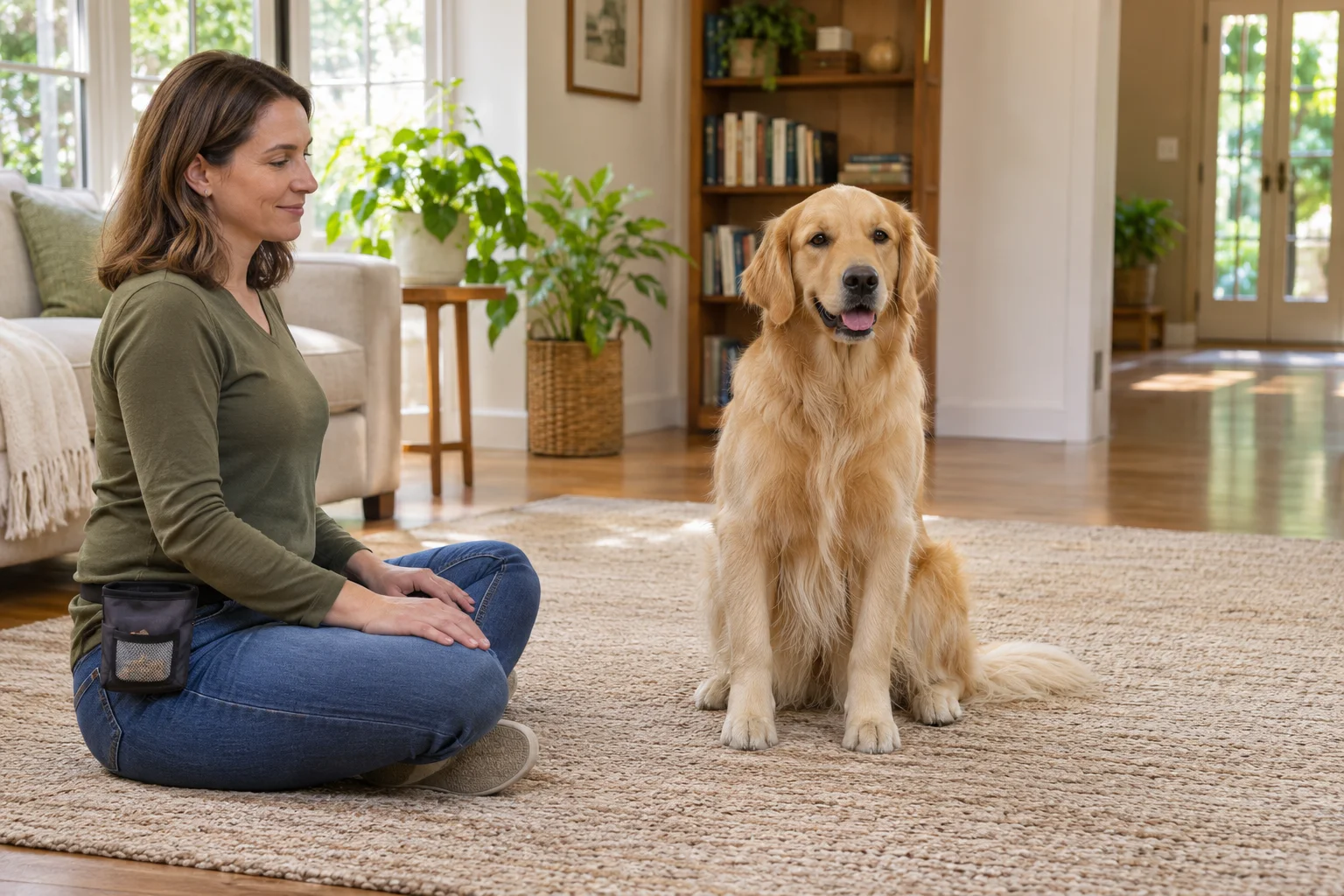
Pick a quiet room with a non-slip floor, such as a rug. Leave space all around your dog so they can walk away in any direction. Don't hold your dog's collar, tether them, hold their head or sit them between your knees.
Use small, soft treats your dog really likes, kept in a pouch at your waist or in a bowl on a table beside you, out of your dog's reach. Our guide to choosing training rewards can help if ordinary kibble isn't interesting enough.
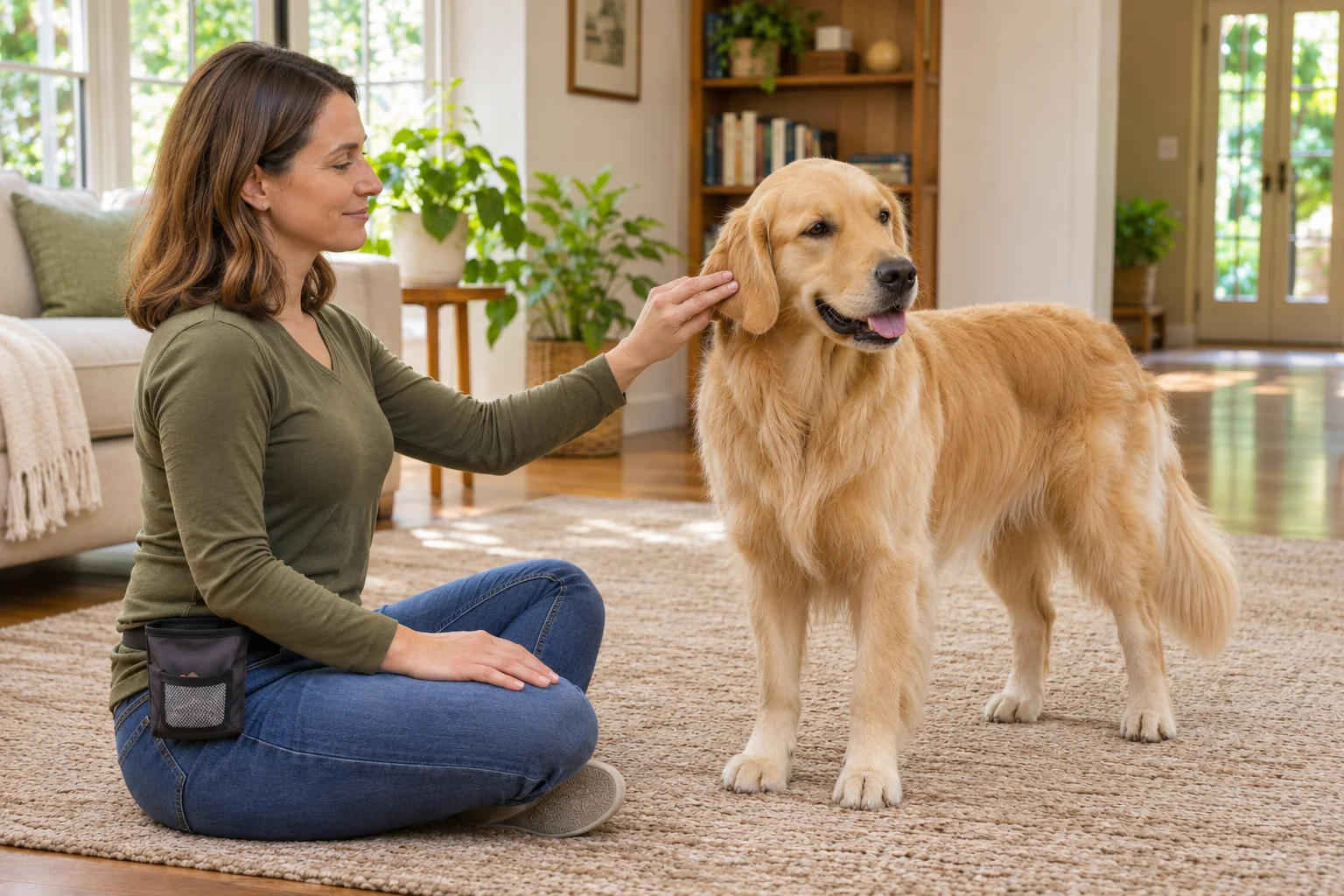
Sit on the floor beside your dog, slightly side-on, so your dog's head is near your hand without you leaning over them. Your dog can stand, sit or lie down; you don't need a cue for this.
Use the hand nearer your dog's head for touching. Keep your other hand free to take treats from the pouch. You only use one hand at a time: the touching hand moves away from the ear first, then your other hand gives the treat.
Work on the ear nearer you. Practice the other ear later by sitting on your dog's other side, rather than reaching across or over their head.
Keep sessions to a few minutes. Our guide to short dog training sessions explains how to fit practice into your day. To end a session, put the treats away and scatter a few on the floor.
Practice ear handling in small stages
Each stage below follows the same pattern. Make one brief contact, move your hand away, then give a treat with your other hand. That is one complete repetition. Pause for a few seconds afterward. If your dog stays beside you and looks relaxed, start the next repetition. If they leave, don't call them back. Continue with an easier stage only if they return on their own and look relaxed; otherwise end the session.
Give the treat after the contact, not during it. Don't use a lick mat, a steady stream of treats or a helper feeding your dog to keep them still while you handle their ears. The VCA behavior article describes continuous feeding for some dogs who can't yet accept brief touches, but food that holds a dog in place can hide the moment they would have moved away. A dog who can't stay relaxed even at the easiest stages needs professional help rather than a food workaround.
Start with a stroke your dog already enjoys
Stroke your dog once on a spot they already like, such as the chest or the side of the neck. Move your hand away and give a treat. This shows your dog how the session works before you go near the ears.
Move your hand toward the ear
Bring your hand slowly from the side of your dog's neck toward the ear, stopping a few inches away. Move it back, then give a treat. Over several repetitions, stop a little closer each time, as long as your dog stays relaxed.
Touch the ear briefly
Rest your fingertips on the outside of the ear flap, near its base, for a second. Move your hand away, then give a treat. Gradually, as your dog stays relaxed, try a gentle stroke along the outside of the flap.
Lift the ear flap gently
For a floppy ear, lift the flap a little way with your fingertips, hold it for a second and lower it gently. For an upright ear, hold the flap gently between your fingers for a second. Move your hand away, then give a treat. You may glance at the ear opening, but keep your fingers on the outside of the ear.
Get your dog used to the bottle and cotton ball
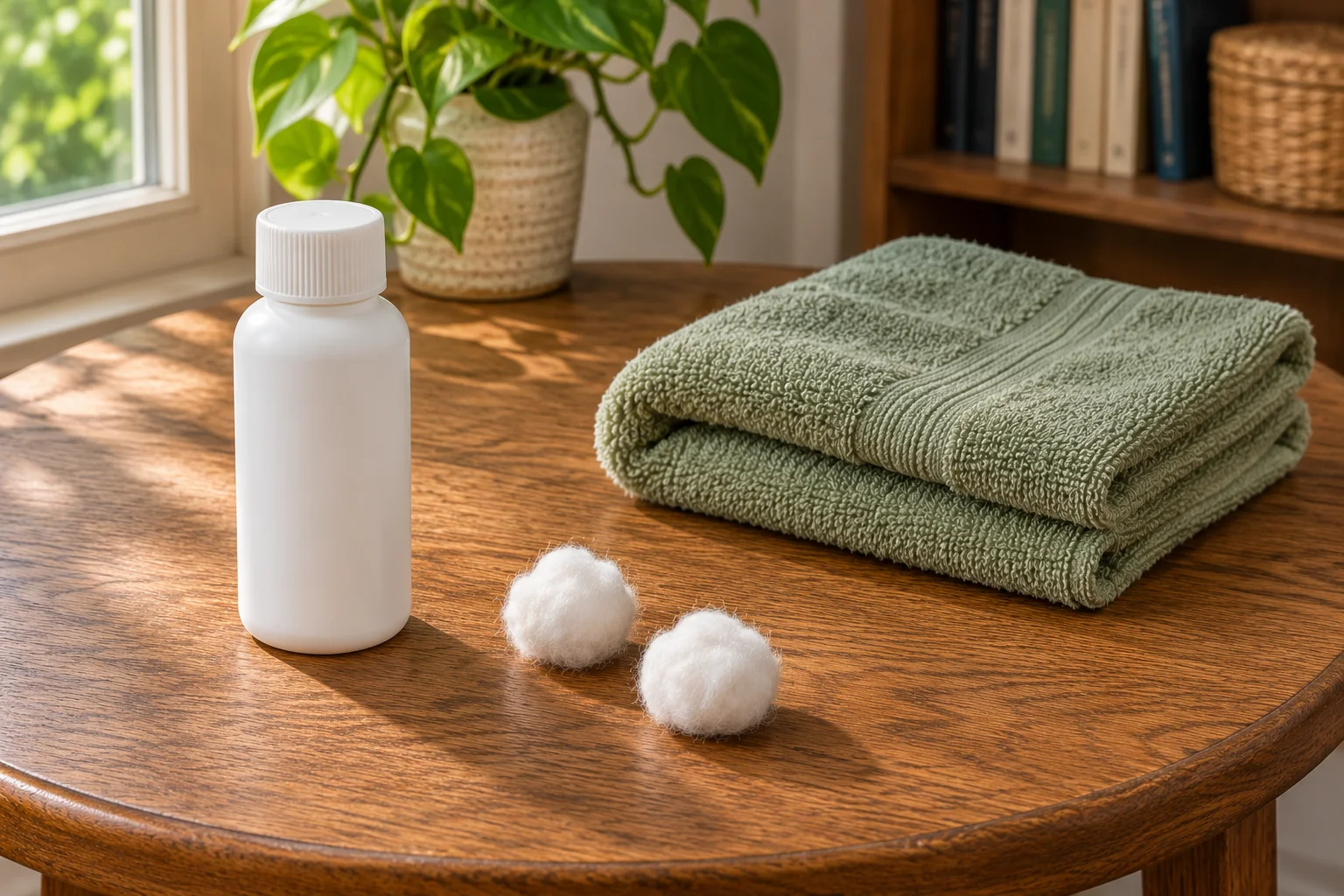
Put the ear cleaner bottle on the floor near your dog, with the cap on, and give a treat. Then hold it still in your touching hand and give a treat from your other hand. When your dog stays relaxed, bring the closed bottle slowly toward the ear, stopping a few inches away, then move it back and give a treat. Don't squeeze the bottle or let liquid touch your dog during practice.
For the cotton ball or gauze, use the same stages, ending with a brief touch of a dry cotton ball on the outside of the ear flap. Don't put the cotton ball, your fingers or anything else into the ear opening.
Stop if your dog stiffens or moves away
Watch your dog's whole body throughout, not just whether they eat. The VCA behavior article lists wide eyes with the whites showing, stiff muscles, taking treats roughly or refusing them, fidgeting, leaning away, and snarling or snapping as signs of stress.
Stop immediately if you see any of these, or if your dog pulls their head away, shakes their head, turns toward your hand or moves off. Move your hand away and pause. Continue with an easier stage only if your dog comes back on their own and looks relaxed. If they don't, end the session.
Eating a treat doesn't mean your dog is comfortable. A dog can eat while stiff or leaning away. Progress to the next stage only when your dog is relaxed at the current one: a loose body, a soft face, staying beside you or coming back between repetitions. Some dogs move quickly and others need many short sessions. There is no target number of repetitions or days.
If your dog snarls, snaps or bites, end the session and follow "Get help if your dog has growled or snapped".
For example, a dog might accept fingertips on his ear flap but lean away when his owner starts to lift it. His owner moves her hand away and pauses. The dog comes back, lies down beside her and looks relaxed, so she returns to a brief touch on the outside of the flap and gives a treat. Over the next sessions, the dog stays relaxed through the touch, with a loose body and soft face, and comes back willingly between repetitions. She then tries lifting the flap a little way for a second. If the dog had started shaking his head or seemed sore, she would have stopped ear practice and booked a vet visit.
Clean your dog's ears only as your vet instructs
Practice and cleaning are separate. Clean your dog's ears only if your vet has said they need cleaning, using the product and method your vet recommends.
VCA's ear cleaning guide describes a general approach in which the owner fills the ear canal with cleaner, massages the base of the ear, lets the dog shake their head and wipes away debris from the ear flap and the outer opening with cotton or gauze. Your vet may give different instructions for your dog, so follow theirs.
Before you try it at home, your dog should already be relaxed with the flap lift, the bottle near the ear and a dry cotton ball on the ear flap. Even then, the first real cleaning is a bigger step than practice, so keep it short and ask your vet whether they would like to show you on your dog first. Let your dog shake their head freely after the cleaner, as your vet has shown you; don't hold their head still. That expected shake during cleaning is different from repeated or unexplained head shaking before practice. The same withdrawal rule applies during real cleaning: stop contact if your dog pulls away, stiffens or seems distressed. Pause, and continue only if your dog comes back on their own and looks relaxed; otherwise end and ask your vet how to provide the care needed. VCA's ear cleaning guide advises stopping and consulting your vet if your dog seems to be in pain. Contact your vet about persistent shaking or other ear symptoms, and don't follow your dog to finish the job. Any cleaner left on the fur can wait until your dog is relaxed again. If the ears need cleaning and your dog can't accept it calmly, ask your vet's team to do it at the clinic while you keep practicing.
A chin rest is optional. Some owners find it a useful way for their dog to say they are ready, but your dog's chin resting on your hand or a cushion is not proof of comfort, and you should never hold their head in place. You don't need a chin rest for ear care.
Fix common ear handling problems
Your dog moves away as soon as your hand rises toward their head
Stop and pause. If your dog returns relaxed, go back to a single stroke on the chest or neck and end there. Next time, stop your hand farther from the ear.
Your dog accepts the touch but shakes their head afterward
Stop ear practice for that session and pause. Head shaking is one of the signs the MSD Veterinary Manual lists for ear inflammation, so if it happens again, or comes with scratching, pawing, a smell or discharge, see your vet before you continue. Don't move to the other ear instead.
Your dog accepts one ear but not the other
Stop and pause. A dog who is relaxed about one ear but pulls away from the other may be sore on that side. See your vet before any more practice on either ear, rather than carrying on with the comfortable ear as a workaround.
Your dog eats the treats but stays stiff
Stop touching and pause. Continue with an easier stage only if your dog comes back on their own and looks relaxed. If your dog stays tense even at the easiest stages, talk to your vet and a qualified behavior professional.
Your dog avoids the bottle
Put the bottle down and pause. Try an easier introduction only if your dog comes back on their own and looks relaxed; otherwise end the session. If they freely re-engage, start with the capped bottle on the floor farther away and reward relaxed interest or simply staying nearby. Your dog doesn't have to sniff it. Stop again if they move away or tense.
Your dog paws at your hand or mouths it
Move your hand away and pause. Continue with an easier stage only if your dog returns relaxed. If their teeth press on your skin, or they growl or snap, end the session and get help.
Your dog gets excited and wriggles
Some dogs find the attention exciting rather than worrying. Wriggling away still counts as moving away, so stop and pause. Continue with an easier stage only if your dog comes back and settles; otherwise end the session. Next time, try practicing after a walk or a play session, when your dog is calmer.
Your dog copes at home but struggles at the clinic
A clinic has new people, smells and sounds, and someone else's hands. Tell your vet's team which stages your dog is comfortable with at home and ask whether they can work in short breaks. If your dog is too worried to be examined, ask your vet whether medication before the visit, such as pain relief for sore ears or calming medication, might help.
Your dog needs ear medication before training is finished
Treatment comes first. Follow "Ask your vet for help if ear treatment can't wait" and ask your vet for a plan that doesn't depend on your dog already being comfortable.
Prepare for vet visits and keep practice going
Once your dog is relaxed with each stage, short sessions now and then help keep ear handling familiar. Tell your vet what your dog is comfortable with and which stages are still hard.
The VCA behavior article recommends teaching dogs to accept a basket muzzle, since even gentle dogs may bite when they feel sudden pain. Our guide to wearing a muzzle comfortably explains how to teach it. A muzzle protects people during necessary care; it doesn't make it acceptable to continue past your dog's stop signs.
Practice brief touches in other places
When your dog is relaxed with ear handling in your usual room, try a single brief ear touch in another quiet room, or with your dog on a mat or low platform if they step onto it themselves. Use the same stages, rewards and stop rule. If your dog moves away or tenses, pause and go back to an easier stage only if they return relaxed; otherwise end. Keep the new place as easy as the old one at first.
Watch for changes
If your dog's comfort changes, for example a dog who used to accept ear handling starting to pull away or shake their head, stop and check with your vet before you continue.
For other grooming, our guide to a dog who hates being brushed covers coat brushing.