
To teach your dog to lie down, start with them sitting in front of you on a comfortable, non-slip surface such as a rug. Hold a small treat at their nose and move it slowly straight down to the floor between their front paws. The moment their elbows touch the floor, say "yes" and give them the treat low, between their paws, while they are still lying down. Then say a release word such as "free" and toss a second treat a short distance away so they get up, ready for the next try.
Add the spoken word "down" only after your dog follows an empty hand into position easily. Never push or pull your dog into a down. If lying down looks stiff, slow or uncomfortable, stop the session and talk to your vet before trying again.
This guide covers the down position and its cue. Holding the position for longer is a separate skill, covered in the guide to teaching the stay command. Relaxing on a particular bed or mat is covered in the guide to teaching your dog to settle on a mat.
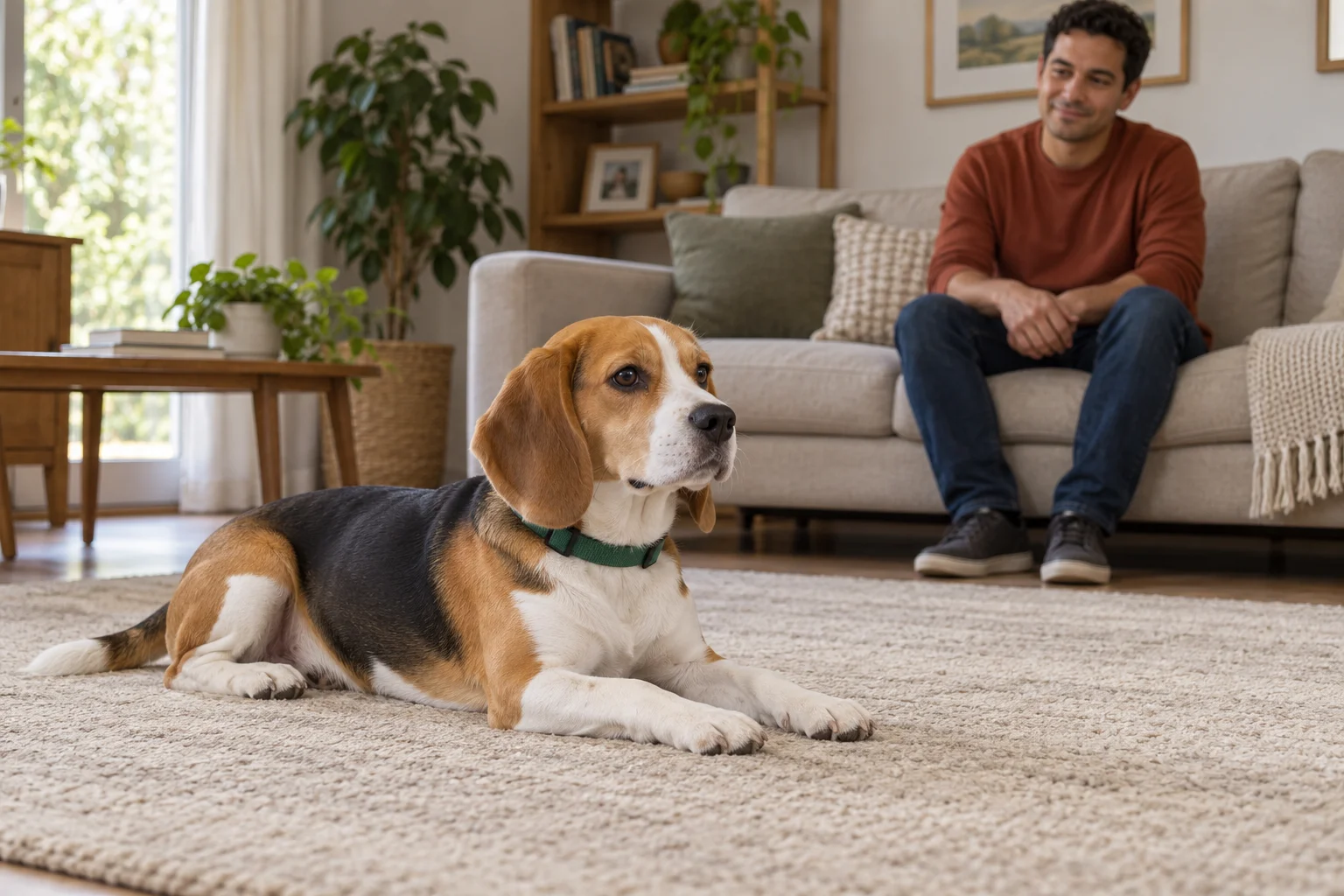
What counts as a down
For this exercise, a down means your dog's chest and elbows are resting on the floor. Their hips can be tucked under them or rolled to one side. Either is fine, as long as the elbows are down.
A few terms come up throughout:
- A lure is a treat you hold at your dog's nose to guide them into position. Their body follows their head.
- A marker is a short word, such as "yes," that tells your dog the exact moment they got it right. In this guide, the marker means "food is coming to you where you are." It does not end the exercise.
- A cue is the signal that asks for the behavior. You will end up with two: a hand signal and the word "down."
- A release is a word, such as "free," that tells your dog the repetition is over and they may get up.
If you have never used a marker, the guide to reward marker timing explains how to pair one with food. You can still follow this method without one by delivering the treat promptly the moment the elbows touch down.
One word deserves a household check. Many families say "down" when the dog jumps on a person or climbs on the couch. If "down" also means "lie down," your dog has to guess which one you mean. For furniture, use a separate cue such as "off," covered in the guide to teaching your dog the "off" cue. Keep that cue distinct from your plan for jumping on people. The guide to getting everyone using the same training rules has more on agreeing one word per behavior.
Set up a comfortable place to practice
Choose a quiet room where your dog already feels relaxed, with other pets and family members elsewhere. You need enough clear floor in front of your dog for their front legs to slide forward a little as they lie down.
The surface matters more than people expect. Many dogs are reluctant to lie down on cold, slippery or uneven ground, and Battersea's lie-down guidance suggests starting somewhere soft, such as carpet or grass. A rug, folded blanket or yoga mat on a hard floor works well, as long as it stays flat and does not slide.
Prepare small, soft treats your dog likes and can swallow quickly. Pieces about the size of a pea are plenty. Keep them in a pouch or pocket you can reach with one hand. If your dog is not very interested in ordinary treats, the guide to choosing training rewards explains how to find something they will work for.
Timing helps too. The American Kennel Club's guide to teaching down suggests practicing after a walk or play session, because an energetic dog is less inclined to lie on the floor. A dog who has just eaten a large meal or needs to go outside will not concentrate well either.
A handful of repetitions, then a break, is a complete session. The guide to short dog training sessions explains how to fit practice into a normal day.
Lure the down from a sit
Start with your dog sitting in front of you, facing you. If your dog has not learned sit yet, you can teach the sit cue or use the standing variation below. Kneel, crouch or sit on a low stool if you can do so comfortably. Bending over your dog from standing can make some dogs back away.
Hold a treat between your thumb and fingers, close enough to your dog's nose that they can sniff it. Then move your hand slowly and smoothly straight down toward the floor, ending between their front paws. Think of drawing a vertical line from their nose to the ground. Move slowly enough that their nose stays glued to your hand.
When your hand reaches the floor, keep it still for a moment. Many dogs fold into a down on their own at this point, sliding their front legs forward until their elbows touch the floor.
If your dog stays hunched over your hand, slide it very slowly forward along the floor by an inch or two (a few centimeters). That small movement often invites the front legs to walk out. The AKC guide describes the lure path as an "L" shape for this reason: down first, then a little forward. Keep the forward part short. If you pull the treat too far, your dog will stand up and follow it instead of lying down.
If your dog cannot sit comfortably or does not know how to sit yet, start from a stand. Bring the treat slowly down to the floor between their front paws and hold it there. Some dogs fold their back end down after their front end, while others need you to move your hand a tiny amount back toward their chest. Battersea notes that some breeds, such as greyhounds, find sitting awkward, so starting from a stand is a sensible choice for them.
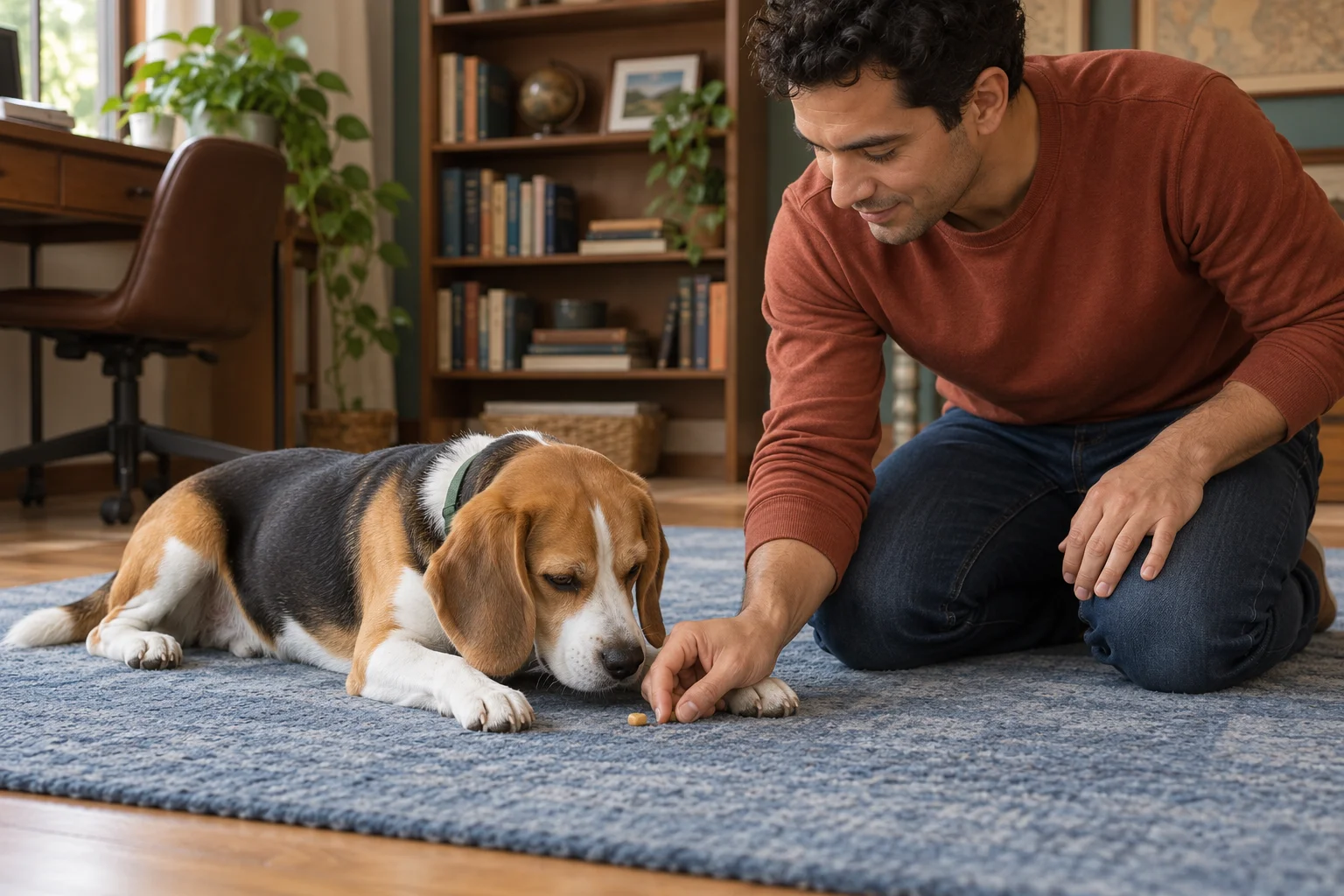
Mark the moment and reward between the paws
Watch your dog's elbows. The instant both elbows touch the floor, say "yes." Then let them have the treat from your lure hand, right there on the floor between their paws.
Where you deliver the treat matters as much as when. Reward while your dog is still lying down. The AKC guide points out that if your dog only gets the treat after they pop back up, you are rewarding the getting up. That habit creates a dog who drops for a split second and bounces straight back to a sit.
Keep the food low. If you lift the treat toward your dog's face, they will lift their head to follow it, and their elbows will come up. Bring the food to their mouth at floor level instead.
If your dog stands up the moment they hear "yes," give them the treat anyway. The marker is a promise that food is coming, and keeping that promise is what makes the word meaningful. Next time, have the treat closer to their mouth and deliver it faster.
End each repetition with a release and a reset
After your dog has swallowed the treat, say your release word once, then toss a treat a few feet (about a meter) away on the clear floor. Your dog gets up to collect it. That ends the repetition.
Say "free" first, then toss. The toss helps your dog move after the release, which gives the word meaning. It also puts your dog back on their feet for the next try, without you pulling them up.
When they have finished the tossed treat, invite them back in front of you, ask for a sit, and run the next repetition the same way. The full repetition looks like this:
- Your dog sits in front of you.
- Your hand moves slowly from their nose straight down to the floor.
- Their elbows touch down and you say "yes."
- They eat the treat on the floor between their paws.
- You say "free" and toss a reset treat a few feet away.
Stop while your dog still wants to play. If you later want your dog to stay down for longer than it takes to eat one treat, that is duration, and it belongs to the stay. The stay guide uses the same release word and the same habit of rewarding in position, so the two skills fit together.
Switch to an empty hand
You are ready to make the food less visible when your dog folds into position smoothly as your hand reaches the floor, without hovering, creeping forward or popping up, for most of the repetitions in a session.
Put the treats in your other hand or your pouch. Make exactly the same movement with your luring hand, now empty, from your dog's nose straight down to the floor. When their elbows touch down, say "yes" and bring a treat from your other hand to the floor between their paws. Then release and reset as before.
Battersea and the AKC both describe this change: the luring hand stops holding food, but the movement stays the same. Your empty hand has become a hand signal.
Expect a puzzled look the first few times. If your dog does not follow the empty hand, go back to a treat in the luring hand for two or three repetitions, then try again.
Once the empty hand works, make the movement a little smaller over several sessions. Stop a few inches above the floor instead of touching it. Later, a downward point from about knee height may be enough. Go back a stage if your dog starts to hesitate.
Add the word "down"
Wait to add the spoken cue until your dog lies down readily for the empty-hand signal. If you say "down" while they are still working out the movement, the word gets attached to hovering and guessing.
When you are ready, say "down" once, in an ordinary voice, then pause for about a second before giving the hand signal. Word first, then hand. Mark and reward on the floor, then release and reset.
Over many repetitions, your dog learns that the word predicts the hand signal. Many dogs start to lie down as soon as they hear it, before your hand moves. When that happens, reward generously.
Avoid repeating the cue. If you say "down, down, down," your dog learns that the first two words do not matter. If they do not respond to one "down," give the hand signal to help, then reward the down they give you. Use the word and signal close together for the next few repetitions.
Reduce treats without skipping earned rewards
Two different things happen to the food in this exercise, and they are easy to confuse.
The first is fading the lure, which you have already done. Your dog stopped seeing food in your hand before lying down, but they still earned a treat every time.
The second is reducing how often the treat arrives. That comes much later, once your dog lies down promptly on the word in several rooms, and it should be gradual. Battersea suggests rewarding the quicker, better downs with food rather than every attempt, and using praise followed by a toy as the reward some of the time.
If you say "yes," always follow it with food. On repetitions rewarded with praise or a toy instead, use ordinary praise or an established alternative marker, not the food-promising "yes."
Food should never disappear suddenly as a test of whether your dog "really knows it." A dog who stops being rewarded for a skill usually offers it less often. Reward generously whenever you ask for a down somewhere new or harder, and keep giving occasional food rewards even when the skill is well established.
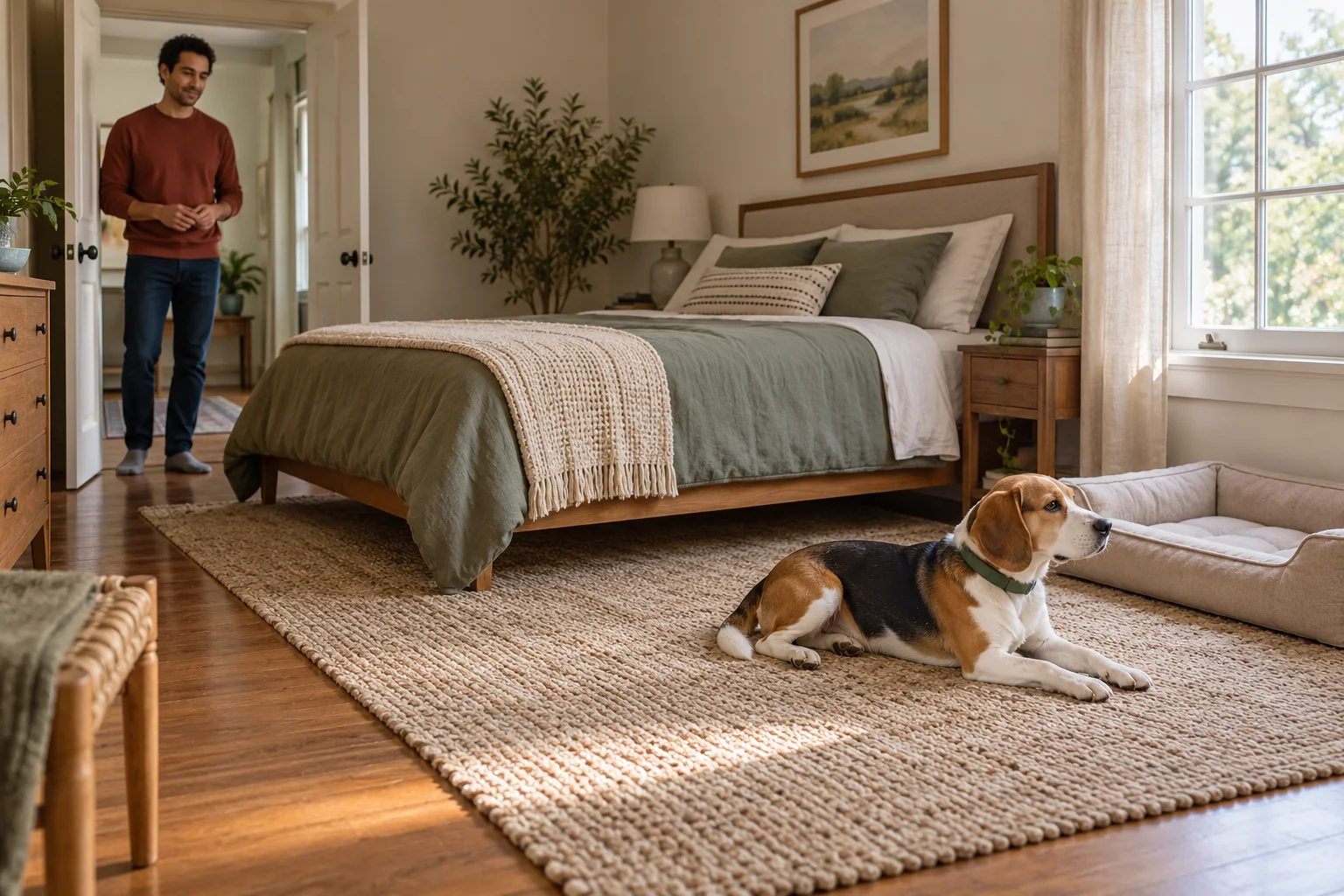
Reward a natural down if the treat lure fails
Luring is the main method here because it is quick for most dogs. Capturing is an alternative you only need if luring is not working. It means waiting for your dog to lie down on their own, then marking and rewarding it.
Capturing can suit a dog who backs away or freezes when a hand moves down in front of them, a dog who will not follow food downward even with good treats, or a dog who often drops into a down on their own instead of sitting.
Before switching, consider whether discomfort is the reason your dog will not lie down when lured. A dog who avoids the position because it hurts needs a vet, not a different training method. The section on discomfort below explains what to look for.
To capture a down, keep a few treats in your pocket or a closed jar near the places your dog usually rests. When you see them lie down, say "yes" and place a treat on the floor between their paws while they are still lying there, the same pattern the AKC guide describes. If your dog is settling for a nap, walk away afterward and let them rest. During a practice session, release them with "free" and toss a reset treat so they can lie down again.
Over time, many dogs start lying down in front of you on purpose. Once you can predict when it is about to happen, say "down" just before they lie down, then mark and reward. Capturing usually takes more patience than luring, because you are waiting for the behavior instead of prompting it.
When your dog hovers, pops up or creeps forward
Most trouble with a lured down falls into a few patterns, each with its own fix.
If your dog hovers with their elbows off the floor, slow your hand down and keep it still on the floor a moment longer. If they still hover, reward the lowest position they offer, then ask for slightly more next time: a lowered head, then bent elbows, then elbows touching the floor. Battersea recommends this kind of gradual approach for dogs who struggle to go all the way down.
If your dog pops straight back up, check where the food arrives. It needs to land on the floor between their paws while their elbows are still down. Have the treat ready closer to their mouth so there is no delay.
If your dog walks forward after your hand, the lure is moving too far or too fast along the floor. Move straight down, pause, and add the forward slide only if needed, keeping it to an inch or two.
If your dog stands up as your hand goes down, your hand may be moving away from their nose rather than toward the floor between their paws. Bring it down closer to their chest.
If your dog follows partway, then loses interest, the treat may not be valuable enough, or your dog may be tired, distracted or full. Try a tastier reward, a quieter room or a different time of day.
Both the AKC and Battersea also describe luring a dog under a low space, such as a chair or your bent legs, so they lie down to reach the treat. If you try this, leave plenty of room, make sure your dog can back out easily, and skip it for any dog who seems worried about tight spaces.
Here is an illustrative example. Picture a short-coated adult dog learning on a tiled kitchen floor. Every time the treat reaches the tiles, she stays hunched over it and will not put her elbows down. Her owner moves the session to a rug in the living room. Now her elbows bend partway, so her owner marks and rewards that. Over the next few repetitions, the elbows go a little lower until they touch the rug. Her owner keeps practicing on the rug and leaves the kitchen tiles until the down is easy everywhere else.
When your dog won't lie down on a certain surface
Many dogs lie down happily on a rug but refuse on tile, wood, a wet lawn or a sidewalk. That is often a reasonable choice. Hard floors can be cold or slippery, wet ground is unpleasant, and asphalt can be hot in summer. A thin-coated or lean dog may simply find a hard surface uncomfortable.
Treat a new surface as a harder version of the exercise. Go back to the empty hand or even the treat lure, keep the session short and reward well. Battersea recommends introducing new textures gradually once your dog is confident on a comfortable one.
Your dog does not need to lie down on every surface. If they will lie on a blanket but not on cold tile, carrying a blanket may be the kindest answer. A sit or a stand is a perfectly good alternative for a quick pause on wet grass or a hot sidewalk.
Do not keep asking for a down on a surface your dog clearly avoids. Repeated cues there teach your dog to ignore the word, and they ask your dog to choose between your reward and their own comfort.
Signs the problem may be discomfort, not training
Sometimes a dog who will not lie down is telling you the position hurts. VCA Animal Hospitals' guide to signs of pain in dogs lists several changes linked to lying down, including:
- Groaning or grunting when lying down or getting up.
- Getting up and lying down repeatedly, as if they cannot get comfortable.
- Reluctance to get up again once lying down.
- Pacing or restlessness instead of settling.
- Difficulty walking on slippery floors.
VCA advises bringing changes like these to your veterinarian's attention. Stop training the down and contact your vet if you notice any of them, or if a dog who used to lie down easily suddenly hesitates.
None of these signs points to a particular cause on its own, and only a veterinary examination can look for one. What matters for training is your response. Do not use tastier treats to get your dog past a position that may hurt. Taking food is not proof that a dog is comfortable.
For an older or stiff dog who is still comfortable enough to practice, Battersea advises keeping sessions gentle and not repeating the movement many times in a row. If lying down seems painful, ask your vet whether a different behavior would suit your dog better.
The same reward-based standard applies to every dog. The AVSAB position statement on humane dog training recommends reward-based methods for all dog training and lists forceful manipulation, including so-called "dominance downs," among the techniques to avoid. The AKC guide adds that pushing a dog into position tends to make them resist the pressure, or frightens them so the down becomes less appealing.
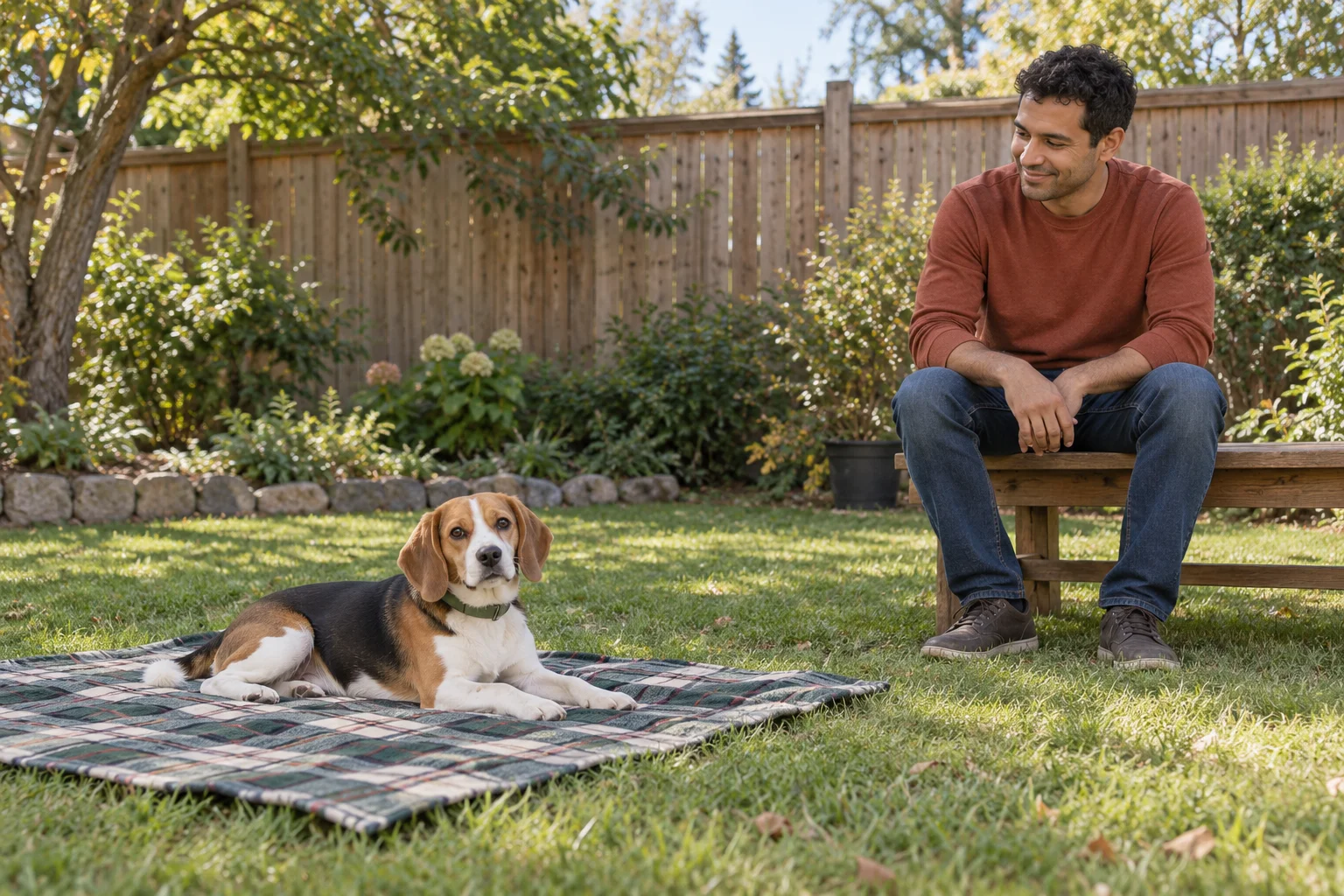
Practice the down in new places
A down that works on your living room rug has been learned on your living room rug. Your dog will not automatically understand that the same word means the same thing in the kitchen, the yard or a friend's house.
Move the skill one small change at a time. Try another quiet room first, on a comfortable surface. Then try the yard or a quiet corner of a park, with your dog on a leash if the area is not securely fenced. Each time you change places, make the exercise easier again: use the hand signal with the word, reward every down and keep the session short.
If your dog cannot lie down somewhere busy, the setting is harder than they are ready for. Move farther from the distraction or go back to a quieter spot rather than repeating the cue. The guide to why your dog listens at home but not outside explains this in more detail.
For your next session, pick the easiest version your dog can do comfortably. If they still need the treat lure, practice that on a soft surface in a quiet room. If the lure is easy, try a few repetitions with an empty hand and the treat in your other hand. If the empty hand is easy, say "down" once and pause before you move your hand.