
To teach a dog to stay, begin with a comfortable sit or down in a quiet room. Reward them for remaining there briefly, teach a word that releases them, then add “stay” before the short hold. Build the time gradually before adding your movement and mild distractions. A trained stay cannot replace a lead, gate, barrier, supervision or road awareness.
What you’re asking your dog to do
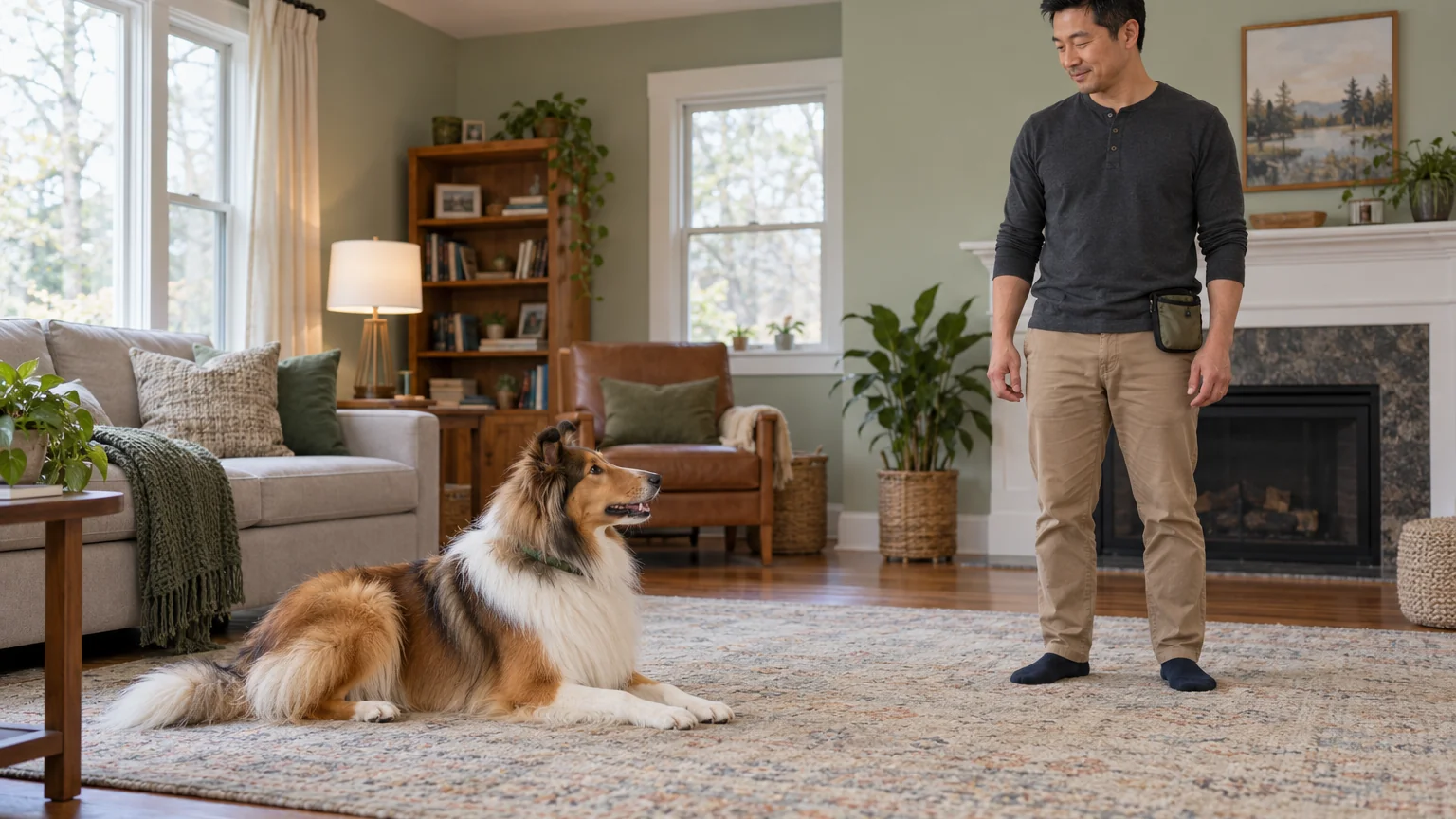
For this exercise, “stay” means keeping the position you’ve asked for until you give a release cue. If you begin with your dog lying down, getting up ends that attempt, even if they remain in roughly the same place.
Choose a position your dog already knows and can hold comfortably. For a relaxed pause, you can teach the down position first; you can also teach a comfortable sit for a very brief hold. There’s no need to insist on sitting if lying down is more comfortable. Practise one chosen position at first so you can recognise clearly what you’re rewarding. If your dog can get up and stand comfortably, you can also teach a separate stand cue. That guide teaches getting into position; this beginner stay exercise starts with a comfortable sit or down.
Your dog can look around while staying. Eye contact isn’t required, and you don’t need to keep asking for their attention. A dog lying comfortably with their head turned towards an ordinary sound can still be doing exactly what you asked.
A doorway wait has a different purpose: pausing behind a boundary until crossing is allowed. You may accept position changes during that pause. If stopping your dog from crossing a threshold is the task you need, use the separate guide to teaching your dog to wait at a door. Keep the cue meanings consistent within your household. A brief wait for the food bowl is another separate routine: calm on four paws is enough, without holding a formal sit or down.
Set up somewhere comfortable and enclosed
Begin indoors with the room’s doors closed, other pets elsewhere and no access to an open exit. Choose a non-slip patch of floor with enough space for you to stand nearby. An existing mat is fine if your dog is comfortable on it, though you don’t need one.
Have small pieces of suitable food in a pouch at your waist or an accessible pocket. Keep any spare food out of your dog’s reach. You should be able to take out a piece with one hand without bending over a container or walking away.
Use food your dog can eat easily while sitting or lying down. Large, chewy pieces can interrupt the exercise because your dog may need to stand or move away to eat them. If choosing food is proving difficult, the guide to choosing dog training rewards explains what to consider.
Best Friends Animal Society’s stay guidance recommends a low-distraction setting, small rewards and short, frequent practice. You can use that simple preparation without restraining your dog in position.
Check that your dog is ready to participate before you begin. Give them a chance to toilet, and avoid starting when they’re exhausted, unusually restless or uncomfortable. If sitting or lying down seems painful, stop and contact your vet rather than trying to train through it.
Teach a clear release cue first
Choose a release word such as “free” that everyone involved can use consistently. It tells your dog that they may leave the position. Avoid choosing something you say frequently in conversation, because an accidental release can make the exercise confusing.
Stand close enough to deliver food without asking your dog to reach forwards. Ask for the familiar sit or down, then give a piece of food while they’re still in that position. At this point, you’re asking for only a brief pause.
Once they’ve swallowed, say “free” before inviting movement. You can then toss a small piece of food a short distance away on the clear floor, allowing them to get up and collect it. The order matters: the release word comes first, and the tossed food helps them move afterwards.
If they remain where they are, give them a moment. After the release, you can move a little to the side and invite them towards you. Don’t pull them up, push their body or repeat “free” insistently. They don’t have to leave immediately every time permission is given.
For another repetition, let them finish eating, then invite them back beside you if they moved away to collect the food. Ask for the chosen position again, reward the brief hold, then release. These easy repetitions give the exercise a clear beginning and ending before you ask for longer stays.
Add “stay” and reward where your dog is
Once your dog can remain briefly in position beside you, add the stay cue. Ask for the sit or down, wait until they’ve settled into it, then say “stay” once. Keep your body still for a moment.
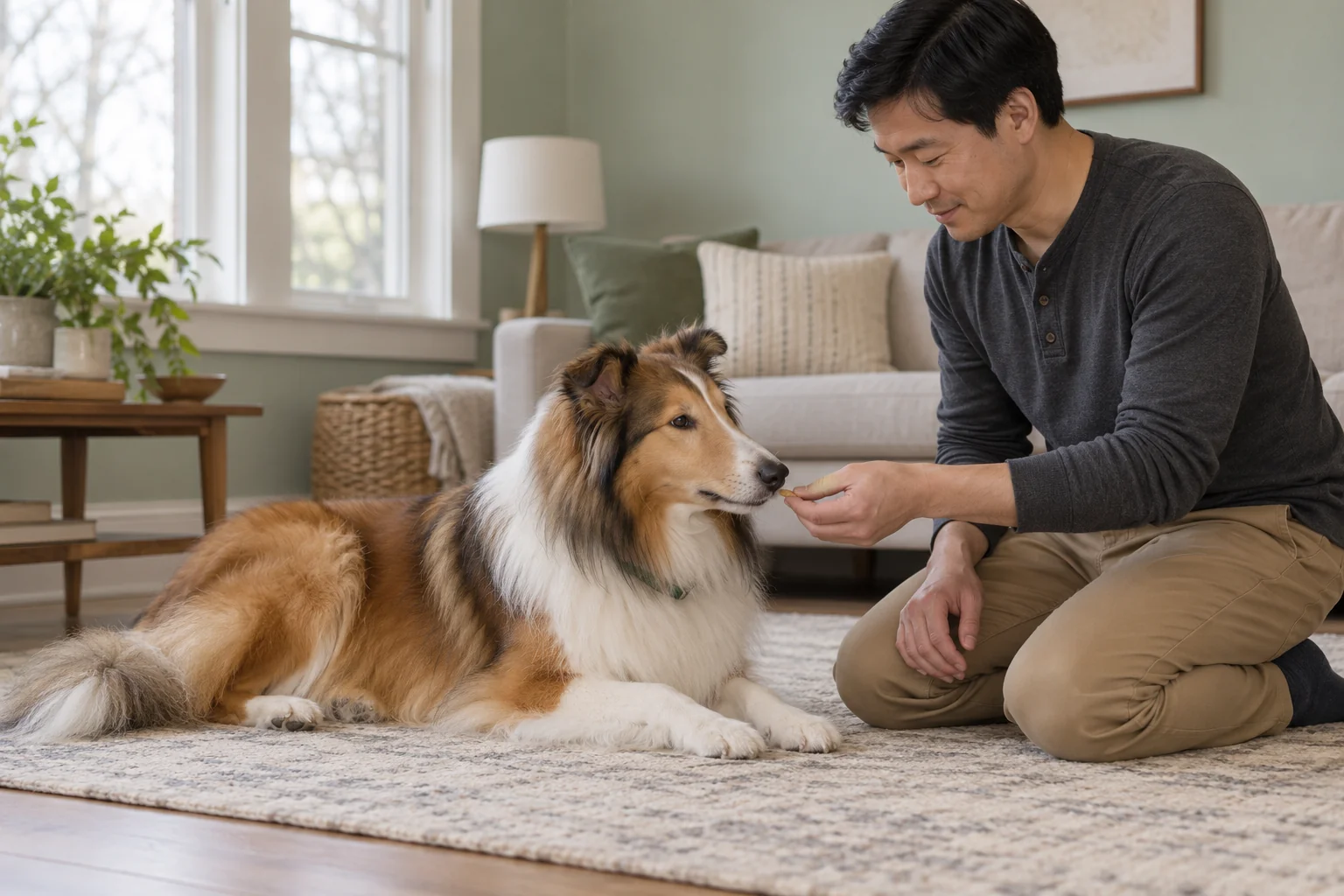
Take a reward from your pouch and deliver it while they’re holding the position. For a down, lower your hand close to their mouth so they can eat without getting up. For a sit, bring the food to their mouth rather than holding it above their nose or beyond their reach.
Reward in the chosen position. This is the part of the exercise you want to make worthwhile. The RSPCA’s stay advice likewise recommends rewarding while the dog remains sitting or lying down.
You don’t need a marker word to begin. If you already use one that tells your dog a reward is coming while they continue the behaviour, say it as they hold position, then deliver the food there. If your click or marker normally ends the behaviour, leave it out of this exercise for now. The guide to reward marker timing can help you distinguish those uses.
After your dog has swallowed, say “free”, then invite movement as before. Let them finish any food used after the release and invite them back beside you before asking for the position again. The full repetition is now: chosen position, “stay”, brief hold, food delivered in position, release, and a pause before restarting.
Make the first repetitions easy to repeat
Stay beside your dog for the first few attempts. A hold of about a second is a useful starting example, though some dogs need an even shorter pause. Give the reward before they begin getting up, then release promptly.
Keep your non-feeding hand relaxed. There’s no need to hold an open palm in front of their face throughout the exercise. If you want to add a hand signal later, make it a brief, consistent signal rather than a moving distraction or something that physically blocks them.
Watch what happens as you reach for the food. If your dog stands when your hand enters the pouch, shorten the pause and prepare a piece in your hand before the next attempt. Hold it quietly near your waist, then lower it to their mouth while they remain in position.
If they follow your feeding hand upwards after eating, let that hand return to your side without waving it around. Make the next repetition short enough that you can reward and release before they’re likely to get up.
A few comfortable repetitions give you more useful information than one long attempt. Look for your dog staying in position through the pause and food delivery without repeatedly creeping forwards or standing. If that isn’t happening yet, keep the hold brief and check your hand placement before adding time.
Build duration without making it an endurance test
Duration simply means how long your dog stays. Work on it while you remain close, with the room as quiet as it was for the first attempts. Your movement will be a separate challenge later.
After several easy holds, try waiting a little longer before feeding. For example, if a one-second pause is comfortable, you might try two seconds, then return to an easier one-second repetition. These are examples of small changes, not a timetable your dog must meet.
Avoid making every repetition longer than the last. Mixing brief holds with a slightly longer one gives you opportunities to reward success without continually approaching the point where your dog gets up.
For a longer hold, you can deliver more than one piece of food while your dog remains in position. Feed one, pause briefly and feed another, then release. Eating a reward doesn’t have to end the stay; the release cue does.
Watch your dog rather than concentrating only on counting. If they’re repeatedly preparing to stand, you may be waiting too long to reward. Shorten the next hold. If they’re becoming restless or disengaged, finish the session.
There’s no need to work towards several minutes simply because a longer stay sounds impressive. Build the amount of time useful for a safe, ordinary situation, with opportunities to move and take breaks. A brief hold while you pick up an item can be a reasonable goal.
Introduce your movement before adding distance
Moving away can be difficult even when your dog stays comfortably beside you. They may be used to following you whenever you shift position, so begin with a movement small enough for them to manage.
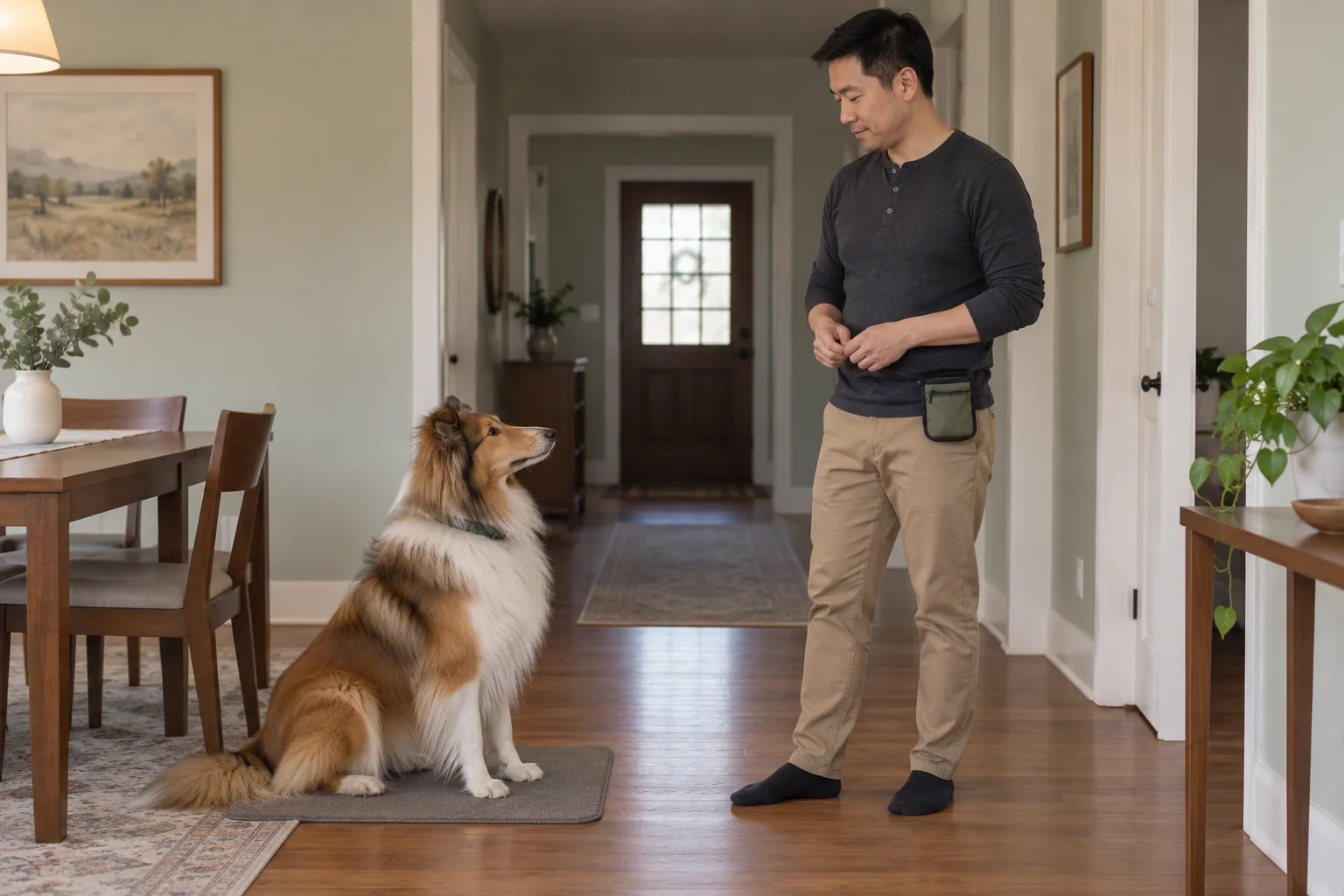
Ask for the chosen position and say “stay”. Shift your weight slightly, return to your original stance, then feed in position and release. Keep the hold short and the surroundings quiet.
When that is going well, try moving one foot a little to the side and bringing it back. Later, move both feet a short distance away and return immediately. You don’t need to walk backwards across the room to begin teaching distance.
Return before rewarding and releasing. Dogs Trust’s stay guidance recommends returning to your dog before giving the reward. Calling them over for the food would reward leaving the position during this exercise.
Approach calmly and deliver the food without leaning so far over them that they move away. If your return causes them to stand, try a smaller movement next time and stop at a comfortable feeding distance.
As distance grows, the journey out and back also takes more time. Keep the distance modest enough that you’re still within an easy duration. Don’t add a pause at the far end as well. Turning your back is another change; save it until smaller movements are comfortable, then introduce only a slight turn.
Change one difficulty at a time
Time, your movement and activity nearby can each make a stay harder. When one becomes harder, make the others easier. That means changing the actual exercise, not simply expecting your dog to concentrate more.
Suppose your dog can hold a brief down while you stand beside them. To introduce movement, shorten the hold and make only a small shift before returning. To introduce a mild distraction, stay close again and reward promptly.
Returning to an easier version is also useful after a break from practice. Begin with something familiar so you can see how your dog responds that day before asking for more.
You’re ready to try a little more when your dog comfortably holds the position through the current challenge, your return and the reward. Looking around is fine; getting up or changing from a sit to a down ends the attempt.
If they repeatedly move before you can reward, the current version needs changing. Reduce the wait, movement or distraction that you just added. Avoid increasing a different demand to compensate, such as shortening the distance but asking for a much longer hold.
Different variations won’t necessarily progress together. Your dog might manage a longer hold nearby yet struggle when you turn sideways. Work on that particular movement with an easy duration rather than treating their earlier success as proof that every version should be equally easy.
Add mild distractions and new places carefully
Start with something small that you control. While standing close to your dog, you might briefly touch your own sleeve with your free hand, then reward and release. That provides a modest change without involving another person or an exciting object.
If your dog stays comfortably, you can gradually try a slightly larger movement. Keep the duration short. Don’t wave food around, drop tempting items beside them or use startling noises to see whether they’ll resist.
Choose everyday distractions according to your dog’s response. A quiet household action may be manageable for one dog and absorbing for another. If your dog turns their head but remains comfortably in position, they can still earn the reward.
A new room is itself a change. Begin there with the shortest familiar hold while you stand nearby. Don’t carry over your longest duration and greatest distance immediately.
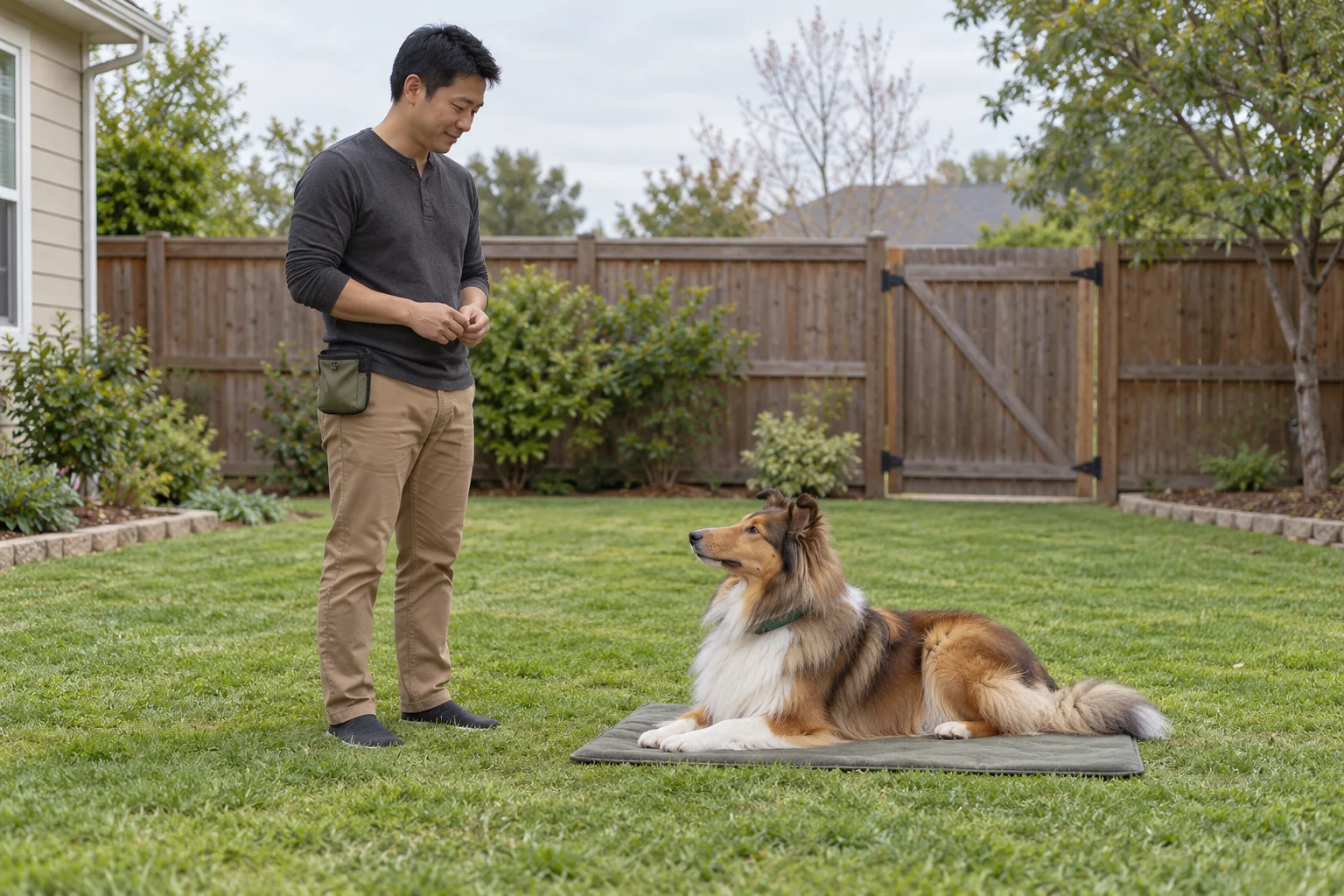
For outdoor practice, choose an enclosed, quiet area and check that gates are closed before starting. Remain nearby and begin with the easy version. If you can’t arrange a setting where your dog moving away would be harmless, practise indoors instead.
Public settings can involve lead handling and unexpected activity that make a beginner session unnecessarily complicated. You don’t need to tackle them to establish the cue. If your dog struggles when the surroundings change, the guide to why dogs listen at home but not outside explains how to reduce those demands.
If your dog moves before the release
If your dog gets up, follows you or changes position before “free”, let that attempt end. Don’t scold, tug a lead, push them back down or repeat “stay” until they stop moving.
Pause briefly, then invite them into the familiar position again. Make the next attempt easier in a specific way. If they followed your movement, use a smaller shift. If they stood during a longer pause, reward sooner. If they moved towards a distraction, remove it or return to the quieter setting.
You can reward the next achievable hold. There’s no need to withhold food for the rest of the session because an earlier attempt went wrong. Equally, don’t chase them with the treat you intended to deliver for staying.
If your dog gets up just as the food arrives, check whether you’re drawing them forwards with your hand. Bring the reward close enough to eat comfortably in position. If that position seems awkward, pause and choose a more comfortable one for the next repetition.
Sometimes your dog stays through the reward but moves before you release. Shorten that final pause so you can say “free” after they swallow and before they stand. Later, you can build a brief pause after eating just as you built the earlier duration.
When the same problem keeps happening, stop repeating the unchanged exercise. Remove the latest difficulty or finish for now. Repeated attempts won’t clarify an instruction whose timing or demands are still confusing.
Keep practice brief and watch for discomfort
A few repetitions can be enough for one session. Fit them into a quiet moment when you have your rewards ready and can give the exercise your attention. Release your dog when you finish, then put the food away.
Forgetting the release can leave the ending unclear. During early practice, stay involved from the first position cue until “free”; don’t start a stay and then become absorbed in your phone or another task.
You can practise again later without making every quiet moment a training opportunity. Dogs also need to move around freely, rest and investigate their surroundings. There’s no requirement to use stays to manage every ordinary activity at home.
Notice changes during the session. Turning away repeatedly, leaving the practice area, refusing food they would normally accept or repeatedly getting up can be reasons to pause. None tells you the cause on its own, but each is worth responding to rather than pressing for another repetition.
Stop if pain or distress may be involved. A sudden reluctance to sit or lie down, stiffness, limping or a marked change in behaviour needs veterinary advice. Don’t try to solve it by insisting on a longer stay.
If there’s no apparent discomfort but the exercise remains difficult, a suitably qualified reward-based professional can help review your setup and timing. This doesn’t replace veterinary advice where pain or illness may be involved. For managing practice around your dog’s interest and energy, see the guide to short dog training sessions.
Keep safety measures in place
A stay can help with an ordinary pause while you remain nearby, but your dog can still move unexpectedly. A surprising noise, another animal or something they want to investigate may interrupt a behaviour that worked well moments earlier.
Keep leads, gates, barriers and supervision in place where they’re needed. Maintain road awareness regardless of how well your dog has stayed during practice. Never rely on the cue beside traffic, at an open exit or wherever leaving position could cause harm.
Don’t deliberately test a stay by opening a route to danger or leaving your dog unattended. Distance training doesn’t require going out of sight, and this beginner method gives you no reason to do so.
Use rewards to teach the behaviour rather than preventing movement through restraint or punishment. The AVSAB Humane Dog Training Position Statement supports reward-based methods and advises against aversive methods.
If your intended use involves leaving your dog alone and they show separation distress, stop that plan and seek veterinary or appropriately qualified behaviour support. A longer stay exercise isn’t an appropriate way to address distress about being separated from you.