
To teach your dog to wait for their food bowl, start in a quiet feeding space with a few pieces of their usual food in the bowl. Wait for four paws on the floor, then lower the bowl smoothly. As soon as it reaches the floor with your dog calm, say your chosen release word, such as "free", and let them eat. Begin with that brief pause, not a long wait in front of dinner.
Skip this exercise if your dog stiffens, freezes, growls or snaps around food. Give them space to eat and contact your vet and a qualified, reward-based behavior professional. If meal timing matters because of a medical condition or medication, check with your vet before adding a wait. Children should not handle this exercise.
If your dog jumps before you can put the bowl down, don't keep lifting it out of reach. Use the gate setup below so you can place it on the floor without a struggle. A dog who feels worried about food needs a quieter feeding arrangement, not a harder test.
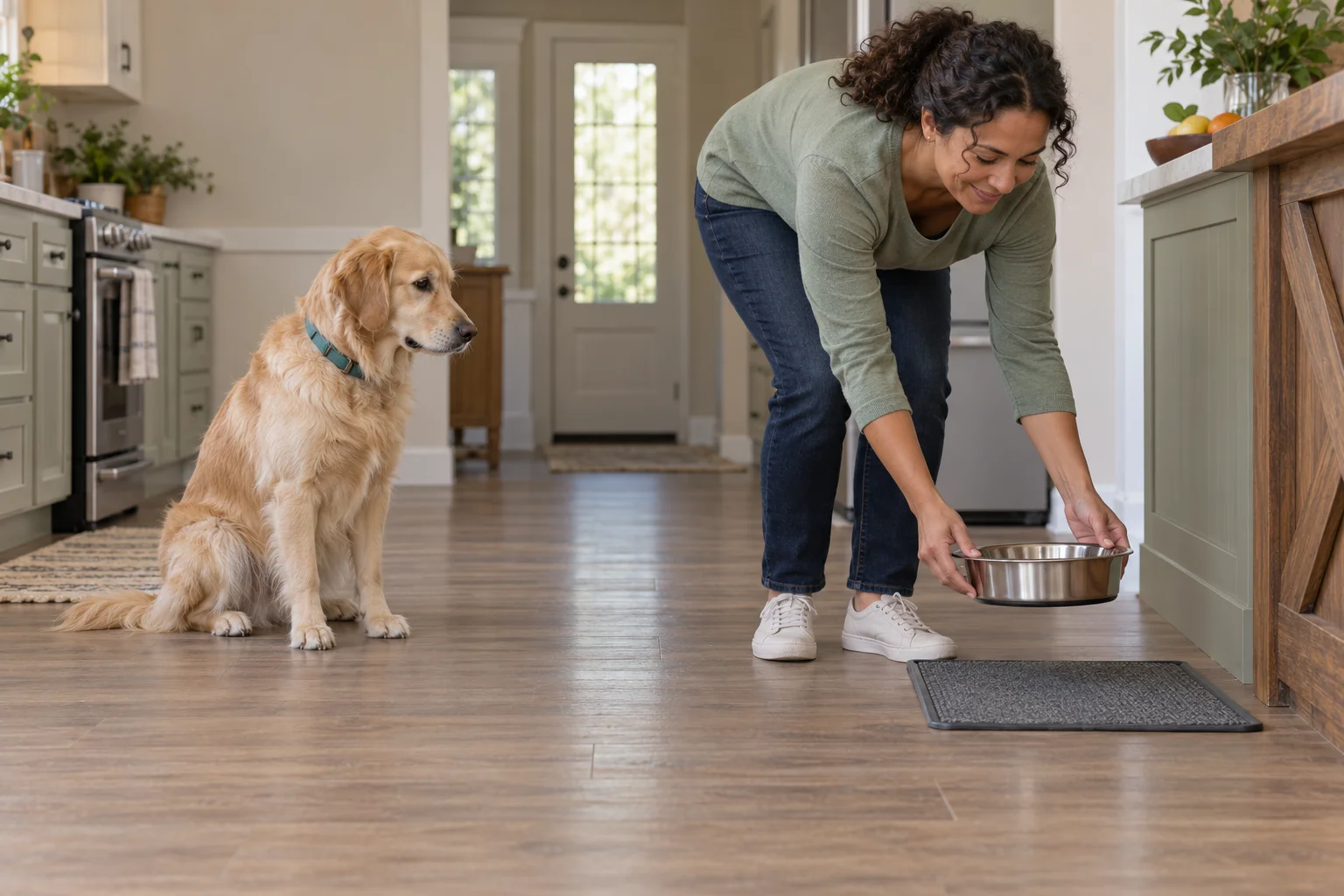
Why teach a wait for the food bowl?
A brief pause can make it easier to put dinner down without your dog jumping at your hands, scratching you or knocking food across the floor. You can practice during an ordinary meal, without a separate long training session.
It's not about making your dog "earn" their food or showing who's in charge. Food should still arrive if practice proves too difficult. The useful outcome is a comfortable routine that lets you put the bowl down safely.
Watch how your dog feels as well as whether they wait. A dog who stands loosely and eats comfortably is different from one who freezes over the bowl. Changes in appetite or eating habits are worth mentioning to your vet.
Skip this exercise if your dog guards food
For most dogs, a short wait before eating is fine. But there are some important exceptions.
Dogs who guard their food. If your dog stiffens, freezes, growls, gulps their food faster or snaps when you approach while they're eating, don't practice this exercise. The ASPCA lists standing stiffly over the bowl, tensing or freezing, growling and gulping the food as signs of food guarding, and advises that if you think your dog is likely to bite, you should not try to resolve the guarding on your own (ASPCA: Food guarding). Get help from your vet and a qualified, reward-based behavior professional instead.
Dogs with medical feeding needs. If your dog has diabetes or another condition where meal timing matters, or takes medication with food, check with your vet before adding any waiting to mealtimes.
Very young puppies. Puppies can learn to wait, but keep it to a second or two. Long waits are frustrating for young dogs.
Older dogs or dogs with sore joints. If your dog finds sitting uncomfortable, let them wait standing up. Calm is the goal, not a particular position.
Dogs who are very worried around people at mealtimes. If your dog seems anxious when you're near their food, give them space to eat in peace and talk to a professional.
Get ready before mealtime
A little preparation makes this much easier.
- Choose a release word, such as "free" or "go ahead". Avoid "OK", which people say all the time and could release your dog by accident.
- Prepare the food out of reach, on the counter, so your dog isn't trying to get into the bowl while you fill it.
- Use a calm, quiet space for feeding, away from other pets and busy walkways.
- Practice with a partial meal at first, or with a few pieces of kibble, so you can do several short repetitions.
- Pick a non-slip spot for the bowl, or use a mat underneath, so the bowl doesn't slide when your dog starts eating.
If your dog already knows a sit or a stay, that can help. Our guide on how to teach your dog the stay command explains how to build a stay, but you don't need a perfect stay to teach a mealtime wait.
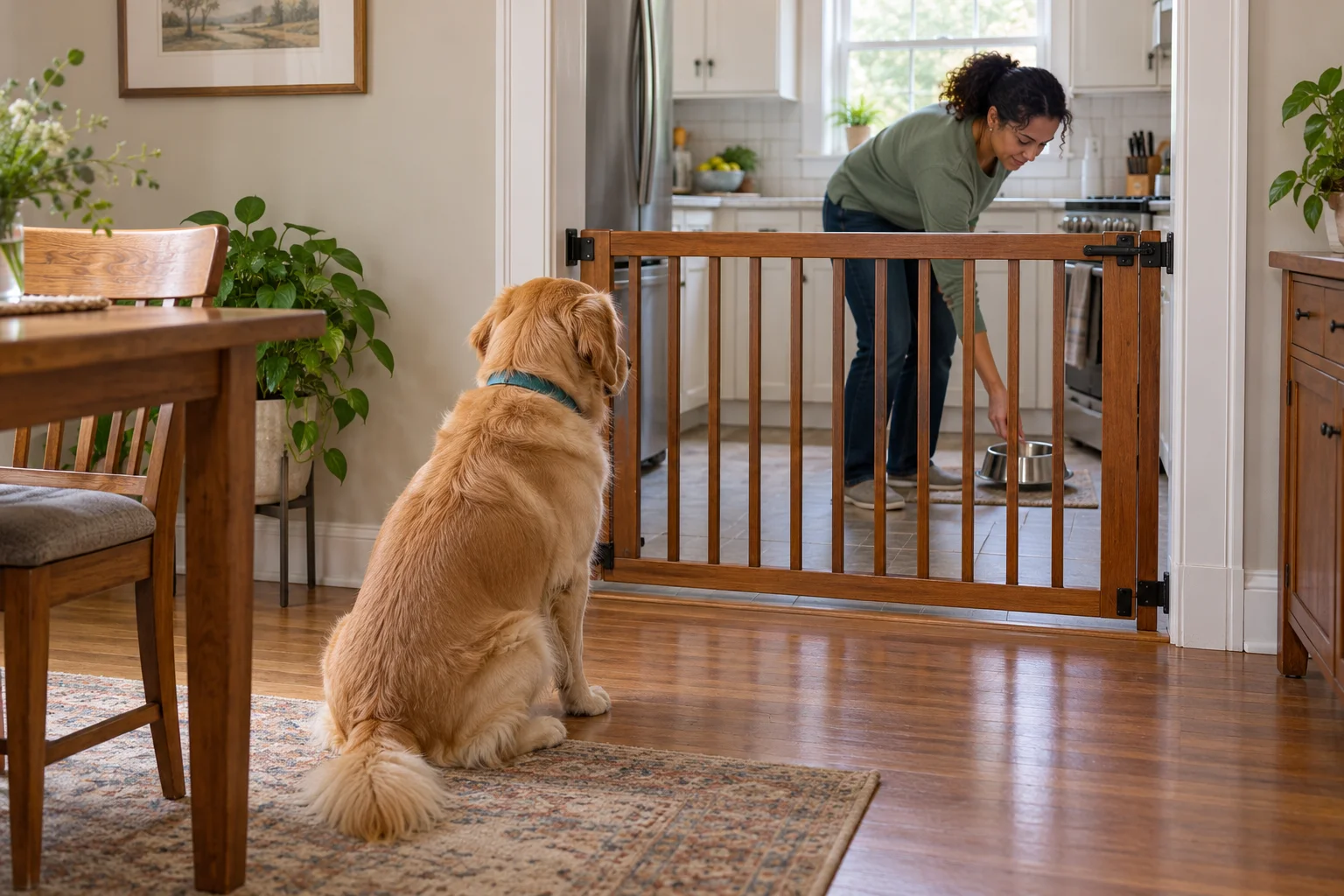
Teach the wait as you lower the bowl
The simplest approach is to reward your dog for staying calm as the bowl moves toward the floor.
- Hold the bowl at chest height, with a few pieces of food in it.
- Ask your dog to sit, or simply wait until they're standing calmly with four paws on the floor.
- Start lowering the bowl slowly.
- If your dog stays calm, keep lowering. If they get up or move toward the bowl, gently pause or bring the bowl back up a little, without any telling off. Wait for them to settle again, then continue.
- When the bowl reaches the floor and your dog is still calm, say your release word straight away and let them eat.
If your dog keeps moving before the bowl reaches the floor, stop repeating the lift-and-lower cycle. Keep the bowl in your hands and use the easier gate setup below for the next attempt. Don't ask your dog to eat from a bowl held halfway down, and don't withhold their meal while waiting for a perfect response.
You can make it easier with a closed baby gate your dog is already comfortable behind. Put the bowl on the floor on your side, where your dog can see it without reaching it. At a brief calm moment, say "free", open the gate and step aside so they can walk to the bowl. The word comes before access to the food, just as it does without the gate. Don't use this arrangement if being separated makes your dog bark, scramble or seem worried; feed them in their usual safe space instead.
Move the bowl smoothly and calmly. Avoid snatching or yanking it away, which can startle your dog or make them more anxious about their food. A gentle pause, then carrying on once your dog settles, is all that's needed.
Keep the wait short
A mealtime wait should be short. A second or two of calm, followed by your release word, is plenty for most dogs, especially at first.
- Release your dog quickly once the bowl is on the floor and they're calm.
- Build up very gradually, if at all. A few seconds is more than enough for everyday life.
- Don't make your dog wait for long periods. Long waits in front of food can cause frustration, which may make mealtimes more stressful, not less.
The point is calm, not endurance.
If you'd like a slightly longer wait, try a slightly longer pause only after the current version is easy and your dog stays relaxed. If they start whining, trembling or creeping forward, the wait has become too long. Go back to a shorter wait for a while. There's no prize for the longest wait, and a quick, calm release is the most useful version for everyday life.
Use one release word from the start
Use your chosen release word from the first easy attempt. In this routine it means your dog can move to the food; you don't need a separate "wait" cue before every bowl movement.
Dogster also describes using a release command, such as "okay" or "free", in its guide to teaching a dog to wait for food. Here, choose one word before you begin and keep it the same throughout practice.
- Without a gate, put the bowl on the floor, then say "free" straight away while your dog is still calm.
- With a gate, put the bowl down, say "free", then open the gate so your dog can reach it.
- Let your dog eat without interruption. You aren't asking for another pause once you have released them.
If your dog doesn't move, step aside and gesture towards the bowl after the word. Don't repeat it insistently or keep holding them back. Over time, they can learn that the word predicts permission to eat.
Make sure everyone who feeds your dog uses that same word and order. A short note on the fridge can help: bowl down, release word, access to food. Keep the wait brief whoever is feeding, rather than having one person ask for a much harder version.
Let your dog eat in peace
Once you've released your dog to eat, leave them to it.
- Don't take the bowl away while they're eating, or reach into it.
- Don't stand over your dog or hover nearby.
- Keep children and other pets away while your dog eats.
Repeatedly taking a bowl away or interfering while a dog eats can make some dogs anxious about their food, which may lead to guarding. If you need to pick up something your dog shouldn't have near their bowl, wait until they've finished and moved away, or toss a treat a short distance away first. A dog who knows they can eat in peace is likely to feel more relaxed at mealtimes.
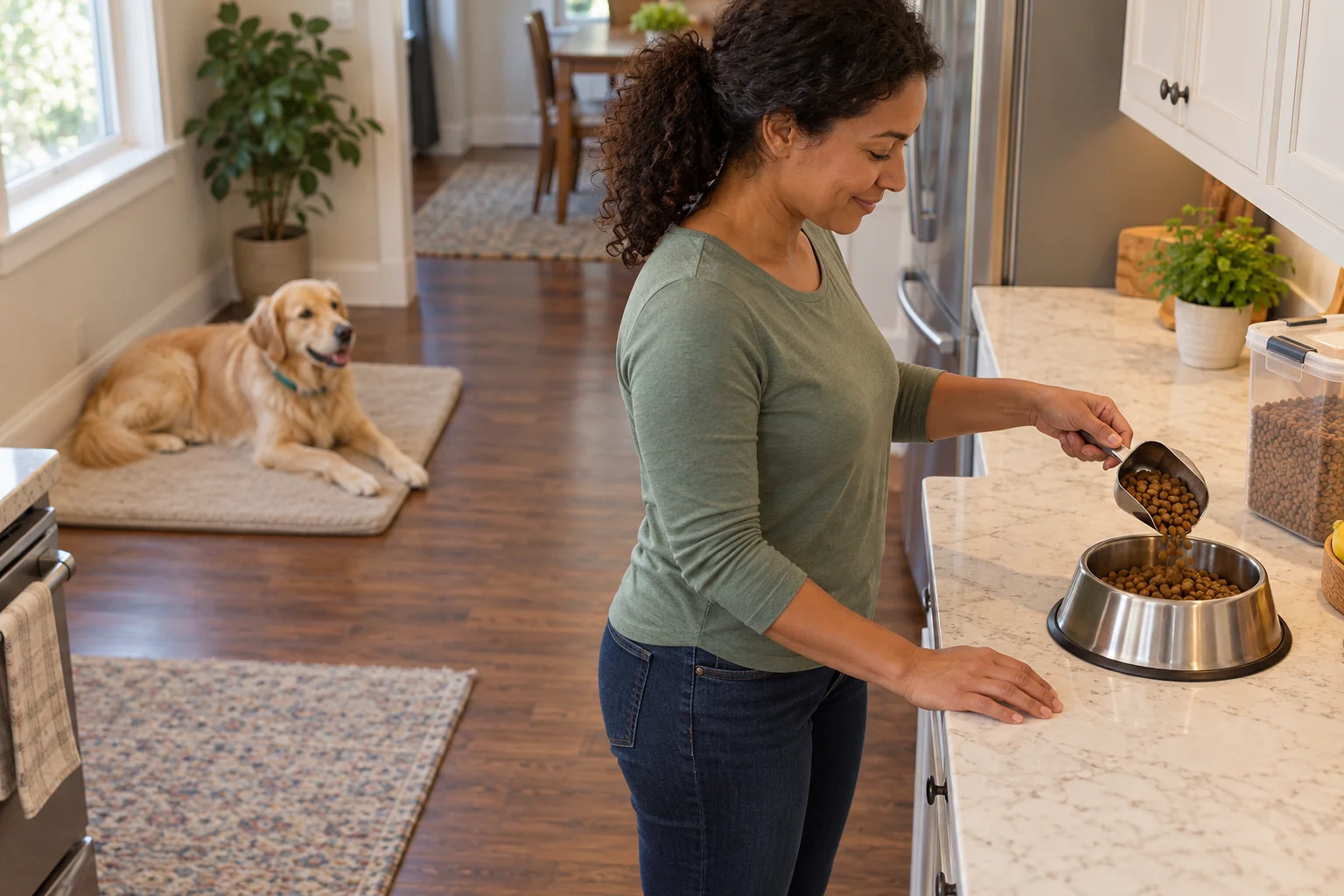
Practice calm before the bowl comes out
For some dogs, the excitement starts long before the bowl goes down. They may bark, jump or spin as soon as you go near the food cabinet.
- Reward calm behavior while you prepare the food, such as lying on a mat or sitting quietly.
- Pause if your dog gets very excited. Stop preparing the food, wait for a calmer moment, then carry on.
- Practice picking up the food scoop or bowl at other times of day, without feeding, so these actions become less exciting.
- Give your dog a job, such as lying on a mat in the kitchen. Our guide on how to teach your dog to settle on a mat explains how.
Try to keep mealtimes at roughly the same times each day. A predictable routine can help your dog feel less frantic, because they learn that food reliably arrives. It also makes it easier to plan a short training session just before a meal, when your dog is keen but not desperate.
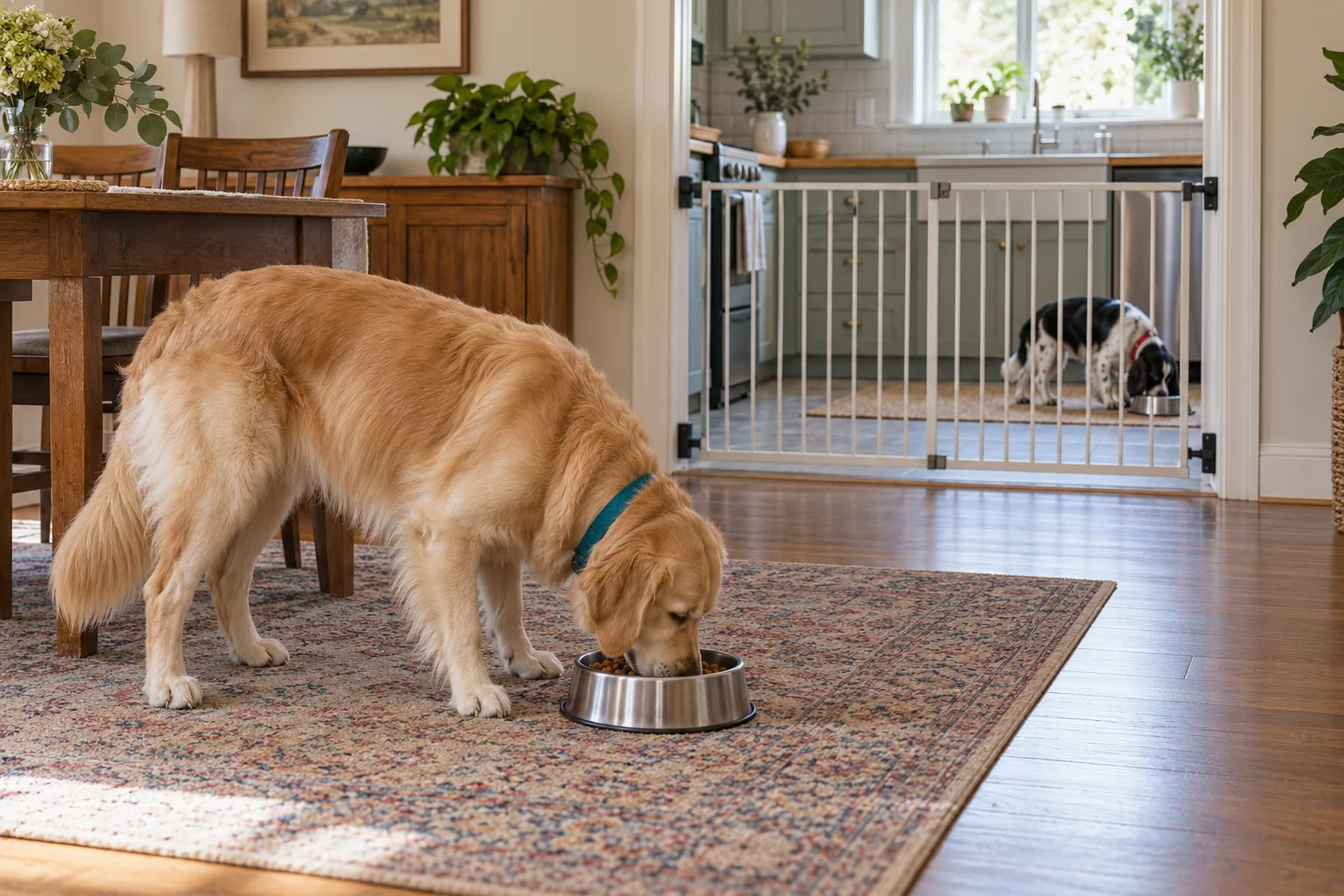
Keep children away and feed dogs separately
Mealtimes need extra care in busy households.
Children. Children should never take food bowls away from dogs, reach into bowls or practice waits with dogs. The ASPCA notes that a resource-guarding dog in a home with children is an unacceptably risky situation. Even with dogs who don't guard, it's safest for an adult to manage mealtimes and for children to stay away while dogs eat.
Other dogs. Feed dogs in separate areas, ideally in different rooms or behind gates, so no one feels the need to rush or protect their food. Practice waits with one dog at a time.
Other pets. Keep cats and other pets away from dog food bowls during mealtimes.
Our guide on how to get everyone at home using the same training rules has ideas for keeping household routines consistent.
Use waiting in other places
Once your dog has a good mealtime wait, the same idea of waiting for a release word can help elsewhere.
- At the door, before going out for a walk. Our guide on how to teach your dog to wait calmly at the door explains this skill.
- Before getting out of the car.
- Before being released to play or to greet a friend.
Each new situation will need its own practice, starting easy. Use the same release word everywhere, so your dog learns that it always means "you can go now", whether it's dinner, the front door or the car.
Build the wait around your dog's progress
Here's an illustrative example for a young adult dog who jumps at the owner's legs as the bowl is lowered. Move on according to the dog's response, not a weekly timetable.
Begin where the bowl can reach the floor safely. Prepare a little food out of reach. If the dog can stay on four paws while the owner lowers it, the owner places it on the floor, says "free" straight away and lets the dog eat. If jumping makes that difficult, the owner uses a familiar closed gate, places the bowl down, says "free" at a brief calm moment and opens the gate. There's no attempt to make the dog wait for a long stretch.
Repeat the easy version while it stays comfortable. The owner looks for loose movement, four paws on the floor and no repeated jumping, whining or scrambling. If those signs of frustration appear, they finish practice and provide the rest of the meal in the dog's usual safe arrangement. They can make the next attempt easier rather than repeating a failed version.
Try without the gate when the setup is easy. The owner lowers a bowl with a little food in it and releases promptly when it reaches the floor. If jumping returns, they go back to the comfortable gate setup. Moving the bowl, removing the gate and lengthening the wait don't all become harder together.
Keep the ordinary meal simple. Once the dog can comfortably stay on four paws while the bowl is placed, the owner uses the same brief routine with dinner. There's no need to add duration for its own sake. Calm food preparation can be practiced separately using the mat routine above.
A different dog, a different plan. Now imagine a newly adopted dog who eats very quickly and glances nervously at people walking past while they eat. Here, the owner doesn't practice waits at all to begin with. Instead, they feed the dog in a quiet corner behind a gate, walk away once the bowl is down and let the dog eat in peace. When the dog seems more relaxed at mealtimes, the owner checks with a qualified trainer before introducing a short, gentle wait. For this dog, feeling safe while eating comes first.
What progress usually looks like
Progress can be small. Look for a more comfortable meal routine rather than how many days practice has taken.
Signs of progress include:
- Your dog stays on four paws, rather than jumping, while you prepare the food
- You can lower the bowl further before they move
- They pause and look at you when the bowl touches the floor
- They wait for the release word before eating
- Mealtimes feel calmer for everyone
Some days will be harder. If your dog is extra hungry, has had a busy day or something unusual is happening at home, they may find waiting harder. On those days, keep the wait very short and release them quickly. The routine stays positive, and you can ask a little more on calmer days.
Troubleshoot common problems
My dog keeps getting up before the bowl reaches the floor. If they're standing calmly, they don't have to sit. If they're jumping or rushing the bowl, use the familiar closed-gate setup so you can put the bowl down safely. Say "free", then open the gate at a brief calm moment. Don't feed from a raised bowl or repeatedly lift it away.
My dog barks while I prepare the food. Pause until they're quieter, and reward calm moments. Practice preparing food at other times.
My dog gulps their food once released. Consider a slow feeder or scatter part of the meal, and talk to your vet if your dog eats very fast.
My dog only waits for me, not other people. Teach other adults in the household the same routine.
My dog stiffens or growls near the bowl. Stop practicing, give them space to eat and get professional help.
My dog waits, then knocks the bowl over when released. Use a heavier or non-slip bowl, and release them calmly rather than in an excited voice.
My dog waits at breakfast but not at dinner. They may be hungrier or more excited at one meal. Keep the evening wait shorter, and check that feeding times suit your dog.
My dog sits but keeps creeping forward. Lower the bowl only while they're still, and pause when they creep. Release them as soon as the bowl is down and they're settled.
My dog seems anxious rather than excited. Make the wait very short, or skip it for now, and let them eat in peace. Talk to a professional if mealtimes seem stressful for them.
Pause and get help if mealtimes become tense
A mealtime wait is optional. If practice makes feeding more tense, stop asking for it and arrange a safe, quiet meal instead.
Look for a qualified, reward-based trainer or behavior professional if:
- Your dog stiffens, freezes, growls or snaps around their food
- They seem anxious or frantic at mealtimes
- You have children or multiple dogs and mealtimes feel tense
Talk to your vet if:
- Your dog has a medical condition that affects feeding
- Their appetite or eating habits change suddenly
The ASPCA advises not to punish or intimidate a dog who guards food. Use reward-based help only. The American Veterinary Society of Animal Behavior states that evidence supports reward-based methods for all canine training (AVSAB: Why you need to reward your dog in training).
You can find more skills and games to try in our dog training guides.