
To teach your dog the "off" cue, wait until they are already on the couch and you have small treats ready. Stand at the end of the couch with a clear patch of floor beside it. Hold a treat at your dog's nose, then move it slowly down and away from the couch toward the floor. The moment all four paws are on the floor, say "yes" and give them the treat at floor level. Add the word "off" later, once your dog follows an empty hand down easily.
Never pull your dog's collar, push them or lift them off the furniture. If your dog stiffens, stares, growls or snaps when you approach or ask them to move, stop practicing. Use the safety guidance in the section on guarding before you try again, and check that your dog is not in pain.
What the "off" cue means
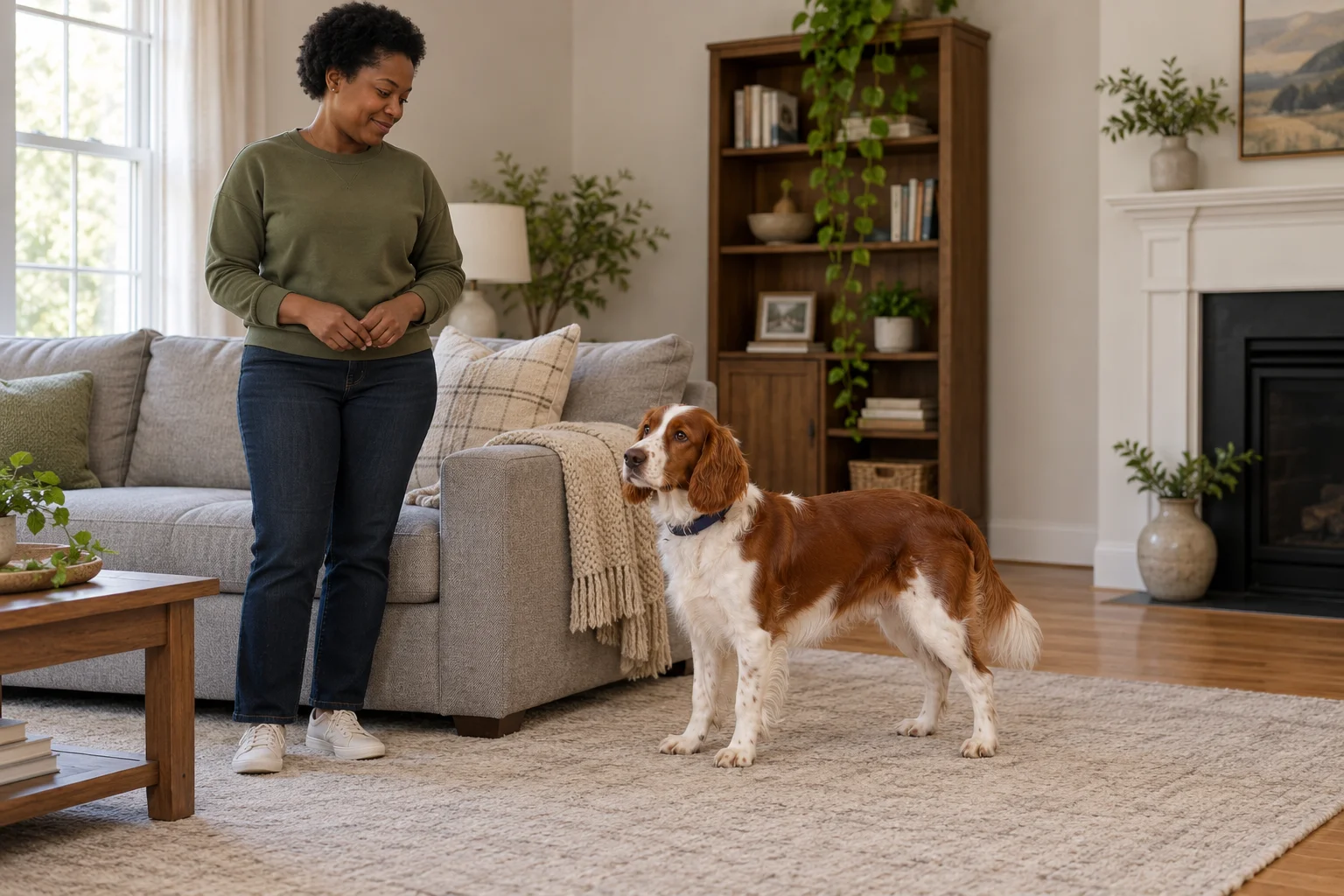
In this guide, "off" means one thing: move from the furniture you are on so all four paws are on the floor. It does not ask your dog to sit, lie down or stay anywhere. Once their paws reach the floor, they have done the whole job.
This makes "off" different from two cues it often gets confused with.
"Down" is a position. If you have taught your dog to lie down, "down" means chest and elbows on the floor, and the guide to teaching your dog to lie down covers that cue. Using "down" for getting off the couch as well forces your dog to guess which one you mean.
Jumping up at visitors is a greeting problem. A dog who leaps at guests needs a different plan for arrivals, covered in the guide to stopping your dog jumping up at visitors. That guide does not use "off" as a cue, so the two skills will not clash.
A few terms come up throughout:
- A lure is a treat held at your dog's nose to guide their movement. Their body follows their nose.
- A marker is a short word, such as "yes," said at the exact moment your dog gets it right. In this guide, every "yes" is followed by a treat, without exception. If you already use a clicker, the click can take the place of "yes."
- A cue is the signal that asks for the behavior. You will end up with a hand signal and the word "off."
If markers are new to you, the guide to reward marker timing explains how to pair one with food before you start.
Agree on the furniture rule first
Before you train, decide where your dog is allowed. Some households let the dog on the couch whenever they like. Others allow it by invitation only. Others want the dog on the floor all the time. Any of these can work. What does not work is a rule that changes from day to day or person to person.
Vetstreet's guide to keeping dogs off furniture points out that allowing a dog up at some times but not others is confusing, and it stresses consistency. PetMD's article on keeping dogs off the couch makes the same point: everyone in the household needs to follow the same rules.
Agree on the word as well. Everyone should say "off," not a mix of "off," "get down" and "no." The guide to getting everyone using the same training rules has more on choosing one word per behavior.
You can teach "off" whichever rule you pick. If your dog is allowed up, "off" lets you ask them to move when you need the seat or want to clean. If your dog is not allowed up, "off" gives you a calm way to fix things when they climb on anyway, while management (covered later) stops it happening when you are not there.
Set up your practice spot
Practice on the furniture your dog actually climbs on, usually the couch. Choose a time when your dog is awake and interested. If they are sound asleep, let them sleep. Waking a resting dog to train them is unfair, and a startled dog is not ready to learn.
Check the landing. Your dog needs a clear, non-slip patch of floor beside the couch to step or jump onto. A rug works well on a hard floor. Move away anything they could land on, such as shoes, toys or a coffee table edge.
Prepare small, soft treats your dog likes, about the size of a pea. Keep them in a pouch or pocket you can reach with one hand. You will need plenty, because each successful attempt earns a treat.
Keep other pets out of the room. A second dog close by can turn treats on the floor into a competition.
Position yourself at the end of the couch, beside the arm, rather than leaning over your dog from the front. Coming at a resting dog from above can feel like pressure. Standing to the side leaves your dog a clear route down to the floor in front of you.
Lure your dog off and reward on the floor
Use the same movement and reward timing each time you practice.
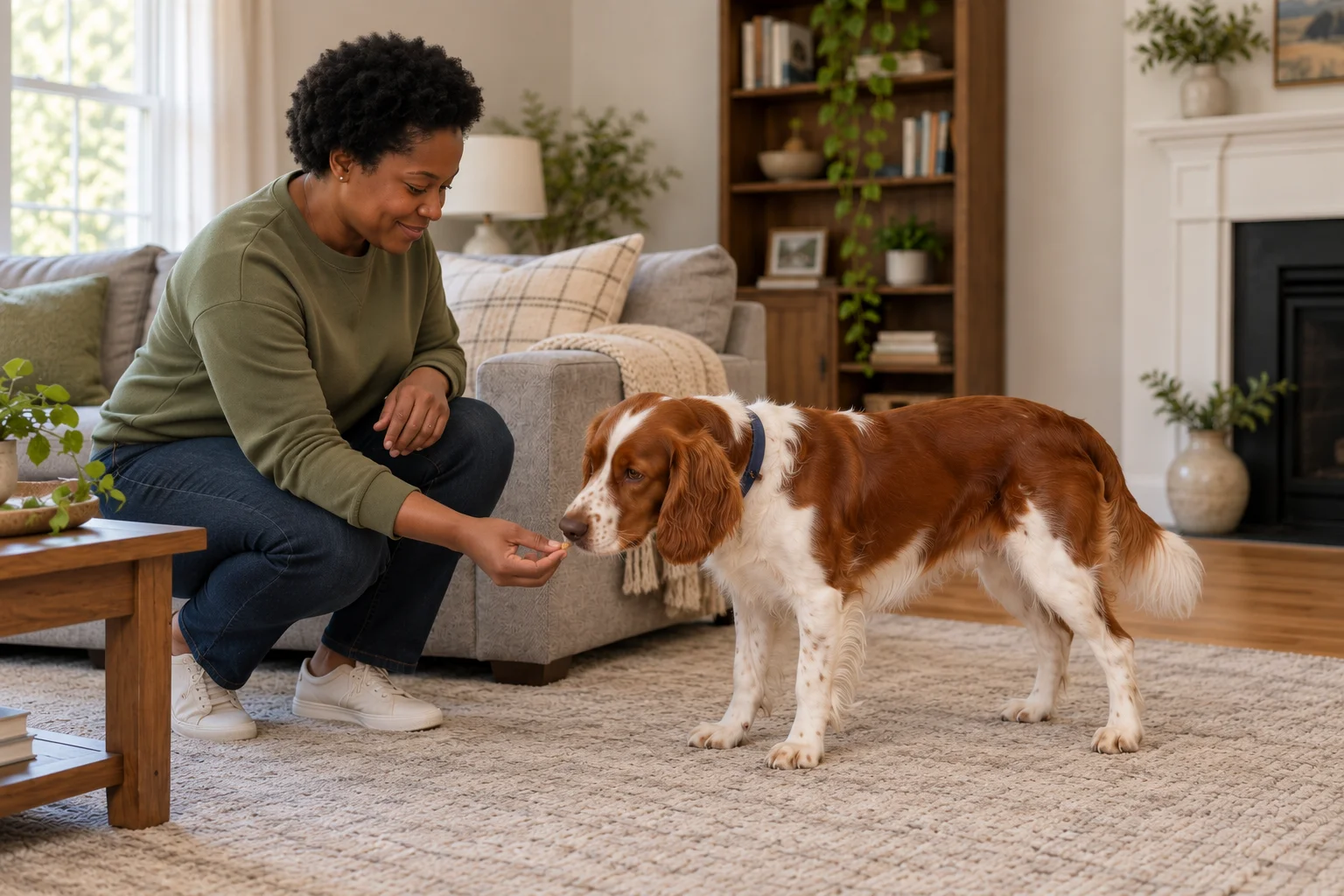
- With your dog on the couch, hold a treat between your thumb and fingers at their nose. Let them sniff it.
- Move your hand slowly down and away from the couch, toward the floor about a foot or two (30 to 60 centimeters) out from the edge. Go slowly enough that their nose stays with your hand.
- Watch their feet. When all four paws are on the floor, say "yes."
- Give them the treat at floor level, right where they are standing.
Mark only when all four paws are down. Two front paws on the floor and back paws still on the cushion is a good start, but it is not "off" yet. Keep your hand still low and away from the couch, and wait a moment for the back feet to follow.
Where the treat goes matters. Deliver the treat on the floor, not back up toward the couch. If you raise your hand to feed, your dog may step back toward the cushion to reach it. Bring the food down to their mouth at their standing height, or place it on the floor between their front paws.
Best Friends Animal Society's guide to teaching "off" uses this same pattern: lure the dog off the item with a treat at their nose, mark as soon as all paws are back on the ground, then give the treat.
If your dog does not follow the treat, do not reach in to pull them. Try a tastier treat, or try again later when they are more interested. Best Friends suggests a higher-value treat if your dog will not follow the lure, so that getting down is worth more than staying put.
What to do after your dog gets off
Once your dog has eaten the treat, that repetition is finished. There is no release word in this exercise, because you are not asking your dog to hold a position on the floor. They are free to sniff around, wander off or come to you.
For the next repetition, you need your dog back on the couch. If they are allowed up, invite them with your usual words and wait a few seconds before you start again. If they are not allowed up, the next repetition simply happens the next time they climb on by themselves.
A handful of repetitions is enough for one session. Stop while your dog is still keen to follow your hand.
If you want your dog to stay on the floor, follow the "yes" and floor treat by tossing a second treat onto their bed or mat nearby. The section on a comfortable place on the floor has more on helping them choose that spot.
Get your dog off without showing a treat
The next goal is for your dog to come off without seeing food first. You are ready when your dog follows the lure off the couch smoothly, with all four paws reaching the floor, on most repetitions in a session.
Put the treats in your other hand or your pouch. Make the same movement with your luring hand, now empty: from your dog's nose, down and away toward the floor. When all four paws are on the floor, say "yes," then bring a treat from your other hand to their mouth at floor level.
Your empty hand has now become a hand signal. The food has not gone away. It still arrives after every "yes," but it comes from the other hand instead of leading the way.
If your dog stares at your empty hand and stays put, go back to a treat in the luring hand for two or three repetitions, then try the empty hand again. Once the empty hand works, you can gradually make the gesture smaller over several sessions, until a short sweep toward the floor is enough.
Add the word "off"
Add the spoken cue only once your dog follows the empty-hand signal off the couch readily. If you say "off" while your dog is still working out what you want, the word gets attached to hesitating and guessing.
When you are ready, say "off" once, in an ordinary voice. Pause for about a second, then give the hand signal. The order is always word first, then hand. When all four paws are on the floor, say "yes" and give the treat at floor level.
Over many repetitions, your dog learns that the word predicts the hand signal. Many dogs start moving as soon as they hear "off," before your hand moves. When that happens, reward generously.
Say the cue once. If you repeat "off, off, off," your dog learns that the first few words do not matter. If they do not respond to a single "off," give the hand signal to help, then mark and reward when they get there. Make the next few repetitions easier by giving the word and signal close together.
Once your dog responds to "off" on the couch, practice on the other furniture they use, such as a bed or armchair. Best Friends notes that the process needs repeating for each new item. Start each new piece with the hand signal and the word together, and reward every success.
Reduce treats without changing what "yes" means
Two different things happen to food in this exercise, and it helps to keep them apart.
The first is fading the lure, which you have already done. Your dog stopped seeing a treat in your hand before they moved, but they still got a treat every time you said "yes."
The second is reducing how often you hand out food. Leave this until your dog gets off promptly on the word, on more than one piece of furniture. Even then, change it gradually.
Give a treat every time you say "yes." Your dog has learned that "yes" means food, so keep that meaning consistent as you reduce treats.
On some repetitions, when your dog gets off, skip the marker and give relaxed praise instead, such as "good dog" and a scratch if they enjoy it. On others, say "yes" and give a treat as usual. Over time, more repetitions can be the praise kind, while "yes" and a treat still turn up regularly. Best Friends describes fading toward praise with treats offered at random once the dog reliably gets off on cue.
Do not cut food off suddenly as a test. Go back to "yes" and a treat every time whenever you practice somewhere new, with a new piece of furniture, or when something exciting is happening nearby.
Give your dog a comfortable place on the floor
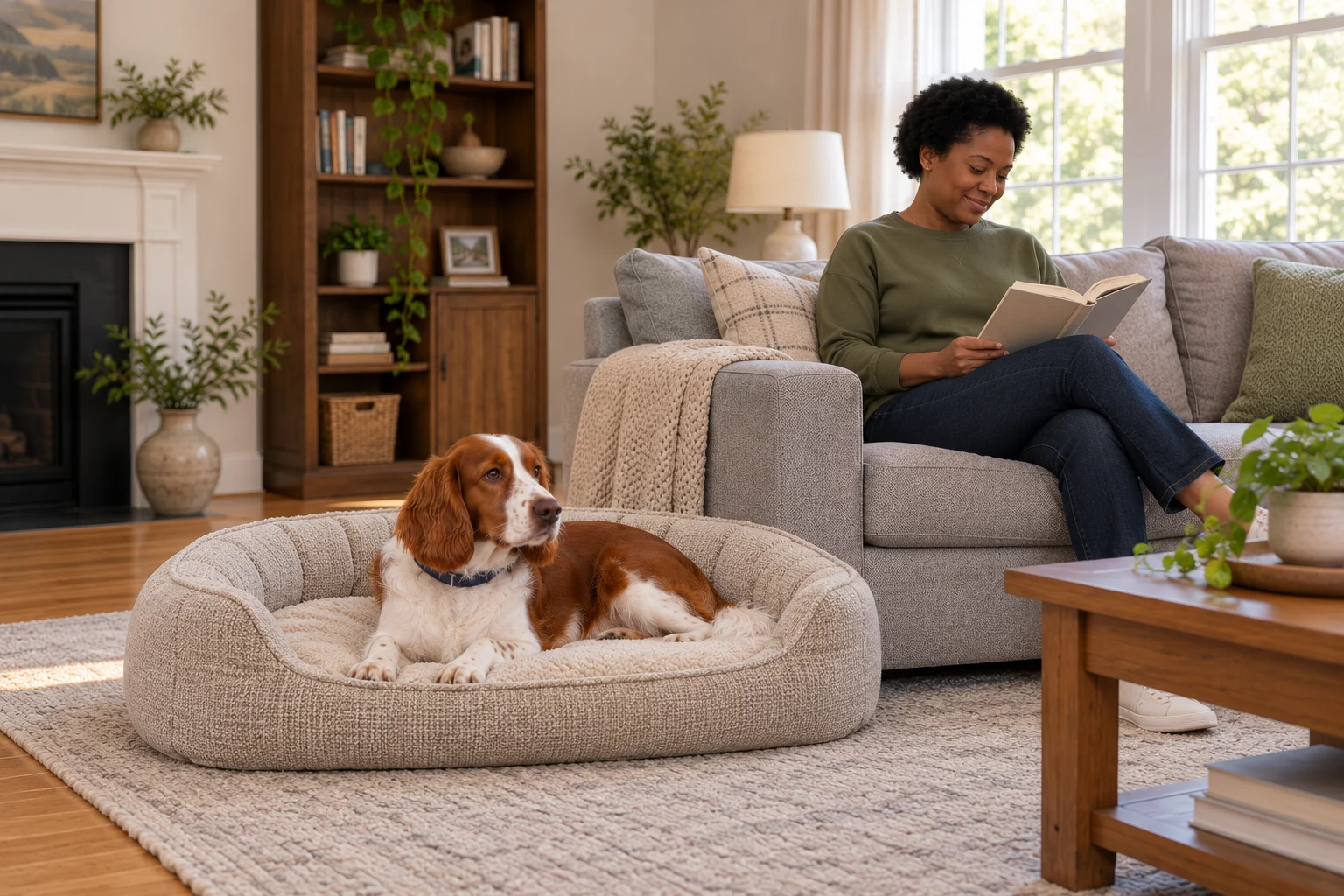
Dogs often climb onto furniture because it is comfortable, warm, raised or close to you. Teaching "off" is easier when the floor offers something just as good.
Vetstreet recommends giving your dog resting spots in the rooms where they spend time, and choosing beds that match what they like about the furniture, such as a raised bed for a dog who likes height. PetMD suggests placing a comfortable bed where your dog already likes to rest, and spending some time with your dog on the floor so the couch is not the only way to be near you.
Put the bed near the couch, not in a far corner. A dog who climbs up to be close to you will happily use a bed that is also close to you.
Make the bed worth choosing. After "off," you can toss a treat onto the bed, as described earlier. You can also give your dog a safe chew there while you watch TV. If you would like your dog to go to the bed and relax there on cue, that is a separate skill, covered in the guide to teaching your dog to settle on a mat.
Block access when you can't train
Training only teaches when you are there to reward. When you are out, asleep or busy, a dog who climbs on the couch and enjoys it is practicing the habit you are trying to change.
Vetstreet suggests blocking access to furniture with a crate or a gated area when you cannot supervise. Closing the door to the living room works too. PetMD suggests keeping the dog out of the room when no one is home. Use whichever fits your home and your dog. A crate only suits a dog who is already comfortable in one.
Avoid deterrents meant to scare or hurt. PetMD specifically warns against things that could scare or hurt the dog, naming products such as scat mats and noise like pots and pans, because they can cause fear and anxiety.
Management is part of the plan, not a sign you have failed. The guide to dog management and training explains why preventing the unwanted habit while you teach a new one makes training work faster.
If your dog won't get off or jumps straight back up
If your dog ignores the lure
If your dog ignores the lure, they may be too comfortable or not hungry enough. Try a tastier treat, or practice before a meal. If they are dozing, wait for another time.
If only the front paws reach the floor
If only the front paws come down, keep your hand low and a little farther from the couch, and wait. Mark only when the back paws arrive. If the back feet never follow, move your hand a short distance farther from the couch so stepping off completely is the easiest way to reach it.
For example, picture an adult dog who loves the corner seat of the couch. Each time her owner lures her, she stretches her front paws to the floor but keeps her back feet on the cushion and leans forward to reach the treat. Her owner stops marking that half-off position. On the next try, he holds his hand a little farther from the couch and keeps it still. Her back feet hop down, all four paws are on the rug, and he says "yes" and gives the treat at floor level. After a few repetitions like that, he tries the empty hand.
If your dog jumps straight back up
If your dog comes off, eats and jumps straight back up, that is normal if the couch is allowed. If it is not, toss a second treat onto their bed after the floor treat. If they still go straight back up, use management for a while and practice in short sessions.
If your dog needs to see a treat
If your dog only gets off when food is visible, go back to the empty hand with food in your other hand. Keep rewarding after every "yes" so your dog learns that food still comes.
If your dog only responds to one person
If your dog gets off for one person but not another, check that everyone uses the same word and the same hand signal. Each person can run a few easy repetitions with treats.
Choose what to practice next
For your next session, start with the easiest version your dog can do. If they still need the treat lure, practice that on the couch they use most. If the lure is easy, try a few repetitions with an empty hand and food in your other hand. If the empty hand is easy, say "off" once and pause before you move your hand.
If your dog stiffens, growls or snaps on furniture
Some dogs do not want to give up a comfortable spot. You might see your dog go still, stare, lift a lip, growl or snap when someone approaches, sits down near them or asks them to move. Treat these as warnings and take them seriously.
Stop the "off" practice and do not reach for your dog. Do not grab their collar, push them or lift them. Vetstreet cautions against physically forcing a dog off a resting area, because they may respond with aggression. Do not punish a growl, either. Punishment is an aversive method, and the AVSAB position statement lists increased fear-related aggression among the documented fallout of aversive training.
If you need your dog off the furniture right now, give them space. Step back and call them to you from a distance, or drop a treat on the floor a few feet away from the couch and let them come to it in their own time. Keep children and visitors away from the furniture until your dog is off.
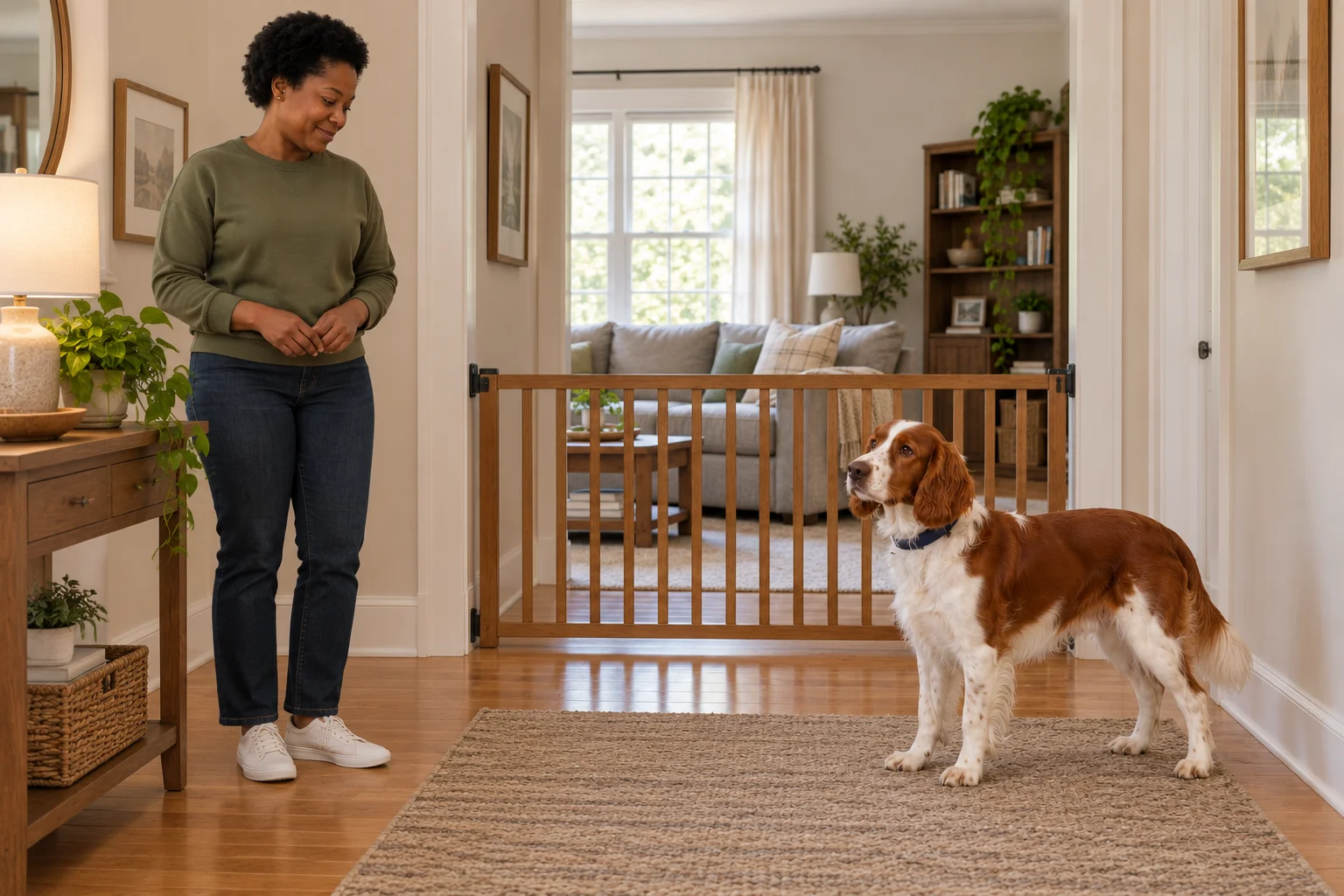
Then stop your dog getting on the furniture where the problem happens. PetMD advises not allowing a dog on furniture if they growl when approached there. Close doors, use gates, and give your dog a comfortable bed on the floor.
Arrange two kinds of help. Book a veterinary appointment, because VCA Animal Hospitals lists growling when people or other pets approach among the possible signs of pain. Then look for qualified, reward-based behavior help. The AVSAB position statement on humane dog training says that more serious concerns such as aggression need a treatment plan, and it names veterinarians, board-certified veterinary behaviorists and certified applied animal behaviorists for referral. PetMD also suggests a certified behavior consultant or applied animal behaviorist for guarding.
An online guide cannot assess your dog or tell you how to safely change guarding. The guide to when to seek professional behavior help explains what to prepare and what a first appointment involves.
Stop practice if getting off may hurt
Getting off furniture means stepping or jumping down onto the floor. For some dogs, that movement may hurt.
VCA's list of possible pain signs includes reluctance to go up or down stairs or to jump onto a bed or furniture, difficulty walking on slick floors, and difficulty getting into the car. VCA advises bringing changes like these to your veterinarian. If your dog hesitates at the edge of the couch, lands awkwardly, yelps, or has started taking longer to get on or off, stop practicing and speak to your vet.
A dog who is slow or hesitant at the edge is not being stubborn. Do not use better treats to coax them past a movement that may hurt. Taking food does not prove a dog is comfortable.
If your dog is young, older, small or stiff, a high couch or bed may be a long way down. Ask your vet whether furniture access suits your dog, and whether a pet ramp or pet stairs would help.
The same reward-based standard applies to every dog. The AVSAB statement recommends reward-based methods for all dog training and lists forceful manipulation among the techniques to avoid.