
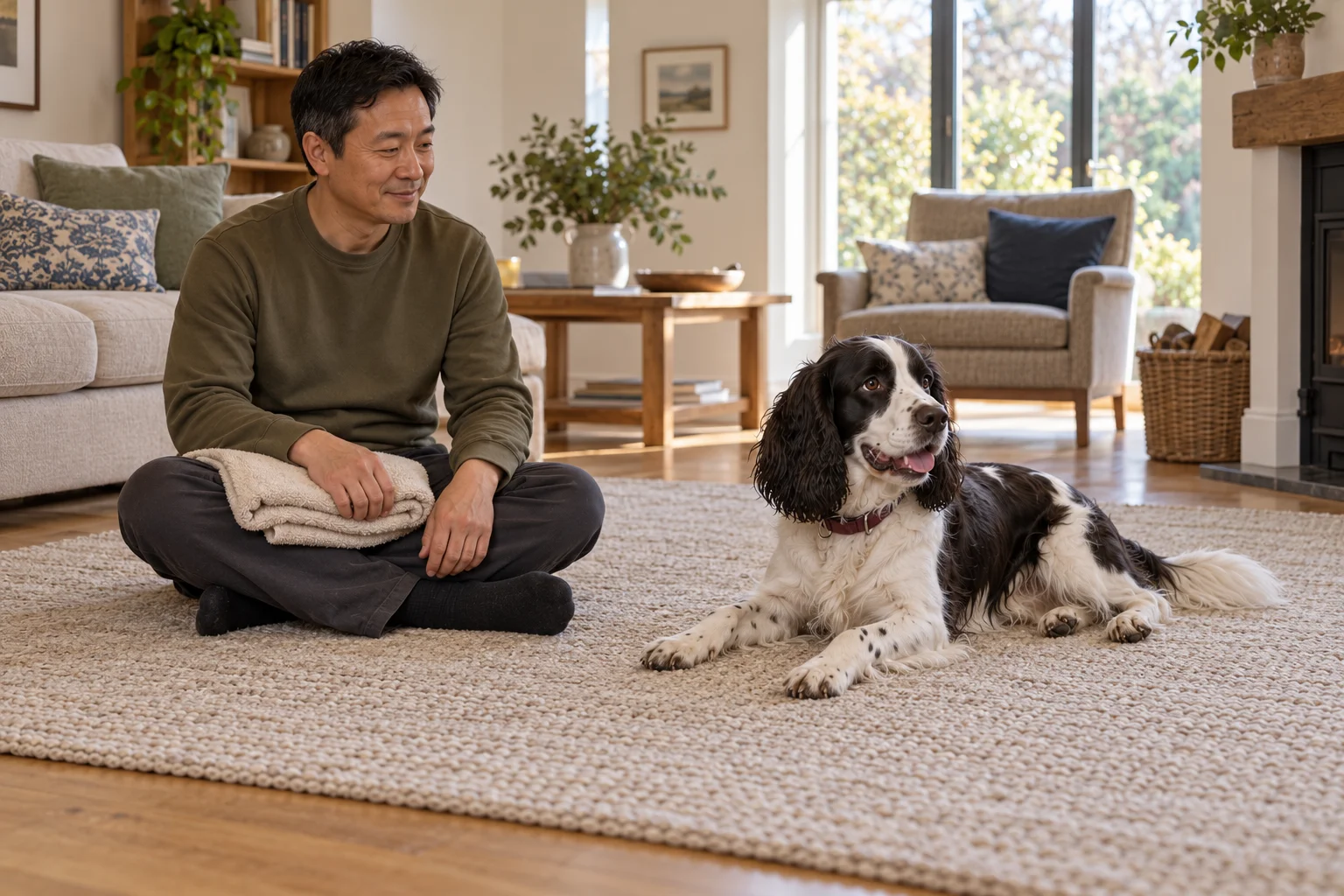
If your dog pulls away when you wipe their paws, stop trying to finish the wipe and start smaller. Before you try touching, follow the vet and professional-help guidance below if this reluctance is new, you suspect pain, or your dog has growled, snapped or bitten during handling. Otherwise, sit on the floor beside your dog in a quiet room, with a treat pouch on one hip and a towel folded on your lap. Briefly touch your dog's leg above the paw, take your hand away, then give a treat. Repeat only while your dog stays relaxed and close to you. Over many short sessions, bring in the towel, then a touch on the paw, then a single gentle wipe.
Your dog must always be free to move away, and you never hold on to a paw. If your dog pulls back, let go and make the next try easier. Taking a treat does not mean your dog is comfortable with what you are doing. While you train, use a mat by the door or a place to dry off so you don't have to wipe a dog who isn't ready.
There is no set number of sessions. Some dogs relax quickly, and others need weeks of short practice before a full wipe feels routine. This guide covers wiping and drying an adult dog's paws with a towel. It does not cover baths or caring for a sore or injured foot. For trimming, see the guide to what to do when your dog won't let you cut their nails.
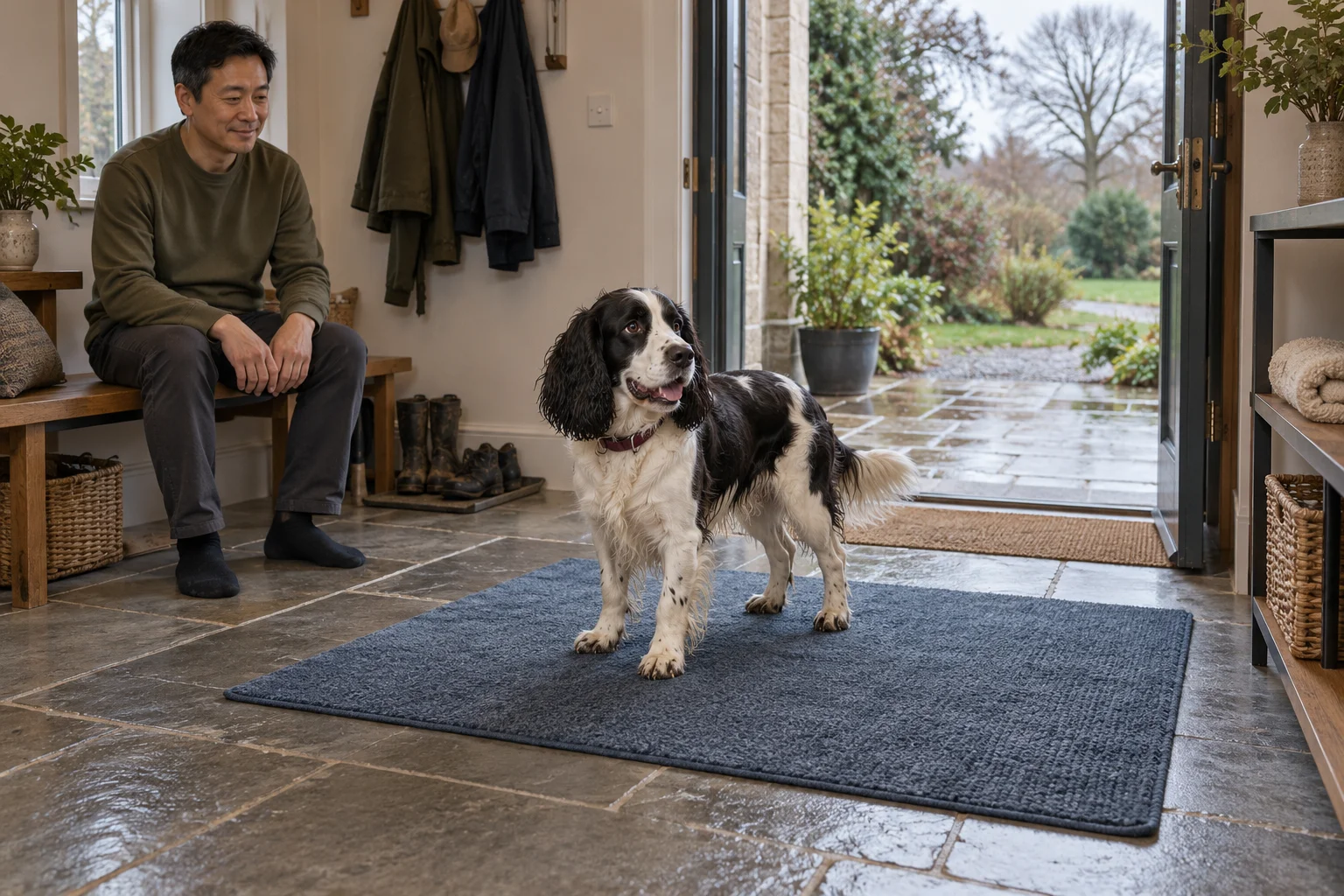
Check for pain, threats or a bite history first
Before you practice, think about why your dog dislikes paw wiping.
A dog whose feet hurt will understandably avoid having them touched. VCA Animal Hospitals' guide to signs of pain in dogs includes licking obsessively at a painful area, lashing out if handled, and avoiding or resenting being brushed, and advises bringing changes like these to your veterinarian. Dogs Trust's guide to handling your dog also notes that a dog in pain is more likely to show fear or aggression when handled.
See your vet before you train if your dog:
- Has started pulling their feet away when they used to allow it.
- Licks or chews at one foot, or seems to favor a leg.
- Flinches, yelps or whips round when one particular foot is touched.
- Has a visible cut, swelling or anything stuck between the toes.
Caring for a sore or injured foot is your vet's job, not part of this exercise. Wait for their advice before you practice again.
Some reactions call for professional help rather than a home exercise. If your dog growls, lifts a lip, snaps or has bitten when their feet or body are handled, stop paw practice. Use the no-touch options later in this guide to manage muddy paws, and talk to your vet, who can check for pain and refer you to a qualified, reward-based behavior professional. The guide to when to seek professional behavior help explains how to find the right person.
Keep this an adults-only exercise. Children should not practice touching or wiping a dog's paws.
Know when your dog wants you to stop
The method in this guide only works if your dog chooses to stay. Before you start, learn what "stop" looks like for your dog.
Best Friends Animal Society's guide to dogs who are sensitive to touch lists signs such as panting, lip-licking, turning the head away and a mouth that suddenly closes, and advises slowing down if your dog moves away or shows stress or fear. Other common signs include pulling the paw back, stiffening, freezing, or looking at your hand with the whites of their eyes showing.
If you see any of these, take your hands away. Do not follow your dog, and do not hold the leg so they can't leave. Give them a moment, and if they come back to you, offer an easier version of the last thing they were comfortable with. If they don't come back, end the session.
Food can make this harder to read. A dog may keep eating treats while feeling uneasy, especially if the treats are very tasty. Watch your dog's body, not just whether they take the food. A relaxed dog stays loose, keeps their weight evenly spread, and leaves their paw on the floor or offers it to you.
Choice is central to cooperative care. A cooperative-care handout by veterinary technician Jessica Benoit, hosted on the American Veterinary Society of Animal Behavior website, says that allowing an animal to opt in or opt out builds trust and reduces resistance, and advises against forcing interactions.
Get your towel, treats and space ready
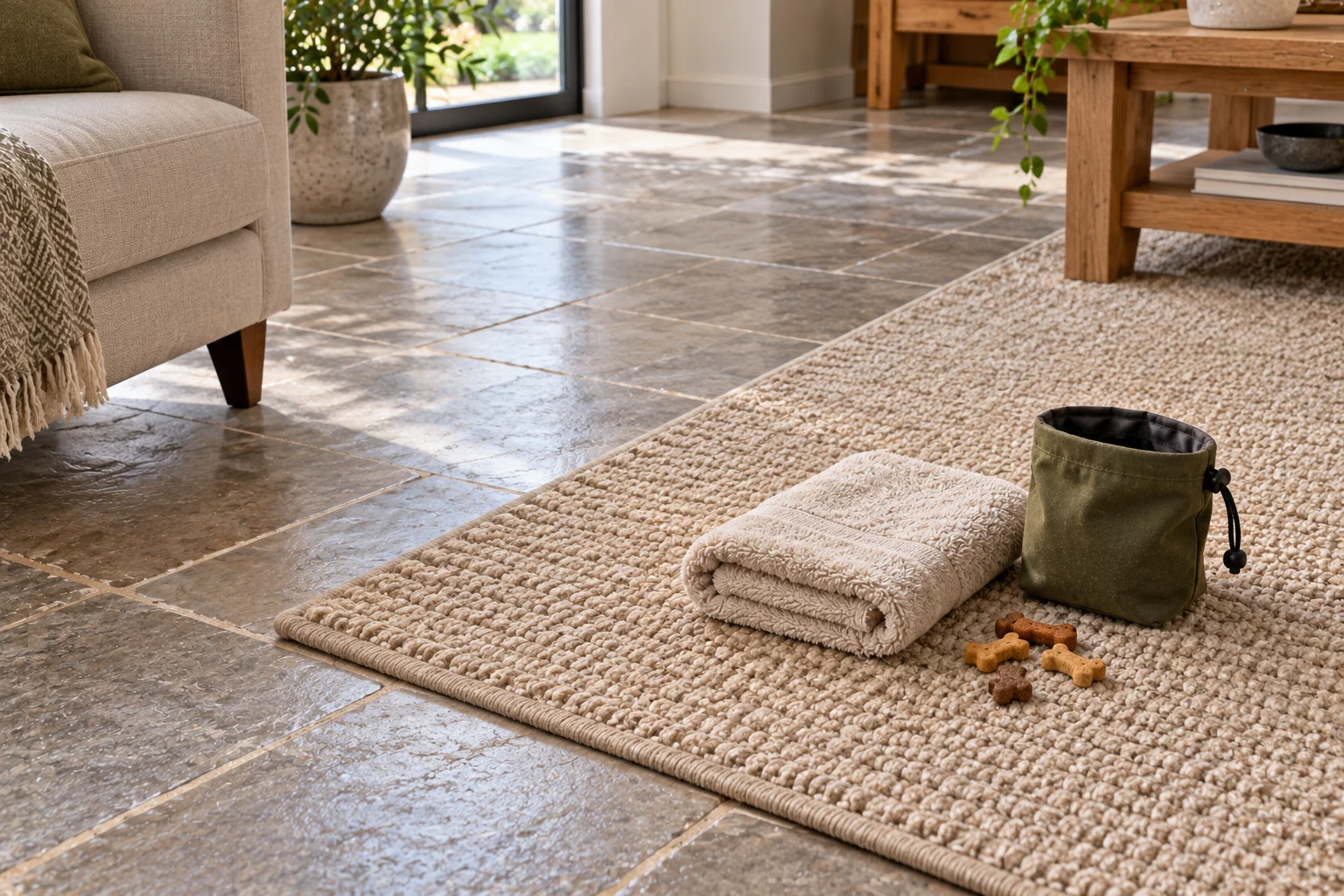
Choose a quiet room where your dog already relaxes, at a time when you are both calm. Dogs Trust recommends only practicing handling when you and your dog are both relaxed, and keeping sessions short but frequent. Do not start right after a muddy walk; that comes much later.
Set up the space:
- Pick a spot with non-slip flooring, such as a rug, so your dog can stand or lie comfortably.
- Leave open space around your dog. They should be able to walk away in any direction without squeezing past you or a piece of furniture. Do not practice in a narrow hallway or with your dog in a corner.
- Keep other pets in another room.
Get your equipment ready:
- A small, soft, dry towel, folded on your lap or on the floor beside your knee.
- Small, soft treats your dog likes, in a pouch on the hip farther from your dog, where your treat hand can reach it. Whole Dog Journal's article on cleaning dog feet suggests tasty treats such as small bits of chicken for this kind of work.
Decide how to position yourself. Sit or kneel on the floor beside your dog's shoulder rather than in front of them or leaning over them. Your dog can stand, sit or lie down, whichever they choose. You do not need to ask for a particular position.
Each hand has one job. Use the hand nearer your dog's legs for touching, and later for holding the towel. Use your other hand for treats. Deliver each treat to your dog's mouth on a flat palm, or place it on the floor in front of their nose. If your dog grabs food roughly, the guide to teaching your dog to take treats gently explains safer ways to hand it over.
Start with a brief touch on the leg
This first stage uses no towel at all. You are teaching your dog that a hand near their leg means a treat is coming.
Whole Dog Journal's article on training a dog to accept foot cleaning, by trainer Pat Miller, CBCC-KA, CPDT-KA, builds up gradually from a touch to the full rub, so that the touch makes the treat appear. Dogs Trust describes the same order: touch, take your hand away, then give a treat.
- With your dog relaxed beside you, lightly touch the outside of their front leg, around the shoulder or elbow, for about a second.
- Take your hand away.
- Give a treat with your other hand.
- Pause. If your dog stays relaxed and near you, repeat.
When touching the upper leg is easy, move your touch lower over several sessions: the middle of the leg, then just above the paw, then the top of the paw itself. Keep each touch brief. Your dog's paw stays on the floor throughout.
Your dog is ready for the next stage when they stay loose and settled through several touches in a row, and perhaps even look to you for the treat when your hand moves toward their leg. If your dog pulls back, flinches or moves away, go back to a touch higher on the leg next time. Pat Miller advises backing up to the previous stage if your dog seems uncomfortable, then breaking the next stage into something smaller.
A handful of touches is a complete session. Stop while your dog is still happy to stay.
Introduce the towel without lifting the paw
Some dogs react to the towel itself, so introduce it before it touches a paw.
First, pick up the towel from your lap, hold it still for a second, then put it down and give a treat. Repeat until picking up the towel doesn't change how your dog looks.
Next, drape the towel over the hand you touch with. Touch your dog's upper leg with your towel-covered hand for a second, take it away, and give a treat. Then work down the leg to the top of the paw, as you did with your bare hand.
Keep the paw on the floor at this stage. Lifting a paw is a bigger change, so leave it until later.
Let your dog sniff the towel without moving it toward them. Watch the rest of their body: if they stay loose and choose to remain nearby, you can continue with the towel introduction. If they stiffen, turn away, mouth the towel or move away, pause. Only return to an easier version, such as the towel resting on your lap, if they are relaxed and willingly participating; otherwise, end the session.
Wipe the top of the paw
Once a towel-covered touch on the top of the paw is easy, turn the touch into one slow, gentle stroke. With the paw still on the floor, stroke the towel once from the top of the paw down toward the toes. Take your hand away and give a treat.
Build up gradually across sessions:
- One stroke, then two.
- A light rub over the top of the paw.
- A gentle press around the sides of the paw and between the toes, only as far as your dog stays relaxed.
Pat Miller's sequence moves from a gentle rub to a firmer one. Keep firmer rubbing for later, when your dog leaves their paw on the floor and stays loose through a light rub.
Treat each paw as a separate skill. A dog who is happy with their front paws may still be worried about their back feet. Start each new paw back at the leg touch, and move round to that side of your dog rather than reaching across them or pulling the leg toward you.
Lift a paw only if your dog is comfortable
To dry the pads underneath, the paw needs to come off the ground. This is optional. Many dogs are cleaner after a good wipe of the top and sides, and you can leave the pads to dry naturally.
If you want to wipe the pads, choose the version your dog finds easier.
Let your dog offer the paw
If your dog already knows a "paw" or "shake" cue, you can use it. Hold your towel-covered palm out, low, near their front paw, and ask for the paw. When they place it on the towel, give a treat. Then try one gentle stroke under the pad before giving the treat. Your dog can take their paw back at any moment. The guide to teaching your dog to give paw explains this cue, but you do not need it to clean paws.
Support the paw without gripping it
Without a paw cue, slide your towel-covered hand slowly down the back of your dog's lower leg and rest it there. Wait. Some dogs shift their weight and lift the paw slightly. When they do, cup the paw loosely in your open hand for a second, put it down, and give a treat.
Never grip the paw or hold on if your dog pulls back. If they pull away, let go immediately and pause. Only try an easier version if your dog is relaxed and willingly choosing to continue; otherwise, end the session. Wiping the top of the paw on the floor is an option for a later attempt only if that contact is already comfortable. Holding on until a dog stops struggling is forced handling, which this guide avoids.
Once a loose lift is easy, add one gentle stroke under the pad before you put the paw down. Keep lifts low and short. If your dog finds the back legs harder, practice them last and separately.
Clean muddy paws with less handling while you train
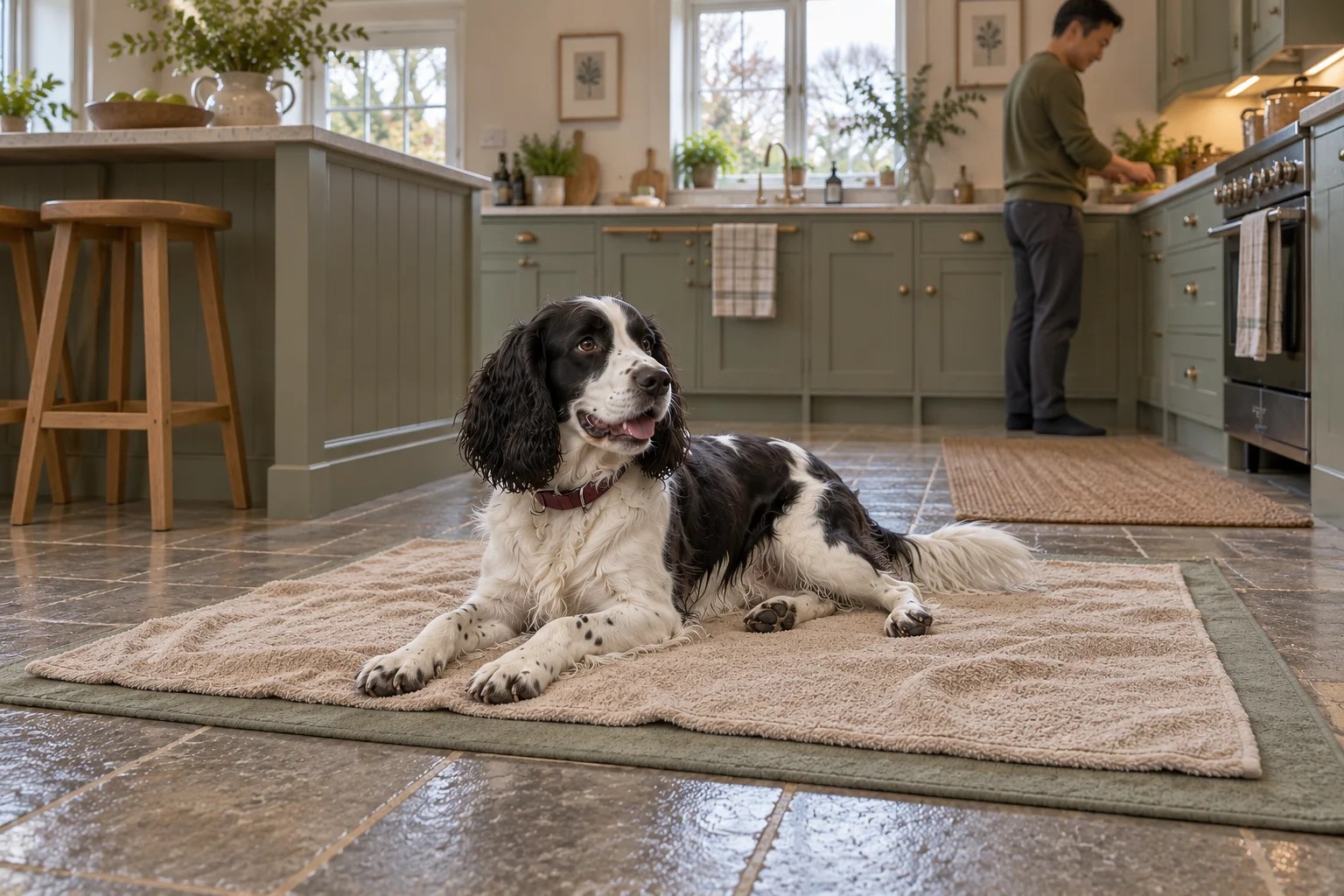
Training takes time, and muddy days don't wait. Use other ways to manage mud so you aren't forced to wipe a dog who isn't ready. Each option has limits, so check whether it suits your dog.
- An absorbent mat inside the door. Your dog walks across it and leaves some mud behind. It removes surface dirt but won't clean deep mud. It reduces the need to touch paws while your dog is not ready for handling.
- A drying area. Let your dog settle on an old towel or washable bed in an easy-to-clean room, such as a kitchen behind a baby gate, until their feet dry. This needs no handling, but dried mud may still need brushing off later, which is handling of its own.
- A "wipe your paws" mat trick. Some trainers teach dogs to scrub their own feet on a mat. It needs no handling but takes its own training.
- A walk-through tray of water. Whole Dog Journal describes teaching a dog to walk through a shallow tub. This is a separate exercise, and wet feet and a new object can worry a dog more than a towel does. Start with an empty tray, and only use it if your dog is relaxed stepping in.
- Cleaning cups or rinsing one foot at a time. These usually mean lifting and holding a paw in water, so they can still involve the handling your dog dislikes. Do not assume they will be an easier shortcut.
Choosing less muddy routes for a while can also help. The guide to dog management and training explains why reducing the problem in daily life makes training easier.
Fix common paw-wiping problems
Your dog pulls the paw away when the towel touches
The towel may be the difficult part, or the touch may be too long. Go back to a bare-hand touch on the same spot, then reintroduce the towel with a lighter, shorter touch.
For example, a short-coated adult dog accepts a bare-hand touch on her front paw but jerks it back as soon as the towel arrives. Her owner goes back to picking up the towel and putting it down for a treat, without touching her. Next session, he touches her upper leg with the towel for a second, and she stays relaxed, so he gives a treat. He keeps the towel on the leg for several sessions before moving down to the paw again.
Your dog mouths or grabs the towel
Your dog may be playful or worried. Use a smaller towel, keep it still on your lap between touches, and go back to briefer touches. If mouthing comes with stiffening or growling, stop and follow the advice on threats and bite history at the start of this guide.
Your dog is fine with one paw but not another
Each paw is new. Start that paw at the leg touch with your bare hand, even if the others are easy. Move round to that side of your dog instead of reaching across them. If one foot suddenly becomes much harder than the others, check it for injury and ask your vet.
Your dog walks away when you sit down with the towel
Your dog may be predicting the towel from your setup. Practice a few sessions where you sit down, give a couple of treats and get up again, with no touching. Keep the towel out of sight until your dog stays near you willingly.
Your dog lets you wipe at home but not after a walk
After a walk, your dog may be excited, wet and keen to go somewhere else. That is a harder situation. Use a drying area or mat for the real muddy returns for now, and practice wiping at the door when your dog is calm and dry.
Practice paw wiping after walks
Practice in a quiet room first, then move to where you will actually wipe paws, such as just inside the door. Each new place needs an easier start. Dogs Trust advises practicing handling in new places gradually, starting again from an easy stage.
When you move to the door, practice there when your dog is dry and calm, using the same setup: you sitting beside your dog, towel on your lap, treats in your pouch, and space for your dog to walk away. Once a gentle wipe of one paw is easy there, try one paw after a calm, short walk.
Keep the first real wipes very short. Wipe one paw, give a treat, and let the rest dry on a mat or in the drying area. Add a second paw only when the first stays easy. Keep giving a treat after each paw.
If your dog's reaction suddenly gets worse, or they start avoiding one paw, stop and check with your vet before you continue.
Choose your next session
Start your next session at the easiest stage your dog accepts comfortably today.
If your dog still pulls away from a bare-hand touch on the leg, practice that higher up the leg, with fewer touches. If leg touches are easy, bring in the towel on your lap. If a towel-covered touch on the paw is easy, try one slow stroke on top of the paw with the paw on the floor. If wiping the top is easy on one paw, start the next paw at the leg touch, and keep using the mat or drying area for real muddy days.