
If your dog drools, yawns, licks their lips, vomits or shakes on car rides, start by telling your veterinarian. Some dogs feel physically sick from the motion, some are anxious about the car, and many have a mix of both. Your vet can check for other health problems, help you work out what is going on and decide whether anti-nausea or anti-anxiety medication would help. Don't give your dog human travel-sickness medicine or any medicine your vet hasn't prescribed for them.
While you wait for that advice, set the car up so your dog is secured, cool and comfortable, and keep journeys short and smooth. Ask your vet about meal timing before trips. Then, if your dog already gets into the car comfortably, practice in small stages: relaxing in the parked car, the engine running outdoors, a very short drive and slightly longer trips. Move on only when your dog stays relaxed at the current stage. If signs of nausea or worry appear, end that trip at the next safe place to stop and make the next one easier.
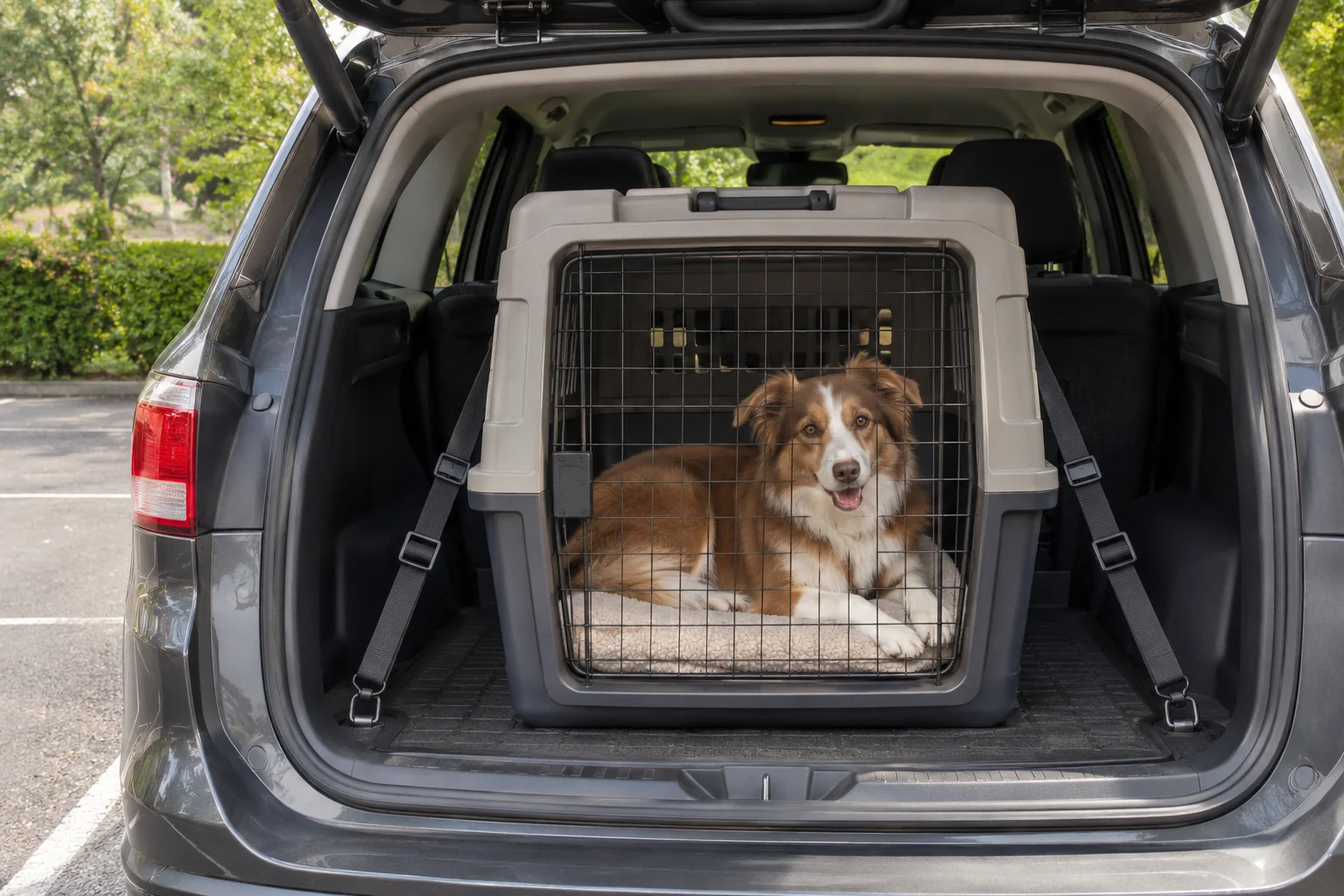
Spot the signs of car sickness and travel worry
Signs that suggest nausea
The MSD Veterinary Manual's page on motion sickness in dogs says motion sickness causes nausea, excessive drooling and vomiting, and can also cause yawning, whining, uneasiness and occasionally diarrhea. PDSA's veterinary guide to car sickness, written by vets and vet nurses, adds panting, swallowing a lot, lip licking and retching as signs of nausea.
These signs often appear once the car is moving and get worse as the trip goes on.
Signs that suggest worry about the car
VCA's guide to car and air travel, written by a team that includes veterinary behaviorists, notes that the same physical signs are often caused by underlying anxiety, and that some dogs become anxious as soon as they get into the car, even when it isn't moving. PDSA lists barking or whimpering and shaking among signs of fear of travel.
Clues that worry is playing a part include:
- Signs starting before the car moves, such as when your dog sees the car, gets in or hears the engine.
- Shaking, whining, panting hard, pacing or trying to get out.
- Refusing food in the car that your dog would happily eat elsewhere.
Why it is often both
The MSD Veterinary Manual explains that fear of the vehicle can contribute when a dog has come to associate travel with feeling ill. PDSA notes that fear can make the sickness worse. So a dog who once felt sick may start worrying about the car, and a worried dog may feel sicker. You don't have to sort this out alone. Describe what you see to your vet, including when the signs start.
Contact your vet before you start practice
The AVMA's brochure on traveling with your pet advises letting your veterinarian know if your pet has a problem with carsickness. PDSA advises speaking to your vet as soon as you notice a problem starting, before things get worse.
Contact your vet before you start practice if your dog:
- Vomits, drools heavily or retches on car rides.
- Seems unwell outside the car, for example vomiting, refusing food, lacking energy or having diarrhea at other times.
- Has started getting car sick for the first time as an adult, or is getting worse.
- Seems unsteady, tilts their head or walks off balance after a trip or at other times.
- Shows signs of panic in or near the car, such as frantic attempts to escape, or has growled or snapped when being put in the car.
If your dog panics in or near the car, or has growled or snapped about the car, don't practice at home until your vet and a qualified behavior professional have advised you.
Take notes or a short video to help your vet: when the signs start, how long into the trip, what your dog ate and when, and how quickly they recover afterward. Our guide to keeping a dog behavior log shows a simple way to record this. A few trips' worth of notes can show whether the signs start before the car moves, which points toward worry, or only after a while on the road, which points toward motion sickness.
Let your vet decide about medication
Medication is your vet's decision, not a home remedy. The MSD Veterinary Manual and VCA both describe anti-nausea and anti-anxiety medicines that a vet can prescribe. VCA notes that a vet may suggest trying a medication before the real trip to see how your dog responds. PDSA warns that non-prescription and human medications for car sickness are often not effective and can have side effects.
Don't give your dog human travel-sickness tablets, sedatives or supplements on your own, and don't adjust a prescribed dose. If your dog seems very drowsy, unwell or more distressed after a medicine, contact your vet.
If your dog panics in the car, our guide on when to seek professional behavior help explains when to involve a qualified behavior professional alongside your vet.
Plan for trips your dog needs now
Some trips can't wait for training, such as a vet appointment. Keep those separate from gradual practice.
- Tell your vet about your dog's car sickness when you book. VCA advises contacting your vet when an urgent trip is coming up, and your vet may be able to suggest a plan or medication.
- Keep the trip as short and smooth as you can, using the travel setup below.
- Bring towels, a waterproof cover, wipes and bags in case your dog is sick.
- If your dog is sick on the way, stop only where it is safe to pull over. Keep your dog secured in the car while you check on them, and clean up once you are parked safely.
When you arrive, have the leash attached before you release the crate door or undo the restraint, and only let your dog out where it is safe, away from traffic. A dog who has felt sick or frightened may try to rush out of the car.
A necessary trip that goes badly doesn't undo all your work. Give your dog time to recover, then continue with the easy stages below.
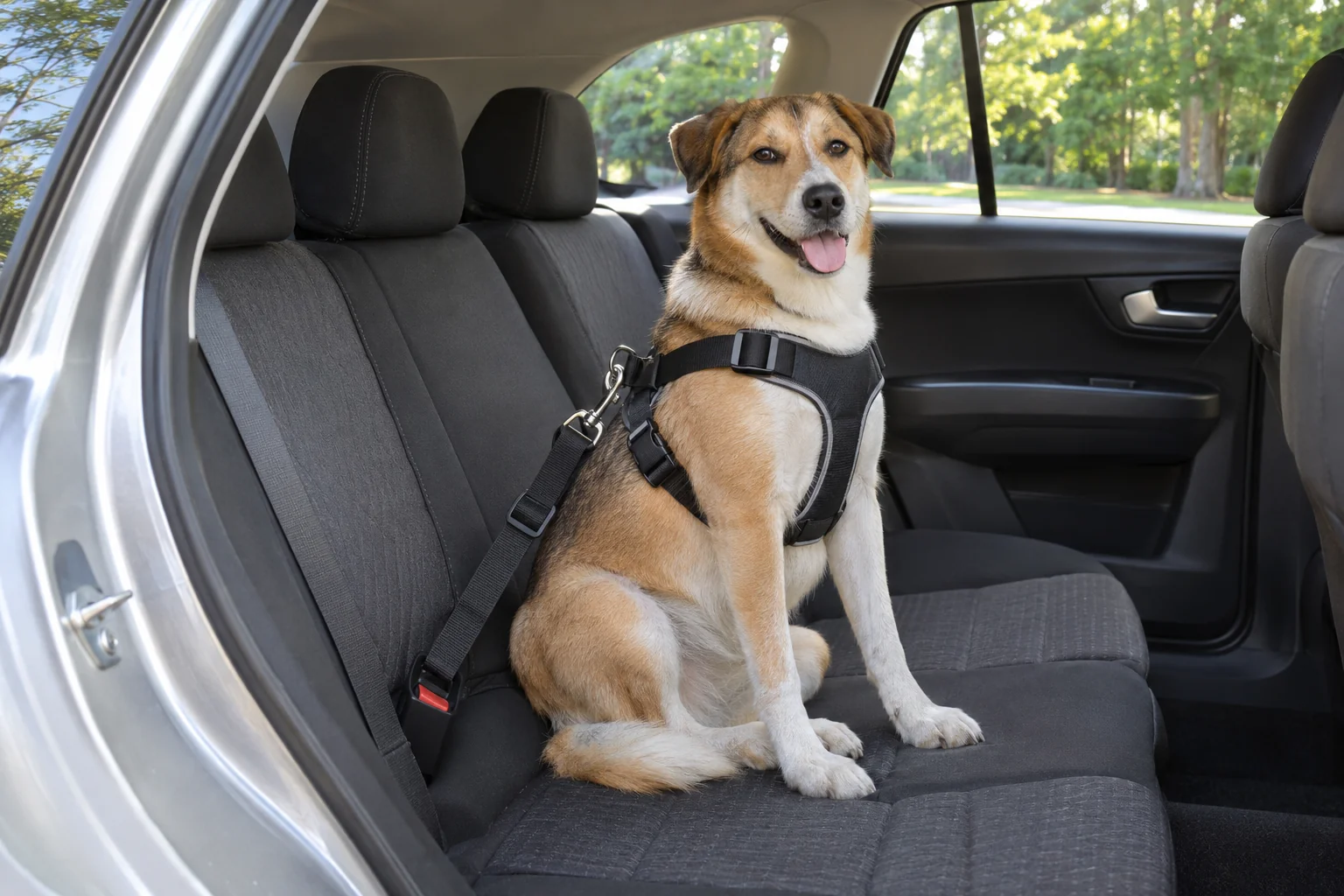
Set up the car so your dog is secure and comfortable
Secure your dog properly
A loose dog can be thrown around in a sudden stop and can distract the driver. The Cornell Riney Canine Health Center's travel advice says the safest way for a dog to travel is in a crash-tested harness, seat belt or travel crate, and refers owners to the Center for Pet Safety for products that have been tested. VCA also advises securing a dog with a crate or a seat belt and harness.
Practical points:
- Follow the product's instructions for fitting it and attaching it to your vehicle.
- Don't let your dog ride loose or in the driver's area.
- Don't let your dog put their head out of the window while you drive. Cornell advises against it.
- Get your dog used to the harness or crate at home before using it in the car. Our guides to getting your dog used to a harness and crate training explain how.
Check where your dog rides
Follow the restraint maker's guidance on where in the car it can be used and how it attaches. If a crash-tested option isn't available, Cornell advises securing your dog's carrier on the floor behind either front seat, a position it says offers the most protection in an accident. Make sure your dog can't reach the driver, and that loose bags or boxes can't slide into them.
Keep the car cool and calm
PDSA advises keeping your dog cool and making sure cool air reaches them in the back of the car. Drive smoothly, with gentle braking and cornering. Keep the radio low, and avoid winding roads at first if you can.
Never leave your dog alone in the car. The AVMA brochure says never to leave pets unattended in a car.
Bring something familiar, such as the bedding or mat your dog rests on at home, if it fits safely with their restraint. If your dog already knows how to relax on a mat, our guide to settling on a mat explains the skill. Practice it at home first rather than expecting it to work straight away in the car.
Ask your vet about meal timing before trips
When your dog eats can affect how they feel in the car, but veterinary sources differ on timing. Cornell suggests avoiding food for several hours before travel, while PDSA suggests feeding at least a few hours beforehand. Ask your vet what suits your dog. This matters especially for puppies, small dogs and dogs with medical conditions such as diabetes. Always give fresh water.
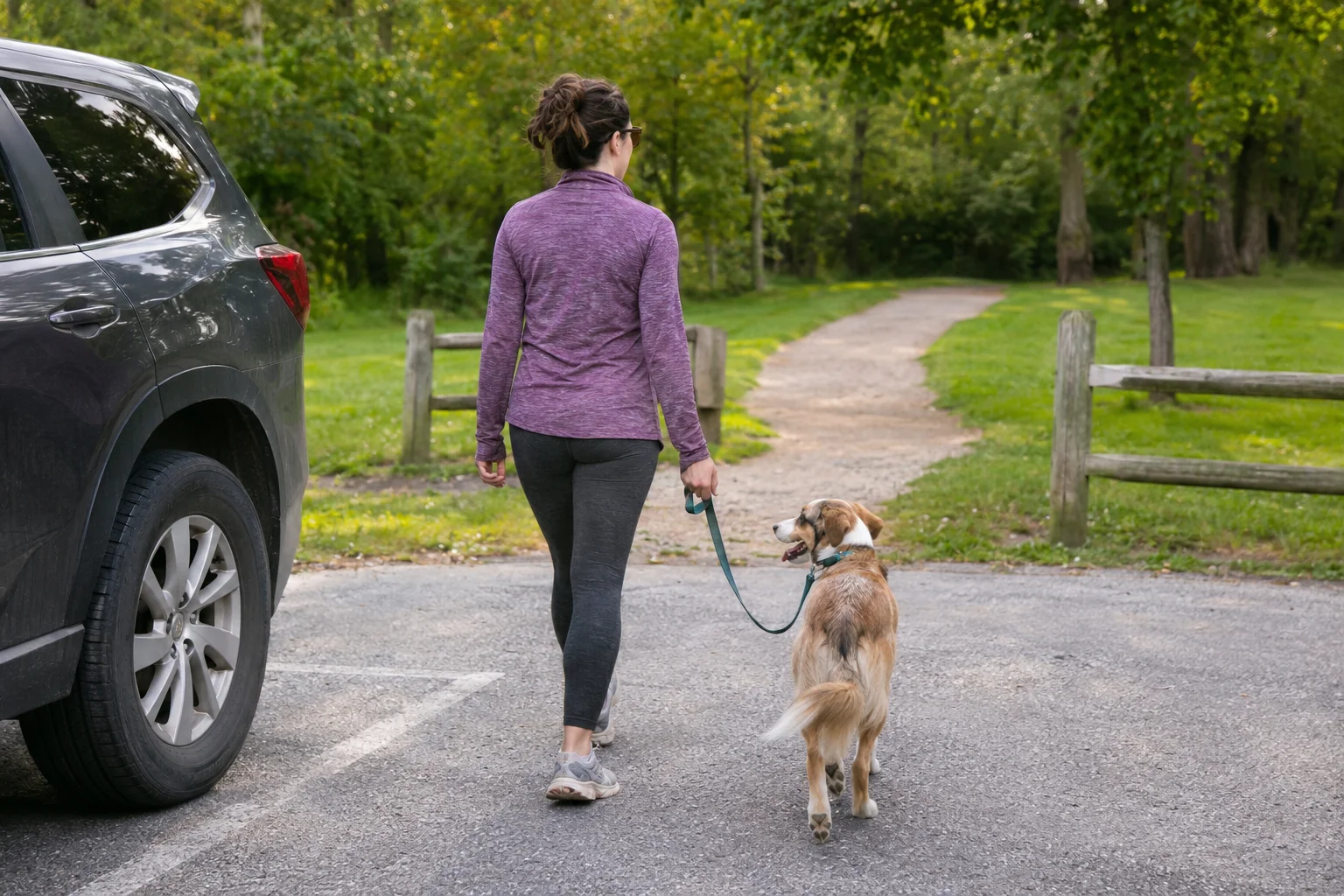
Make each trip calm and predictable
A familiar routine helps your dog know what to expect.
- Give your dog a chance to toilet before the trip.
- Load your dog calmly, using the same entry point and setup each time.
- Secure the harness or crate before you start the engine.
- Plan a pleasant end to the trip, such as a sniff walk or a game, so the car doesn't always lead to the vet or the groomer.
- Let your dog out on a leash, in a safe place away from traffic.
VCA suggests taking your dog on drives to favorite places, so the car predicts good things rather than only stressful visits.
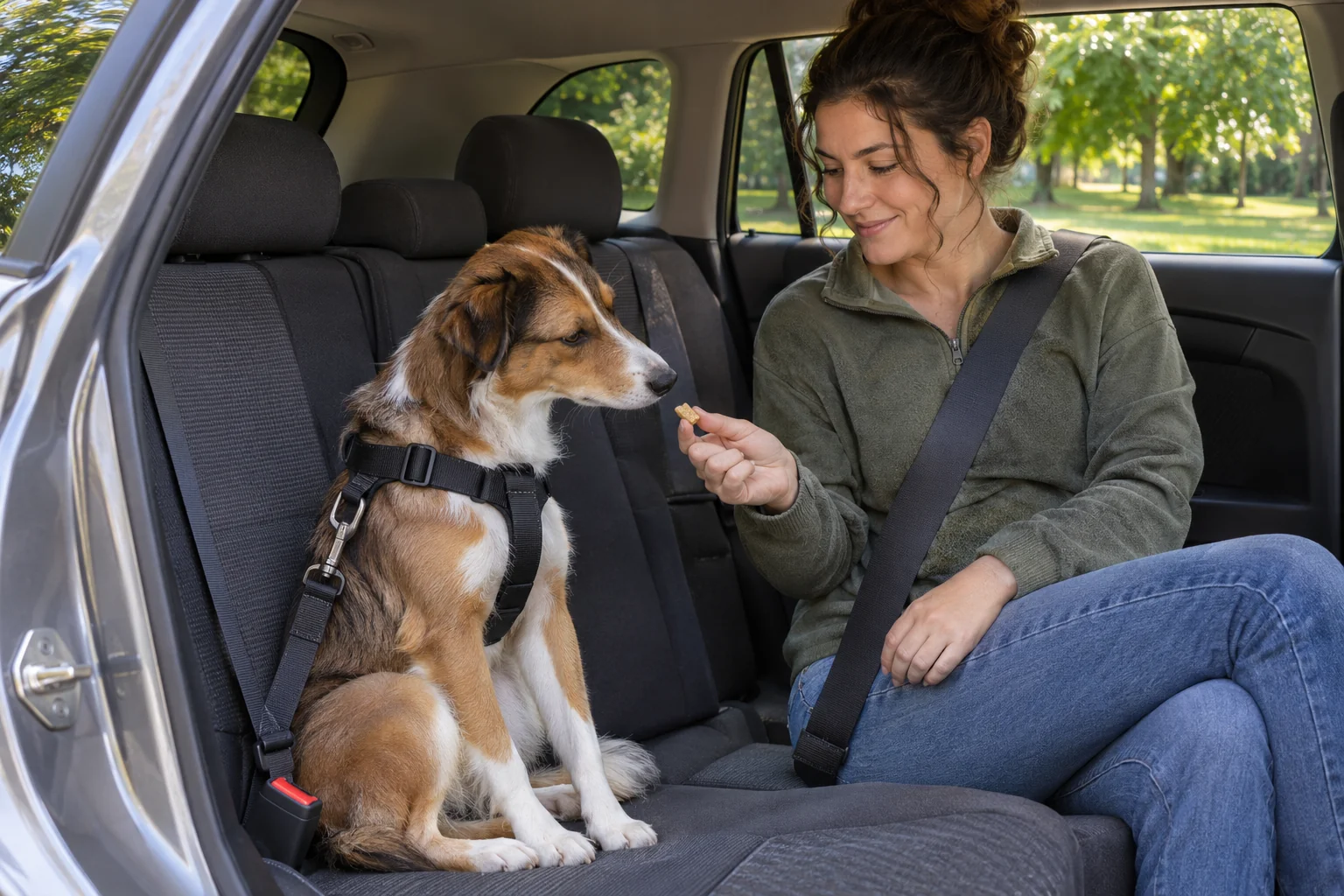
Practice short, easy car sessions in stages
This plan is for dogs who already get into the car comfortably and whose vet has been told about the car sickness. If your dog doesn't want to get in, start with our guide on teaching your dog to get into the car, which covers getting in and out as a separate skill.
PDSA recommends very short journeys at first, and VCA describes starting with your dog sitting calmly in the parked car before taking short drives to places your dog enjoys. VCA suggests pairing calm experiences with treats your dog loves. The MSD Veterinary Manual notes that some dogs can get over motion sickness by gradually getting used to travel.
Each stage below follows the same rule. Stay at a stage until your dog is relaxed there: a loose body, normal breathing, no drooling or lip licking, and lying down or settling. Interest in a treat while the car is parked is a good sign, but taking food on its own doesn't prove your dog is comfortable. If signs of nausea or worry appear, end that session calmly and go back to an easier stage next time. There is no fixed number of days or trips.
Relax in the parked car
With your dog secured in their crate or harness, sit beside them in the back seat, or by the open door, with the engine off for a minute or two. Give a few treats, then let your dog out on a leash, in a safe place away from traffic, and finish with something they enjoy, such as a short walk. Our guide to choosing training rewards can help you pick something worthwhile.
Turn the engine on while parked outdoors
When your dog settles easily in the parked car, add the engine. Only ever run the engine outdoors, never in a garage. With your dog secured, start the engine, sit for a few moments, give a treat, then turn it off and let your dog out.
Take a very short drive
When your dog stays relaxed with the engine running, drive to the end of the street, or once around the block, and home again. Keep it smooth and slow. Give treats once you have parked, not while you are driving, and let your dog out for a short walk or game.
Build up gradually
Make the next trips a little longer, or end them somewhere your dog enjoys, such as a favorite park, so the car predicts good things. Change one thing at a time: distance, road type or speed.
Notice what progress looks like
Progress is often gradual. Look for small changes across several trips: drooling starting later in the drive or not at all, your dog lying down sooner, quicker recovery after you arrive, and your dog walking up to the car willingly. Write these down alongside your trip notes. If progress stalls for a while, stay at the stage your dog manages comfortably and ask your vet whether anything else would help. Our guide to short dog training sessions has ideas for fitting brief practice into busy days.
If you have a second adult available, they can sit beside your dog with their own seat belt on and watch for early signs while you drive. Neither of you should unclip your dog's restraint while the car is moving.
End the trip at the first signs of trouble
If your dog starts drooling, licking their lips, yawning repeatedly, panting, whining or shaking during a practice trip:
- Head home, or pull over somewhere safe and stop the car.
- Keep your dog secured while the car is in traffic. Let them out only where it is safe, on a leash.
- Give them fresh air and a short, calm walk if they want it.
- Make the next practice easier, for example a shorter trip or going back to the parked-car stage.
Don't try to push through with treats or reassurance while your dog feels sick. A dog who feels sick may not want food anyway, and keeping a worried dog in the situation won't teach them to relax. Aim to end practice trips before your dog feels unwell.
If your dog vomits, stop where it is safe, keep them secured, and clean up once you are parked. Let your vet know, especially if your dog vomits on more than one practice trip.
For example, a young dog who jumps into the car happily drools and licks his lips about five minutes into every drive. His owner tells her vet, who checks him and talks through options. At home, she starts with the dog relaxing in the parked car with the engine off and treats afterward. Once he lies down calmly there, she runs the engine for a few moments, then drives once around the block and lets him out at the park. On one trip he starts drooling at the corner, so she heads home, lets him out for a sniff and goes back to the engine-running stage the next day. Over the following weeks he starts settling down as soon as the car moves off, so she adds a little more distance.
Fix common car sickness problems
Your dog drools before the car even moves
This points to worry about the car. Go back to the parked-car stage, with the doors open if your dog prefers, and keep sessions very short. Talk to your vet about anxiety, and consider a qualified behavior professional.
Your dog won't take treats in the car
A dog who refuses favorite treats may be nauseous or worried. Don't try harder with food. End the session and make the next one easier. Use rewards after the trip, such as a walk or game, instead.
Your dog is only sick on the way to the vet
Your dog may have learned that the car predicts a stressful visit. Add plenty of short, pleasant trips that end somewhere your dog enjoys, and tell your vet so they can help make the visit itself easier.
Your dog pants heavily in the car
Panting can be a sign of nausea, worry or heat. Check that cool air reaches your dog, as PDSA advises, and stop somewhere safe if your dog seems hot or distressed. If heavy panting continues after the trip, or your dog seems weak or unwell, contact your vet straight away.
Your dog won't settle in the crate or harness in the car
Go back to practicing with the crate or harness at home, where your dog is already comfortable, before using it in the car again. Then return to the parked-car stage.
Your dog is still sick despite medication
Tell your vet. Don't increase the dose or add another medicine yourself. Your vet may want to review the medicine, its timing or your dog's health.
Your dog is fine on short trips but sick on longer ones
Keep trips at a length your dog manages comfortably, and add time slowly. Ask your vet about medication for longer trips you can't avoid.
Your dog was improving but suddenly gets worse
Go back a stage, and check with your vet in case something else has changed, such as an illness or a new medicine.
Your puppy gets car sick
Cornell notes that many dogs, especially puppies, experience nausea when traveling, and PDSA says car sickness is common in puppies. Talk to your vet, keep trips short and easy, and follow the same stages. Don't assume your puppy will simply grow out of it without help.
Your dog shakes or tries to escape in the car
Stop the practice and keep your dog safely secured until you are parked. Shaking or escape attempts suggest strong fear. Talk to your vet and a qualified behavior professional before more car practice.
Your dog is calm in the crate at home but not in the car
The car is a new place, with motion, noise and smells. Treat car practice as a separate stage, starting from the parked car. Our guide on why your dog listens at home but not outside explains why skills need practice in each new place.