
"Find it" is a simple game where you say a cue and your dog uses their nose to find a treat or toy. It starts with a treat tossed on the floor in front of them and can grow into searches around the house, in the yard and even on walks.
Quick start: In a quiet, clear space, use a few pieces of food your dog can safely eat. Say “find it,” toss one where they can see it land, and let them find it. Repeat a few times, then pause. Count the food toward their daily allowance, supervise, and keep other dogs separate.
It's one of the most useful games you can teach. It gives your dog a satisfying job for their nose, it's easy for almost any dog to learn, and once your dog loves it, "find it" can help in all sorts of everyday situations, such as when visitors arrive, when your dog needs to settle or when something worrying passes by on a walk.
This guide covers how to teach "find it" from scratch, how to make searches harder as your dog improves, and how to use the game in real life. It also covers safety, including which foods to avoid, how to stop "find it" from turning into scavenging, and how to play with more than one dog.
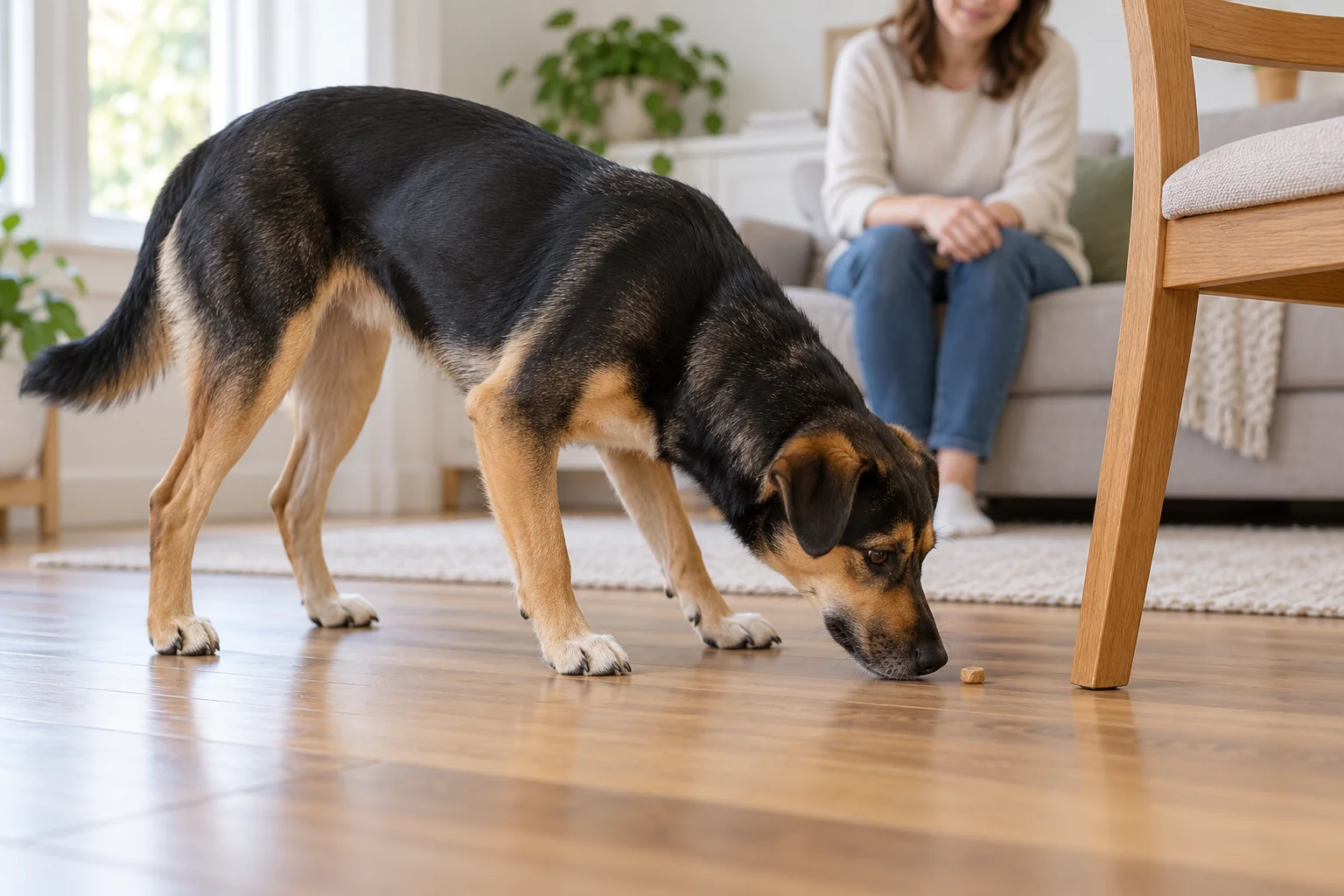
Why "find it" is so useful
Dogs experience the world largely through their noses. Mikkel Becker, writing for Vetstreet, notes that most dogs are naturally good at following their noses (Vetstreet: Teach your dog to find it). A game that lets them use that skill can be very satisfying.
"Find it" can:
- Give your dog a mental workout. A few minutes of searching can be surprisingly tiring.
- Help bored or frustrated dogs. ASPCApro, the ASPCA's resource for shelter professionals, describes scent games as a job that may be just what bored or frustrated dogs need to boost their moods (ASPCApro: Scent games for canine enrichment).
- Redirect your dog's attention. Once your dog loves the game, saying "find it" and scattering a few treats can draw their attention away from something exciting or worrying.
- Slow down fast eaters. Scattering part of a meal for your dog to find makes eating last longer.
- Suit almost any dog. Puppies, older dogs and dogs who can't do much physical exercise can often still enjoy a gentle sniffing game.
Choose safe treats for the game
Because "find it" involves lots of small rewards, it's important to choose treats carefully.
- Use small, soft, strong-smelling treats your dog can eat quickly, or pieces of their usual food.
- Count them as part of your dog's daily food. If you play often, use some of your dog's regular meal so they don't gain weight.
- Avoid foods that are dangerous to dogs. The ASPCA lists foods to avoid feeding pets, including chocolate, grapes and raisins, onions, garlic and products containing xylitol, a sweetener that can cause low blood sugar and liver damage (ASPCA: People foods to avoid feeding your pets).
- Think about allergies. If your dog has a food allergy or a special diet, use only foods your vet has approved.
Toys work too, once your dog understands the game. Some dogs prefer searching for a favorite toy, which is a great option for dogs on a restricted diet.
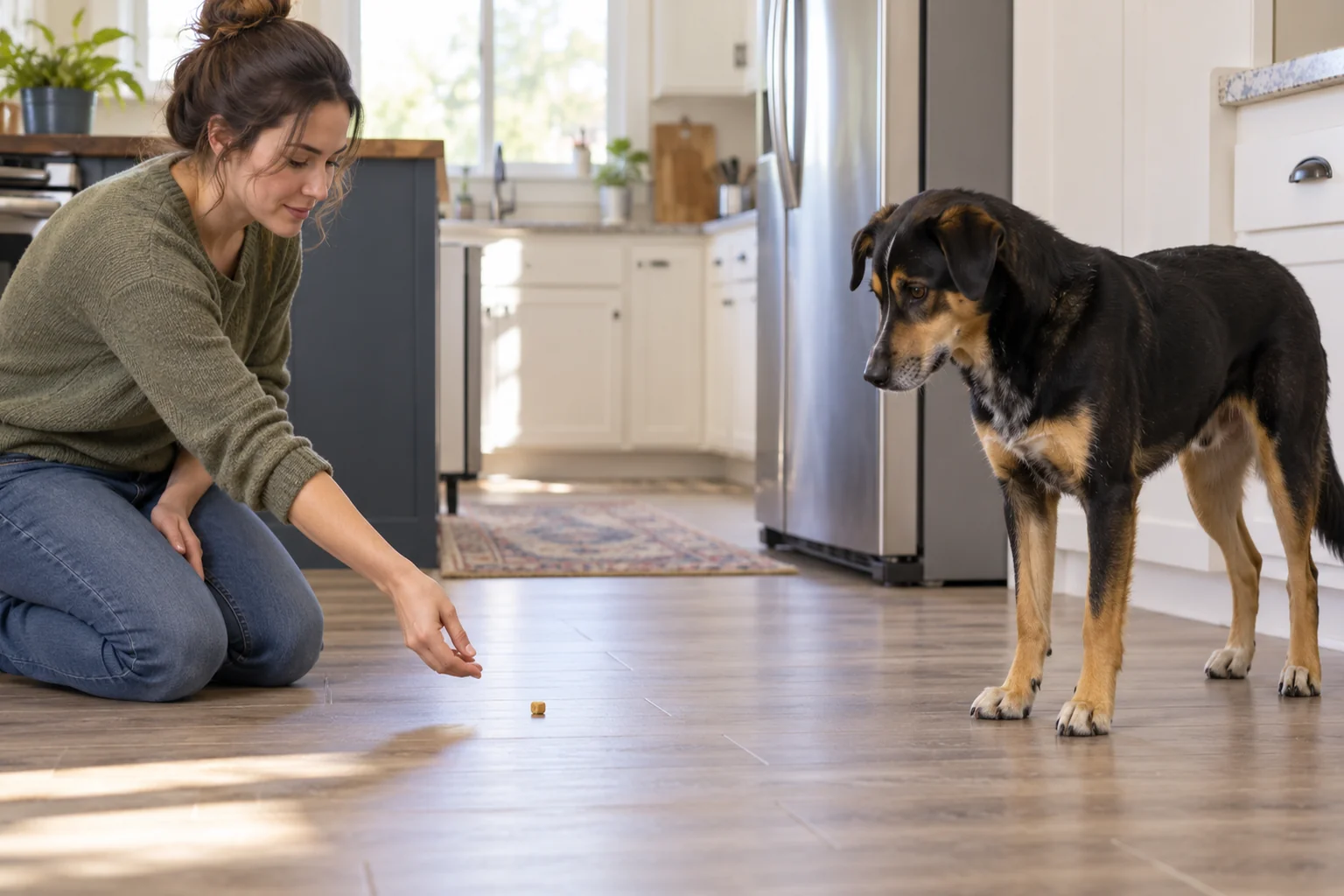
Teach "find it" from scratch
Start somewhere quiet, on an easy surface such as a hard floor or short grass, so treats are easy to see and smell.
- Show your dog a treat. Let them sniff it in your hand.
- Say "find it" in a cheerful voice.
- Immediately toss the treat a short distance away, on the floor, where your dog can easily see it land.
- Let your dog get it. Praise them as they eat it.
- Repeat several times.
At first, the treat should be easy to find. Becker advises starting easy by tossing the treat or toy in a flat, open area. If your dog seems unsure where it went, point at it or walk over with them.
Within a few repetitions, many dogs start to look at the floor as soon as they hear "find it". That means they're learning the cue.
Practice in short bursts of five or six tosses, then take a break. Toss the treats in different directions, sometimes to the left and sometimes to the right, so your dog learns to search rather than simply running to the same spot each time.
Build the game gradually
Once your dog understands the basic game, make it a little harder, one change at a time.
Scatter several treats. Say "find it" and toss three or four treats in a small area. Your dog needs to use their nose to find them all.
Toss into slightly harder places. Try tossing treats onto a rug, into longer grass or near a piece of furniture, where they're harder to see.
Hide treats while your dog watches. Put a treat behind a chair leg or under the edge of a mat while your dog watches. Then say "find it" and let them search.
Hide treats while your dog is out of sight. Once your dog is good at watching you hide treats, hide one or two while they're in another room, or ask a family member to keep them busy. Then bring your dog in and say "find it".
Use more rooms. Gradually hide treats in different places around the house, at nose height or lower, so your dog has to search.
Go at your dog's pace. If they can't find a treat after a short search, make the next one easier. The game should always feel winnable.
It helps to change only one thing at a time. If you move to a new room, keep the hiding places easy. If you make the hiding places harder, stay in a room your dog already knows. Changing several things at once can leave your dog confused and less keen to play.
Help your dog when they're stuck
Searching should be fun, not frustrating. If your dog seems stuck or starts to lose interest:
- Make it easier. Hide the next treat closer, in plain view, or in a place they've found before.
- Use smellier treats, which are easier to detect.
- Walk slowly with your dog toward the area, without pointing directly at the treat.
- Keep sessions short. A few minutes is plenty, especially at first.
Stop while your dog is still keen, so they look forward to playing again next time.
Notice how your dog searches, too. Some dogs work systematically, nose down, moving in small circles. Others dash about using their eyes. Both are fine at first. As your dog gets more practice, you may see them slow down and rely more on their nose, especially if you hide treats where they can't be seen. Praise that calm, careful sniffing.
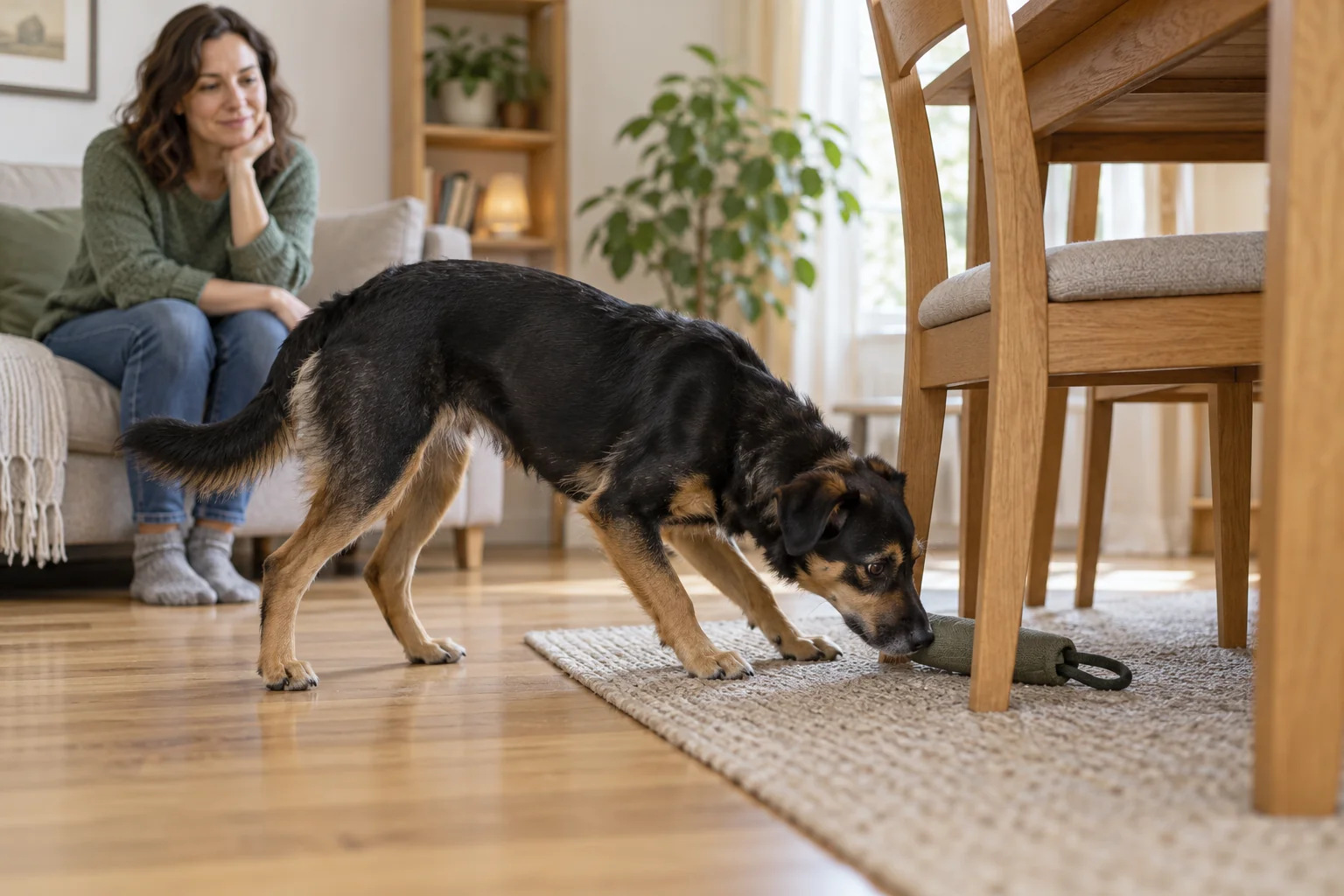
Play "find it" with toys
Once your dog loves searching for food, you can try toys too.
- Start with a favorite toy your dog already loves.
- Hide it in an easy place, partly visible, while your dog watches.
- Say "find it" and praise your dog when they get it.
- Follow up with a game, such as tug or fetch, as a reward.
Some dogs find toy searches more exciting than food. Others prefer treats. Our guide on how to choose training rewards your dog actually wants explains how to find what motivates your dog most.
Use "find it" in everyday life
Once your dog loves the game, you can use it to help in all kinds of situations.
When visitors arrive. Scatter a few treats on a mat in another room and say "find it" while you answer the door. It gives your dog something to do other than rushing to greet.
To help your dog settle. A short sniffing game can help some dogs relax before a quiet period, such as when you need to work.
Before mealtimes. Instead of putting your dog's bowl down, scatter part of their meal on a clean floor or grass and say "find it". This turns a quick meal into a few minutes of satisfying work.
On walks. If your dog sees something exciting in the distance, such as another dog, you may be able to say "find it" and scatter a few treats on the ground. This can draw their attention away and give them something calm to do. It works best if you start well before your dog is upset.
At the vet. Becker notes that "find it" can help nervous dogs relax in places like the vet's office. A few treats scattered on the floor of the waiting room may help your dog cope.
If your dog barks, lunges or seems very worried around other dogs, "find it" can be one helpful tool, but it isn't a full plan. Our guide on what to do when your dog barks at other dogs on walks covers this in more detail.
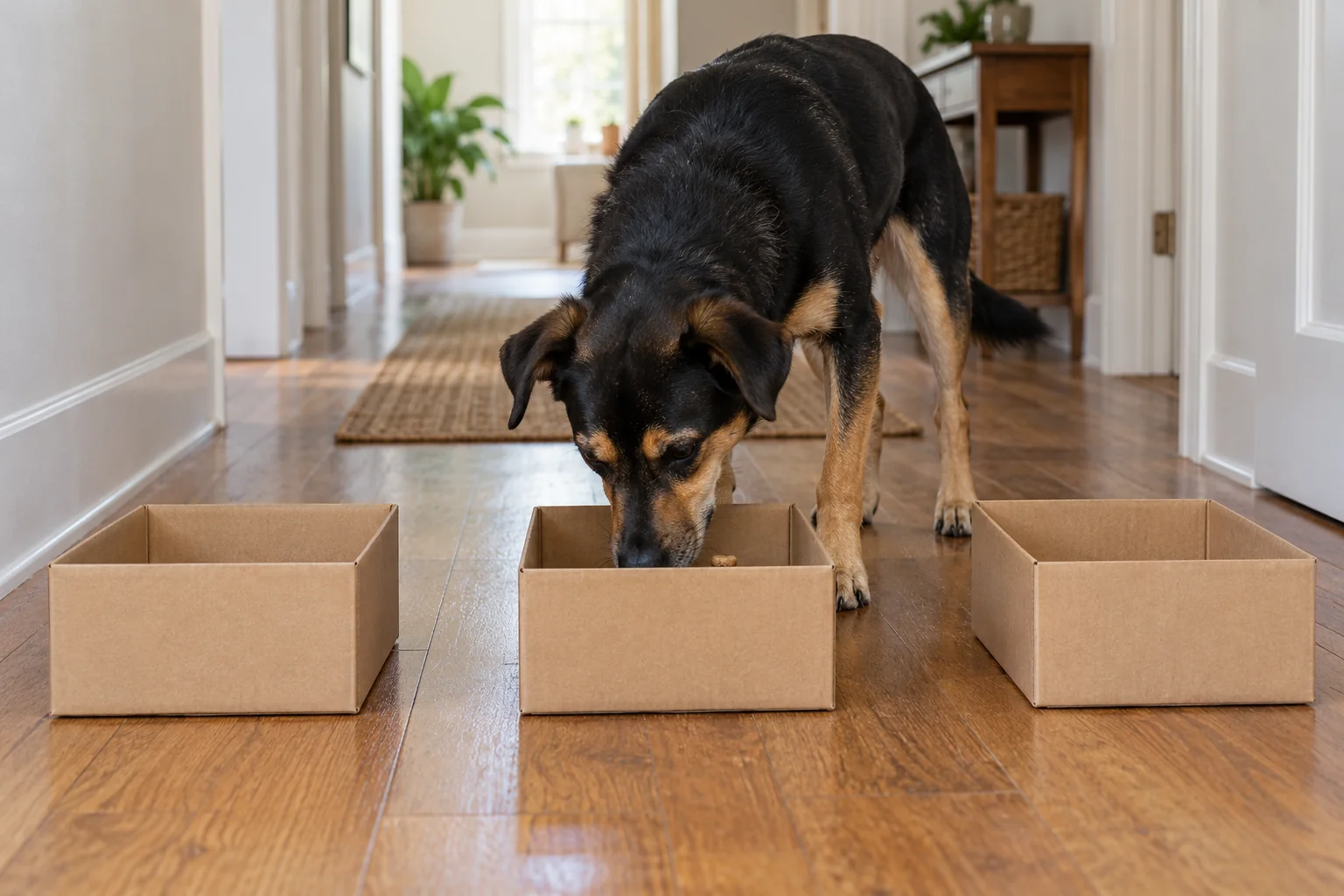
Indoor search games for busy days
"Find it" is a great option for days when your dog can't get much exercise outside. Once your dog knows the basic game, you can turn it into a longer search.
- The box game. ASPCApro describes a game with several cardboard boxes, where a treat is hidden in one box and the dog searches until they find it. You can try this at home with a few boxes on the floor, if your dog doesn't chew or eat cardboard.
- Muffin tin search. Put treats in some cups of a muffin tin and cover them all with tennis balls. Your dog sniffs out which cups have treats.
- Towel roll. Roll a few treats inside an old towel and let your dog unroll it to find them.
Our guide on rainy-day enrichment for dogs has more ideas for calm indoor activities.
Keep "find it" from becoming scavenging
Some owners worry that teaching "find it" will make their dog more likely to eat things off the ground. A few habits keep the game clear.
- Use the cue every time. Your dog should search only when you say "find it". If they start scanning the floor without a cue, simply ignore it and don't toss a treat.
- Teach "leave it" too. "Leave it" means "don't touch that", while "find it" means "go and search". Learning both helps your dog understand when sniffing for food is OK. Our guide on how to teach your dog to leave it explains how to teach this.
- Check the area first. Before playing outside, check for things your dog shouldn't eat, such as food waste, chicken bones or mushrooms.
- Supervise. Always watch your dog during search games.
If your dog already eats things on walks that they shouldn't, play "find it" in safe areas at home first, and talk to your vet if your dog eats non-food items.
Playing with more than one dog
"Find it" can be tricky in multi-dog households. Searching for food can lead to tension, even between dogs who normally get on well.
- Play with one dog at a time, with other dogs in another room or behind a gate. ASPCApro also suggests running scent games with one dog at a time, away from other dogs.
- Never scatter food between dogs who may squabble over it.
- Watch for signs of tension, such as stiffening, staring or growling, and separate the dogs if you see them.
If any of your dogs guards food or toys, get advice from a qualified behavior professional before playing food-based games with them around other dogs.
Find it for puppies and older dogs
"Find it" is one of the few games that suits dogs at almost every stage of life.
Puppies can start with the simplest version: a treat tossed a short distance on a hard floor. Keep sessions to a minute or two, because young puppies tire quickly. The game is also a handy way to redirect a mouthy puppy toward something else, or to help them explore a new room or surface calmly. Use small pieces of their usual food, so you don't upset their stomach.
Older dogs often keep a keen nose even when their bodies slow down. Searching can give them a satisfying job without the strain of long walks or energetic games. Keep hiding places at nose height or lower, so your dog doesn't need to jump, climb or crouch awkwardly, and play on a non-slip surface. If your older dog seems confused, stiff or less interested in food than usual, mention it to your vet.
Dogs on restricted exercise, for example after an operation, may also enjoy gentle "find it" games. Ask your vet first which kinds of movement are OK, and keep searches calm and close by.
A short example: practising on a rainy day
Here's a brief illustration, not a timetable. Adjust it to your dog.
The pattern: A young, energetic dog gets restless indoors when rain limits their usual walk.
- Begin with visible treat tosses in the kitchen, using part of breakfast.
- When the cue is familiar, scatter a few pieces on a rug. Later, hide one behind a chair leg while the dog watches.
- Then hide one or two treats in easy places while the dog waits in another room. Try a box search or a quiet yard only if the dog stays relaxed.
If excitement or frustration rises, make the game easier or stop. A scent search can be one rainy-day activity, but it does not replace suitable movement, rest or veterinary advice.
Troubleshoot common problems
My dog doesn't understand the game. Go back to tossing a single treat where they can easily see it land.
My dog loses interest quickly. Use tastier treats, make searches easier and keep sessions short.
My dog searches without the cue. Only reward searches you've asked for, and teach "leave it" too.
My dog gets frustrated. Make the next search easier, and end on a successful find.
My dog eats things they shouldn't while searching. Check the area first, and play only in safe, supervised spaces.
My dog guards the treats from other dogs. Play with one dog at a time, and get professional help if guarding is a problem.
My dog runs around wildly instead of sniffing. Your dog may be too excited. Play in a smaller space, use fewer treats and toss them gently, close to you. Some dogs calm down as they learn to slow down and use their nose.
My dog won't search outside. The outdoors is full of competing smells. Go back to the simplest version, with a single treat tossed where your dog can see it, and build up again.
My dog finds the treats too quickly. That's a good sign. Add a little difficulty, such as hiding treats in a few places at once or under a light cover, but keep the game winnable.
When to get help
"Find it" is a gentle game that suits most dogs. Some need extra support.
Talk to your vet if:
- Your dog regularly eats non-food items
- Your dog has a food allergy or special diet
- Your dog seems to lose their sense of smell or interest in food
Look for a qualified, reward-based trainer or behavior professional if:
- Your dog guards food or toys from people or other dogs
- Your dog is very worried or reactive on walks
- You'd like help using "find it" as part of a wider training plan
Use reward-based help only. The American Veterinary Society of Animal Behavior states that evidence supports reward-based methods for all canine training (AVSAB: Why you need to reward your dog in training).
You can find more skills and games to try in our dog training guides.