
If your dog barks when you leave, start by making things safer, not by trying to stop the barking. Don't punish your dog, don't use a bark collar, and don't leave them longer to "cry it out". Barking while you are out has several possible causes, so it doesn't on its own mean your dog has separation anxiety. Look for other clues, cut down the time your dog spends alone while you find out more, and book a vet visit to check for health problems.
Contact your vet promptly, and avoid leaving your dog alone until you have advice, if your dog hurts themselves trying to get out, panics, drools, trembles or pants heavily when alone, or is getting worse. Those dogs need a vet and a qualified behavior professional, not a home training plan. The details are in "Get help quickly if your dog panics or hurts themselves".
Avoid the things that can make barking worse
Some common reactions make a worried dog feel worse, or hide the problem without helping.
- Don't punish or scold your dog, even when you come home to noise complaints or damage. The ASPCA's guide to separation anxiety explains that anxious behaviors are not disobedience, and that punishment can make the problem worse. The RSPCA's guide to separation-related behavior warns that raising your voice or showing disappointment might scare your dog and make things worse.
- Don't use bark collars or other aversive devices. The British Small Animal Veterinary Association's position statement on aversive training methods recommends against aversive methods, giving a shock or vibration when a dog barks as an example, and names spray collars and electric shock collars among the devices it recommends against.
- Don't leave your dog to "cry it out". Longer absences don't teach a distressed dog to cope.
- Don't force your dog into a crate or small room to contain the noise. The ASPCA notes that a crate helps some dogs but causes stress for others, and recommends a different approach if crating causes distress.
- Don't leave your dog alone on purpose to test or film their reaction. You can learn a lot without adding extra time alone, as described in "Gather clues without testing your dog".
Exercise and toys can help a dog rest, but they are not a cure on their own for a dog who is distressed when alone.
Get help quickly if your dog panics or hurts themselves
The MSD Veterinary Manual's page on behavior problems in dogs, written by a board-certified veterinary behaviorist, describes separation anxiety as a dog panicking when left alone, and notes that confined dogs may destroy kennels, walls or doors trying to reunite with their owners. The ASPCA warns that escape attempts can be extreme and result in self-injury.
Contact your vet promptly if your dog:
- Has injured their mouth, teeth, paws or nails trying to get out, or has damaged doors, windows or crates.
- Drools, trembles, pants heavily, paces or won't eat when left alone.
- Has started soiling indoors when alone, but not when someone is home.
- Is getting worse, or the problem started suddenly.
Until you have advice, arrange for someone to be with your dog, or take your dog with you where it is safe and allowed. Don't confine a panicking dog more tightly to prevent damage; that can increase the risk of injury.
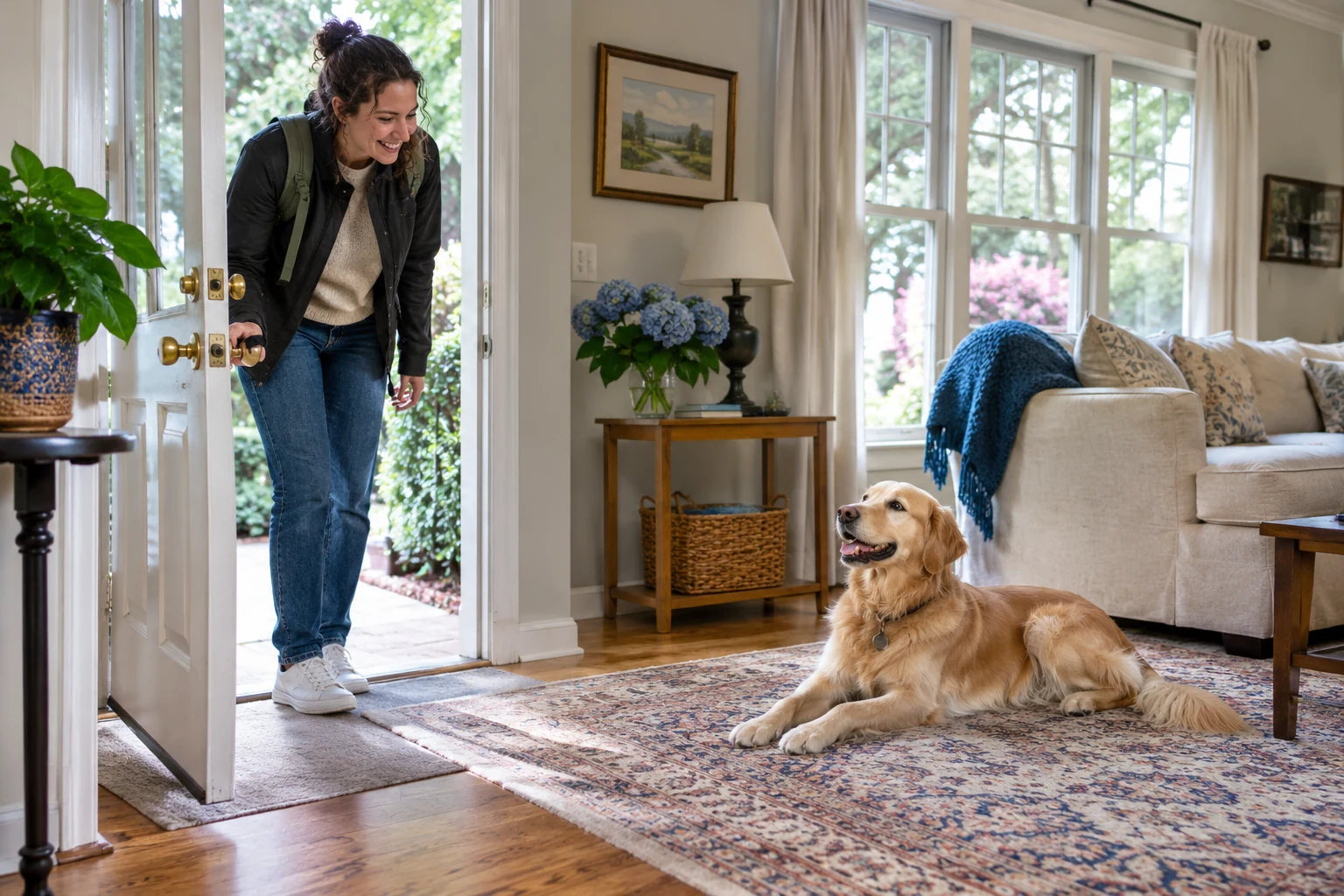
Reduce time alone while you work out what's happening
The quickest way to protect your dog, and your neighbors, is to cut down how long your dog spends alone for now. Dogs Trust's guide to separation anxiety advises avoiding leaving your dog alone when possible while you work on the problem, and suggests friends, family, dog sitters and daycare.
Options that may work for you:
- A friend, neighbor or family member who can sit with your dog.
- A dog sitter or walker for longer absences.
- A daycare your dog enjoys, if your vet or behavior professional agrees it suits them.
- Taking your dog along on errands where dogs are welcome and it is safe, such as a short drive if your dog travels comfortably.
- Adjusting your schedule so absences are shorter for a while.
This is management, not a cure. It stops your dog from practicing distress while you get proper advice, and it gives you time to find the right help.
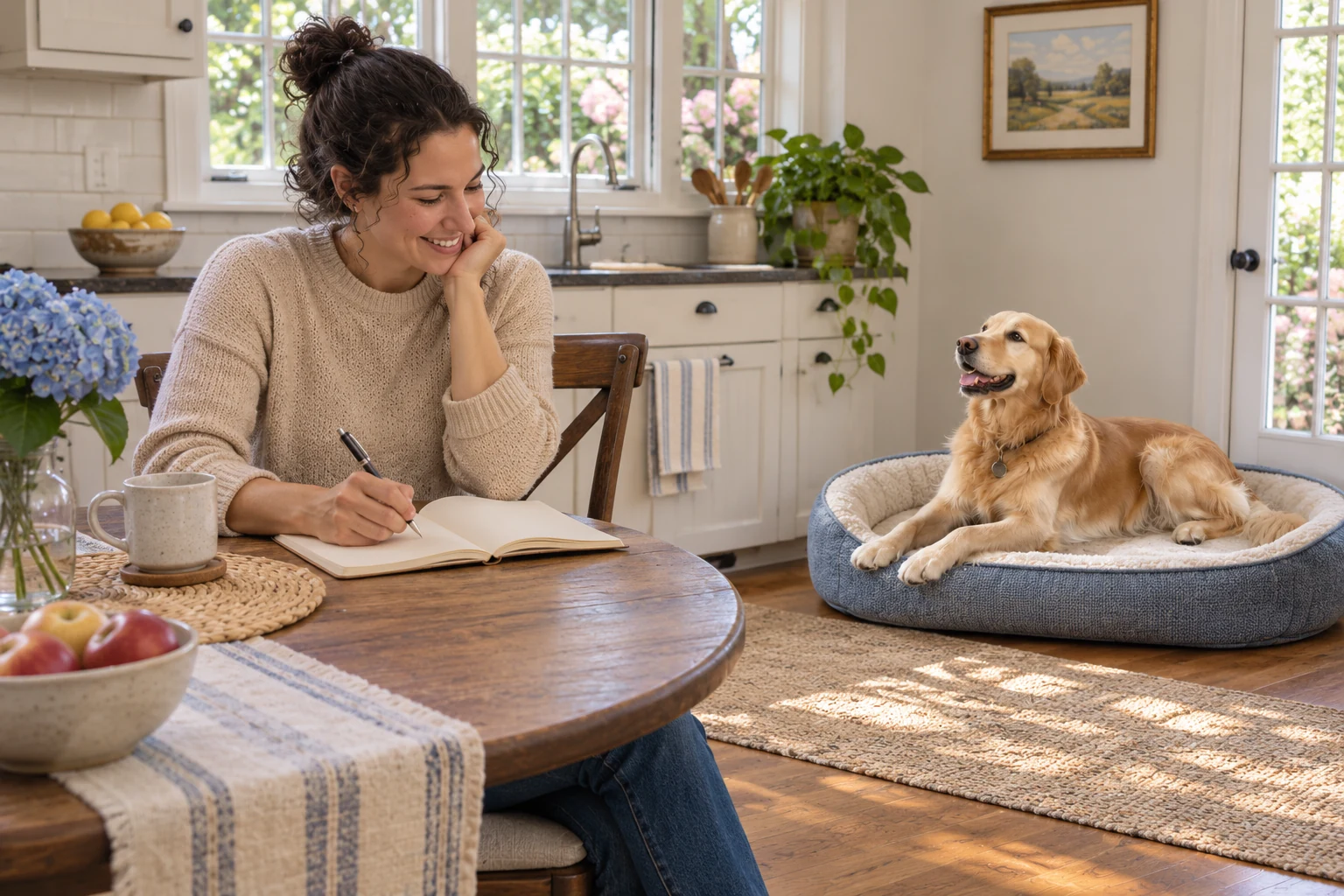
Gather clues without testing your dog
Barking when alone can have different causes, and your vet or behavior professional will want to know what is happening. You can collect useful information without leaving your dog alone any extra.
Keep notes on:
- What you find when you come home: damage, especially near doors and windows, wet patches from drooling, toileting accidents, or untouched food and chews.
- What neighbors report: when the barking starts, how long it lasts, and whether it sounds like barking at passersby or continuous barking, howling or whining.
- How your dog behaves as you get ready to leave: following you, pacing, panting or hiding.
- Anything that has recently changed, such as a move, a new work schedule or a new household member.
The RSPCA suggests a camera to monitor your dog while you are out. If you already have a camera running during absences you can't avoid, the footage can help your vet. Don't create extra absences just to record.
Some everyday questions can also help, as long as you answer them from what already happens rather than setting up a test. Does your dog bark when another person or pet is at home? Do they settle when you are home but behind a closed door? Do they react to your keys, shoes or coat? Write down what you have seen. Our guide to keeping a dog behavior log shows a simple way to record what you notice.
Look at the possible reasons for barking
Many things can make a dog bark when no one is home. These are possibilities to discuss with your vet or behavior professional, not a diagnosis.
Signs that point toward distress about being alone
The ASPCA describes separation-related barking as persistent and not seeming to be triggered by anything except being left alone. The RSPCA lists destructive behavior, howling, barking, whining and toileting indoors as common signs, along with less obvious ones such as trembling, panting and not eating while the owner is out. Dogs Trust notes that a dog who only eats or plays when someone is present is likely to be anxious.
Signs that point toward something else
- Barking at sights and sounds. The ASPCA describes barking triggered by unfamiliar sights and sounds that happens whether or not the guardian is home. The RSPCA advises checking whether barking is actually caused by a disturbing noise. If your dog barks at passersby, deliveries or the doorbell when you are home too, our guides to barking at the window and barking at the doorbell may help.
- Boredom or frustration. The ASPCA notes that boredom can cause disruptive behavior without obvious anxiety. Dogs Trust notes that frustration or boredom can develop into anxiety over time, so it still deserves attention.
- Needing to go out, or a health problem. The RSPCA notes that underlying health issues can cause or contribute to separation-related behavior. The ASPCA advises seeing your vet to rule out medical causes when house soiling is involved, including the effects of some medicines.
- Fear of specific noises, such as fireworks or storms. Our guide on helping a dog who is scared of fireworks covers noise fear.
What the timing can tell you
The MSD Veterinary Manual notes that signs of separation anxiety are often most severe within the first 15 to 30 minutes after a dog is left alone. Barking that starts soon after you leave and doesn't seem linked to anything outside is worth mentioning to your vet. Barking that happens at particular times, such as when the mail arrives or children walk home from school, may point toward outside triggers. Timing on its own doesn't confirm either explanation, but it helps whoever is assessing your dog.
Several causes can happen together. A professional can help you sort them out.
For example, a neighbor mentions that a young dog barks every weekday morning. The dog's owner checks what she has already seen: the barking starts soon after she leaves, the chew she left is untouched when she returns, and there are scratch marks on the inside of the front door. Rather than trying a bark collar or a longer absence, she asks a friend to stay with the dog on workdays, books a vet visit and takes her notes. Her vet rules out a medical cause and refers her to a veterinary behaviorist, who builds a plan for the dog. If the notes had instead shown barking only when delivery trucks pulled up, and the dog had eaten her chew normally, the window-barking advice would have been a better first step.
See your vet before you change anything else
Book a vet visit before you start any new plan. The RSPCA notes that health issues can cause or contribute to separation-related behavior, and Dogs Trust advises seeing a vet if you think your dog is showing signs of separation anxiety, noting that some medical conditions can cause similar signs.
Take your notes with you. Ask your vet:
- Whether anything medical could be contributing, including pain, toileting needs or the effects of current medicines.
- Whether your dog's signs suggest distress about being alone, or something else.
- Whether medication might help alongside behavior support. The ASPCA advises always consulting your veterinarian or a veterinary behaviorist before giving any medication for a behavior problem.
- Who they recommend for behavior help.
Don't give your dog supplements, calming products or medicines on your own while you wait.
Find a qualified behavior professional
If your vet thinks your dog is distressed when alone, an individual plan from a qualified professional is usually the next step. The ASPCA recommends a Certified Applied Animal Behaviorist or a board-certified veterinary behaviorist for moderate to severe cases. If neither is available, it suggests a Certified Professional Dog Trainer, after checking that they have experience treating fear with desensitization and counterconditioning. Dogs Trust says getting in touch with a qualified professional is the best way to stop the anxiety getting worse.
A good professional will:
- Ask about your dog's history, health and daily routine.
- Build a gradual plan around your dog's own pace, rather than a fixed schedule.
- Help you manage absences in the meantime.
- Use reward-based methods, never punishment or aversive devices.
The plan itself is usually gradual and individual, built around what your dog can manage without becoming distressed. That is why this article doesn't give a fixed schedule of practice absences. A schedule that is too fast for your dog can make distress worse, and the right starting point depends on what the professional sees. Be wary of anyone who promises a quick fix, or who suggests leaving your dog to bark it out.
Our guide on when to seek professional behavior help explains what to look for and the questions to ask.
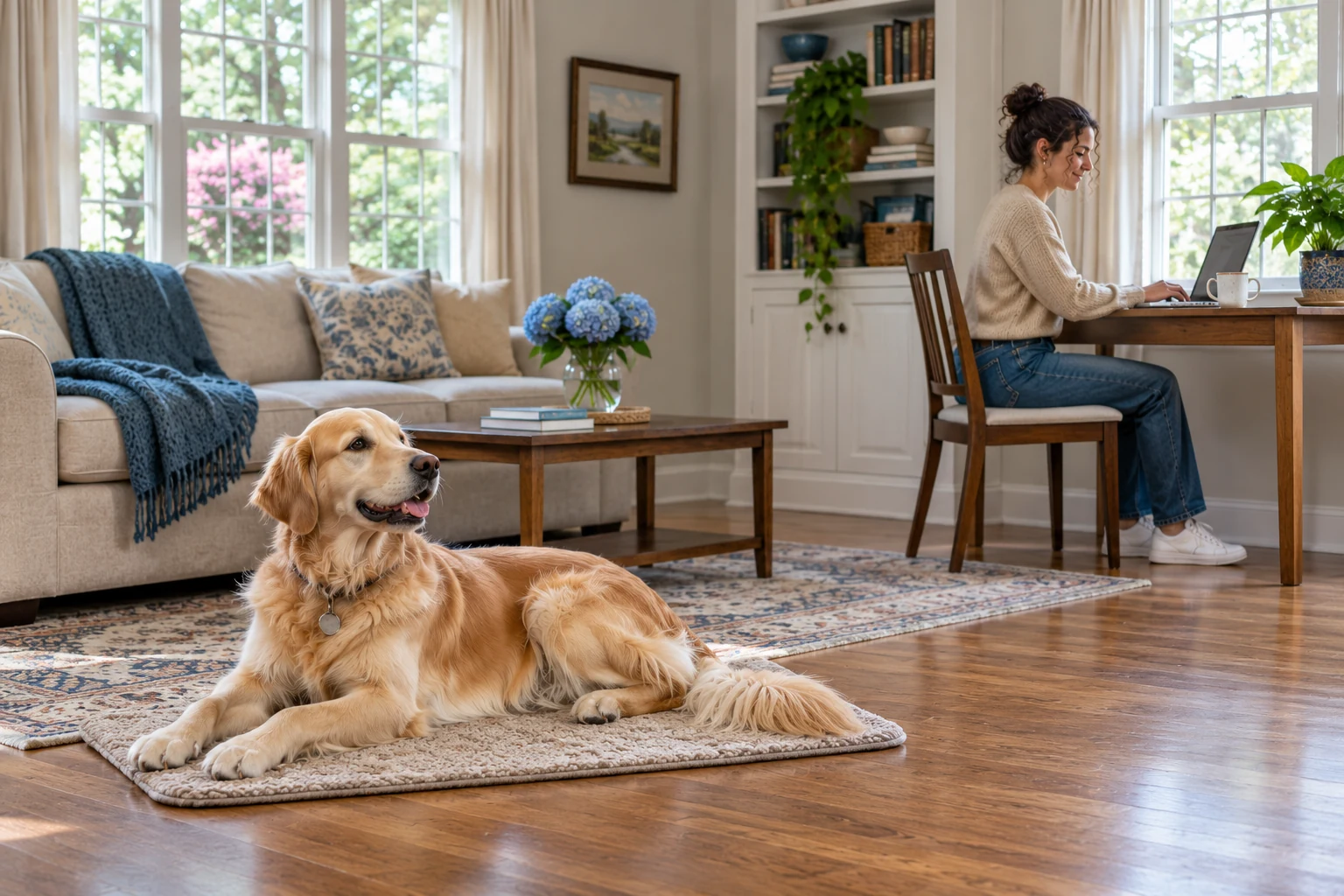
Keep routines steady while you arrange help
A steady routine at home won't fix distress on its own, but it can help your dog rest and gives a professional a clearer picture.
- Keep mealtimes, walks and rest at roughly the same times each day.
- Give your dog chances to sniff, explore and play on walks, and quiet rest afterward.
- Reward your dog for settling on their own bed or mat while you are home. Our guide to settling on a mat explains how. Practice it while you are in the room, not as a way to leave your dog alone.
- Keep greetings and goodbyes calm and brief, without making a fuss of either.
If your dog seems restless or unable to settle even when you are home, mention it to your vet.
Set up necessary absences as kindly as you can
Some absences can't be avoided while you wait for help. Keep them as short as you can, and make your dog's space as comfortable as possible.
- Leave your dog in a familiar room where they already rest calmly, with water and a comfortable bed.
- Use a crate only if your dog already relaxes in it with the door closed. Our guide on how to crate train a dog covers crate comfort, but it isn't a fix for distress about being alone. If crating causes distress, the ASPCA suggests a different approach, such as a room behind a baby gate.
- If your dog barks at things outside, choose a room away from the street or front door.
- A walk or game before you leave may help your dog rest, as the ASPCA notes, but don't expect it to fix distress.
- Keep departures and returns low-key.
If your dog shows any of the signs in "Get help quickly if your dog panics or hurts themselves", stop leaving them alone and contact your vet.
What to do in common situations
Your neighbors or landlord are complaining
Explain that you are getting veterinary and professional help, and arrange cover so your dog isn't alone while you do. Don't use a bark collar to buy time; the BSAVA position statement recommends against aversive devices.
You can't arrange cover every day
Cover the longest absences first, and make the others as short as you can. Ask your vet and behavior professional what to prioritize, and whether medication might help while you work on the problem. Don't make up for missing cover by confining your dog more tightly or adding a bark collar. If your dog shows any panic signs, treat finding cover as urgent.
Your neighbors hear barking but your camera shows a calm dog
Compare the times. Your dog may be barking at something outside the camera's view, or the barking may happen at times the camera doesn't cover. Share both reports with your vet rather than adding absences to check.
Your dog damages things only when alone
The ASPCA lists juvenile destruction and boredom among the possible reasons for damage, as well as distress. Damage near doors and windows, or with drooling, injuries or toileting, deserves a prompt vet visit. Damage spread around the house with a relaxed dog on your return may point elsewhere. Either way, note what you find and share it.
Your dog follows you everywhere at home
Many dogs like to be near their people. Note it, along with any signs of worry as you get ready to leave, and mention it to your vet or behavior professional. Don't push your dog away or punish them for following you.
Your dog howls rather than barks
Howling is another form of vocalizing. The RSPCA lists howling among the common signs of separation-related behavior. Treat it the same way: reduce time alone, keep notes and talk to your vet.
Someone suggests getting a second dog
Another dog is not a reliable fix for distress about being alone, and it adds a new member to the household who also needs care. Talk to your vet and behavior professional before making any change like this.
Your dog only barks when one particular person leaves
Note it and tell your vet and behavior professional. It is useful information, not a reason to test it further.
Your dog barks at deliveries but is otherwise settled
If your dog eats, rests and only barks at outside noises or passersby, it may be barking at sights and sounds rather than distress. Our window and doorbell guides cover this. Mention it to your vet if you are unsure.
Your dog won't eat a chew or a meal when alone
Not eating when alone can be a sign of distress. Note it and include it in what you tell your vet, rather than adding more food or toys.
The barking started after a move, a new job or a household change
Changes in routine can affect some dogs. Reduce time alone, keep notes and talk to your vet. Don't assume it will settle without help.
Your dog got worse after a crate, a collar or a longer absence
Stop that approach, reduce time alone and talk to your vet and a qualified behavior professional. Tell them exactly what was tried.
Your dog is a puppy or a newly adopted rescue
Young puppies and newly adopted dogs have different needs. Our guides on helping your puppy settle and rest and helping a rescue dog settle in cover those situations. If they show distress when alone, the same vet-first advice applies.