
Before practicing, stop and get help instead if the excitement includes grabbing or mouthing your hands or clothes hard enough to hurt, jumping at children or unsteady adults, or hiding, cowering or freezing when the leash or harness appears. Stop too if your dog yelps or flinches as equipment goes on, or if picking up keys or shoes sets off panting, pacing or whining because you might leave without them. For those dogs, use management and arrange help from your veterinarian or a qualified reward-based behavior professional; the guide on when to seek professional behavior help explains the options. If your dog clearly needs to go to the bathroom, just take them out. Practice can wait for a calmer moment.
If your dog spins, barks or leaps the moment you touch the leash, practice getting ready for walks at times when you aren't actually going out. With the outside door closed and treats in a pouch, pick up the leash and reward your dog the instant all four paws are on the floor. A sit counts too, but isn't required. If your dog erupts, calmly put the leash down, step away and wait. Then try again with something smaller, such as just touching the leash where it hangs. Over many short, quiet rehearsals, the leash stops being a starting gun.
Check whether this plan fits your dog
This plan suits a healthy dog whose excitement is happy and bouncy: barking, spinning, jumping up briefly, running to the door and back, or grabbing at the leash in play. It does not treat fear, pain, aggression or distress about being left behind, which look different and need a different response.
Look at the whole dog, not just the noise. San Diego Humane Society lists possible signs of overexcitement, including dilated pupils, panting when not hot, a tight, high wag, trouble focusing and taking treats roughly. A dog showing those signs while bouncing toward you is a good fit for this practice. A dog who backs away, tucks their tail, or turns their head away from the harness is telling you something else, and the guide on reading dog body language in context can help you sort out what you're seeing.
Keep children out of this practice while your dog is still jumping, mouthing or snatching at the leash. An adult who can stay calm and keep their balance should do the early rehearsals, and other family members can join once the dog is settled through the whole routine. A few household rules help here, which the guide to getting everyone using the same training rules covers.
Notice what sets off the excitement
Most dogs get excited about the leash for a simple reason. As Whole Dog Journal training editor Pat Miller explains, the leash usually appears just before a walk, so it predicts one of the best parts of the day.
Spend a day noticing what happens before your dog starts to bounce. For some dogs it's the leash itself. For others it's putting on shoes, picking up keys, reaching for a jacket, saying "walk" or even walking toward a certain cupboard. Write down the first thing that gets a reaction. That earliest signal is where your practice will begin, because it's the easiest moment to catch your dog still calm.
Also notice your own part in it. The American Kennel Club warns against excited questions such as "Who wants to go for a walk?" because they wind a dog up before the leash is even in your hand. A quiet voice and slower movements make the rest of this much easier.
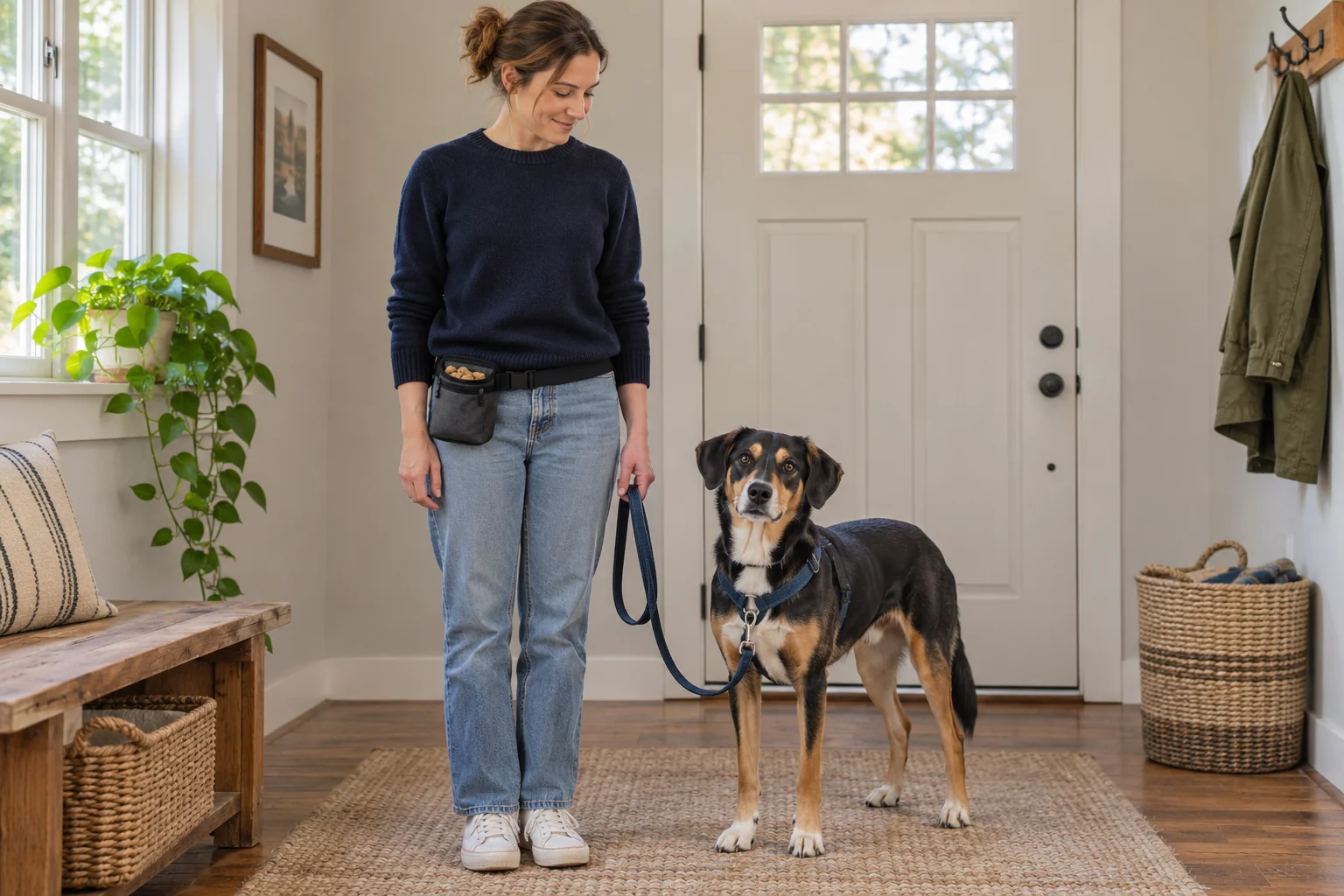
Set up your leash, treats and a closed door
Choose a quiet time, ideally when your dog has recently been out to the bathroom and isn't desperate for a walk. Close the outside door and keep it closed for every rehearsal in this guide, including when the leash is clipped on.
You'll need:
- The leash and the collar or harness your dog already wears comfortably. If putting on the harness is itself a struggle, work through getting your dog used to a harness as a separate project. Until then, practice clipping the leash to a collar your dog is comfortable wearing.
- Small, soft treats your dog likes, in a pouch on your hip or a pocket you can reach easily. For the casual practice below, a lidded jar of treats on a shelf near the leash hook, out of your dog's reach, saves fetching the pouch every time. The guide to choosing training rewards can help if your dog ignores ordinary treats when excited.
- Enough space that your dog can't knock anything over, and nothing fragile within jumping range.
Decide where treats will land. Hold each treat low, at your dog's mouth height, or drop it on the floor between their front paws. Treats held up near your chest invite jumping. If your dog snatches when excited, place the treat on the floor rather than offering it from your fingers, and consider teaching your dog to take treats gently at calmer times.
If you already use a marker word such as "yes" to tell your dog a treat is coming, you can use it here. Every "yes" still earns a treat. If you don't use a marker, simply hand over or drop the treat at the right moment; the guide to reward markers and timing explains the difference.
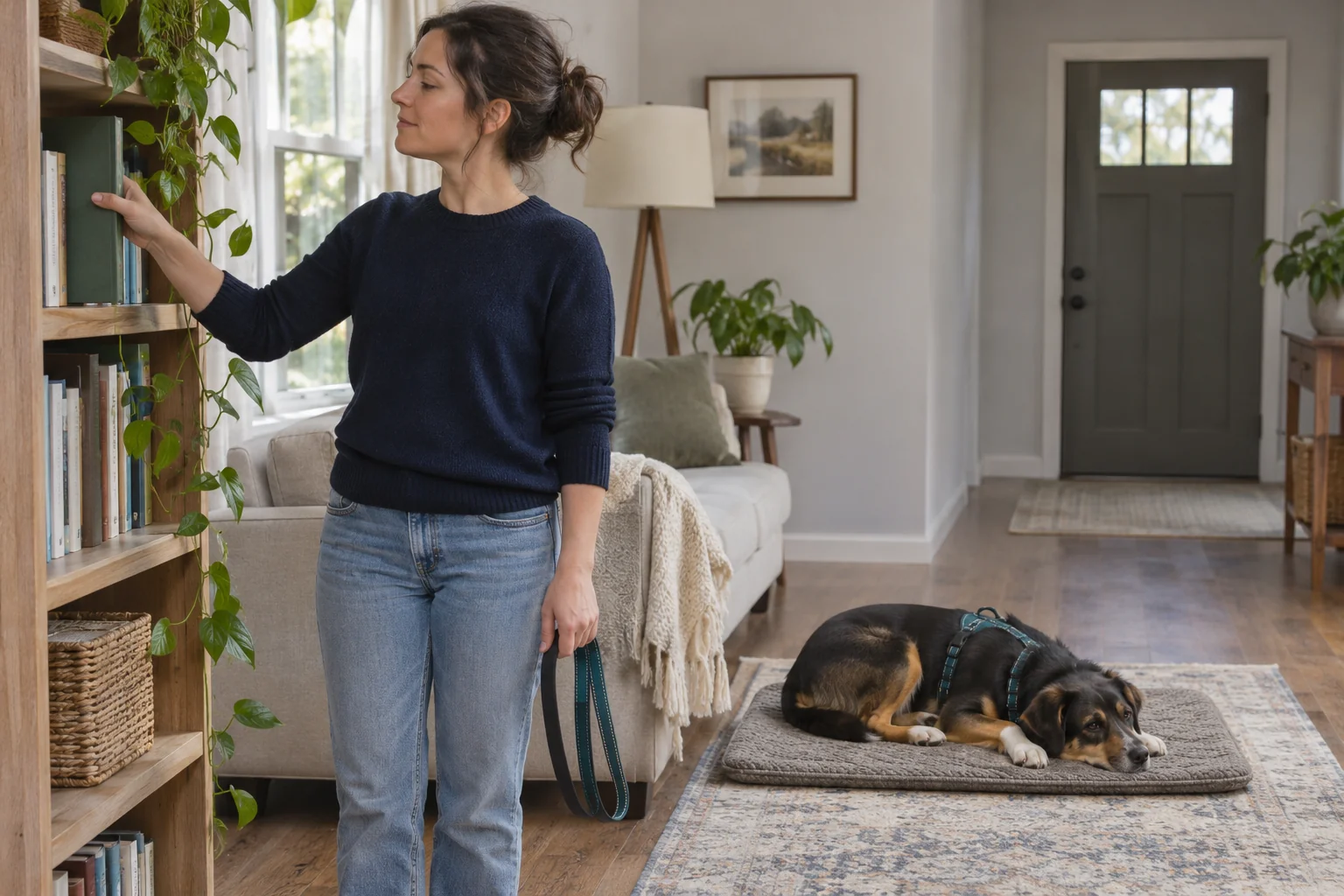
Pick up the leash at random times without going out
The first goal is to make the leash less predictable. The American Kennel Club suggests rehearsing throughout the day by picking up the leash, putting it down and rewarding your dog if they stay calm.
Do this when you're passing the hook anyway. Lift the leash, hold it for a moment and put it back. If your dog stays where they are or looks up without bouncing, drop a treat at their feet. If they start to get up, put the leash back and carry on with what you were doing. Miller also suggests carrying the leash from room to room or draping it around your neck for a while, so the leash shows up often without a walk following.
You're looking for small changes: your dog glancing at the leash and then settling back down, or getting up but not barking. These count as success. If every lift still sets off a full spin, make it smaller. Touch the leash without lifting it, or simply walk toward the hook and away again, and reward your dog for staying calm at that level.
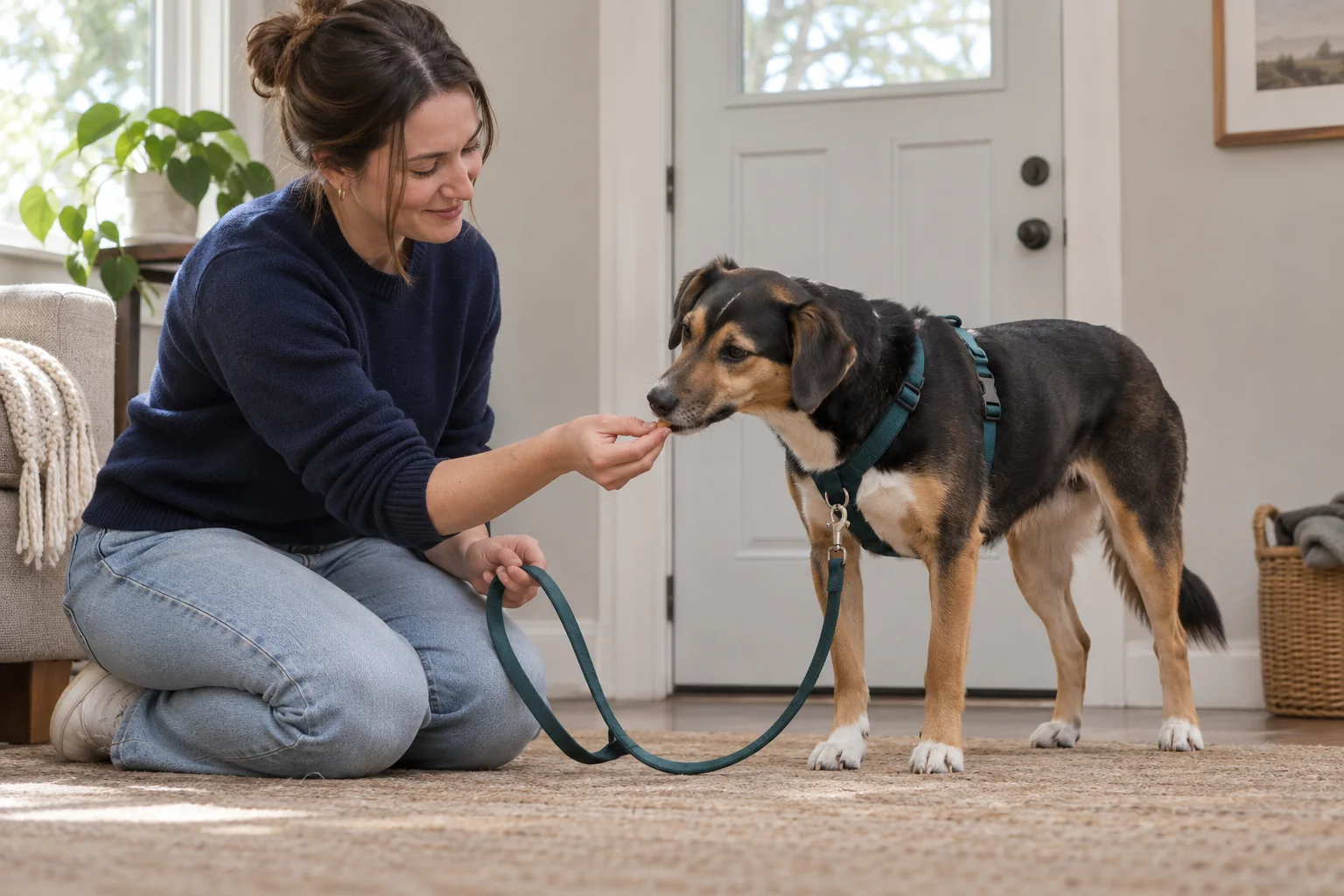
Reward four paws on the floor while you hold the leash
Once casual leash handling gets less reaction, start a short practice session. Stand near the leash hook with treats in your pouch and your dog nearby.
- Pick up the leash with one hand and keep it still at your side.
- The moment your dog has all four paws on the floor, say your marker if you use one and give a treat low with your other hand. A sit or a lie-down also counts, but you don't need to ask for one. The ASPCA's advice for excited walkers is to wait for four paws on the floor if your dog doesn't know sit.
- Keep rewarding every few seconds while your dog stays down, so the calm behavior keeps paying while it's happening.
- Put the leash back and walk away. That's one repetition.
If your dog leaps, barks or spins, stay quiet. Lower the leash, put it back on the hook, and turn away. Miller describes this as teaching your dog that getting excited makes the walk opportunity go away, while staying calm makes good things happen. Wait until your dog is standing or sitting quietly, then try again at an easier level: pick up the leash more slowly, hold it lower, or only touch it.
Don't keep repeating the same lift that triggers an explosion. If your dog erupts two or three times in a row, the practice is too hard right now. Go back to random handling during the day and keep the next session short. The guide to short dog training sessions has ideas for fitting a few repetitions into ordinary routines.
Never shout, push your dog away or grab them. BC SPCA's guidance on excitable dogs is plain: never shout at or hit an overexcited dog, because they're excited out of happiness. Punishment can make the leash something to worry about instead.
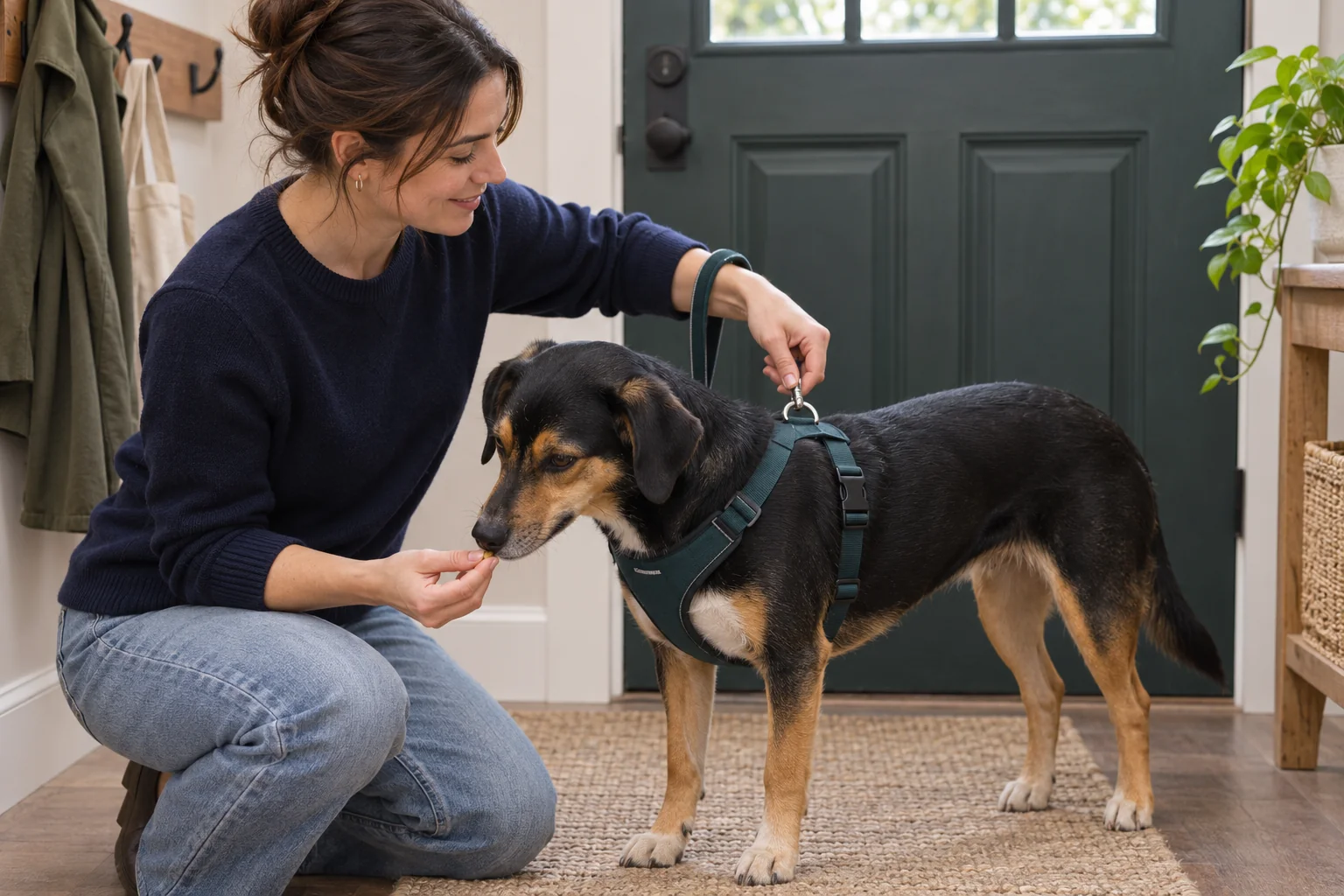
Clip and unclip the leash without heading out
When your dog can keep four paws on the floor while you pick up the leash and walk a few paces toward them, start adding the clip.
Keep the outside door closed. Loop the leash handle over one wrist so you can't drop it, and hold the clip in that same hand. Your other hand stays free for treats.
- Walk to your dog with the leash. Reward four paws on the floor as you arrive.
- Bring the clip toward the ring on the harness or collar. If your dog stays still, clip it, then give a treat low with your free hand.
- Reward again while your dog stands calmly on the clipped leash.
- Unclip, reward once more and put the leash away. Don't go out.
If your dog jumps or grabs as you reach for the ring, take the clip away, stand up straight and wait. The ASPCA advises putting the leash away and walking off if your dog jumps while you clip it, and only clipping when your dog can keep all four paws down. Next time, reward as your hand starts moving toward the ring, before it gets close.
If reaching toward the collar makes your dog duck or move away, that's handling worry rather than excitement. Stop clipping practice and work on getting your dog comfortable with you holding their collar, or clip to the back of a harness your dog is happy wearing.
Make keys, shoes and your voice less exciting
Other walk signals often fire up a dog before the leash is even touched. Miller suggests mixing these up so they lose their meaning; her example is putting your keys in your jacket pocket before breakfast. You could also wear your walking shoes while you cook dinner, or pick up the treat pouch and then sit down to read.
Treat each of these as its own small practice. Put on your shoes, and if your dog stays settled, drop a treat. If your dog starts bouncing, finish putting the shoes on calmly and then sit down with a cup of coffee instead of heading out. Do this enough times and the shoes stop meaning "walk right now."
Keep your voice low and your movements unhurried throughout. If your household always says "walk" in an excited tone, agree as a family to stop using it as a teaser. Some families switch to a calm phrase said only at the moment the door opens.
Walk to the closed door on leash
When your dog can be clipped and unclipped calmly, add the walk to the door. Clip the leash, reward, and walk together to the closed outside door. Reward four paws on the floor when you get there. Then walk back, unclip and reward.
This is where many dogs get excited again, so make the first attempts short. If your dog surges toward the door, stop where you are and wait for the leash to go slack and four paws to be down before you continue. If it keeps happening, go back to clipping and unclipping in the room where the leash lives.
Opening the door is a separate skill. If your dog rushes out the moment the door opens, practice waiting calmly at the door as its own exercise, with the leash on and the door opened only a small amount at first. At a road crossing, the separate curb-wait guide covers stopping safely on leash during a walk; this article covers excitement indoors before the leash goes on.
Turn your practice into a short routine before real walks
You won't be able to practice the full routine every time you need to go out, and that's fine. Practice most of the time when no walk follows, and use a shortened version of whatever your dog currently manages before real walks.
For example, if your dog can stay calm while you pick up the leash but still bounces when you clip it, pick up the leash calmly, reward, and then clip as quickly and quietly as you can before heading out. Don't wait for perfection before a walk your dog needs, and never make a dog who needs the bathroom wait for a calm routine. The calm moments you rewarded still count.
A useful sign that your dog is ready for a fuller routine before real walks is that you can pick up the leash, clip it and walk to the door while your dog keeps four paws mostly on the floor and takes treats gently. When that happens in practice, try the same sequence before a real walk at a quiet time of day. If your dog falls apart at the real thing, go back to the last part they managed and keep practicing it at times when no walk follows.
San Diego Humane Society's advice fits the same pattern: ask for a calm behavior, such as a sit, before life rewards like meals, walks and play. If your dog doesn't know sit or finds it uncomfortable, four paws on the floor works just as well. A calm start then becomes the normal way walks begin.
If your dog spins when you lift the leash, make it easier
For example, an owner notices their dog spins and barks as soon as they lift the leash off its hook. They try lifting it slowly, but the dog spins three times in a row. So they stop lifting and simply touch the leash on the hook, dropping a treat as the dog watches without spinning. Once the dog stays settled each time the leash is touched, the owner lifts it an inch, rewards four paws on the floor and puts it back.
Over the next few short sessions, the dog starts staying down while the leash is lifted and held. The owner then adds walking two paces toward the dog. When the dog stands calmly, they reward low and put the leash away without going out. The next practice starts with this easier version before adding the clip.
The owner's decisions follow the dog's response each time. Calm at one level means trying a little more next time. An explosion means going back to the last level the dog managed.
What to do when your dog is still overexcited at walk time
Your dog barks while you get ready
Barking often starts at the earliest walk signal. Go back to that signal and practice it alone, rewarding quiet moments before the barking starts. Keep your own voice quiet. If you've already got your shoes on and your dog is barking, wait silently for a brief pause, then reward and continue more slowly.
Your dog jumps up at you or the leash
Hold the leash low at your side, deliver treats low or on the floor, and turn away without speaking if your dog jumps. Reward the moment all four paws land. For jumping at guests rather than at walk time, the guide on stopping your dog jumping up at visitors is a better fit.
Your dog grabs the leash in their mouth
Keep the leash still rather than pulling it back, because tugging can turn it into a game. Wait for your dog to let go, then reward four paws on the floor. Bringing a toy your dog likes to carry can give their mouth something else to do, as long as they release it easily. If your dog grabs your hands, sleeves or clothing hard, or the grabbing grows more intense when you wait, stop practice and get help as described in the opening.
Your dog runs off with excitement and won't come back
Some dogs race around instead of jumping. Don't chase. If the leash isn't clipped yet, calmly put it back and sit down until your dog settles. If it is clipped, stand still holding the handle until your dog slows, then unclip calmly and end the session. If these bursts look like the frantic running described in the guide to dog zoomies, wait for them to pass before practicing.
You have more than one dog
Practice with one dog at a time, because two excited dogs set each other off. The other dog can rest in another room or behind a gate only if they're comfortable there; if being shut away upsets them, practice when someone else can take them out for a walk or sit with them in another room. Bring the dogs together for the routine once each one can stay calm alone.
Your dog is calm in practice but wild before real walks
That usually means the practice doesn't yet match the real situation. Real walks may come at a certain time, after a certain sound or with more people moving around. Practice at that time and in those conditions, at an easier level, without going out.
Your dog gets frantic when you leave without them
If keys, shoes or a jacket lead to whining, pacing or barking when your dog can see you're leaving alone, that's a different problem from walk excitement. Practicing walk routines won't fix it. Use the guide on when to seek professional behavior help and talk to your veterinarian.
Your dog pulls hard once you're outside
A calmer start makes walking easier but doesn't teach loose leash walking. For that, use the guide on how to teach loose leash walking, which picks up where this routine ends.
Get help when excitement includes hard mouthing, fear or distress
Some dogs need more than a calmer routine. Get help from your veterinarian or a qualified reward-based behavior professional if:
- Your dog mouths, grabs or nips hands, clothing or people hard enough to hurt or frighten them.
- Your dog jumps at children, older adults or anyone unsteady.
- Your dog hides, freezes or tries to escape when the leash or harness appears.
- Your dog yelps, flinches or moves stiffly when equipment goes on, or the excitement is new and sudden.
- Your dog shows distress when you get ready to leave without them.
Until you get help, keep the routine as quiet as possible and keep children away from walk preparations. If equipment seems to cause discomfort, stop using it and ask your veterinarian before trying again. The guide on when to seek professional behavior help explains what different professionals do.